

PANHANDLE
St. Vincent Island
fishing guide
St. Vincent Island is a national wildlife refuge reached by boat. It offers designated fishing opportunities, but refuge rules and wildlife boundaries shape the whole trip.
Explore the guide ↓A boat landing does not open every part of the island
St. Vincent Island is managed as a national wildlife refuge near Indian Pass. There is no road bridge from the mainland. Check current refuge opening, landing and route information before departure, particularly after storms or during special management activities.
Fishing is allowed in designated areas under applicable rules. Refuge land is primarily wildlife habitat, so a quiet-looking trail or beach does not establish unrestricted access. Plan where you may land and where you may walk. Do not enter closed nesting ground, assume a campground is available or use private mainland facilities without permission while arranging the crossing.
Separate open surf from bay-facing habitat
The Gulf side offers sand, surf and feeding troughs for smaller coastal fish. Bay-facing water can contain sheltered edges used by redfish, trout and other inshore species. Pick the authorized setting that matches your ability and the transport plan rather than trying to circle the whole island.
Watch wind on both shores. The calmer landing side may not describe the exposed beach you intend to fish or the return crossing later. Keep a firm pack-up time and a clear route back to the boat. Remoteness adds responsibility; it does not make a difficult pass or an unknown shoreline safe to wade.
Use a compact surf offering instead of a heavy beach camp
For an approved Gulf-shore session, start with a trimmed shrimp bait in a controllable sand trough. Whiting may feed near shore, while traveling pompano can take small crustacean offerings when seasonal conditions suit them. There is no need to carry a separate heavy rod for every possible fish.
Select a sinker that holds within the outfit's rating and keeps the rig away from other users. Inspect the bait between trials and alter distance deliberately. If weed or waves prevent control, shorten the attempt rather than pushing farther into the water. Keep all hooks secured during the walk back to the landing.
Work trout and redfish routes without damaging cover
Spotted seatrout can hunt above mixed grass and sand in surrounding bay water. Suspend a shrimp above vegetation or swim a light soft plastic through a clean lane. A rig that repeatedly drags plants is poorly matched to the depth or path.
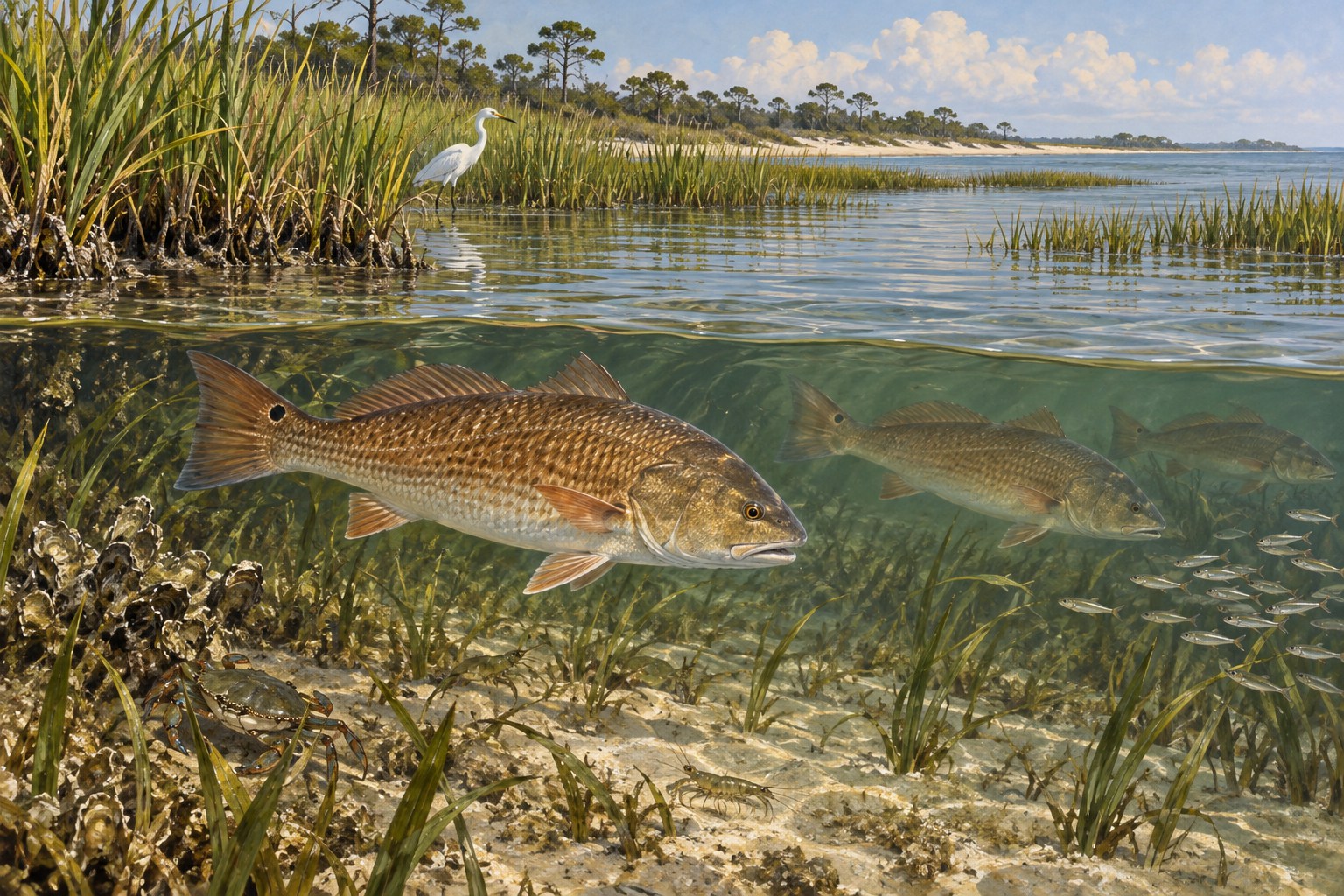
Redfish may search a bank or sand margin for shrimp and crabs. A quiet boat approach and a modest cast beside the feeding route can be useful. Do not use a propeller to force the craft across living seagrass. Keep clear of wildlife-management boundaries and treat a visible fish in restricted water as something to observe, not pursue.
Read refuge freshwater limits as a separate rule set
The refuge lists fishing opportunities in its lakes and Oyster Pond, with seasonal restrictions different from saltwater bank fishing. Its published summary gives May 15 through September 30 for the freshwater fishing season and seasonal lake boating. Confirm the exact open water and permitted use with refuge staff before planning that portion of the visit.
The refuge prohibits live minnows as bait and does not allow outboard motors on its lakes and ponds. Its information identifies electric-motor restrictions and designated motor storage arrangements. Do not transfer a saltwater bait bucket into freshwater or assume every inland pond is open. Largemouth bass, sunfish and catfish need their own access, gear and identification plan.
Pack supplies for the whole island journey
Carry drinking water, sun protection, first aid and a reliable communication method before optional tackle. Bring pliers, a ruler and enough spare leader for the planned environment. All rubbish needs a secure place for the return boat ride.
Freshwater and saltwater license needs may differ, so review the actual activity before leaving the mainland. If retaining fish, bring suitable cold storage and allow for its weight on the return walk. Do not count on a refuge landing to supply ice, food, bait or a cleaning table. A small portable kit helps keep the visit within realistic limits.
| Habitat after access confirmation | Useful approach | Extra requirement |
|---|---|---|
| Gulf sandy trough | Small shrimp surf rig | Safe return to landing |
| Surrounding bay edge | Light lure or shrimp float | Seagrass and boundary protection |
| Open refuge freshwater | Approved bass or panfish method | Season, bait and boating rules |
Allow current and weather to control the crossing decision
Indian Pass and nearby channels can move strongly. Wind opposing the flow may create rough water even when the beach looks pleasant. Check the marine forecast for both departure and return, and wear a life jacket from the start of boat travel.
Share the intended landing and return time with someone ashore. Know who will be contacted if the schedule changes. A kayak crossing needs separate experience and assessment rather than simply substituting a paddle for a motorboat. If weather becomes uncertain, do not launch on the assumption that the remote island will provide convenient emergency shelter.
Protect quiet habitat from fishing-related disturbance
Observe turtles and birds without moving them aside to create a casting space. Use open designated routes and avoid walking through dune plants. Saltwater fishing may be available year-round in approved areas, but that does not remove seasonal wildlife closures or refuge management decisions.
Keep discarded line in a closed pouch. Do not leave bait scraps where birds will gather beside hooks. Historical objects and natural resources are not souvenirs to collect. A refuge visit should leave the sand and landing quieter, not more littered or disturbed, than you found them.
Make the initial visit one clearly defined outing
Choose a designated saltwater shore session for the first visit unless freshwater access has been specifically confirmed and planned. Work one rig carefully, observe food movement and keep the boat return straightforward. A successful modest plan is easier to repeat than an exhausting attempt to sample every habitat.
Record the permitted landing, route and rules verified for that day. Distinguish a Gulf-beach catch from a bay or lake observation. At departure, count every bag and rod and check the landing for cut line. The most important result is a complete safe return that protects the refuge and keeps future access possible.
Common questions
Is St. Vincent Island connected to the mainland by road?
No. Arrange legal boat access, landing and return before planning the fishing portion.
Are saltwater and freshwater access rules identical?
No. Refuge freshwater fishing and lake boating have seasonal restrictions, while approved saltwater surf and bank opportunities have different arrangements.
May I bring live minnows for lake fishing?
No. The refuge specifically prohibits live minnows as bait.
Can I use an outboard motor on the refuge lakes?
No. The refuge restricts lake and pond boating, including outboard motors. Confirm its current seasonal and electric-motor requirements.
Prepare for your visit
Check local tides and weather. Read more about florida pompano, whiting, permit. Check current FWC saltwater fishing rules.