
FLORIDA KEYS & EVERGLADES
Summerland Key
fishing guide
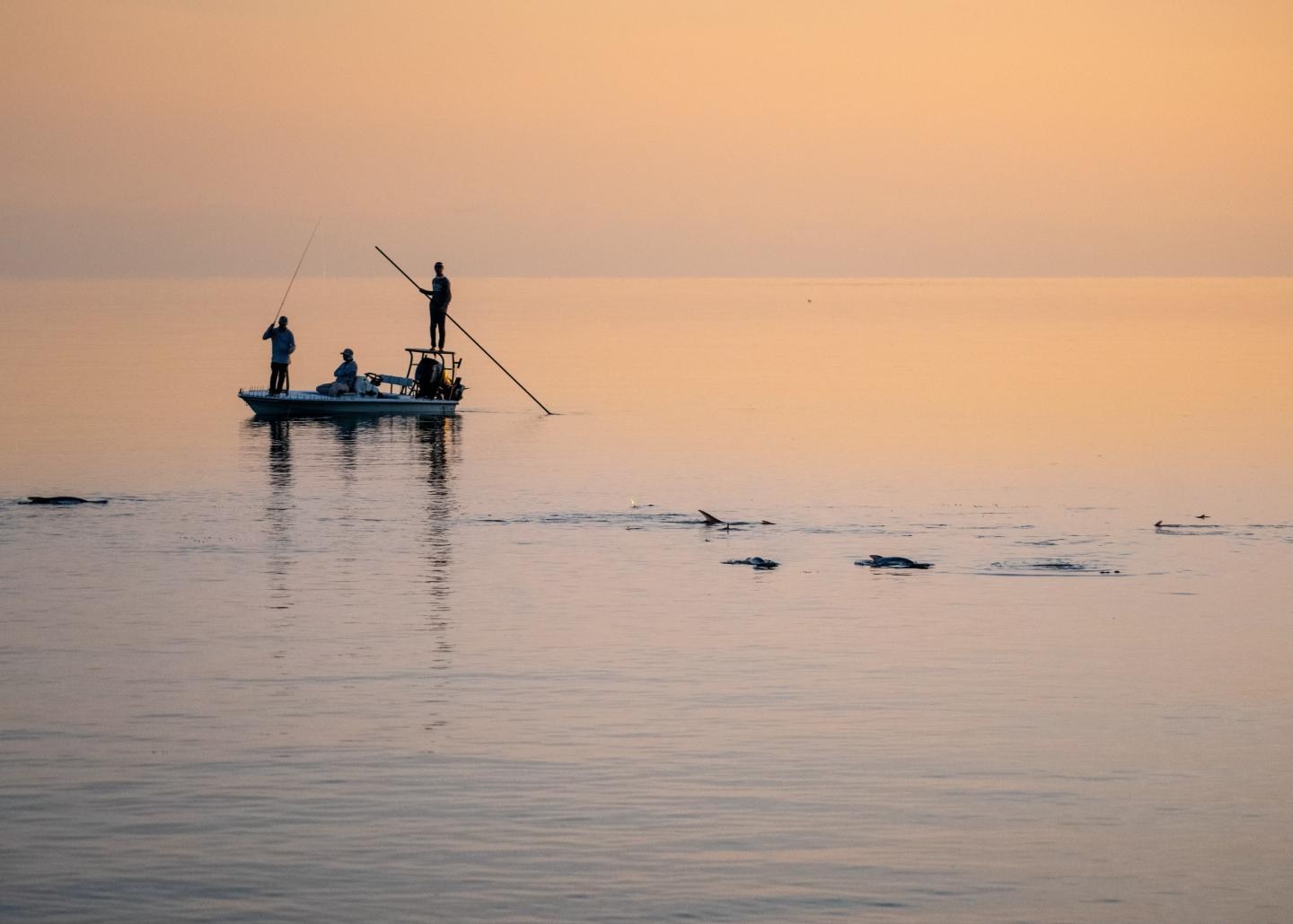
Summerland Key is surrounded by Lower Keys channels, flats and mangrove water. Most shore access needs a separate permission check. Choose a verified launch and a clear route, then focus on accurate bait placement rather than trying to fish every habitat in one day.
Explore the guide ↓Start with an authorized waterfront facility
Summerland Key is a developed Lower Keys island with private canals and waterfront properties. Being close to the water does not make a seawall or boat ramp public. Confirm access with a marina, property operator or an official public-facility listing.
Ask about trailer parking as well as launch use. A business may permit a boat in the water without allowing overnight vehicle storage. Check hours, any gate procedure and how you will retrieve the boat if weather ends the outing early.
For shore fishing, use only an expressly allowed position. Do not climb onto canal structures or cast from active road shoulders. The surrounding regional fishing opportunities are broader than the small amount of shoreline available to a visitor on foot.
Read a channel edge without blocking traffic
Channels around the island can carry stronger flow than the adjoining flats. A baitfish school may pause beside an edge where deeper water meets vegetation. Look for that feeding route while staying outside marked navigation space.
From a boat, plan a drift that will not carry you across another vessel's path. Keep an engine or paddle ready to leave safely. Fish movement is worth watching, but traffic, depth and the return route decide where the boat can remain.
A dark line may suggest depth, yet it can also be a dense grass strip. Compare it with current charts and actual readings. Do not navigate by color alone when approaching a narrow or unfamiliar channel.
Use small bait to test cover
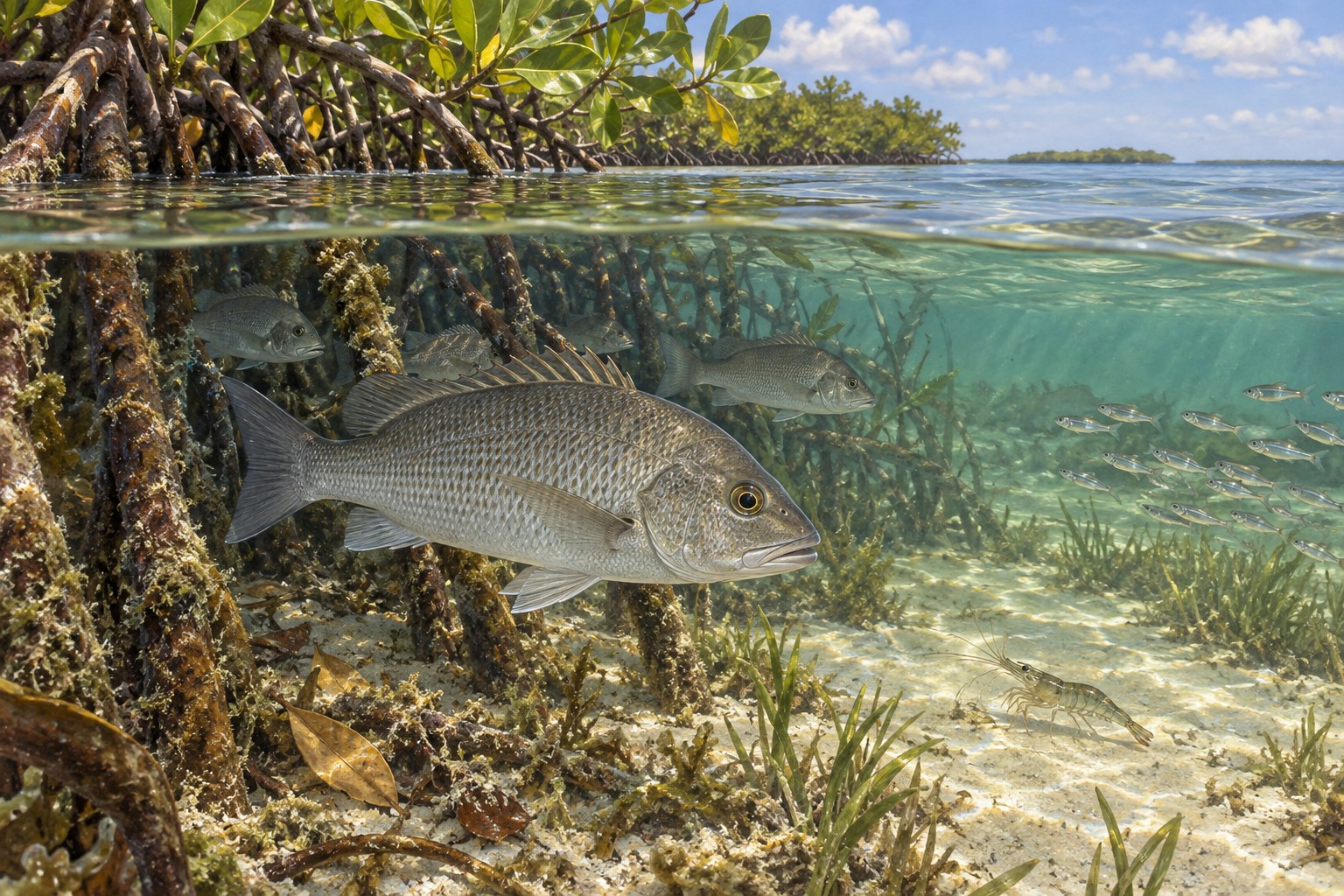
Mangrove snapper can use roots, hard edges and other suitable cover in permitted water. A narrow bait strip or small shrimp is easy to present precisely. Match the hook to the offering rather than using a large hook with a tiny piece.
Hold the bait near the edge of the cover without dragging it into the obstruction. Only a little weight may be needed in gentle flow. More weight can keep the rig down, but it can also pin the hook where you cannot recover it.
Set a controlled drag and guide a hooked fish into open water. Sudden slack gives the fish room to return to cover. A landing net helps complete the catch without swinging fish onto a crowded deck.
Fish the sand openings with a quiet approach
The neighboring shallow bottom supports small prey that attracts bonefish, permit and other flats fish where conditions suit them. Approach slowly and observe before casting. A fish seen on an open patch may soon move across vegetation or deeper water.
Try a shrimp-shaped offering ahead of an identified feeding route. For permit-focused fishing, a suitable crab imitation may be useful. Neither approach replaces the need to identify the fish or respect protected habitat.
Light tackle should mean a quiet presentation, not an excessively prolonged fight. Use an outfit capable of landing the intended fish promptly. Keep coral and vegetation clear of the line and avoid chasing fish into closed or unsafe water.
Cover an open edge with a compact lure
A small paddle-tail or modest spoon can locate mobile jacks and other nearshore predators. Begin along a clean casting lane with visible prey or a clear habitat change. Random long casts over empty bottom tell you less than a few controlled casts at a useful edge.
Let the lure swim instead of constantly jerking it. Compare a steady retrieve with one short pause. Keep note of whether a bite comes near the sand, beside vegetation or close to deeper flow.
If toothy fish repeatedly damage the leader, change the leader to suit the intended target. Use careful hook removal and do not handle a barracuda by putting a finger in its mouth. A lively fish and exposed hooks need room.
Prepare a manageable inshore kit
A medium spinning outfit is a useful foundation for ordinary Lower Keys inshore fishing. Ten- to twenty-pound line with a leader chosen for abrasion is a common starting range. Larger fish or rough cover may require greater strength and a different landing plan.
Bring a ruler, pliers, spare hooks and only the lure sizes you expect to use. A small organized bag is easier to keep dry on a flats boat or kayak. Keep a hook-free place for stepping and handling fish.
Choose the first rig from the water you are actually allowed to reach. The table illustrates changes in approach rather than specific coordinates or guaranteed catches.
| Habitat | Initial rig | What to watch |
|---|---|---|
| Cover beside flow | Small natural bait | A drift into unrecoverable roots |
| Open sand patch | Shrimp imitation | A quiet entry ahead of fish |
| Prey along deeper edge | Compact lure | Vessel traffic and drift direction |
| Shallow return route | Conservative depth check | Water falling sooner than expected |
Follow movement without surrendering depth
Tidal flow can make an edge more useful by carrying shrimp and small fish past it. Observe the direction on site and cast so the offering travels naturally. A station prediction cannot show every local turn around islands.
The useful fishing flow and the safest navigation depth are not always the same. An outgoing tide may concentrate fish while making a return crossing shallower. Set a return limit before you get absorbed in a feeding school.
Strong wind can lower or raise the water across a flat. Check actual depth instead of relying only on a clock. Leave a greater margin on your first visit or when the forecast is changing.
Plan for fronts and summer storms
During cooler months, fronts can bring a fast shift in wind and rough water outside sheltered channels. A leeward shoreline can offer a more manageable search, provided it is open to fishing. Do not force an exposed ocean route because it was the original plan.
Hot-season outings need shade, drinking water and an early storm check. A small boat can have little shelter and a long return across open water. Finish the distant part of the trip while there is still a safe weather margin.
Wear a life jacket and carry appropriate communication equipment. Tell someone your exact launch and planned return time. If the day becomes unsuitable for fishing, a short safe scouting trip can still be worthwhile.
Check the Lower Keys protection map
Current sanctuary zones include different restrictions on fishing, entry and vessel use. Find the boundary for the exact route before launching. A famous reef or island nearby does not tell you which side of a protected line you occupy.
State rules govern many nearshore catches, with federal requirements also relevant on some offshore routes. Verify the current season, measurement and bag limit for each species. Do not assume that a fish in a neighboring angler's cooler was legal to keep.
Remove bait debris from the launch and keep line trimmings aboard. Do not disturb nesting birds or cut mangrove branches for a casting lane. Leave the shallow habitat intact so the same small prey can support future fishing trips.
Common questions
Can visitors fish from any canal seawall on Summerland Key?
No. Many waterfront areas are private. Obtain permission for the exact access point.
What is a useful first snapper offering?
Try a small shrimp or thin bait strip beside suitable permitted cover with an exposed hook point.
Why should I check depth during an outgoing tide?
The flow may improve feeding while reducing the water available for your route home.
Are nearby reefs automatically fishing areas?
No. Consult current sanctuary boundaries and rules before fishing, anchoring or entering a protected area.
Prepare for your visit
Check local tides and weather. Read more about mangrove snapper, permit, bonefish. Check current FWC saltwater fishing rules.