
FLORIDA KEYS & EVERGLADES
Veterans Memorial Park
fishing guide
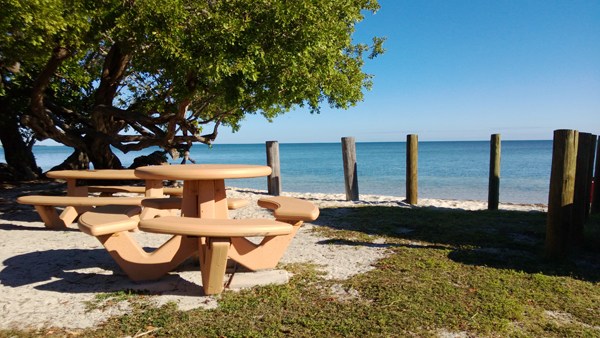
Veterans Memorial Park on Little Duck Key is a shallow-water stop near the Seven Mile Bridge. Its beach and picnic setting are useful for observing Keys habitat. Establish the permitted fishing area before unpacking, and keep away from bridge traffic and swimming space.
Explore the guide ↓Find the Little Duck Key park
This Veterans Memorial Park is at 39900 Overseas Highway on Little Duck Key. It is the Monroe County coastal park near the southwest end of the Seven Mile Bridge. Do not confuse it with inland Florida parks carrying the same name.
The county lists a beach, accessible features and a beach wheelchair. Its stated hours are 7:30 a.m. to sunset. Check current facility notices and parking instructions before setting a departure time. An old photograph cannot confirm today's access condition.
The park beach and the bridge are different places. Do not step onto road shoulders or crossing structures to seek deeper water. Confirm the current allowed shore-fishing area with park staff or signs, and keep the protected swimming space clear.
Understand the shallow beach setting
A shallow shoreline is best approached by studying the bottom rather than trying to overpower it. Look for small sand openings and changes in water color. Those features can guide a controlled presentation when the beach section permits fishing.
At low water, parts of the nearshore zone may become too shallow for a useful bait drift. That is not an invitation to walk farther across fragile bottom. Wait for better depth or choose another designated fishing place.
This park is a compact public stop. A single attended rod and a small tackle bag are easier to manage than several lines fanned across the beach. Leave an obvious passage for families and visitors reaching the water.
Set modest expectations for a short visit
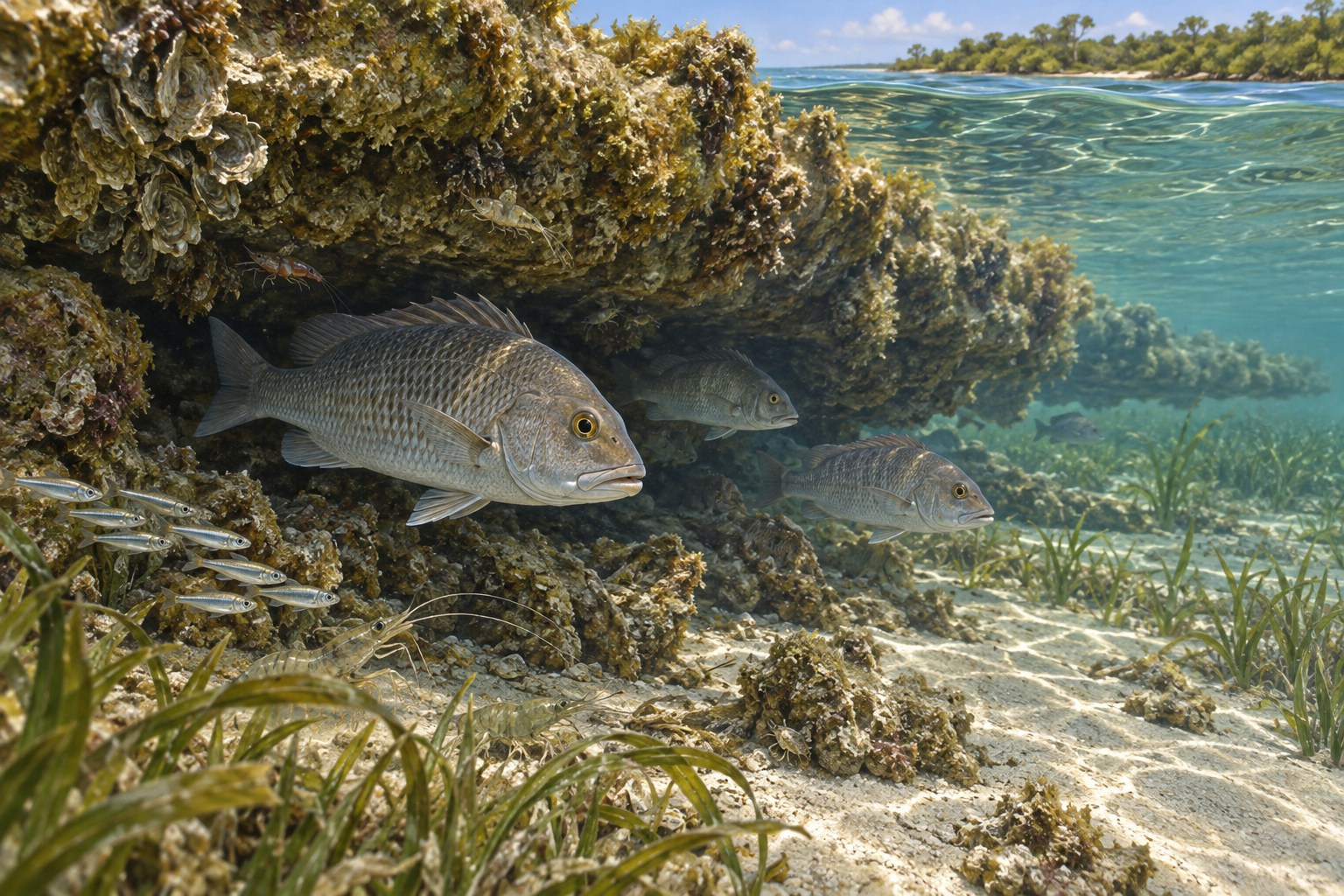
The surrounding Keys water supports small snapper, grunts, jacks and other coastal fish where cover and food are available. Their presence in the region does not guarantee a bite immediately in front of a picnic beach. Use the visible habitat to choose a target.
A small snapper may feed near a hard edge or cover. Jacks can move through open water after baitfish. A stationary shrimp and a moving soft plastic test different opportunities, so keep both approaches available without cluttering the shore.
Large tarpon seen near a bridge are not a sensible target with an ordinary beach outfit. Fish of that size need sufficient tackle, a safe landing position and species-specific handling. A brief sightseeing stop should not become an unplanned big-fish fight.
Make each natural-bait cast easy to read
Start with a single small shrimp bait rather than a multi-hook rig. Thread the offering securely without burying the hook point. A small piece can be enough for testing whether fish are feeding along a clean bottom patch.
Allow the rig to settle, then keep a gentle connection through the line. Tightening so hard that the bait drags continuously can spoil the presentation. Excess slack can hide small bites and allow the hook to sit unattended in a snag.
Check the bait after a faint repeated tap. Small fish may strip it without pulling the rod strongly. Renew a damaged offering and compare the next cast at the same depth before changing the whole setup.
Swim a lure through a recoverable lane
A two- to three-inch soft bait on a suitable light jig can imitate small forage. Use it over sand or above the edge of vegetation. The goal is a lure that returns cleanly, not one that spends each retrieve hooked to the bottom.
Try a straight retrieve at first. If fish follow without taking it, briefly slow down or pause in open water. Change only one part of the retrieve so you can notice whether the adjustment makes a difference.
Wear polarized glasses to inspect both fish and hazards. Glare can conceal submerged obstacles and people farther out. Before every cast, check the entire area rather than focusing only on a shape below the surface.
Prepare for a public roadside park
Choose a rod that can be carried safely from the parking area. Keep its hook secured while walking and avoid waving a long surf rod around picnickers. A medium spinning outfit is versatile for ordinary inshore fish in unobstructed water.
Add a leader suited to abrasion and expected fish, along with a compact measuring board. Carry a few spare jig heads and hooks. A small water bottle and sun protection matter more than a large selection of lure colors on a short stop.
Use these combinations only after confirming where fishing is allowed. The bridge's deeper current is not included in this beach plan.
| Situation | Compact approach | Limit |
|---|---|---|
| Small bites over clear sand | Single shrimp bait | Check the hook after taps |
| Open water above vegetation | Light soft plastic | Avoid digging into grass |
| Wind pushing the rig sideways | Shorten the controlled drift | Stop before reaching people |
| Very shallow low water | Observe and wait | Do not chase depth toward the bridge |
Let tide and wind set the useful window
A rising tide can create more usable depth along a broad flat. A falling tide may concentrate small prey into remaining water. Observe the direction a floating leaf or loose seaweed travels before deciding where a bait will drift.
Wind across shallow Keys water can push a float sideways faster than expected. A bow in the line reduces bite detection. Move to a safer sheltered permitted position or stop when the rig no longer stays in its clear lane.
Do not wade out toward the bridge to follow the receding water. Bottom depth and flow can change abruptly near channels. Your route back should remain obvious and available throughout the visit.
Fit fishing around a shared beach
Veterans Memorial Park is used for beach time and picnics as well as coastal sightseeing. Keep bait away from picnic tables used by others. Put tackle waste directly into a closed container so wind cannot scatter it.
Summer heat can make a small park stop tiring surprisingly quickly. Take shade and water breaks before feeling worn out. Thunder over the open water should end the fishing session, with enough time to return to a safe enclosed vehicle.
In cooler windy weather, secure hats and loose gear before starting. A small item blowing into the water is not worth entering an uncertain tidal area. Plan an outing that you can pack up promptly when conditions change.
Keep catches and wildlife separate
Verify the Florida saltwater license requirement that applies to your age, residency and method. A beach visit or county parking payment is not a fishing license. Check size, bag and seasonal limits for each identified species before deciding to keep it.
The Keys also have protected marine areas and wildlife rules. A beach name does not tell you every offshore boundary. Anyone leaving the park by boat needs current navigation information and a clear understanding of the route.
Release fish without dragging them over hot sand, and never feed scraps to birds. Collect all spare line, even short leader trimmings. A clean shoreline is safer for children, wading birds and the next person visiting the park.
Common questions
Which Veterans Memorial Park is this guide about?
The Monroe County beach park at 39900 Overseas Highway on Little Duck Key, near the Seven Mile Bridge.
Does beach access include permission to fish from the bridge?
No. The bridge requires separate access and safety checks. Stay off active road shoulders and structures.
How many rods make sense for a short park visit?
One attended rod is easier to manage around a compact shared beach than several lines.
What should I do if low tide leaves very little fishing depth?
Avoid walking across fragile flats toward channels. Wait for more water or move to a designated fishing area.
Prepare for your visit
Check local tides and weather. Read more about permit, tarpon. Check current FWC saltwater fishing rules.