
FLORIDA KEYS & EVERGLADES
Sombrero Beach
fishing guide
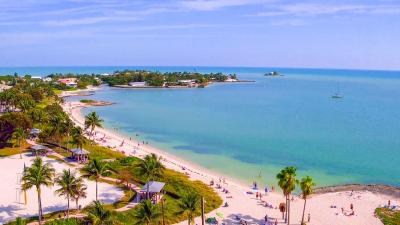
Sombrero Beach puts Marathon visitors beside shallow Atlantic water, turtle nesting habitat and a busy family beach. Build a modest shore plan around safe casting space. For a wider fishing trip, use an authorized launch and follow the sanctuary boundaries offshore.
Explore the guide ↓Separate the city beach from the offshore reef
Sombrero Beach is reached along Sombrero Beach Road in Marathon. The city manages a developed beach park with picnic facilities and accessible features. It is not Sombrero Reef, which lies offshore and has separate marine protection rules.
The city identifies the beach as turtle nesting habitat. Activity near active nests is limited during nesting season. Read the current signs before carrying tackle down to the water, and leave marked nest areas completely clear.
A public beach listing does not settle every casting boundary. Confirm where angling is allowed with the city or posted park instructions. Do not fish through swimmers, launch areas or a crowded stretch simply because it offers the shortest walk from the car.
Read the flat water before choosing a target
This part of the Keys has shallow clear water rather than the deep breaking surf common on many mainland beaches. Light wind can let you see sand patches, darker vegetation and small fish moving near shore. Those changes are more useful than an arbitrary long cast.
Dark water does not always mean depth. It may be vegetation, cloud shadow or a different bottom. Watch how a wave travels across the patch and compare several views before deciding how to present bait.
Fish using a shallow edge may be moving between feeding areas. Do not expect every promising patch to hold a resident school. A quiet observation period can show whether small prey is present and whether larger fish are following it.
Choose realistic nearshore fish
Small snapper, grunts, jacks and barracuda are possible in the broader Marathon shallows where habitat suits them. A beach outing should focus on fish within a safe, permitted reach. Reef grouper and offshore pelagics require a different route, equipment and fishing plan.
Mangrove snapper favor cover and can be cautious in clear water. A small natural offering fished beside an open sand margin is a better starting point than a large bait buried in grass. Jacks are more mobile and can arrive quickly when baitfish gather.
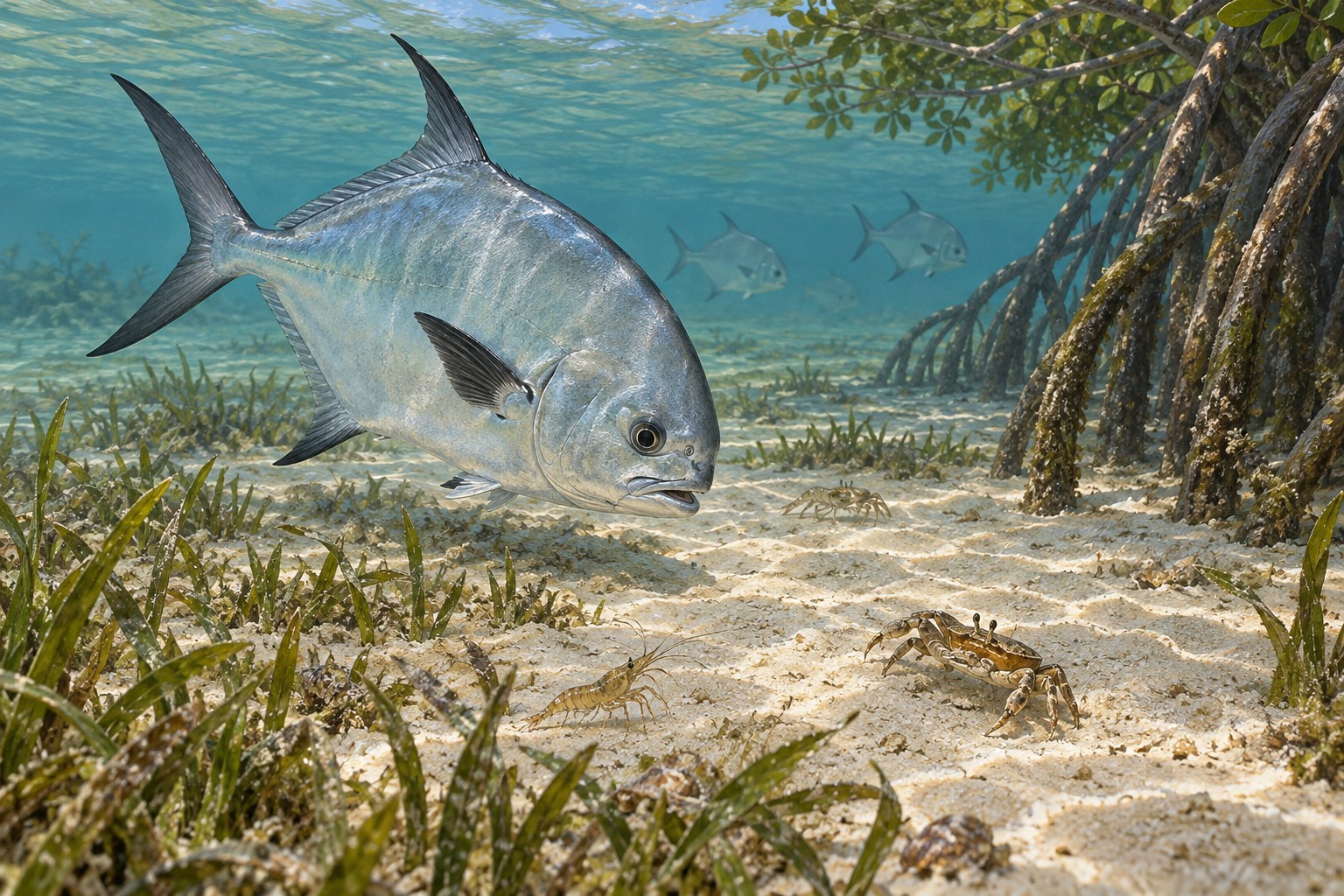
Do not mistake a silvery fish on a flat for proof that bonefish or permit will be easy to catch. Identify the fish carefully and treat specialized flats fishing as a separate skill. Clear water rewards quiet positioning and accurate casts.
Keep shrimp small and above unwanted snags
Use a lively shrimp on a hook that leaves the point clear. A tiny piece of fresh shrimp can also test for smaller fish. Oversized hooks or a thick ball of bait can turn a gentle bite into a missed chance.
In clean sand, use only enough weight to control the rig. Near vegetation, suspend the bait or keep it moving above the bottom. Repeatedly retrieving grass is a signal to change depth or move to a cleaner casting lane.
Carry bait in shade and remove only what is needed for the next few casts. Warm shallow water and a hot beach can quickly ruin a crowded bait container. A few well-kept shrimp are more useful than many weak ones.
Work a short baitfish imitation
A small paddle-tail on a light jig head gives a simple way to cover clear nearshore water. Choose a weight that lets it swim without plowing through the bottom. Try a steady retrieve before adding twitches or long pauses.
If small prey is moving quickly at the surface, a compact spoon can be worth trying. Keep it away from people and stop the retrieve before exposed hooks reach a swimmer's path. A crowded beach is a reason to put the lure away.
For barracuda, tooth damage can be immediate. Match the leader to the intended target and inspect it after contact. Do not use an unnecessarily heavy tooth-proof setup for every small snapper presentation.
Carry an outfit suited to an open beach
A light or medium spinning outfit covers many small nearshore presentations. Ten- to twenty-pound braid with a suitable leader is a practical starting range, not a requirement. The size of fish and nearby obstacles decide whether it is adequate.
Bring pliers, a ruler, spare leader and a small hook box. Keep loose hooks inside a closed container while walking through the park. A landing net can reduce handling, but choose one you can carry without blocking the public route.
The table outlines useful decisions in permitted water. It is not a list of guaranteed catches or an authorization to cast from every section of the park.
| Water clue | First presentation | What to adjust |
|---|---|---|
| Clean sand margin | Small shrimp with modest weight | Reduce weight if it digs in |
| Vegetated shallows | Suspended shrimp or light paddle-tail | Lift the bait above grass |
| Baitfish moving quickly | Small spoon in a clear lane | Change pace, not just color |
| People entering the casting area | Reel in | Choose an open permitted area or stop |
Use the tide to judge room and reach
An incoming tide can cover shallow margins and give small fish more space to spread. Falling water can pull prey toward deeper routes. At a beach, the useful question is whether those changes are within a safe casting distance.
Check the forecast for Marathon and compare it with the actual waterline. A predicted high tide is not a promise that the beach will have room for rods. Wind can change both water level and the direction your line travels.
Keep the return walkway and all beach equipment away from the rising wash. Move the tackle bag before the tide reaches it. Fishing is simpler when the kit remains dry and the landing area is not shrinking beneath your feet.
Plan around wind, heat and visitors
Cooler months can bring breezier days to the Keys. A bright sunny forecast may still produce choppy open water. In warmer months, early permitted hours can be more comfortable, while afternoon storms can force a fast change of plans.
Use marine wind and lightning forecasts alongside the ordinary air-temperature forecast. A sheltered-looking beach does not guarantee a safe small-boat route. Do not paddle offshore merely to reach fish visible beyond your casting range.
Family use is central to Sombrero Beach. Keep the outing flexible enough to stop when swimmers occupy the area. You can still learn from baitfish, birds and changing water without having a hook in the water all day.
Protect nests and confirm the rule for each catch
Release unfamiliar fish rather than guessing its legal size or season. Check current Florida harvest rules before retaining a species, and learn whether your route enters a sanctuary zone with additional restrictions. Offshore reef boundaries require deliberate navigation.
Keep released fish wet, supported and free of dry sand. Remove a hook with pliers when possible, and cut an unsafe deep hook close to the mouth instead of prolonging handling. Do not pose a lively fish over exposed tackle.
Collect line pieces and bait wrappers before leaving. Avoid bright lights around nesting habitat and follow the city's directions for protected areas. The beach is a place to share with wildlife and visitors, not a space to reserve with fishing lines.
Common questions
Is Sombrero Beach the same place as Sombrero Reef?
No. The beach is a city park in Marathon. The reef is offshore and has distinct sanctuary protections.
Can I cast anywhere on the beach?
Confirm the current allowed fishing section and avoid swimmers, protected nests and posted exclusions.
What is a simple bait to try in permitted shallow water?
A small shrimp offering is useful for testing sand margins. Keep the hook point exposed and the bait out of grass.
Should I bring offshore tackle for a beach visit?
Ordinary shallow-water fishing uses a lighter kit. An offshore trip needs its own authorized launch, route and weather plan.
Prepare for your visit
Check local tides and weather. Read more about mangrove snapper, permit, bonefish. Check current FWC saltwater fishing rules.