
The Foundation of Your Florida Inshore Fishing Gear
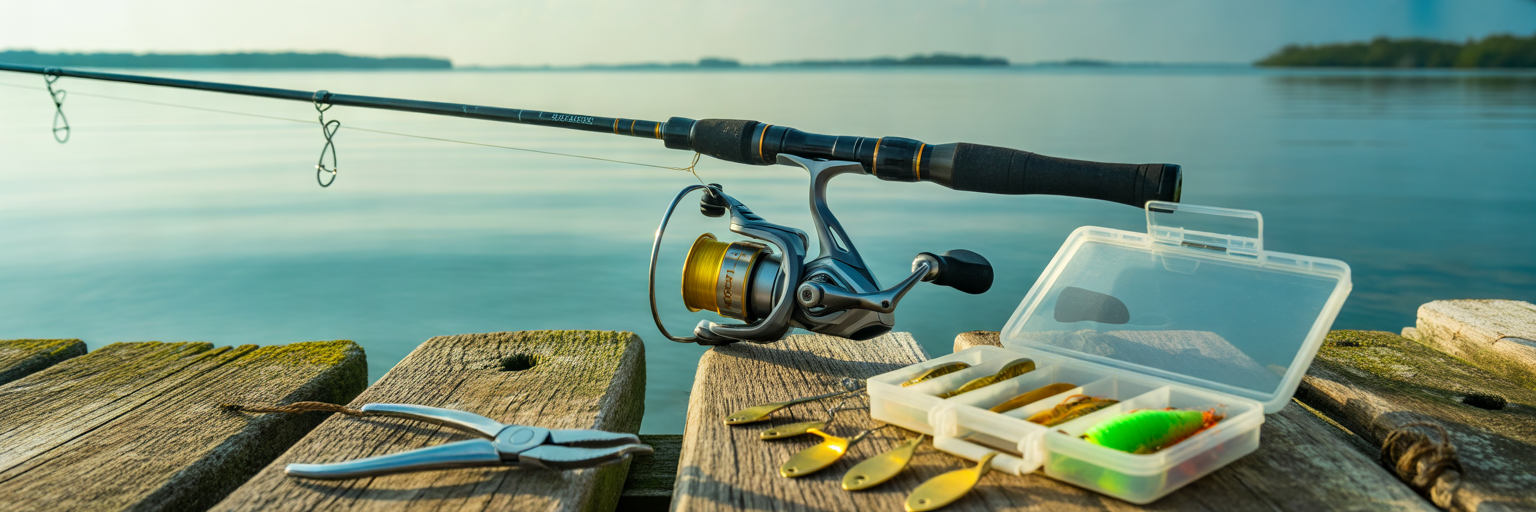
Your rod is the single most important piece of your inshore arsenal. It is not just a tool for casting, it is your direct line of communication to the fish. It is how you feel the subtle tap of a sheepshead, deliver a lure with precision, and win the fight against a powerful linesider. Having the right Florida inshore fishing gear starts with a rod that balances sensitivity with raw strength. For most situations, a 7-foot, medium-power, fast-action spinning rod is the undisputed workhorse.
Let’s break that down. Power is the rod’s backbone, its guts. It is the leverage you need to pull a big snook away from a dock piling before it wraps you and breaks the line. Action is the rod’s personality, describing where it bends. A fast-action tip is flexible, letting you feel the faintest pickup from a speckled trout in a deep channel and providing the speed for a lightning-fast hookset. This combination makes it the best rod for snook and redfish, hands down.
Of course, seasoned anglers know when to break the rules. If you are stalking spooky redfish in a foot of calm water, downsizing to a medium-light rod lets you cast a weightless shrimp with the necessary finesse. On the other hand, if you are dropping heavy baits into a deep pass with a ripping current for bull reds or nearshore grouper, you need to size up. A medium-heavy rod gives you the power to control the fight in that heavy water. These are strategic decisions. The standard setup is your go-to, but knowing when to adapt is what separates good anglers from great ones.
Pairing the Right Inshore Spinning Reel
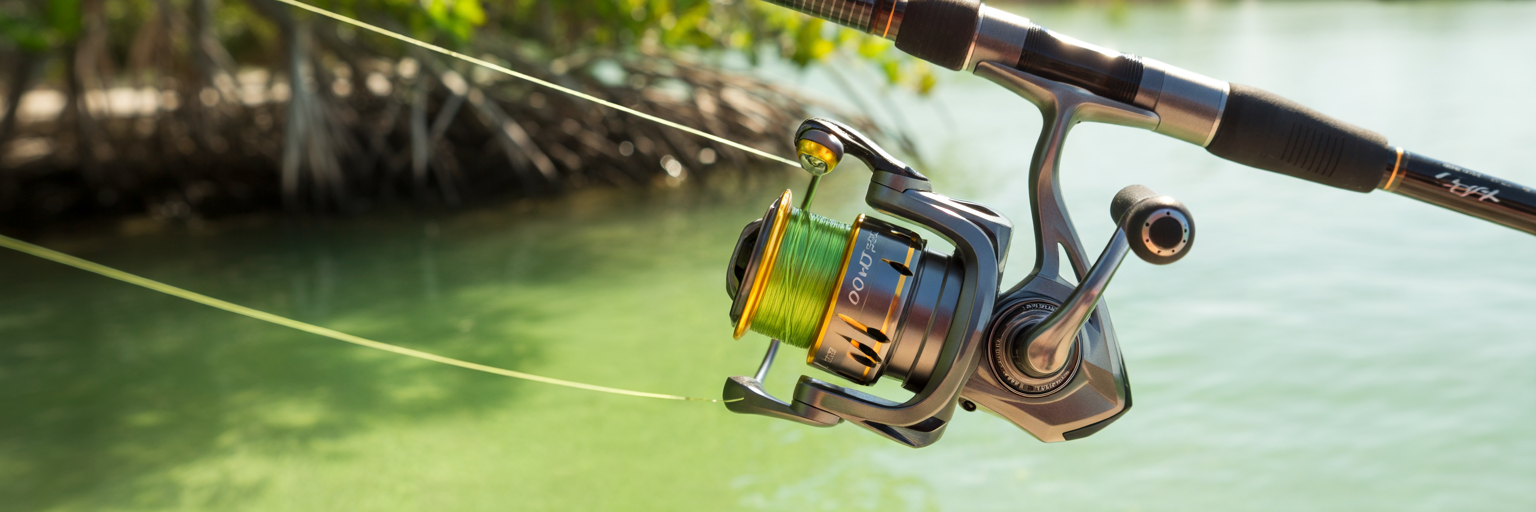
If the rod is the foundation, the reel is the engine that powers your entire system. For Florida’s inshore waters, the 2500 and 3000-size spinning reels are the undisputed champions. These numbers simply refer to the reel’s size and line capacity. They offer the perfect balance, holding plenty of line while remaining light enough to cast all day without fatigue. A proper inshore spinning reel setup is built around this balance of power and endurance.
The most critical component of any saltwater reel is its drag system. A jerky, unreliable drag is like having bad brakes on a truck, it is how you lose trophy fish. A quality, sealed drag system allows a powerful fish like a jack crevalle or tarpon to take line smoothly and consistently. This tires the fish out without putting enough sudden pressure on the leader to cause a break. A cheap, unsealed drag will quickly fail after a few encounters with saltwater spray and hard-running fish, seizing up at the worst possible moment.
When choosing a reel, there are non-negotiable features. It must be built with corrosion-resistant materials like an aluminum or carbon composite body to survive the harsh saltwater environment. A rigid reel body is also essential. It prevents the frame from flexing when you are putting serious heat on a big fish, ensuring all your cranking power goes directly into the fight. Finally, understand gear ratios. A higher ratio, like 6.0:1, retrieves line faster, which is ideal for working a topwater lure quickly across the surface. A lower ratio provides more torque, like the low gear in a truck, giving you the winching power needed to pull a grouper out of its rocky home.
Spooling Up: Braided Line and Fluorocarbon Leaders
For a serious inshore angler, braided line is the only choice for your main line. Its near-zero stretch is a massive advantage. It means you can feel every single bump, tick, and blade of grass your lure touches, giving you a clear picture of the bottom. More importantly, it allows you to set the hook with absolute authority, even at the end of a long cast. Braid’s thin diameter also cuts through the wind for longer casts and lets you pack more line onto your spool, which is crucial when a big fish decides to run.
The sweet spot for most inshore applications is 10 to 15 lb test braid. This range is strong enough to handle an unexpected 40-inch snook but thin enough to cast a lightweight shrimp or paddle tail a country mile. It is the perfect intersection of strength and castability.
Your braided line, however, is highly visible underwater. That is where the fluorocarbon leader comes in. This short piece of line is the critical link between your braid and the lure, and it performs two essential jobs. First, it is the stealth component. Fluorocarbon is nearly invisible in water, a crucial factor for fooling sharp-eyed fish like redfish and trout in Florida’s clear flats. Second, it is your armor. Its high abrasion resistance is what saves you from being cut off by oyster bars, barnacle-encrusted pilings, or the razor-sharp gill plate of a snook. A 20 lb test leader is the all-around workhorse, but step up to 30 lb when fishing around heavy structure or when big tarpon might show up. An 18 to 24-inch leader connected with a solid knot like an FG Knot or Double Uni is all you need to complete the system.
Your Go-To Lures for Inshore Species
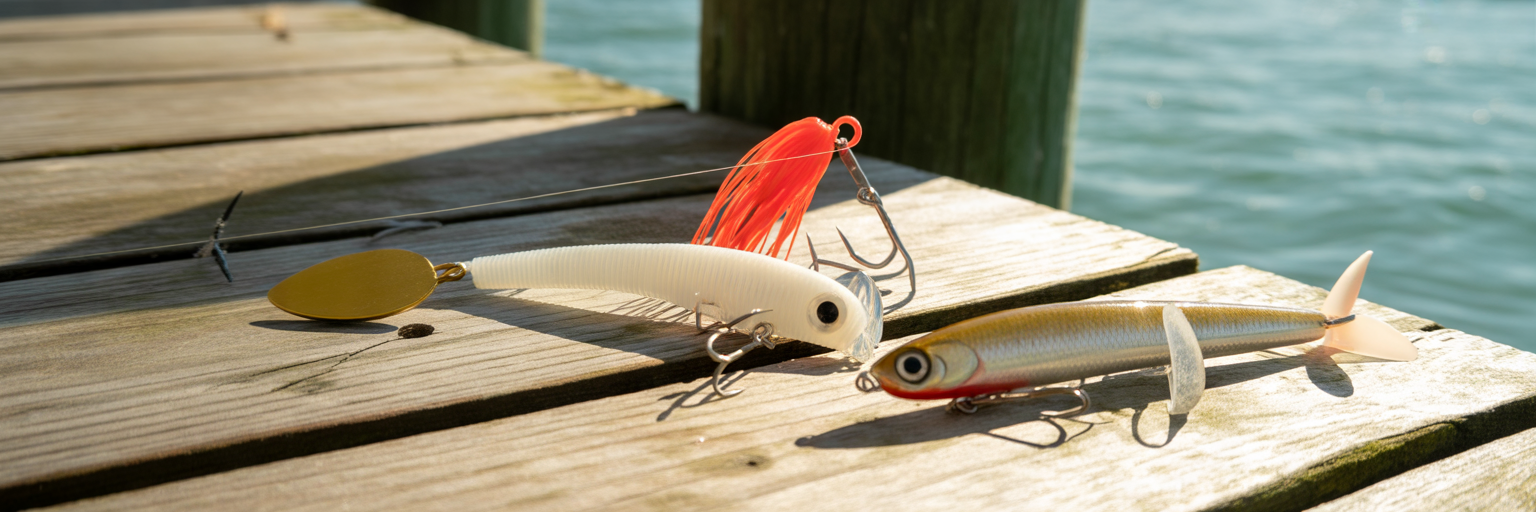
You do not need hundreds of lures to be successful. In fact, the opposite is often true. Building a small, effective confidence box with a few proven winners is far better than carrying a tackle store on your back. The top lures for Florida inshore fishing can be broken down into three simple categories that allow you to cover the entire water column and imitate the primary baitfish that predators are hunting.
First is the soft plastic paddle tail. This is arguably the most versatile lure ever created. Rigged on a jig head, it can be fished in six inches of water on the skinniest flats or bounced along the bottom of a 20-foot channel. The thumping tail sends out vibrations that call in everything from redfish and snook to flounder and trout.
Next is the classic gold spoon. This is the quintessential redfish lure for a reason. Its flash and wobble perfectly imitate a fleeing crab or small baitfish on a sunny flat, triggering an aggressive, predatory response that is unmistakable. It is simple, effective, and has been catching redfish for decades.
Finally, you need a topwater ‘walk-the-dog’ plug. This is for the heart-stopping excitement of a surface explosion. There is nothing in fishing that compares to seeing a snook or trout blow up on your lure. This is the go-to for dawn and dusk patrols when predators are actively looking up to feed. Mastering these three lure types will make you a more effective and confident angler than someone with a box full of lures they do not know how to use.
Mastering Soft Plastics and Jig Heads
Diving deeper into soft plastics, there are two main styles you need to know: the paddle tail and the jerk shad. A paddle tail provides a constant, vibrating ‘thump’ as it moves through the water. This makes it a great search bait, as fish can feel it from a distance, especially in stained water. A jerk shad, on the other hand, has an erratic, darting action that you create with your rod tip. It perfectly mimics a wounded, disoriented baitfish, making it deadly when fish are keyed in on visual cues in clear water.
Color selection does not need to be complicated. A simple rule works almost everywhere. Use natural colors like white, silver, and new penny in clear water and under a bright sun. Use dark or loud colors like root beer and chartreuse in stained water or in low light conditions, where the lure’s silhouette is more important than its specific color pattern.
Jig head selection is where many anglers get confused, but the logic is simple: use the lightest weight you can get away with while still maintaining contact with the bottom. This ensures the most natural presentation.
| Jig Head Weight | Target Water Depth | Primary Use Case & Conditions |
|---|---|---|
| 1/8 oz | 1-3 feet | Shallow flats, calm days, sight-fishing. Allows for a slow, natural fall. |
| 1/4 oz | 3-8 feet | The all-purpose workhorse. Good for moderate current, windy days, and covering water. |
| 3/8 oz | 8-20+ feet | Deep channels, bridges, and strong currents. Gets the lure down fast and keeps it there. |
| 1/16 oz | Less than 2 feet | Finesse presentations for spooky fish in ultra-clear, shallow water. |
Proper rigging is critical. The plastic must be threaded perfectly straight on the hook to swim naturally. For those who want to know how to rig for redfish in heavy cover, learning to rig a soft plastic weedless on a worm hook is a game-changer. It allows you to cast confidently into the gnarliest mangrove roots, oyster beds, and thick grass without constantly getting snagged.
Topwater and Hard Baits for Explosive Strikes
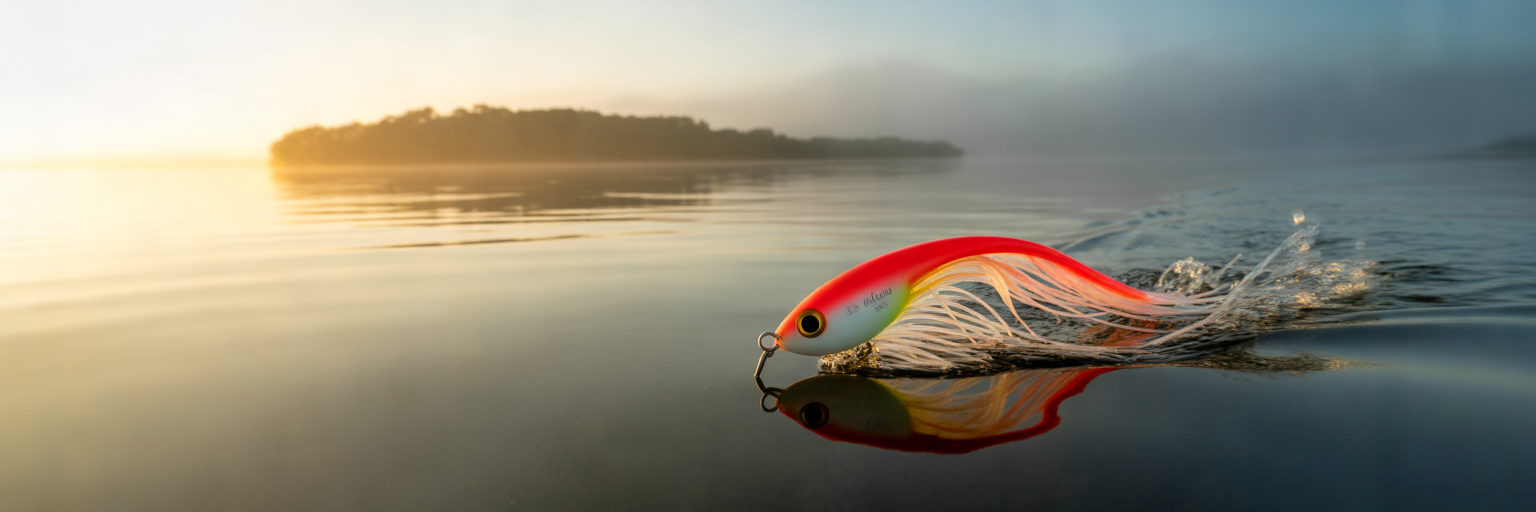
Topwater fishing is a visual, heart-pounding style of angling. The best times are almost always first light, last light, and on calm, overcast days when predators are looking up for an easy meal. The key to success is the retrieve. For a ‘walk-the-dog’ lure, point your rod tip down toward the water. Use short, rhythmic twitches of the rod tip while reeling slowly. The goal is to get the lure gliding from side to side in a zigzag pattern. Experiment with the cadence, a quick twitch-twitch-pause, until the lure dances perfectly on the surface.
Other hard baits have their place as well. Poppers create more noise and commotion, making them great for windy days or when you need to call fish in from a distance. Their loud ‘chug’ can attract curious predators to investigate. Suspending twitchbaits, like the iconic MirrOlure MirrOdine, are deadly in cooler water when fish are more lethargic. The classic retrieve is a twitch-twitch-pause, where the lure darts erratically and then hangs suspended in the water column. This pause is often when the strike occurs.
The single most important tip for topwater fishing is patience on the hookset. Your instinct will be to rip the lure away the second you see the explosion on the surface. You must fight that urge. An angler often pulls the lure away from the fish before it has a chance to eat it. Wait until you feel the weight of the fish on the line, then drive the hook home with a firm reel set and sweep of the rod.
The Unbeatable Power of Live and Natural Bait
Do not ever let anyone tell you that fishing with live bait is for beginners. It is a strategic weapon that the most seasoned pros rely on, especially when the bite gets tough. The guiding principle is simple: nothing beats the real thing. When artificials are not getting the job done, matching the hatch with live bait is the surest path to success.
Live shrimp is the undisputed king of Florida inshore bait. It is on the menu for every single predator that swims in our estuaries, from pinfish to 200-pound tarpon. The two most effective ways to fish a shrimp are free-lined or under a popping cork. Free-lining with a small hook and no weight allows the shrimp to drift naturally along a mangrove line or dock piling, presenting an irresistible meal. Fishing a shrimp under a popping cork on the grass flats uses sound and scent to attract fish from a wide area.
Beyond shrimp, there are seasonal superstars. When pilchards, greenbacks, or other whitebait are thick along the coast, it is like ringing the dinner bell for every snook, redfish, and tarpon in the area. A cast net is the tool of choice for acquiring this prime bait. When the bite is tough, a livewell full of frisky whitebait is the ultimate trump card.
When fishing with any live or cut bait, you must use circle hooks. This is non-negotiable. The hook’s unique design ensures it slides to the corner of the fish’s mouth, resulting in a clean hookup that dramatically increases the survival rate of released fish. It is better for the fishery, and in many cases, it is required by Florida regulations. It is the right thing to do for the fish and for the future of our sport.
Beyond the Basics: Essential Terminal Tackle
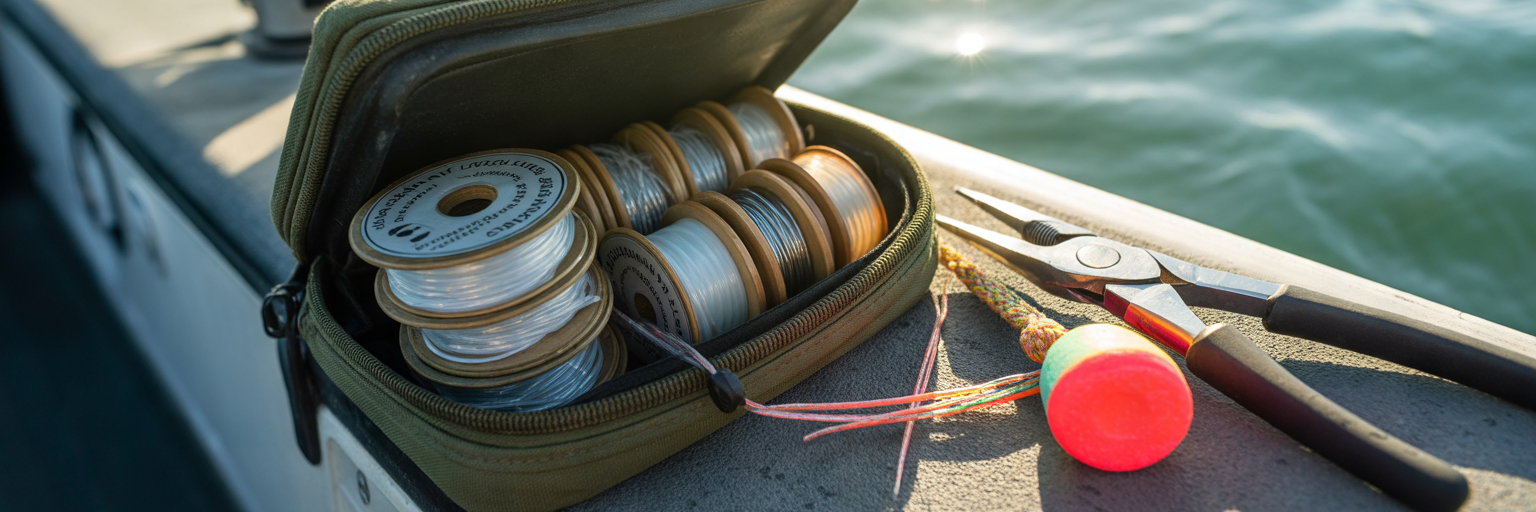
A successful day on the water often comes down to the small, unglamorous items that you did not realize you needed until it was too late. These are the pieces of terminal tackle and equipment that can be the difference between a great day and a frustrating one.
- High-Quality Fishing Pliers: A cheap pair from the hardware store will not cut it. You need pliers with side cutters sharp enough to slice through braid cleanly and a long nose for safely removing hooks from a toothy or spiny fish.
- A Popping Cork: This is not just a bobber, it is a fish-calling device. The ‘chugging’ or ‘popping’ sound it makes when you twitch it mimics the sound of other fish feeding, drawing curious predators in to investigate your bait.
- Polarized Sunglasses: These are essential fishing equipment, not just a fashion accessory. They cut the glare on the water’s surface, allowing you to see what is underneath: submerged oyster bars, potholes in the grass, and most importantly, the fish themselves. You cannot catch what you cannot see.
- A De-hooking Tool: For those times when a fish swallows the hook, a dedicated de-hooker allows you to remove it quickly and safely, minimizing harm to the fish.
- A Fish Gripper: This tool allows you to securely handle fish like snook or trout for a quick photo and release without getting spined or damaging the fish’s protective slime coat.
- A Leader Spool: A small wheel or spool of your preferred fluorocarbon leader material makes for quick and easy re-tying on the water after a break-off.
Protecting Your Investment: Gear Maintenance
Let’s be direct: gear maintenance is not a suggestion, it is a mandatory ritual for any saltwater angler. The saltwater environment is relentlessly destructive. Salt, sand, and sun will destroy your equipment if you let them. Neglecting your gear is the same as throwing money away. Following a few simple fishing gear maintenance tips will keep your equipment performing at its peak for years.
The most important step is a gentle, low-pressure freshwater rinse of your rod and reel after every single trip. Do not use a high-pressure nozzle from a hose. This can force salt and sand deep into the reel’s sensitive mechanics, causing far more harm than good. A light spray or mist is all you need to wash away the corrosive salt.
After rinsing, the single most important reel care tip is to loosen the drag completely before storage. This takes the pressure off the internal drag washers, preventing them from becoming compressed over time. A compressed drag washer loses its smoothness and can cause the jerky, unreliable performance that leads to broken lines. This simple step preserves your reel’s performance for years.
Periodically, add a single drop of quality reel oil to key moving parts like the handle knob, line roller, and bail hinges. Also, remember to check your rod guides for any cracks or corrosion that could fray and weaken your line. While these tips cover your inshore setup, the principles of care are universal. For those who also venture offshore, understanding essential offshore fishing gear maintenance is just as critical for protecting larger, more complex reels from the harsh environment.
Building Your Complete Inshore Tackle System
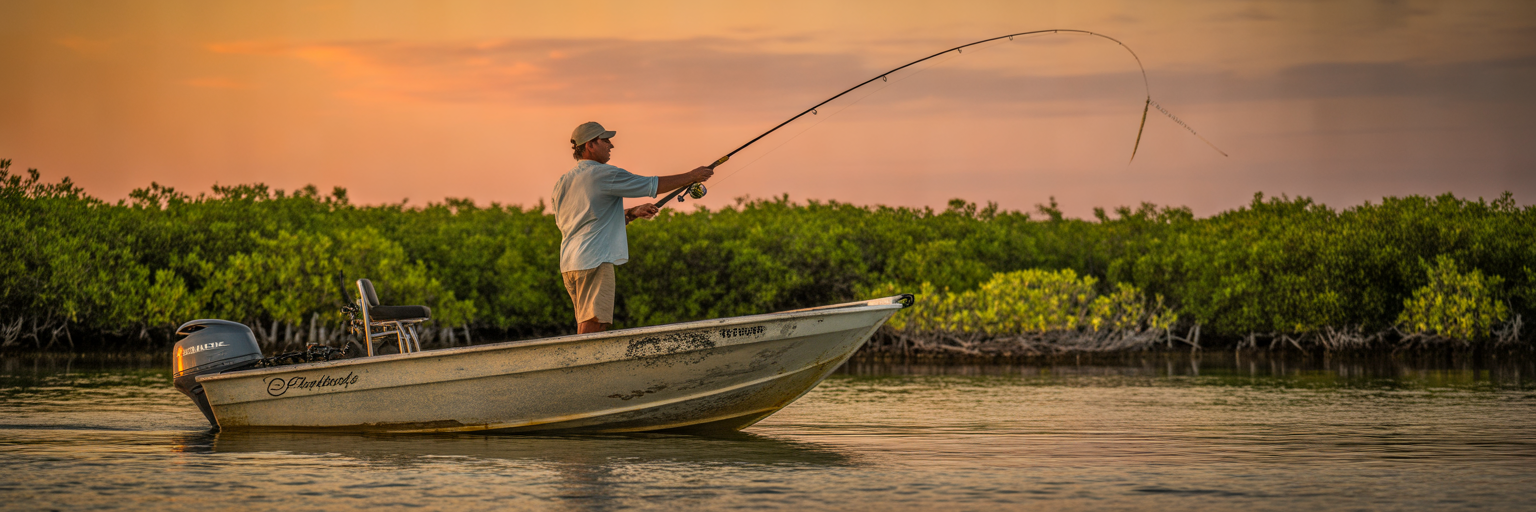
Let’s bring it all together. The ultimate all-purpose setup that can confidently handle 90% of what Florida’s inshore waters will throw at you is a 7-foot medium-power, fast-action rod paired with a 3000-series reel, spooled with 15 lb braid and finished with a 20 lb fluorocarbon leader. With this one combo, you are ready to battle snook, redfish, trout, jacks, and more.
For the dedicated angler ready to get more specialized, a three-rod arsenal will cover every possible scenario:
- The Finesse Rod: A 7-foot medium-light setup for delicate presentations with light line on the shallow flats.
- The Workhorse: The all-around 7-foot medium power setup described above. This is your go-to rod.
- The Heavy Hitter: A 7-foot medium-heavy setup for fishing bridges, deep passes, and targeting oversized fish with heavier line and lures.
Your minimalist lure box should contain a handful of paddle tails with appropriate jig heads, a gold spoon, a topwater walker, and a suspending twitchbait. Mastery of these few tools is far more valuable than a large, unused collection. The best gear is just a tool. It gives you the best possible chance to turn every opportunity into a catch. The real secret to success is getting on the water, paying attention to the conditions, and putting in the time. Now go get your lines wet.