
Mastering Florida Live Bait Fishing Tactics
There is a reason the old-timers swear by it: nothing triggers a strike from a wary Florida gamefish quite like the real thing. While artificial lures have their place, live bait is the gold standard in our saltwater scene for one simple reason. It speaks a language predators instinctively understand. No plastic imitation can perfectly replicate the authentic scent trail of a stressed shrimp, the frantic flutter of a pilchard, or the vulnerable profile of an injured baitfish that flips a predator’s switch from cautious to committed.
Success starts with the core principle of “matching the hatch,” a concept just as critical on a Tampa Bay flat as it is on a Montana trout stream. It means understanding the local food chain on any given day. Are the snook ambushing finger mullet along the mangroves, or are they busting on threadfins in the pass? Answering this question is the foundational step to a productive day on the water. It dictates what you catch, how you rig it, and where you fish.
Mastering this game comes down to three interconnected skills. First is acquiring healthy, “hot” bait that is full of life. Second is keeping it that way in the livewell, because lethargic bait gets ignored. The final piece is presenting it flawlessly so it looks like an easy, natural meal. You cannot have a great presentation with half-dead bait, and the best bait in the world is useless if it is rigged to spin unnaturally in the current.
This is an active, thinking-angler’s game. It demands constant observation and adjustment, not just soaking a bait and waiting. Understanding how these elements work together is the difference between hoping for a bite and making one happen. These are the essential Florida saltwater fishing tips that turn a good day into a great one.
Matching the Right Bait to Your Target
Choosing the right bait is a strategic decision, not a matter of convenience. The bait you use should be a direct reflection of the species you are targeting and the environment you are fishing. This is the angler’s playbook for making the correct call at the baitwell.
Inshore Power Baits: Pilchards, Threadfins, and Shrimp
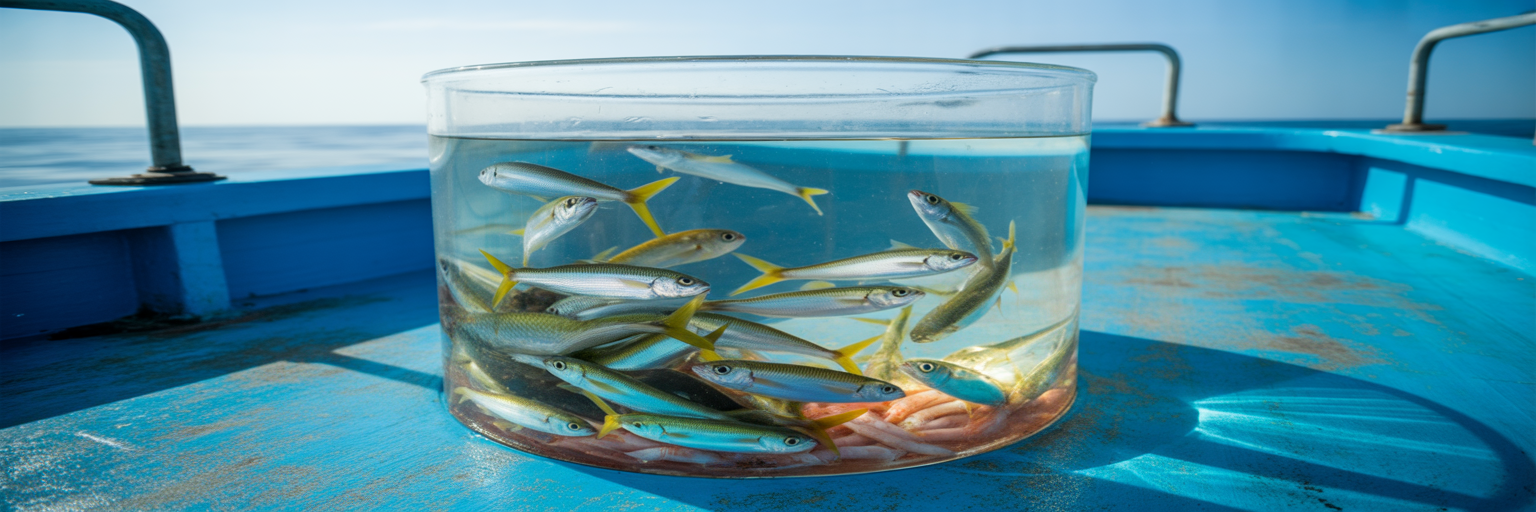
For inshore predators like snook, redfish, and seatrout, few things outperform pilchards (greenbacks) and threadfin herring. Their small size, flashing scales, and schooling behavior are pure candy for fish on the flats and in the backcountry. A livewell full of these is often called “white gold” for good reason. Live shrimp is the universal donor, an irresistible offering for nearly everything that swims inshore, from sheepshead and pompano around structure to spooky bonefish on the flats. When you need the best live bait for redfish cruising a mangrove shoreline, a free-lined shrimp or a lively pilchard is a tough combination to beat.
Hardy Structure Baits: Pinfish and Grunts
When you need a bait that can take a beating, turn to pinfish and small grunts. These baits are tough, noisy, and stay on the hook, making them the go-to choice for dropping down to grouper and snapper on reefs or pitching to tarpon around abrasive bridge pilings. Their constant struggle and the clicking sounds they make create a built-in distress signal that bottom dwellers and aggressive predators find impossible to ignore. They are workhorses, designed for fishing heavy structure where more delicate baits would be stripped or killed instantly.
The All-Purpose Mullet: From Fingerlings to Smokers
Mullet are a versatile bait with different applications depending on their size. Small finger mullet are dynamite for drawing explosive strikes from jack crevalle, snook, and redfish along seawalls and spillways. Their panicked skipping across the surface is a powerful trigger. Larger “smoker” mullet, typically a foot long or more, are trophy baits. These are what you deploy when hunting for giant tarpon in a pass, big cobia shadowing a ray, or smoker kingfish on a nearshore reef.
Premium Offshore Baits: Goggle-Eyes, Blue Runners, and Sardines
The offshore game demands baits with stamina and scent. This is where premium options like goggle-eyes, blue runners, and sardines shine. They are oily, energetic, and can handle the rigors of kite fishing or slow trolling. Their endurance and strong scent trail are critical for attracting top-tier pelagics like sailfish, mahi-mahi, and tuna that are covering vast amounts of water. Acquiring them often takes extra effort or cost, but the results they produce on the troll or under a kite are undeniable. As top guides and publications like Sport Fishing Magazine have long confirmed, knowing the specific forage for your target is non-negotiable.
| Bait Type | Primary Target Species | Ideal Habitat | Pro Tip |
|---|---|---|---|
| Pilchard (Greenback) | Snook, Redfish, Seatrout, Mackerel | Grass Flats, Passes, Beachfronts | Chum heavily to ball them up; use a light wire hook to avoid impeding their natural swim. |
| Live Shrimp | Redfish, Snook, Pompano, Sheepshead | Docks, Mangroves, Flats, Jetties | The universal donor. Hook under the horn for free-lining or through the tail for jigging. |
| Pinfish | Grouper, Snapper, Tarpon, Cobia | Reefs, Wrecks, Bridges, Ledges | Clip the tail fin to slow it down and create more vibration for bottom targets. |
| Mullet (Finger) | Snook, Jack Crevalle, Redfish | Mangrove Lines, Docks, Spillways | Excellent for aggressive, visual strikes. Free-line them along structure. |
| Goggle-Eye | Sailfish, Tuna, Kingfish, Wahoo | Offshore Weed Lines, Color Changes | The gold standard for kite fishing. Bridle rig for maximum stamina and hookup ratio. |
The Art of Finding and Catching Bait
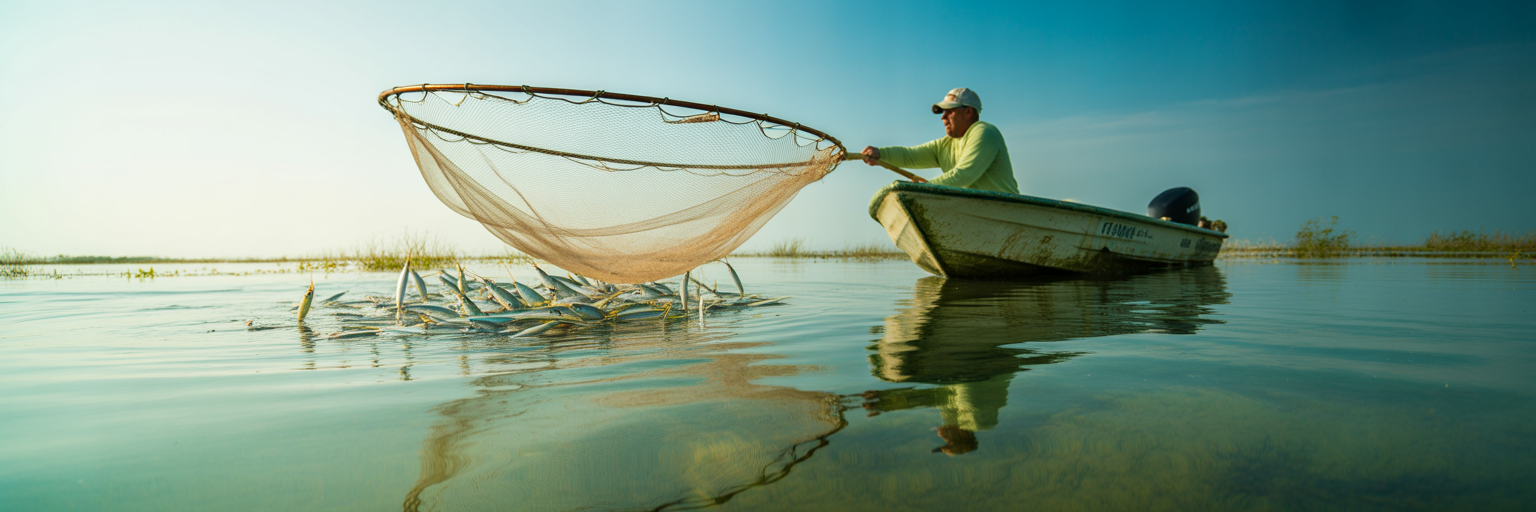
The day’s success often begins before sunrise, on a calm flat, with a cast net in hand. “Making bait” is a skill in itself, and learning to do it efficiently puts you in control of your fishing day. It starts with knowing what to look for. Scan the surface for the subtle dimples of “nervous water,” which indicates a tightly packed school of bait just below. Look for the flash of flipping pilchards or the tell-tale sign of diving birds, which are nature’s fish-finders.
Once you locate an area, the next step is to use chum to your advantage. A simple but effective mix of canned jack mackerel or sardines, instant oats, and a bit of sand creates a cloud that draws scattered bait into a concentrated ball. Add a splash of menhaden oil to amplify the scent trail. Deploy the chum up-current from where you marked the bait and give it a few minutes to work. This process is fundamental to learning how to catch live bait in Florida effectively, as it turns a difficult throw into an easy one.
With the bait balled up, the cast net becomes your primary tool. Success here depends on technique and having the right net for the job.
- Choosing Your Net: Match the mesh size to the bait. A 3/8-inch mesh is standard for pilchards and threadfins, while a larger 1/2-inch or 5/8-inch mesh works better for bigger baits like mullet. The net’s radius determines its coverage, and its weight (in pounds per foot) dictates how fast it sinks. A heavier net is better for deeper water.
- Loading the Net: There are many ways to load a net, but the goal is always the same: a tangle-free setup. A common method involves coiling the hand line, then draping sections of the net over your non-throwing arm, leaving the lead line free to be held by your throwing hand.
- The Throw: A perfect throw is about smooth body mechanics, not brute force. Rotate your torso away from the target and then unwind in a fluid motion, allowing the centrifugal force to open the net into a full “pancake” as it flies toward the water. A fully open net maximizes your coverage and traps the entire school.
Sometimes, a cast net is not the right tool. When bait is holding deep on a channel marker or bridge piling, a Sabiki or gold-hook rig is the better choice. This multi-hook rig allows you to jig vertically to catch blue runners, threadfins, or sardines that are out of a net’s reach. This method of using chum and timing the throw is a core component of professional approaches, as detailed in resources like the Tampa Bay Live Bait Playbook. Remember that timing is everything. The “golden hour” just after sunrise is prime time, before the sun gets high and boat traffic scatters the schools for the day.
Keeping Your Bait Lively and Irresistible
Catching bait is only half the battle. The science of keeping bait alive in livewell systems is what separates anglers who have frisky bait at noon from those with a tank of dead ones. It all starts with your livewell’s design. A circular or oval well is non-negotiable for delicate baits like pilchards. In a square well, they will slam their noses into the corners, resulting in “red nose,” stress, and eventual death. A rounded shape allows them to swim continuously without injury.
Next, focus on water flow. Your livewell pump’s capacity, measured in gallons per hour (GPH), should be sufficient to turn over the entire volume of water multiple times per hour. Proper plumbing is just as important. The inlet should be positioned high to help aerate the water, while the outlet or overflow should be low to pull waste and deoxygenated water from the bottom. This creates a constant, healthy circulation that keeps the environment clean.
The Florida heat is a major enemy of live bait. As water temperature rises, its ability to hold dissolved oxygen plummets. A common rookie mistake is throwing loose ice into the well. This causes rapid temperature shock and introduces chlorine, both of which are lethal to bait. The professional method is to use frozen water bottles. They gradually cool the water without contaminating it, providing a stable and less stressful environment.
The most common sin in bait management is overcrowding. A well packed too tightly will quickly run out of oxygen, no matter how good your pump is. A good rule of thumb is to stock no more than one dozen pilchards per gallon of water, or about one pinfish per gallon. Fewer, livelier baits will always out-fish a well full of dying ones. These are not just suggestions; they are fundamental rules for bait survival, as outlined in The Ultimate Guide to Catching and Keeping Saltwater Live Bait.
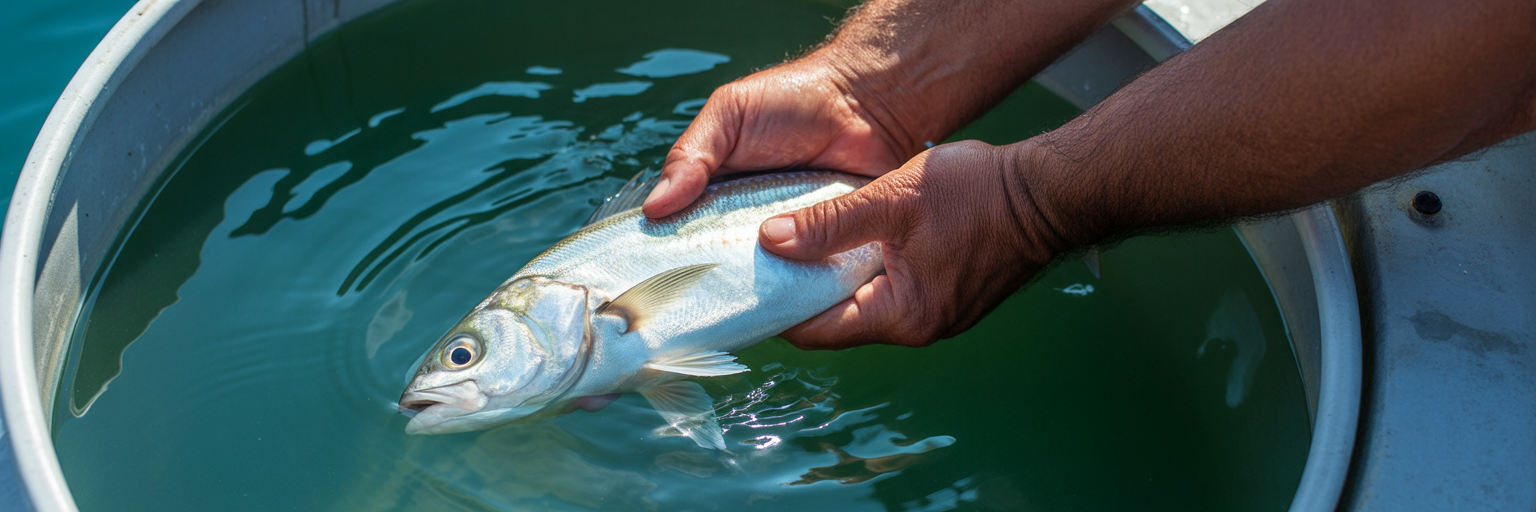
Finally, handle your bait as little as possible. Your dry hands can strip the essential slime coat from a baitfish, which is its primary defense against infection. Always wet your hands before touching bait. Better yet, use a soft, rubberized dip net to transfer bait from the well to the hook. This minimizes physical damage and stress, ensuring every bait you deploy is as lively and irresistible as possible.
Proven Rigs for Every Florida Environment
With a well full of healthy bait, the final step is presentation. The right rig delivers your bait to the strike zone in the most natural way possible. Your choice of rig should be dictated by the depth, current, structure, and the species you are targeting.
Rigging for Shallow Flats and Sight-Fishing
In shallow, clear water where fish are spooky, stealth is everything. The free-line technique is king here. This involves simply hooking a bait and letting it swim with no weight attached. A pilchard or shrimp nose-hooked on a light wire hook will drift naturally to a wary redfish or snook. For targeting fish under cover, rigging live bait for snook often means tail-hooking a pilchard. This allows you to skip the bait far under mangrove overhangs or docks, placing it right in the predator’s kitchen.
Tackling Deep Passes and Heavy Current
When fishing deep channels or passes with strong current, you need weight to get the bait down. A knocker rig, where the egg sinker slides freely on the line directly down to the hook, is a simple and effective choice. A sliding sinker rig, also known as a Carolina rig, separates the weight from the bait with a swivel and a length of leader. This allows the bait more freedom of movement. The key in both cases is to use the lightest weight possible that still gets you to the bottom. Too much weight kills the bait’s action.
Bottom Fishing Rigs for Reefs and Wrecks
For presenting a pinfish or grunt to grouper and snapper, the classic fish-finder rig is a reliable choice. It is similar to a sliding sinker rig and allows a predator to pick up the bait without feeling the weight of the sinker. A three-way swivel rig is another excellent option, especially in heavy current. It uses a dropper line for the weight and a separate leader for the bait, which helps keep the bait suspended just off the structure and minimizes snags.
Advanced Offshore Rigging: Trolling and Kite Fishing
Offshore, bait stamina and hookup ratios are paramount. Instead of simply hooking a bait, advanced anglers use bridle bands or dental floss to rig a goggle-eye or blue runner. The bridle is looped through the bait’s eye sockets or just in front of the dorsal fin. This leaves the entire hook exposed for a solid hookset while allowing the bait to swim freely and stay alive for hours under a kite or on a slow troll. This is the standard for targeting sailfish, tuna, and other pelagics.
The Final Word: Hook and Leader Selection
Your terminal tackle is the final connection to the fish. Choosing the right hook and leader is critical.
- J-Hooks: These are best for situations where you are holding the rod and can set the hook hard and fast, like when fishing for kingfish or using aggressive baits.
- Circle Hooks: This is the standard for any situation where the rod will be in a holder or when conservation is a priority. When a fish eats the bait and swims away, the circle hook slides to the corner of the mouth, ensuring a secure hookset that is better for the fish and reduces the chance of a pulled hook.
Match your hook size to your bait size, for example, a 1/0 for a live shrimp or a 5/0 for a pinfish. For your leader, fluorocarbon is the top choice due to its near-invisibility and high abrasion resistance. A 20-30lb test is a good starting point for inshore fishing, while you might use 60-80lb test for bottom fishing offshore. These rigging methods are time-tested and form the foundation of successful live bait presentation, as detailed by experts at Florida Sportsman.
Using Tides and Structure to Your Advantage
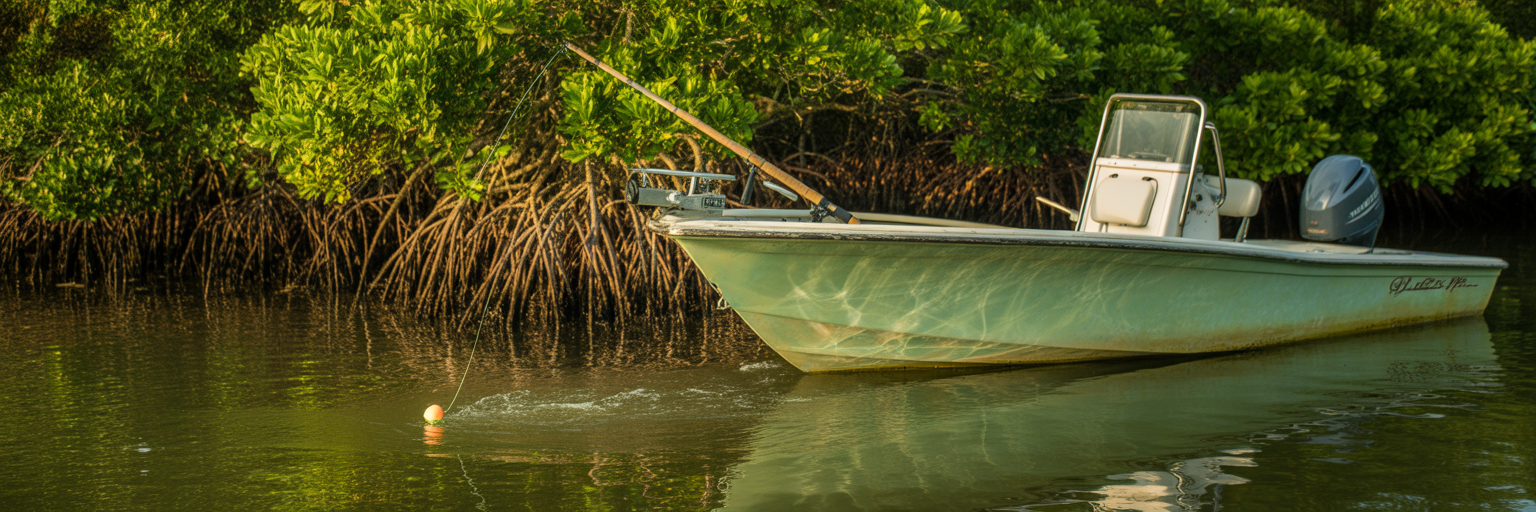
Having the right bait and the perfect rig is only part of the equation. The best anglers fish the tides, not just the spots. Moving water is the engine that drives saltwater feeding activity. An incoming or outgoing tide transforms structure like oyster bars, dock pilings, and mangrove points into predictable ambush locations. The correct approach is to position your boat up-current or up-wind from the structure and allow your bait to drift naturally into the strike zone, just as a real piece of forage would.
Look for current seams, which are visible lines between fast and slow-moving water. These seams act as conveyor belts for bait, and predators love to hang in the slower water just off the main current, waiting for an easy meal to drift by. A free-lined bait presented along this edge is one of the most effective live bait fishing tactics you can employ. It is a simple way to put your offering right in front of a waiting fish.
Water clarity should directly influence your tackle choices. In the crystal-clear waters of the Keys or the Gulf Coast, stealth is paramount. This means using long, light fluorocarbon leaders to avoid spooking fish. Conversely, in the stained, tannic waters of a backcountry creek or after a heavy rain, visibility is reduced. Here, you can get away with shorter, heavier leaders without alerting your target.
Learn to read structure like a predator would. The up-current side of a wreck is where fish will often stage, waiting for the current to bring them food. The distinct shadow line cast by a bridge at midday provides cover and a perfect ambush point. It is about thinking where a fish would position itself to get an easy meal with the least amount of effort.
Finally, understand the strategic use of a popping cork. It is not just a bobber; it is a fish-calling tool. The chugging sound it makes mimics the sound of feeding fish, drawing predators in from a distance. It is an excellent tool for suspending a live shrimp just above the grass on a flat or for creating a commotion in choppy water to get the attention of redfish and seatrout.
Common Bait-Handling Mistakes That Kill Strikes
Sometimes the smallest details make the biggest difference. You can do everything right, but a few simple mistakes in handling and presentation can ruin your chances. Here are the common errors that prevent strikes and how to fix them.
- Using an Anchor for a Hook: A frequent mistake is using a hook that is too large or too heavy for the bait. The goal is for the bait to look natural and vulnerable. A heavy-wire hook weighs it down, impedes its frantic action, and makes it look unnatural. Choose a light-wire hook that is strong enough for the target but small enough to be inconspicuous.
- Improper Hook Placement: Where you hook the bait matters. Hooking it too deep through the body can kill it instantly. Hooking it off-center can cause it to spin unnaturally in the current, which is a major red flag for gamefish. For free-lining, a light hook through the nose or under the chin is best. For fishing under a cork, hooking through the tail often works well.
- Fouling Your Own Well: Livewell management does not stop once you have caught bait. Leaving dead or “red-nosed” bait in the well is a lazy habit that can crash your entire system. Dead bait releases ammonia, which stresses the healthy bait and depletes oxygen. Be diligent about scooping out any dead or dying bait throughout the day.
- Impatience and ‘Over-Fishing’ the Bait: Many anglers have a tendency to constantly reel in and check their bait. Live bait fishing requires patience. You need to let the bait do the work. Its panicked movements are what draw a strike. Constant re-casting just stresses and kills your bait faster. Give it time to work the area.
- Mismatched Tackle: Using a rod that is too stiff or line that is too heavy deadens the presentation. The bait cannot swim naturally if it is fighting against heavy, unforgiving gear. The right tackle allows the bait to perform and also lets you feel the subtle take of a cautious fish. As many fishing guides will tell you, letting the bait swim naturally is paramount, and heavy gear is often the main culprit in preventing that.