
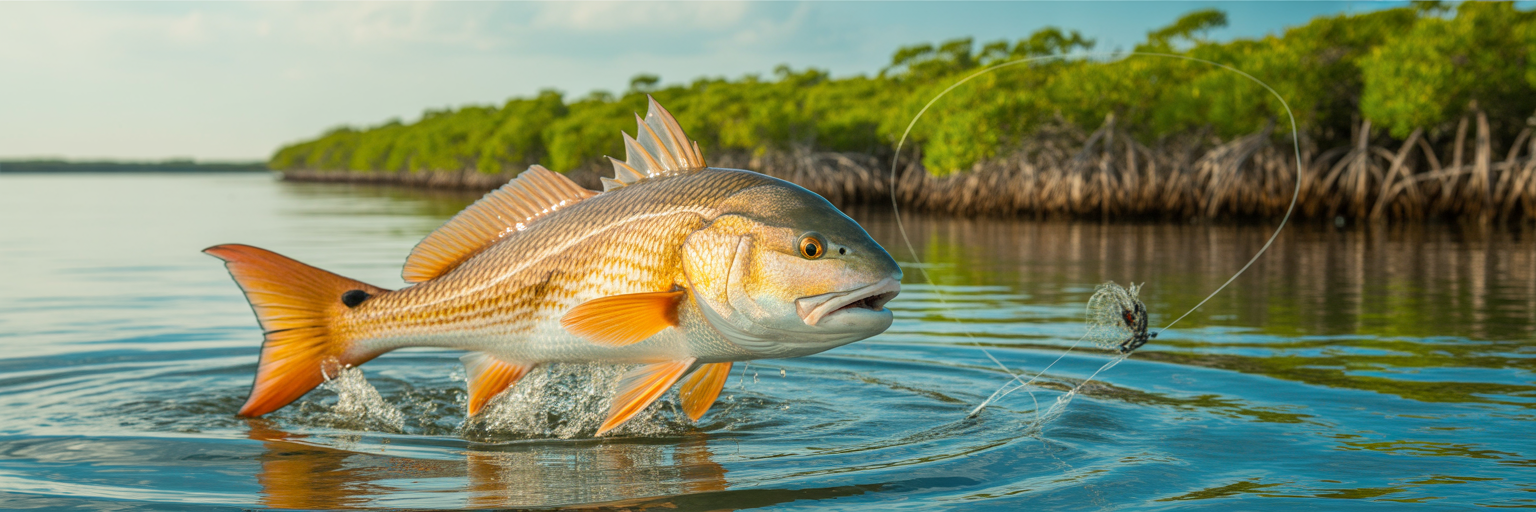
Your Guide to Redfish Fishing in Florida
There are few sights in Florida inshore fishing more iconic than a bronze redfish tail waving in the morning sun. That tell-tale spot is a signal that the fight you have been looking for is just one cast away. This guide cuts through the noise to deliver what really works for anglers who want to know how to catch redfish in Florida. The red drum is Florida’s premier inshore game fish, prized for its aggressive strikes and powerful, drag-peeling runs. Its appeal is simple: it is a year-round target found in a huge variety of coastal habitats, offering a consistent and rewarding challenge for everyone.
Whether you are poling a skinny water flat or casting along a jetty, the redfish is an accessible and formidable opponent. They are not picky eaters, but they are not fools either. Success requires understanding their world, from the way they use tides to ambush prey to the specific baits they cannot ignore. This is not about luck. It is about putting the right presentation in the right place at the right time. This guide provides a clear roadmap to doing just that, breaking down the essential knowledge you need to consistently find and catch more redfish.
We will cover the exact environments where redfish feed and rest, helping you read the water like a seasoned guide. You will learn how to select the right gear for every situation, from sight-casting to slot-sized fish on the flats to battling bull reds in deep channels. We will detail the proven baits and lures that trigger strikes, explaining not just what to throw but when and why. Understanding how redfish behavior changes with the seasons is critical, so we will provide a complete playbook for targeting them throughout the year. Finally, we will cover the techniques for proper handling and conservation, because protecting this incredible resource is a responsibility we all share.
Forget hoping for a bite. Consistent success with redfish comes from mastering the fundamentals of tides, structure, and presentation. This guide gives you the tools to build that mastery, turning every trip into a calculated hunt with a higher probability of a tight line and a memorable fight. It is time to stop guessing and start catching.
Decoding Florida’s Prime Redfish Habitats
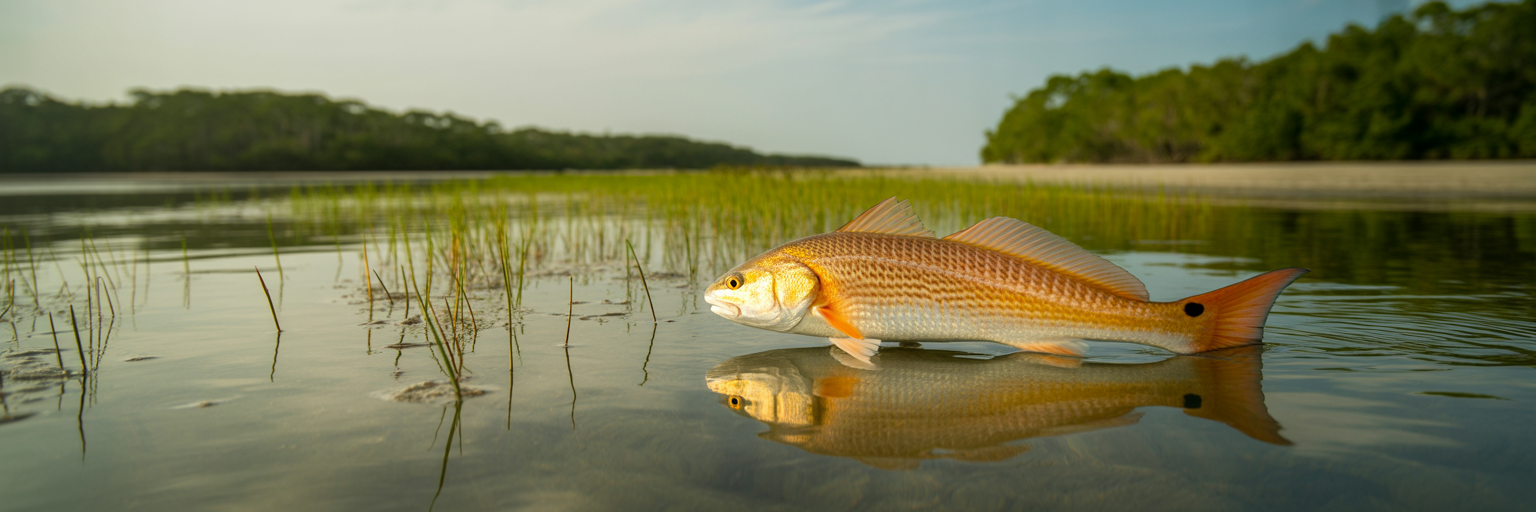
Finding redfish consistently starts with knowing where to look. They are creatures of habit, and their movements are dictated by three things: food, comfort, and safety. Understanding how they use different types of structure and how tides influence their behavior is the single most important factor in locating them. This is your playbook for identifying the most productive Florida inshore fishing spots before you even make a cast. It is about environmental intelligence, not just randomly casting at promising-looking water. Redfish are ambush predators that use their environment to their advantage, and learning to see the water through their eyes is the key.
Shallow Grass Flats and Oyster Bars
Shallow grass flats are the primary feeding grounds for redfish. These vast, sunlit areas are nurseries for shrimp, crabs, and small baitfish, creating a rich buffet. Redfish use the grass for camouflage, cruising the edges and potholes to hunt for an easy meal. Look for healthy, mixed grass beds with sandy patches in between. These patches, or “potholes,” are classic ambush points. An even better combination is a grass flat adjacent to an oyster bar. Oyster bars are redfish magnets. They hold an immense amount of life, from tiny crabs to baitfish seeking shelter. More importantly, they create current breaks and eddies where redfish can hold without expending energy, waiting for the tide to bring food to them. A cast parallel to an oyster bar is one of the highest-percentage plays in redfish angling.
Mangrove Shorelines and Tidal Creeks
Mangrove shorelines offer redfish two critical elements: shade and ambush points. On hot, bright days, redfish will tuck deep into the shade provided by overhanging mangrove branches. The intricate network of prop roots creates a perfect maze for ambushing prey. A well-placed cast that lands inches from the mangrove edge often gets an immediate, explosive strike. Tidal creeks act as highways, connecting deeper channels to the shallow feeding flats. Redfish use these creeks to travel with the tide. The mouths of these creeks are natural choke points. On an outgoing tide, bait is flushed out from the flats and back bays, and redfish stack up at these creek mouths to intercept them. Look for points, bends, and any small cut that creates a current seam. That is where you will find fish waiting.
Reading the Tides for Predictable Patterns
If you learn nothing else, learn the tides. The tide dictates almost everything a redfish does. An incoming tide is the dinner bell. As the water rises, it allows redfish to push up onto shallow flats and into mangrove systems that were previously dry, giving them access to fresh feeding grounds. This is when you will find them actively hunting in skinny water. Conversely, an outgoing tide pulls them off these flats. As the water recedes, redfish fall back into predictable locations like creek mouths, the edges of oyster bars, and deeper channels adjacent to the flats. They know the bait is being pulled to them, so they position themselves to intercept it. The last two hours of the outgoing and the first two hours of the incoming are often the most productive periods. Before you leave the dock, check your tide chart and build your game plan around the water movement.
Learning to spot fish before they spot you is a huge advantage. Look for “tailing” redfish, where a fish is head-down feeding in shallow water with its tail breaking the surface. Scan for “nervous water,” which is the subtle disturbance created by a school of baitfish being harassed from below. The most obvious sign is a “push,” the V-shaped wake created by a single or a small school of redfish cruising just under the surface. Seeing these signs tells you exactly where to focus your efforts.
The Right Tackle for Inshore Redfish
Your connection to a redfish is only as strong as your gear. Using the wrong tackle can lead to lost fish, missed opportunities, and frustration. The goal is to be perfectly matched to the environment and the size of the fish you are targeting. A proper redfish tackle setup is not about having the most expensive equipment; it is about having the right tool for the job. Here is a breakdown of the hardware that will handle everything from slot-sized fish on the flats to bull reds at the jetties.
The Ideal Spinning Setup for Slot Redfish
For the vast majority of inshore redfish scenarios, one setup excels. You need a 7-foot, medium-power, fast-action spinning rod. This combination is the workhorse of redfish angling. The length provides excellent casting distance, which is critical for covering water on the flats. The fast-action tip is sensitive enough to detect a subtle bite from a soft plastic, yet it has the backbone to drive a hook home. The medium power is the sweet spot for fighting slot-sized fish (18-27 inches), with enough strength to turn a fish away from oysters or mangroves without overpowering it. Pair this rod with a high-quality 2500 or 3000-size spinning reel. A reel in this class has a smooth drag system and enough line capacity for the powerful runs redfish are known for.
Gearing Up for Bull Reds
Targeting bull reds, fish over 27 inches, requires a significant step up in tackle. These are not the same fish you find on the flats. You will find them in deeper channels, around bridge pilings, and along jetties where the current is strong and the structure is unforgiving. For this fight, you need a 7 to 7.5-foot, medium-heavy power rod. This heavier backbone is essential for pulling a 20-plus-pound fish away from sharp, line-shredding structure. Match this rod with a 4000 or 5000-size spinning reel. This larger reel offers increased line capacity and a more robust drag system capable of handling the sustained, powerful runs of a mature redfish. Spool it with 30 to 40-pound braided line. Using tackle that is too light for bull reds is irresponsible; it leads to prolonged fights that can exhaust the fish to death, even if released.
The Critical Connection: Line, Leader, and Knots
Your line, leader, and knots are the most critical components of your setup. They are not afterthoughts. For most inshore applications, 15 to 20-pound braided line is the standard. Braid has zero stretch, which gives you a direct connection to your lure for incredible sensitivity and solid hooksets. It also has a thin diameter, allowing for longer casts. However, braid has poor abrasion resistance and is highly visible underwater. That is why a fluorocarbon leader is absolutely mandatory. Use a 24-inch section of 20 to 30-pound fluorocarbon. It is nearly invisible to fish and tough enough to withstand contact with oyster shells and mangrove roots. Mastering a few key knots will prevent you from losing the fish of a lifetime.
- Line-to-Leader Knot: The connection between your braid and fluorocarbon leader must be strong and slim enough to pass through your rod guides smoothly. The FG Knot is the strongest and slimmest option, but it takes practice. A Double Uni Knot is easier to tie on the water and is extremely reliable.
- Lure Knot: Do not tie your lure directly to your leader with a simple clinch knot. Use a loop knot like the Kreh Loop. This creates a small, open loop that allows your lure or bait to move more freely and naturally in the water, resulting in more strikes.
Proven Baits and Lures That Redfish Cannot Resist
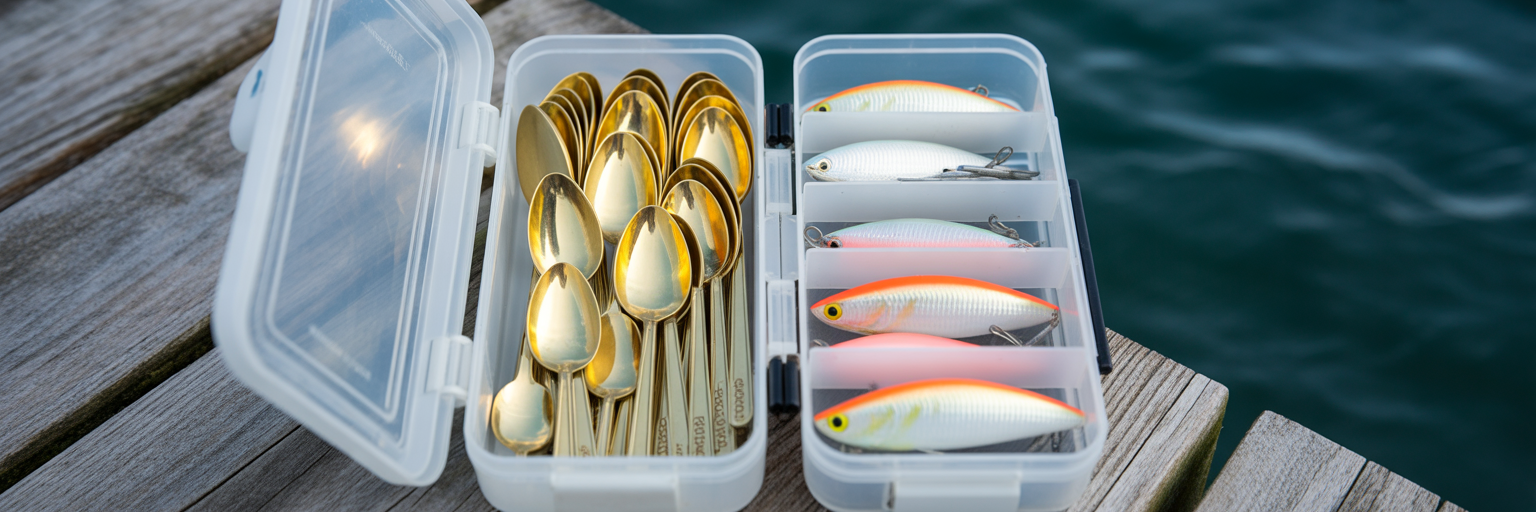
Redfish are opportunistic feeders with a reputation for being aggressive, but that does not mean they will eat just anything. Matching your offering to the local forage and conditions is what separates a great day from a slow one. The best bait for redfish is often what they are already eating in that specific area. Your tackle box should have a mix of live bait, hard baits, and soft plastics to cover every scenario, from sight-casting on a calm flat to blind-casting in murky water.
Live Bait: Matching the Natural Forage
When redfish get finicky, nothing beats the real thing. Live bait is your highest-percentage option. Live shrimp are the universal offering; nearly every inshore predator eats them. Rig a shrimp on a 1/0 or 2/0 circle hook under a popping cork to call in fish from a distance on the flats. The sound mimics feeding activity and draws curious reds. For a stealthier approach, free-line a shrimp or rig it on a light jig head. In the fall, finger mullet are a top choice as they migrate out of the estuaries. Free-line one along a channel edge or mangrove shoreline. For tough, structure-oriented fish, a small live crab or mud minnow pinned to a jig head is an irresistible meal that stays in the strike zone.
Hard Baits: Classic Spoons and Topwater Plugs
Two hard baits have stood the test of time for a reason: they flat-out work. The simple 1/2-ounce gold spoon is arguably the most effective redfish lure ever created. Its flash and wobble perfectly imitate a fleeing, injured baitfish like a pinfish or small mullet. It is a fantastic search bait for covering water on grass flats and along oyster bars. The other essential is a topwater plug. There is nothing more exciting than a redfish exploding on a surface lure. A walk-the-dog style plug like a Zara Spook is deadly during low-light conditions at dawn and dusk. The key is a steady “walk-the-dog” retrieve that creates a rhythmic side-to-side action. The strikes are violent and unforgettable.
Soft Plastics: The Ultimate Search Tool
If you could only have one artificial lure for redfish, it would be a soft plastic paddle tail. A 3 to 4-inch paddle tail swimbait rigged on a 1/8 to 1/4-ounce jig head is the ultimate workhorse. It allows you to cover water efficiently at all depths. You can swim it steadily across a flat, hop it off the bottom in a channel, or skip it under a dock. Color selection is simple. In clear water, go with natural tones like white, silver, or new penny to match the local baitfish and crustaceans. In stained or murky water, switch to darker colors like root beer or brighter colors like chartreuse to create a more visible silhouette.
Scented Baits: When Presentation Needs an Edge
Sometimes redfish need a little more convincing, especially after a cold front or in high-pressure situations. This is when scented soft baits like Gulp! Shrimp shine. These baits combine the visual appeal and action of a soft plastic with a powerful scent trail that fish can home in on. They are incredibly effective when you need to slow down your presentation. Instead of a fast, reaction-based retrieve, you can fish a Gulp! on a jig head very slowly along the bottom, or even let it sit still. This gives finicky fish time to find the bait and commit. It is the perfect tool for targeting lethargic winter fish or for when you know fish are in an area but are refusing to chase fast-moving lures.
Adapting to Seasonal Redfish Behavior
A successful redfish angler thinks like a fish. Their location and behavior are not random; they are driven by water temperature, spawning urges, and food availability. Understanding these seasonal patterns allows you to predict where they will be and what they will be doing throughout the year. What works in the heat of August will fail in the cold of January. This is your calendar for staying on the bite all year long.
Fall (September-November) is prime time. This is the season every redfish angler waits for. As water temperatures begin to drop, redfish form large, aggressive schools near passes, inlets, and along the beaches for their annual spawn. This is your best opportunity to catch not only large numbers of fish but also the trophy-sized bull reds. They are focused on feeding heavily before the spawn, making them susceptible to a variety of presentations. Casting spoons, large soft plastics, or free-lining live mullet into these massive schools can lead to incredible action.
Winter (December-February) is a game of thermal refuge. As cold fronts push through, cooling water temperatures drive redfish from the open flats into areas that hold heat. Look for them in protected, deeper residential canals, dark mud-bottomed creeks, and sun-warmed basins on the back side of the flats. Their metabolism slows down, and they become much more lethargic. Presentations must be slow and deliberate. This is the time to soak live shrimp or cut bait on the bottom or to slowly work scented soft plastics like a Gulp! Shrimp along the mud. The bites will be subtle, not aggressive.
Spring (March-May) signals a transition. As the water warms, redfish begin to disperse from their winter haunts and move back toward the shallow flats and oyster bars. The key to finding them is finding the returning schools of baitfish. The fish are hungry after a long winter and will be feeding actively. This is a fantastic time for reaction baits. Covering water with paddle tail swimbaits, gold spoons, and topwater plugs is highly effective as fish are more willing to chase. The schools will be more spread out than in the fall, so covering ground is essential.
Summer (June-August) is all about beating the heat. The intense Florida sun drives water temperatures up, and redfish behavior changes dramatically. The best action is concentrated during the low-light hours of early morning and late evening. During these periods, you can find them feeding actively on the flats. As the sun gets high and the water heats up, redfish seek cooler, more oxygenated water. This means making pinpoint casts to shady pockets under mangrove shorelines, deep under residential docks, or in deeper holes adjacent to the flats. A live shrimp or a well-placed soft plastic skipped into the shade is often the only way to get a bite midday.
| Season | Primary Location | Dominant Behavior | Top Tactic |
|---|---|---|---|
| Fall (Sept-Nov) | Passes, inlets, and adjacent flats | Aggressive schooling for spawn | Casting into large schools with spoons or live mullet |
| Winter (Dec-Feb) | Deeper canals, dark mud bottom creeks | Seeking thermal refuge, lethargic | Slowly working scented baits or soaking live shrimp on the bottom |
| Spring (Mar-May) | Shallow flats, oyster bars | Actively feeding, following baitfish schools | Covering water with paddle tails and topwater plugs |
| Summer (Jun-Aug) | Shady mangrove lines, docks, deeper holes | Seeking cooler water, active at low light | Pinpoint casts with shrimp or soft plastics to shady pockets |
Mastering the Art of Sight-Fishing Redfish
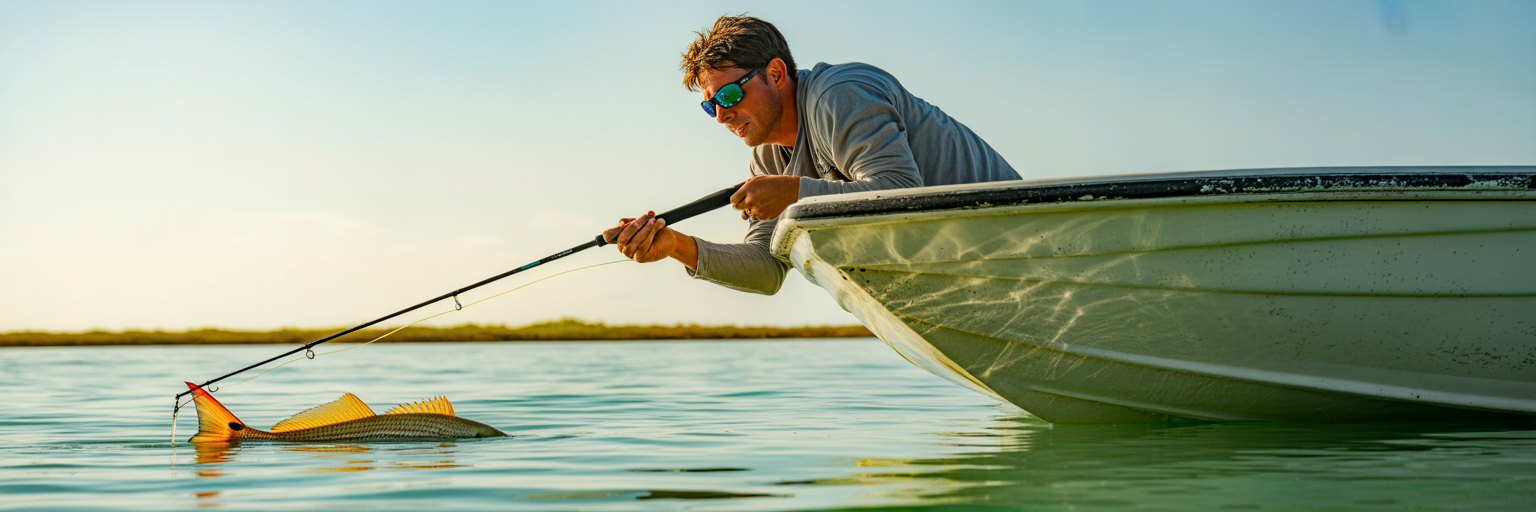
There is no greater thrill in inshore angling than spotting a fish, making the perfect cast, and watching it eat your lure. This is the essence of sight fishing for redfish, and it is the pinnacle of the sport. It transforms fishing from a game of blind luck into a calculated hunt. It is a visual, predatory experience that requires stealth, precision, and a keen eye. Mastering this technique will make you a far better angler, as it forces you to understand fish behavior on an intimate level.
Essential Gear: High-Quality Polarized Sunglasses
You cannot catch what you cannot see. High-quality polarized sunglasses are the single most important piece of equipment for sight-fishing. They are not a luxury; they are non-negotiable. Polarization cuts the horizontal glare reflecting off the water’s surface, allowing your eyes to penetrate the water and see what lies beneath. For the shallow, tannin-stained waters where redfish live, copper, amber, or brown lenses are superior. They enhance contrast and make the bronze or copper color of a redfish “pop” against a sand or grass bottom. Leave your grey lenses for offshore fishing; inshore, contrast is king.
Spotting the Fish: Reading the Visual Cues
Learning to see fish is a skill that develops with time on the water. You are not just looking for a whole fish. You are looking for signs of life. The classic visual is the “tailing” redfish, with its spotted tail waving above the surface as it feeds head-down on the bottom. But there are other, more subtle cues. Look for a “push,” which is the V-shaped wake a cruising fish makes as it moves through shallow water. Scan for a “mud,” a puff of silt or sand kicked up by a feeding fish. Often, all you will see is a dark, shadowy shape moving slowly against the bottom. Understanding these signs is a key part of the hunt, as detailed in comprehensive guides on how to catch redfish in Florida. Train your eyes to ignore the distractions and focus on these tell-tale signs of movement.
The Stealthy Approach and Perfect Presentation
Once you spot a fish, the hunt begins. Redfish in shallow water are extremely wary of noise and sudden movements. Silence is critical. Use a push pole to quietly move the boat into position. If using a trolling motor, keep it on its lowest, most constant setting. Sudden changes in motor speed will alert every fish in the area. Position the boat so the sun and wind are at your back. This puts the sun in the fish’s eyes, making you harder to see, and it helps you make a longer, more accurate cast. The presentation is everything. Never cast directly on top of the fish; this will spook it every time. Your cast must lead the fish by several feet, landing the lure or bait in its path. The goal is for the fish to intercept your offering naturally. Retrieve the lure across its line of sight to trigger a predatory, instinctual strike.
Responsible Angling and Redfish Conservation
Being a great angler means being a great conservationist. The future of Florida’s incredible redfish fishery depends on the choices we make on the water today. This is not just about following rules; it is about adopting a stewardship mindset to protect the resource for generations to come. A healthy fishery is the result of a community of responsible anglers.
First and foremost, you must know and follow the regulations. According to the Florida Fish and Wildlife Conservation Commission (FWC), redfish have a protected slot limit. In most regions, this is an 18 to 27-inch slot, with a daily bag limit. Any fish smaller than 18 inches or larger than 27 inches must be released immediately. These “bull reds” are the primary breeders and are vital to the population’s health. It is also critical to know that regulations can change and vary by region. For example, some areas like the Indian River Lagoon system are currently designated as catch-and-release only for redfish to help stocks recover. Anglers should always verify the latest slot limits, bag limits, and regional rules by checking the official Red Drum (Redfish) page on the Florida Fish and Wildlife Conservation Commission (FWC) website before every trip.
Proper catch-and-release techniques are essential to ensure a fish’s survival. Follow these best practices:
- Use single, barbless circle hooks when fishing with live or cut bait. They are designed to hook the fish in the corner of the mouth, preventing gut-hooking, which is often fatal.
- Use tackle that is strong enough to land the fish quickly. Prolonged fights exhaust fish and dramatically reduce their chances of survival.
- Handle fish with wet hands to protect their sensitive slime coat, and support their weight horizontally. Never hold a large fish vertically by its jaw or gills, as this can damage its internal organs.
- Properly revive a tired fish before release. Hold it upright in the water, facing into the current, and gently move it back and forth to pass water over its gills. Only release it when it is able to swim away strongly on its own.
Finally, practice habitat stewardship. Avoid running your boat in shallow water where your prop can create “scars” in sensitive seagrass beds. These areas are critical nurseries for the entire ecosystem. Always practice a “leave no trace” ethic. Ensure all trash, discarded packaging, and especially used fishing line are stowed securely and disposed of properly back at the dock.