
HookCurrent Florida fishing
Red Grouper
Explore red grouper habitat, feeding, growth and spawning, then learn how to search low hard bottom, control a drift and present natural bait.
Epinephelus morio
Look beyond the tallest reef
Red grouper can occupy bottom that looks modest on a chart. Low rock, holes and patches of hard ground may be more useful than a dramatic wreck. An angler who searches only the highest structure can pass over productive habitat.
This fish rewards a different kind of attention. Read small bottom changes, track the drift and keep bait near the seabed without dragging it blindly through every snag.
Red grouper identification
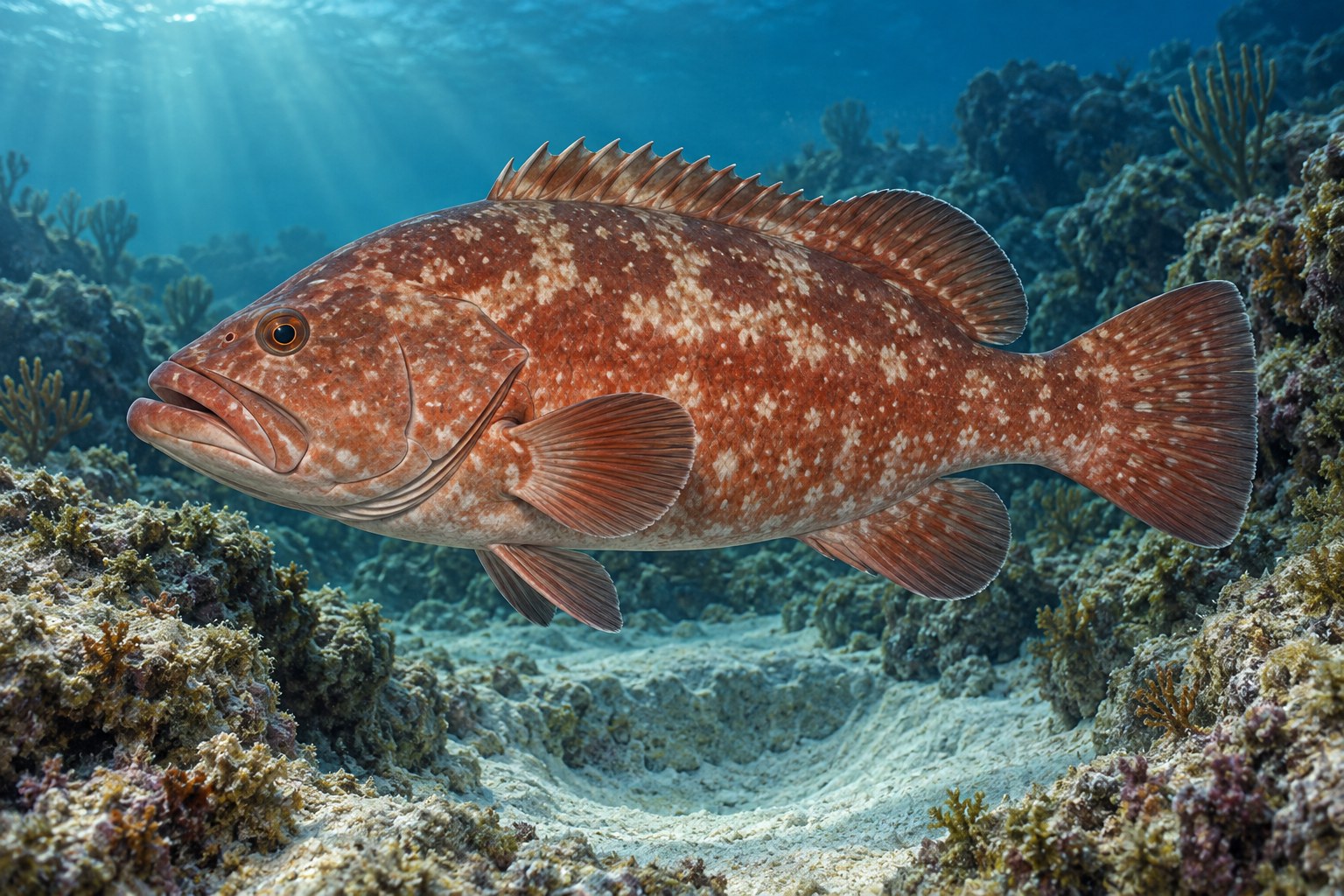
Epinephelus morio commonly has a reddish-brown body with irregular pale blotches. Tiny dark spots may appear on the snout, and orange-red coloring can show inside the mouth. Its outline is heavy and broad compared with a slender open-water predator.
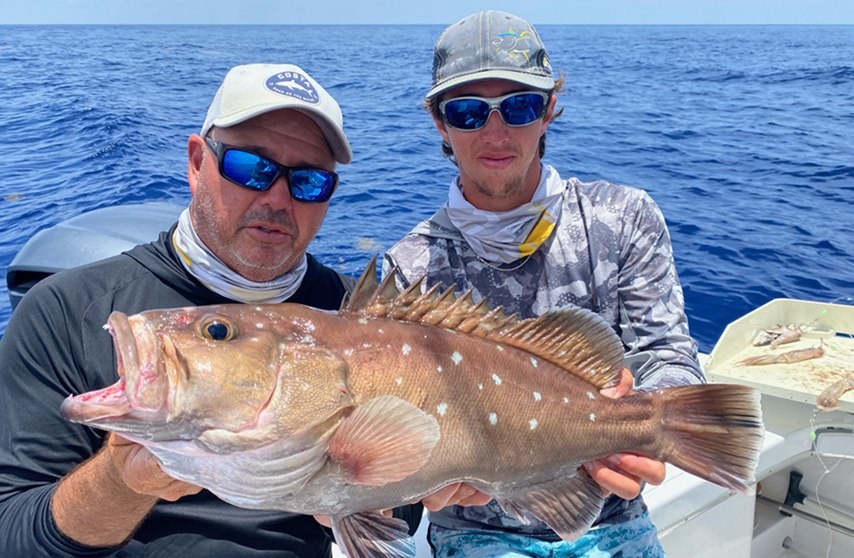
Not every reddish grouper is a red grouper. Compare the pattern and fin shape, and watch for features of other species. Nassau grouper, for example, have a distinctive dark mark near the tail base and a different pattern.
Take the time to identify a fish before placing it in the cooler. Similar size does not mean identical rules, and faded colors can make the task harder later.
Habitat with room to feed
Red grouper use hard bottom, rocky areas and nearby sediment. Their relationship with the seabed is especially interesting because they can help clear material from holes, creating useful space for other marine life.
Different life stages occupy different coastal and offshore settings. Nearshore reefs can hold younger fish, while older adults commonly occur farther offshore. Depth alone does not reliably reveal the age of every fish at a site.
A productive area may consist of several small patches rather than one large reef. Mark changes in bottom return and note where bites begin and stop during a drift.
Planning a Florida trip
The Gulf coast is strongly associated with red grouper fishing. Trips from west-central and southwest Florida often target offshore hard bottom, while the species also occurs in Atlantic waters.
Sarasota, Venice, Naples and other Gulf ports offer different distances to suitable grounds. Choose a launch and weather window that suit the actual run. A calm morning near shore can hide rougher conditions farther offshore.
Local guides and current charts can help explain the bottom, but neither replaces the day's observations. Look for bait and fish activity instead of repeatedly dropping on a coordinate only because it has a familiar name.
Growth, sex change and spawning
Red grouper are long-lived reef fish. They begin adult life as females, with some changing to males as they age. This makes the population's size structure important for reproduction.
Spring is an important spawning period, although activity can extend beyond a narrow two-month window in parts of the range. Eggs develop in the water column rather than in a guarded nest.
Growth and reproductive biology are reasons to handle undersized fish well. A small released grouper is part of the future adult population, not simply an inconvenience before a keeper arrives.
What red grouper eat
Their food includes fish and a variety of invertebrates. Crabs, shrimp, squid and other bottom-associated prey fit their feeding environment. Natural baits can appeal through both movement and scent.
Live baitfish, fresh cut fish and squid are practical options. Select a bait that stays on the hook during the descent. Soft scraps can disappear before the rig reaches useful bottom.
Vary the bait only after checking location and presentation. Several different baits dropped onto empty sand do not provide a fair test of which one a red grouper prefers.
Find a repeatable drift
Begin upcurrent of the suspected hard-bottom patch and watch the boat's actual track. Wind may push the hull differently from the current carrying the rig. Record where each bite occurs, not just where the drift starts.
If bites cluster over a small section, repeat that line deliberately. Reset far enough upcurrent to reach bottom before the boat crosses the productive zone.
Retrieve before the line becomes excessively angled or drags through a known obstruction. Long uncontrolled drifts can create tangles and make it difficult to understand where the fish were caught.
Bottom tackle with enough feel
A capable bottom rod and reel, strong main line and abrasion-resistant leader form the foundation. Match strength to the expected fish and roughness of the bottom. There is no advantage in tackle so light that fish repeatedly reach cover before they can be controlled.
Use a suitable natural-bait hook that meets the rules for the fishing area. Keep the point clear, and avoid a bait mass so thick that it blocks a clean hookup.
Choose sinker weight to maintain useful contact. In moderate conditions, feeling the bottom clearly is more valuable than simply using the largest sinker available. Change the drift or line angle when current defeats the presentation.
Presenting a bait near a hole
Lower the rig under control until it reaches bottom, then manage slack so the bait remains close without disappearing into a crack. Small adjustments can keep it available to a fish at the edge of cover.
When using circle hooks, let steady tension turn the hook into place. A dramatic upward strike can interrupt that process. Once connected, gain line promptly and keep the fish from settling back into the hole.
Avoid pumping with huge rod movements. Short controlled lifts and steady winding often maintain pressure more effectively, especially when the boat is moving in a sea.
Anchoring on a small productive patch
Where anchoring is allowed, a precise position can keep baits over a small area of bottom. Set up so the current carries the rigs toward the feeding zone. Do not drop the anchor directly onto living reef habitat.
If the boat swings widely, several rods may stop fishing the intended patch. Adjust the arrangement or choose a controlled drift instead of letting lines cross under the hull.
A quiet period can mean the bait moved away from the hole, not that the fish disappeared. Check boat position before replacing every bait and leader.
Mixed catches and release equipment
Red grouper grounds can also hold snappers and other groupers. Each fish needs its own identification and rule check. A combined reef-fish catch should not be managed as if all species share one size limit.
Fish brought from deeper water can struggle with pressure changes. Keep a descending device ready and follow proper release guidance. Minimize handling, use wet hands when needed and avoid leaving fish on a hot deck.
Record high release rates of undersized fish. Moving to another depth or patch may reduce repeated handling of small fish and improve the quality of the trip.
Retention decisions at the dock and offshore
Check current red grouper seasons, limits and jurisdiction before departure. Gulf and Atlantic management can differ, and in-season changes may affect a planned trip.
Bring enough ice for the intended legal catch. Measure fish with a proper tool rather than a visual estimate. Keep the landing decision calm and deliberate, even when several rods hook up together.
The most useful trip notes describe the bottom and conditions: low rock beside sand, a manageable drift, a particular bait staying intact. Those observations can be applied to new ground without depending on one heavily fished waypoint.
Red grouper questions
Do red grouper require a large wreck?
No. Low hard bottom, holes and scattered rock can be productive. Small bottom changes are worth investigating.
Are they different from gag grouper?
Yes. Their body patterns and habitat use differ, and each species has its own management considerations.
Can drifting work better than anchoring?
It can help search a broad area. Anchoring may suit a small patch once located, provided the method is allowed and avoids damaging habitat.
Why do bites occur only halfway through a drift?
That section may cross the useful bottom. Mark the bite location and repeat the same track rather than treating the entire drift as equally productive.
Should I keep fishing a patch full of small grouper?
Consider moving. Repeatedly catching undersized fish creates avoidable handling and may signal that another depth or area is more suitable.
Can a female become a male?
Some red grouper change sex as they age. That is a normal part of their reproductive biology, not an injury or unusual condition.
Match your approach to the water
| What you find | An option to try | The detail that matters |
|---|---|---|
| Scattered low hard bottom | Fresh cut fish or live bait | Search with a short drift and mark the bite location. |
| A small patch produces repeatedly | Precise permitted anchor position | Keep the rig beside the hole without damaging reef. |
| Current makes line angle excessive | Reset drift or adjust weight | Know where the bait is before judging whether fish are absent. |
Plan a red grouper trip
Local access guides for red grouper trip planning: Sarasota, Venice Beach, Naples Beach.
Tides and weather · Florida fishing charters
Read the current FWC rules for red grouper.
Rules review: October 4, 2026.
Research and photograph credits · All fish species · Return to the beginning