
HookCurrent Florida fishing
Scamp Grouper
Learn scamp identification, reef habitat and spawning behavior, with practical advice on compact baits, precise bottom fishing and deep-water release.
Mycteroperca phenax
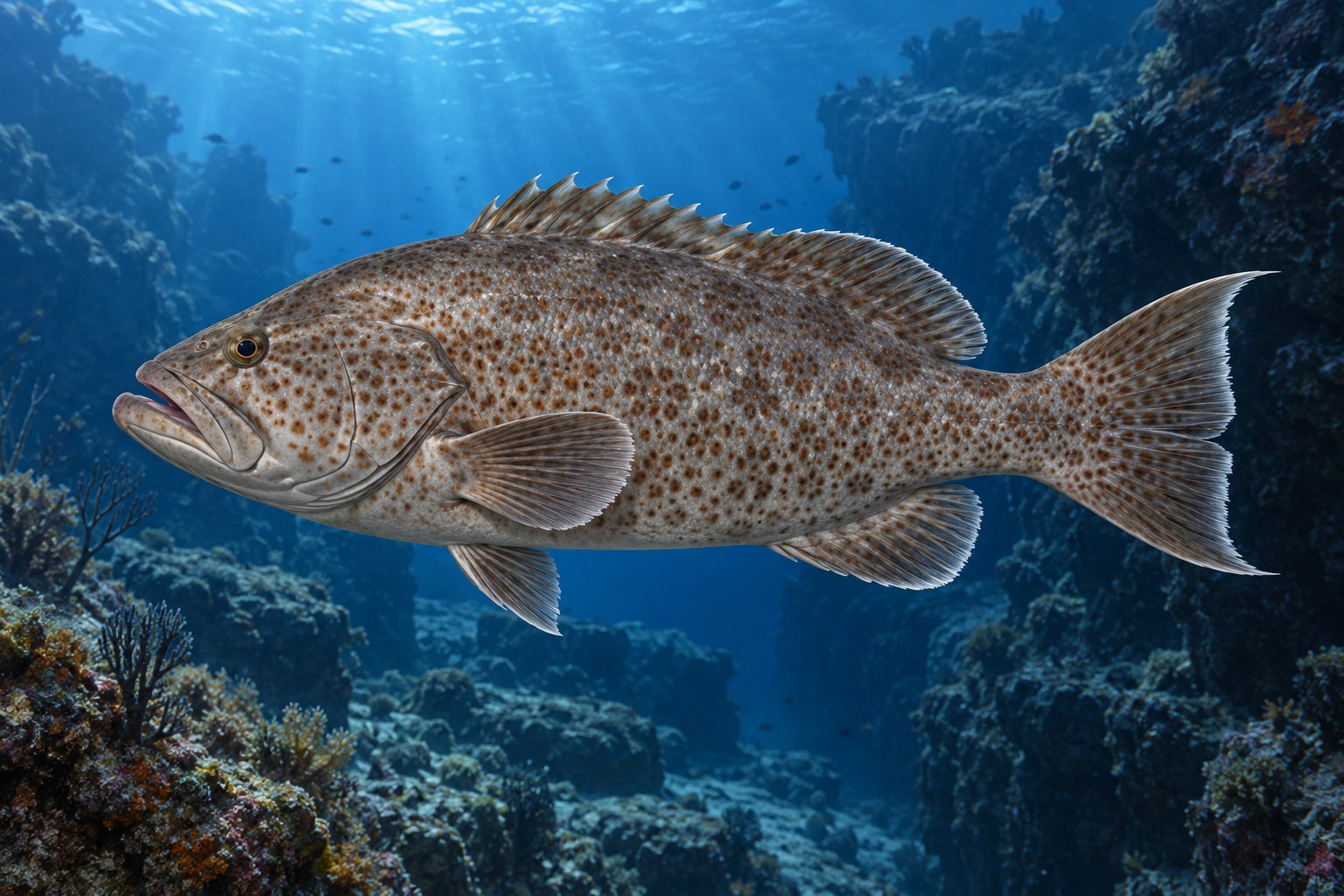
Notice the smaller features of the reef
Scamp fishing rewards attention to fine detail. A low ledge, a patch of rock beside sand or a small concentration of bait can matter more than the most obvious wreck in the area. The fish are closely tied to structure, but not every piece of structure offers the same opportunity.
A dedicated scamp approach should not simply copy a heavy-bait plan for a much larger grouper. Bait size, placement and sensitivity can make a meaningful difference while the tackle still needs enough strength for rough bottom.
The tail and spots help tell the story
Mycteroperca phenax usually has a gray to brown body covered with dark or reddish-brown spots. Some spots gather into small rosette-like patterns. Adults develop extended tail rays that create a distinctive fringed or broomlike appearance.
Yellowmouth grouper can be similar. Mouth coloration and body details need careful comparison, and not every scamp shows the same dramatic tail extensions. Young fish can be particularly difficult to identify from one feature alone.
Learn the species before the trip and keep an official reference available. Common market names and casual dockside labels are not reliable substitutes for identification when harvest rules are involved.
Reefs, ledges and nearby sand
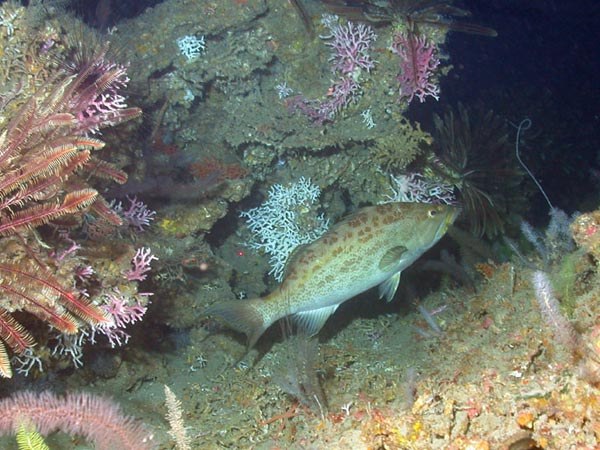
Scamp use nearshore and offshore reefs, rocky bottom and ledges. They often stay close to cover while feeding on small prey moving nearby. A bait needs to reach that boundary between shelter and open feeding space.
The edge of a rock patch can be worth as much attention as its center. Sand beside structure may provide a cleaner place to present bait while still keeping it within reach of a fish.
Use charts and the sounder together. A broad hard-bottom area may contain several small features that fish differently. Slow down enough to understand where the bottom changes before starting a long drift.
Florida trip settings
Scamp occur in both Gulf and Atlantic reef fisheries. Offshore trips from the Panhandle, west coast and Atlantic ports may encounter them alongside other groupers and snappers.
The suitable run depends on the port and the depth being targeted. Destin-area offshore structure is a different journey from northeast Florida ledges or Gulf hard bottom farther south. Plan fuel, weather and return options around the real route.
Do not assume a fishery is open because a charter report shows a recent catch. Reports may include releases, different jurisdictions or dates outside the planned trip. Current rules need their own check.
Growth and reproduction
Scamp begin adult life as females, and some transition to males as they grow. Late spring is an important spawning period in Florida species information. Adults release eggs into the water rather than maintaining a nest on the reef.
Their reproductive pattern gives larger fish an important role. A population is not described fully by counting fish without considering size and sex structure.
Juveniles and adults can use different depths and kinds of cover. The small fish beside one patch of reef do not necessarily mean that larger scamp are directly underneath them.
Small fish and other prey
Scamp feed on small fish and invertebrates. This makes compact live or fresh dead baits useful options. An oversized bait may be ignored or picked apart before a scamp takes it properly.
Small baitfish, manageable pieces of fresh fish and squid can all fit a practical bait selection. Choose a portion that leaves the hook point available and remains secure during descent.
Keep a few bait sizes ready rather than committing the entire trip to one large presentation. Compare them over the same productive bottom so the result means something.
A bottom outfit with controlled feel
Use a rod and reel capable of moving fish away from rock while still showing small changes in pressure. Main line and leader need enough strength for depth, current and mixed catches.
A compact single-hook rig can reduce tangles and make bites easier to interpret. Natural-bait hook requirements differ by fishing area, so confirm the legal arrangement before tying the day's rigs.
Leader length affects how the bait moves and how easily it snags. Longer is not automatically more natural if it lets the bait disappear into a crevice. Start with a manageable arrangement and adjust to the actual bottom.
Weight and depth control
Select a sinker that reaches the target without creating an uncontrollable angle. If current carries the rig far away, the bait may never fish the ledge shown on the screen directly below the boat.
Drop under control and recognize first bottom contact. Allowing a heavy rig to tumble freely through a rock pile makes recovery harder and can bury the bait.
Keep enough tension to detect a take while avoiding a constant drag across rough ground. Small lifts can reposition the bait, but aggressive jigging is not required for every natural-bait presentation.
Search in short, useful passes
A controlled drift across a small feature provides clearer information than a long drift over mixed bottom. Mark where bites happen and where snags begin. Repeat the productive part from the correct direction.
If all fish are undersized or another species dominates, try a different edge or depth. Staying on one patch simply because it produces action can create unnecessary release handling.
Where permitted, anchoring can hold the boat over a precise area. Position the anchor safely away from sensitive reef habitat and let the current carry rigs toward the fishing zone.
Read the bite without overreacting
A scamp may take a bait less dramatically than a large grouper attacking a lively fish. Maintain contact and watch for increasing weight or purposeful movement. Small bait thieves can create similar taps, so experience with the local bottom helps.
For circle hooks, wind steadily as the fish moves away. Once connected, keep pressure and lift it clear of shelter. Do not pause to rearrange gear while the fish has an easy route back into rock.
If the bait returns stripped, inspect the hook point and adjust the portion. A larger hook is not always the solution to small fish picking at the bait.
Mixed grouper catches require careful decisions
Scamp may come aboard with gag, red grouper, yellowmouth grouper or other reef fish. Identify each catch independently. The species with the most restrictive rule cannot be made legal by calling it a more familiar grouper.
Check current size, season, bag and aggregate provisions for the coast and jurisdiction. Rules can change, and a limit remembered from a previous trip may no longer apply.
Measure with the method required by the rule. Keep the fish supported and minimize handling while making the decision. Prepare ice for retained fish and release equipment for everything that must go back.
Return deep fish effectively
Pressure changes can make a released grouper unable to swim down. A descending device should already be rigged and understood before fishing starts. Quick, correct use can return a fish to a more suitable depth.
Avoid unnecessary photographs or extended time on deck when a fish is struggling. Wet handling tools and a suitable net help reduce additional damage.
If repeated drops produce injured small fish or predator losses, move. A responsible plan includes knowing when to leave a productive-looking reef and search elsewhere.
Learn from bottom detail
Keep notes that describe the feature, not just its coordinates. Low ledge with sand on the downcurrent side says more than grouper spot. Add the bait size, weight and current conditions that allowed a clean presentation.
Over several trips, those details build a practical pattern. They also make it easier to explore new ground without repeating the same long, snag-filled drift.
Scamp grouper questions
Does every scamp have a broomlike tail?
The extended rays are most useful on adults and vary in appearance. Use body spotting and other features as well, especially with young fish.
Are scamp and yellowmouth grouper identical?
No. They are separate species that can look similar. Compare mouth coloration and the full set of identification features.
Should I use the largest bait available?
Compact baits often fit scamp's feeding habits better. The best size still depends on the fish and what smaller reef residents are doing.
Why are short drifts useful?
They help connect each bite to a particular bottom feature. Long drifts can hide whether the productive water was a small ledge or a broad area.
Can a small grouper need a descending device?
Yes. Pressure-related difficulty is not limited to trophy fish. Have release equipment ready for any deep-caught fish that cannot return properly.
What should I change when only undersized fish bite?
Try another patch or depth instead of repeatedly handling the same size class. The next useful area may have different bottom or current exposure.
Match your approach to the water
| What you find | An option to try | The detail that matters |
|---|---|---|
| A small ledge beside sand | Compact live or fresh bait | Fish the edge without letting the rig tumble into rock. |
| Bites at one point of a drift | Repeat the short productive pass | Separate useful bottom from the rest of the route. |
| Only undersized fish take | A different patch or depth | Reduce repeated handling and search for another size class. |
Plan a scamp grouper trip
Local access guides for scamp grouper trip planning: Destin, Pensacola Beach, St. Augustine.
Tides and weather · Florida fishing charters
Read the current FWC rules for scamp grouper.
Rules review: October 4, 2026.
Research and photograph credits · All fish species · Return to the beginning