
HookCurrent Florida fishing
Wahoo
Learn how to identify wahoo, find productive offshore water, choose trolling presentations and prepare tackle for fast runs and sharp teeth.
Acanthocybium solandri
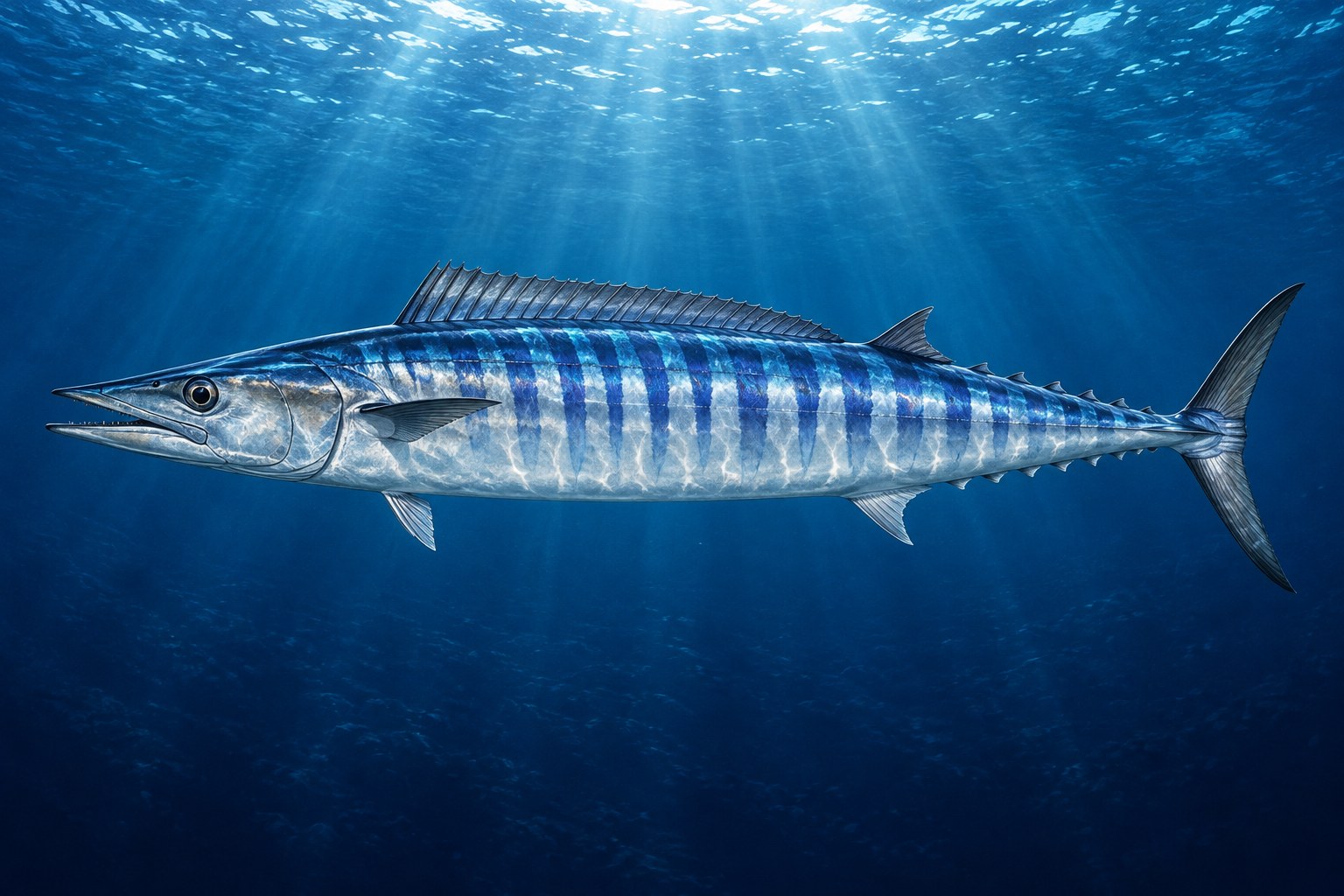
An offshore fish built for a sudden strike
Wahoo fishing can involve a long search followed by seconds of excitement. A lure disappears, the reel accelerates and a fish races away before anyone has a clear view of it. Preparation matters because there is little time to fix weak knots or crowded tackle after the strike.
These fish are a natural fit for Florida's offshore waters. They are not a dependable target from an ordinary beach or bay shoreline. Plan the boat, weather window and crew around an ocean trip before choosing a lure color.
The features that identify a wahoo
Wahoo have a long narrow body, pointed jaws and dark vertical bars along silver-blue sides. The first dorsal fin is long and low. Sharp, closely set teeth make the mouth hazardous even on a fish that appears quiet.
King mackerel can cause confusion. Compare the shape and markings rather than assuming every long fish with teeth is a king. Wahoo show the characteristic body bars, while a king mackerel has a sharp drop in its lateral line.
Fresh wahoo colors can be striking and then fade quickly. Take identification photographs while the features are visible, without placing hands near the mouth or leaving the fish out solely for a better picture.
Habitat and the value of an edge
Wahoo inhabit warm offshore water and feed on fish and squid. They often occur alone or in loose groups. Finding one does not always mean a dense school will remain under the boat.
Depth changes, current boundaries, reef edges and offshore structure can concentrate prey. Floating material may help gather life, but a random board in empty water is not automatically a wahoo spot.
Florida anglers search Atlantic offshore water, the Keys and suitable Gulf grounds. Distances and sea conditions differ by port. Key West and the Upper Keys offer a different offshore setting from a long Gulf run out of a Panhandle harbor.
Movement, seasons and reproduction
Wahoo move through warm water as feeding opportunities and conditions change. Regional fishing patterns can be useful, but they are not a statewide schedule. An inlet that produces well in one season does not set the calendar for all of Florida.
Spawning takes place in warm water, with activity extending across a broad part of the warmer year. Females release eggs in the water column rather than guarding a nest. Young fish develop in the open-water food web.
For planning, combine seasonal knowledge with the actual conditions offshore. Bait, clean water, current and safe weather have immediate value. A favored moon phase cannot compensate for a dangerous sea forecast.
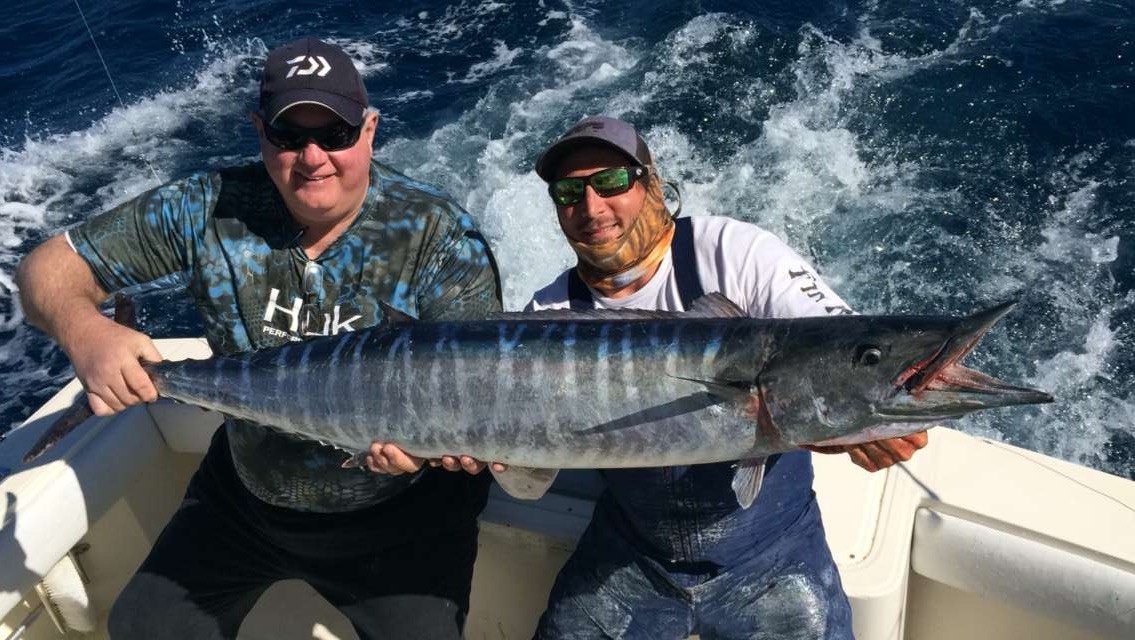
Understanding the food chase
Wahoo attack swimming fish and squid with speed and cutting teeth. A presentation needs to remain intact and track properly at the chosen pace. A bait that spins wildly can be less useful than a plain lure swimming cleanly.
Match the method to the boat and crew. Conventional trolling, deeper presentations and specialized faster trolling each require different equipment. They should not be treated as interchangeable simply because all involve a moving boat.
Start with a spread you can watch. Weed, a damaged bait or a lure skipping incorrectly should be corrected quickly. A neglected line can spend most of the trip fishing poorly.
Conventional trolling with lures and natural bait
Skirted lures, diving plugs and carefully rigged ballyhoo or similar bait can cover water effectively. Set each presentation where it swims consistently rather than placing every lure at an arbitrary distance.
Watch how the spread behaves during a turn. Inside lines slow and outside lines speed up. A presentation that works in a straight line may tumble when the boat changes direction.
Use appropriate bite protection and strong connections. Wire and cable have different handling characteristics, and a stiff or kinked leader can spoil a bait. Inspect every connection after a strike, even if no fish remains attached.
Going deeper without losing control
Planers and weighted systems can put a bait below the surface spread. They also add load and complexity. Know how the system releases and how the crew will clear it before putting it overboard.
Separate lines so a deep presentation does not cross the surface spread during turns. Keep the number of deployed lines within the crew's ability to clear them safely after a hookup.
Do not grab a heavily loaded line or wrap it around a hand. Devices under towing pressure can move suddenly. A method that catches fish is only useful if the boat can fish and retrieve it safely.
Specialized faster trolling
Faster trolling requires lures, weights, leaders, rod holders and reels designed for the loads involved. Ordinary light trolling gear should not be pushed beyond its purpose in an attempt to imitate another boat.
There is no universal speed that works with every lure. Judge the manufacturer's guidance, sea state and actual lure behavior together. If the boat pounds heavily or the spread becomes unsafe, slow down or change the method.
Arrange the cockpit before starting. Heavy terminal tackle needs a controlled place to land. Keep passengers clear of lines and never allow a child to reach for a loaded leader.
What to do after the bite
Keep the boat under control and communicate which line is hooked up. Clear nearby tackle methodically. Sudden turns, crossed lines and several people reaching into the same corner create avoidable problems.
Let the drag absorb the initial run. Maintain pressure as the fish changes direction. If the line goes slack, retrieve smoothly and determine whether the fish is moving toward the boat rather than assuming it has escaped.
Stay ready for another strike while keeping the first fish the priority. Wahoo can travel near others, but leaving a chaotic spread deployed to chase a second fish is rarely a good trade.
Bringing a fish alongside
Wahoo can make a final burst close to the boat. Keep the line clear of the hull and engines. The person handling the fish should know whether it will be retained or released before it reaches the leader.
Use suitable landing tools and keep everyone away from the mouth. A large toothy fish should not be swung across an occupied cockpit. Plan a secure place for a retained fish before it comes aboard.
For release, minimize handling and use tools that allow the hook to be removed safely. Cutting a leader may be preferable to a risky attempt to reach deeply into the mouth. Do not endanger the crew to recover a hook.
Rules and care of the catch
Review the current wahoo rules for the waters and landing location involved. Offshore fishing can cross jurisdiction boundaries, so a familiar state rule should not be the only planning step.
Bring enough ice and insulated storage for a fish longer than the usual inshore catch. A cooler that cannot hold the expected fish is a problem to solve at the dock. Cool retained fish promptly and handle the meat cleanly.
Keep a simple trip record of current direction, depth, bait signs and successful presentation. Over time, those observations provide better local guidance than remembering only the largest fish.
Wahoo questions
Is high-speed trolling required?
No. Wahoo also take conventional trolling presentations. Faster methods are specialized options, not a requirement for every trip.
Can monofilament alone prevent bite-offs?
Sharp teeth can cut ordinary leader material. Choose suitable bite protection for the presentation and inspect it after contact.
Are wahoo schooling fish?
They may occur near other wahoo, but many encounters involve individual fish or loose groups. Do not expect every strike to reveal a large school.
Why did a natural bait stop swimming well?
It may be damaged, rigged off center or fouled with weed. Retrieve and inspect it instead of dragging it for another hour.
Can I target them from a small bay boat?
The offshore route and conditions must suit the vessel, equipment and crew. The fact that a fish is present offshore does not make that trip suitable for every boat.
What should I check after losing one?
Inspect the hook point, leader, crimps or knots and the lure itself. Damage can explain the loss and prevent the same failure on the next strike.
Match your approach to the water
| What you find | An option to try | The detail that matters |
|---|---|---|
| A broad search along an edge | Conventional trolling spread | Check tracking and clear weed frequently. |
| Need to fish below surface lures | Properly managed deep presentation | Keep weighted lines separate during turns. |
| A specialized faster-trolling trip | Purpose-built tackle and lures | Match speed and load to the equipment and sea conditions. |
Plan a wahoo trip
Local access guides for wahoo trip planning: Key West, Islamorada, Marathon.
Tides and weather · Florida fishing charters
Read the current FWC rules for wahoo.
Rules review: October 4, 2026.
Research and photograph credits · All fish species · Return to the beginning