
HookCurrent Florida fishing
Yellowtail Snapper
Understand yellowtail snapper habitat, food and spawning, then learn how to use chum, light leaders and a natural drift around Florida reefs.
Ocyurus chrysurus
Let the current carry the bait
Yellowtail snapper fishing often looks simple from a distance. An anchored boat releases chum, a bait drifts away and the line suddenly speeds up. The details are what make that sequence work. Boat position, current, bait size and line resistance all affect whether a fish accepts the offering.
This is one of the classic reef fisheries of the Florida Keys. It is also a useful lesson in presenting food naturally. A perfectly fresh bait can fail if the line pulls it across the current while every loose piece of food drifts another way.
Recognizing a yellowtail
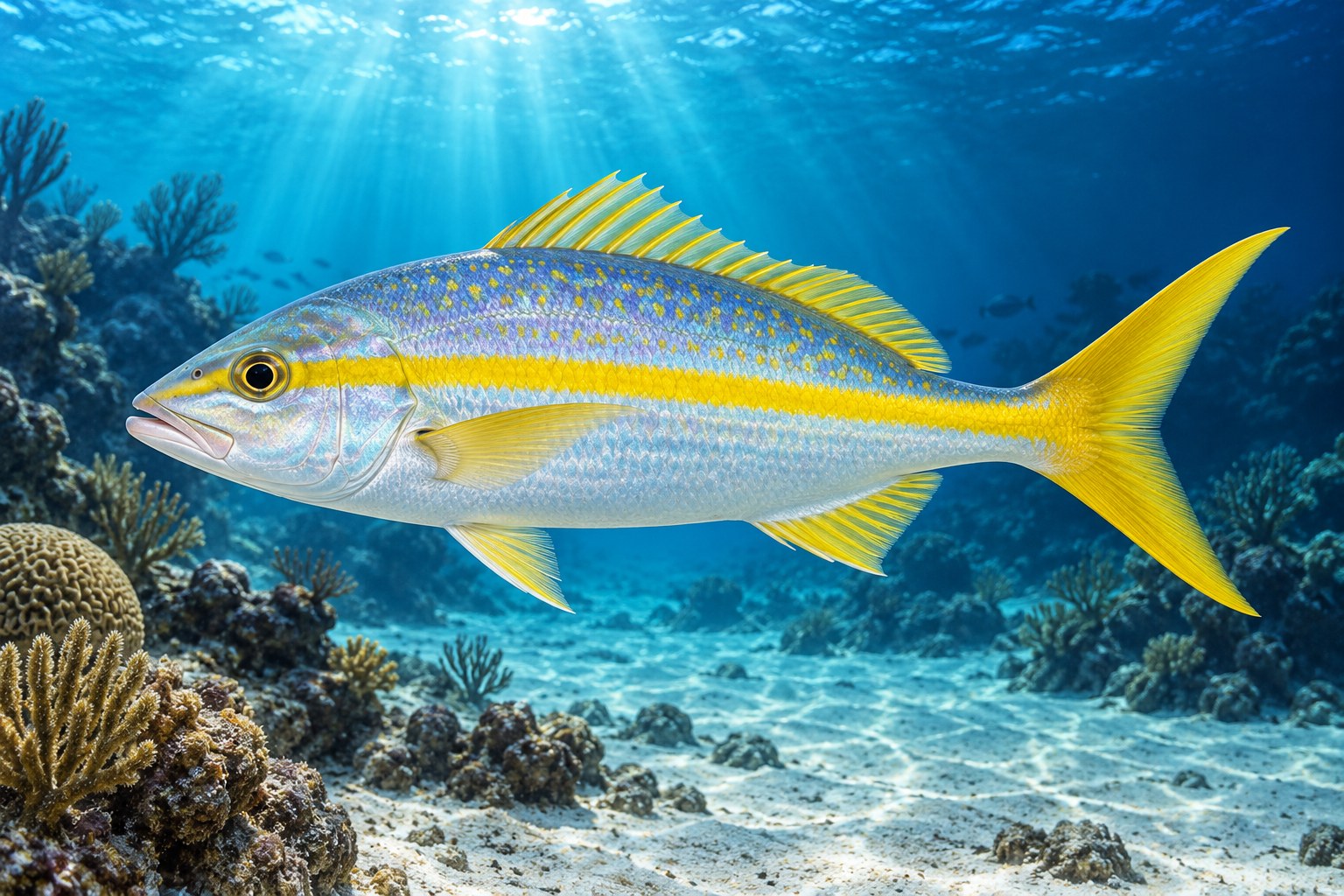
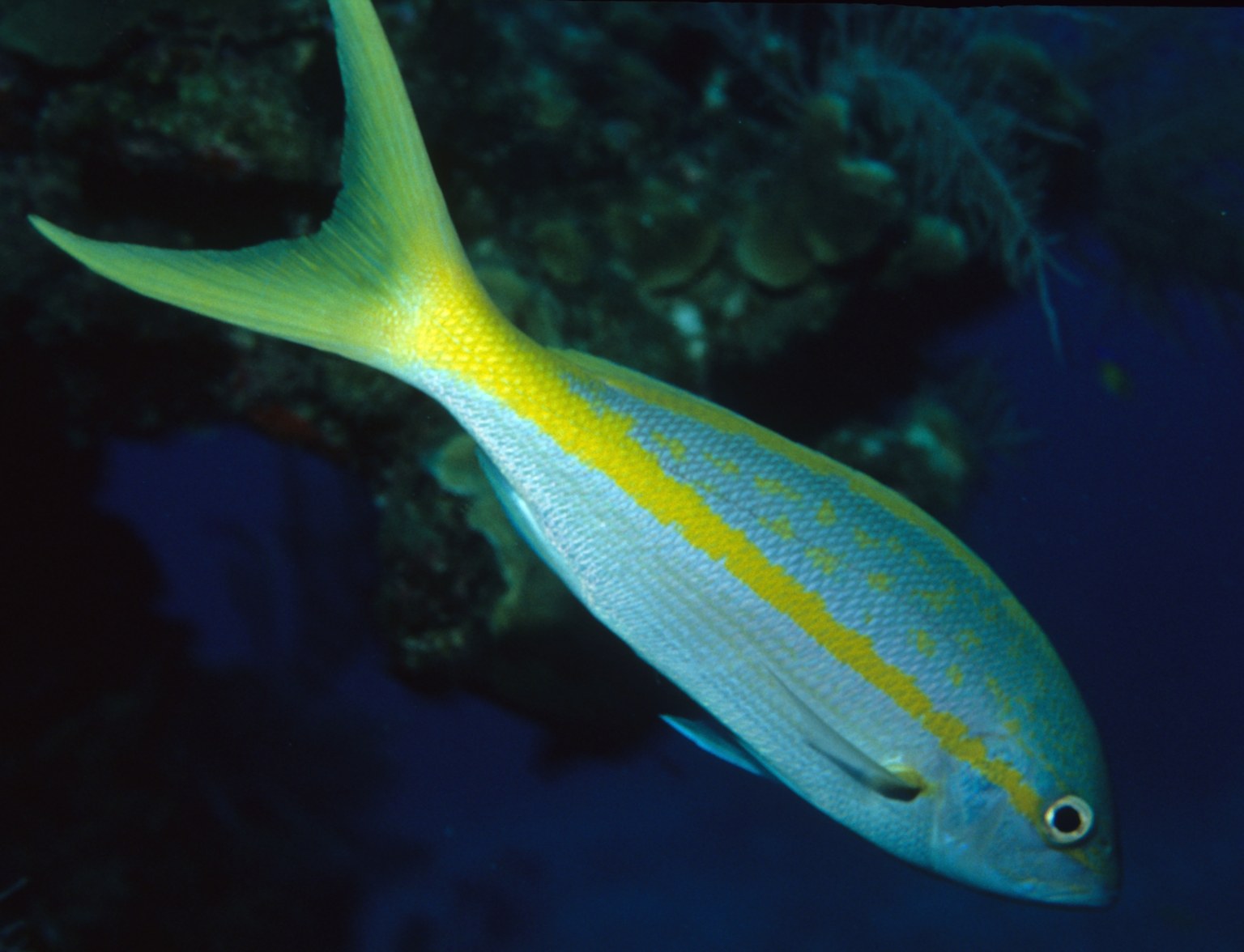
Ocyurus chrysurus has a strong yellow stripe that runs from the head toward the tail. The tail itself is yellow and deeply forked. The back can appear olive or bluish, with yellow spotting. Its body is slimmer than the heavy outline many anglers associate with red snapper.
Other reef fish may enter the chum line, so identify the entire fish before deciding to keep it. Small yellowtail still have the stripe and forked yellow tail. A yellow tint alone is not enough to identify an unfamiliar snapper.
Color fades after a fish dies. Learn the living features while they are easy to see, and keep a current identification reference available on the boat.
Reef edges and open water above them
Yellowtail use tropical coastal water and are strongly associated with reefs. They often feed above the bottom rather than staying tucked in a hole. This makes a suspended chum trail effective when the fish rise to meet it.
Around the Keys, look at reef edges and nearby changes in depth. Current sweeping along a reef can carry food into open water. The productive part of a site may sit away from the highest piece of structure.
The Lower Keys, Key West and reef waters off the Upper Keys all provide starting areas for planning. Weather, protected zones and the distance to safe shelter should shape the trip. A named reef does not automatically allow anchoring, fishing or entry everywhere around it.
Seasonal behavior and reproduction
Yellowtail are warm-water fish. They can provide fishing opportunities across much of the year in South Florida, but wind, water clarity and current often decide whether a particular day is comfortable or productive.
Spawning is associated with warm months, including summer. Adults release eggs into the water, and early life stages drift before young fish settle into coastal habitat. Shallow nursery areas and adult reef habitat support different parts of the life cycle.
Do not turn a broad spawning season into a guaranteed fishing calendar. A summer reef with poor current can fish worse than a cooler-season day with a steady flow of clean water.
What yellowtail eat
Small fish and invertebrates form their diet. A fish feeding in a chum trail may take tiny pieces rather than a large chunk. That is why a modest bait can outfish a much larger one on a light presentation.
Cut baitfish, shrimp pieces and strips of squid are common options. Trim them so the hook can enter a mouth cleanly. A large loose flap can spin during the drift and twist the leader.
Keep bait cold and firm until needed. Soft pieces that wash off immediately leave an empty hook in the line. A fresh small portion is often more useful than a large bait that has warmed in the sun.
Position the boat before starting
First observe the direction of the current. Wind and current may pull a boat differently. The goal is to send the chum toward the fish without placing the anchor on living coral or drifting tackle into another boat.
Use an appropriate anchoring or legal mooring approach for the area. Protected reefs can have specific restrictions. Never drop an anchor on coral simply because the sounder shows fish there.
Once settled, watch where the chum actually travels. A line moving sideways under the boat tells you more than a forecast arrow. If the trail misses the feeding zone, adjusting position may solve more than adding extra chum.
Build a steady feeding trail
A controlled supply of small particles encourages fish to keep looking along the same path. Releasing a huge amount at once can feed fish without helping them find your hook.
Allow time for the trail to develop. Watch for fish rising and for changes in the depth at which they appear. Yellowtail may remain below the visible surface activity even when other species are eating above them.
Avoid dumping packaging, plastic mesh or unused tackle overboard. Chum belongs in the water only where the method is allowed and where it can be used without creating problems for nearby swimmers or other boats.
Light tackle without needless weakness
A spinning outfit in a light to medium class gives useful control over small baits. Many situations suit line around 10 to 20 pounds, with a leader selected for water clarity, fish size and abrasion risk. These are starting ranges rather than fixed rules.
Choose a hook that fits the bait and complies with the rules for the waters being fished. Natural-bait hook requirements can differ between regions and jurisdictions. Keep the point clear of a thick knot of bait.
Long leaders and small hardware can help wary fish, but a leader that is impossible to handle safely creates its own problems. The aim is a natural drift with enough strength to land fish efficiently.
Control the drift, not the fish's appetite
Feed line so the bait travels at about the same speed as the chum. Hold enough contact to notice a take without creating constant drag. A bait pulled back toward the boat is no longer part of the same food trail.
Start with little or no added weight when fish are feeding high. Add only what is needed if the bait must reach deeper water. Too much lead sends it below the active fish, while too little may leave it above them.
Watch the line for a sudden increase in speed. Close the bail and come tight smoothly, especially with a circle hook. A hard sweeping strike can pull the bait from a fish before the hook turns into position.
When the fish are visible but refuse
Visible fish can be the most frustrating fish on the reef. Check whether the hook bait is the same size as the food they are taking. Reduce a bulky bait before assuming the fish demand a special flavor.
Look for drag caused by a bowed line, a heavy swivel or the boat's movement. Try a fresh leader if it has become cloudy or rough. Change presentation carefully so you know which adjustment helped.
Predators also change the behavior of the school. Barracuda, sharks or large jacks may push yellowtail deeper or make them nervous. Moving to another site can be better than continuing to lose fish in the same trail.
Landing and deciding what to keep
Bring a fish to the boat with steady pressure and use a suitable net when needed. Wet hands protect the surface of a fish being released. Avoid squeezing the belly while removing the hook.
Measure fish accurately and consult the current snapper rules before keeping any. Minimum sizes, combined limits and regional requirements need to be understood together. Do not assume that every snapper in the cooler has the same rules.
A fish brought up from depth may need help returning. Have an appropriate descending device ready and learn its use before the trip. Preparing release equipment in advance prevents a long delay while a fish struggles at the surface.
A useful reef-day routine
Check marine conditions, access restrictions and the day's regulations at home. Pack several leader sizes, small hooks, a measuring tool, a net and release equipment. Keep one outfit ready for an unweighted drift and another ready to fish a little deeper.
At the reef, solve boat position first, chum flow second and bait presentation third. This order avoids spending the whole morning changing hooks while the food trail travels away from the fish.
Yellowtail snapper questions
Are yellowtail only found in the Keys?
No. They occur in other warm coastal waters too. The Keys are a major Florida destination because reef habitat and the species overlap there so well.
Do I need a heavy bottom sinker?
Often you do not. Fish feeding in a chum trail may take a freely drifting bait. Add weight only when depth and current call for it.
Why does my bait keep spinning?
A long uneven strip or off-center hook placement can make it rotate. Trim the bait and check it beside the boat before sending it down the trail.
Is stronger current always better?
No. Some flow helps carry food, but very strong current can make depth and boat position difficult to manage. A steady manageable drift is easier to fish.
Can a beginner catch yellowtail?
Yes, especially with help setting the boat and chum trail. Watching line movement and avoiding drag are skills a beginner can learn during the trip.
What if sharks keep taking hooked fish?
Stop feeding the same situation. Move to another location or change the plan instead of repeatedly hooking fish that cannot be landed or released safely.
Match your approach to the water
| What you find | An option to try | The detail that matters |
|---|---|---|
| Fish rising into chum | Small unweighted bait | Feed line at the speed of loose food. |
| School holding below the trail | A little additional weight | Reach the fish without dropping below them. |
| Visible fish refusing baits | Smaller bait and reduced drag | Check leader condition and line bow before changing the chum. |
Plan a yellowtail snapper trip
Local access guides for yellowtail snapper trip planning: Key Largo, Islamorada, Key West.
Tides and weather · Florida fishing charters
Read the current FWC rules for yellowtail snapper.
Rules review: October 4, 2026.
Research and photograph credits · All fish species · Return to the beginning