
HookCurrent Florida fishing
Red Snapper
Plan a Florida red snapper trip with clear advice on reef habitat, bottom rigs, bait, fish identification, release tools and checking the right season.
Lutjanus campechanus
A reef fish that deserves a complete plan
Red snapper are a major attraction for Florida offshore anglers. They gather around reefs, ledges, wrecks and other bottom features, take a range of baits, and pull hard immediately after the hookup. Reaching the fish is only part of the job. A good trip also accounts for current, safe weather, harvest rules and the fish that must be released.
The Gulf and Atlantic fisheries are managed differently. Private boats and certain charter trips can also operate under different season arrangements. Before choosing a date, decide which coast, which waters and what kind of trip you will take. Those details matter more than a general statement that snapper season is open.
Identify the fish before keeping it
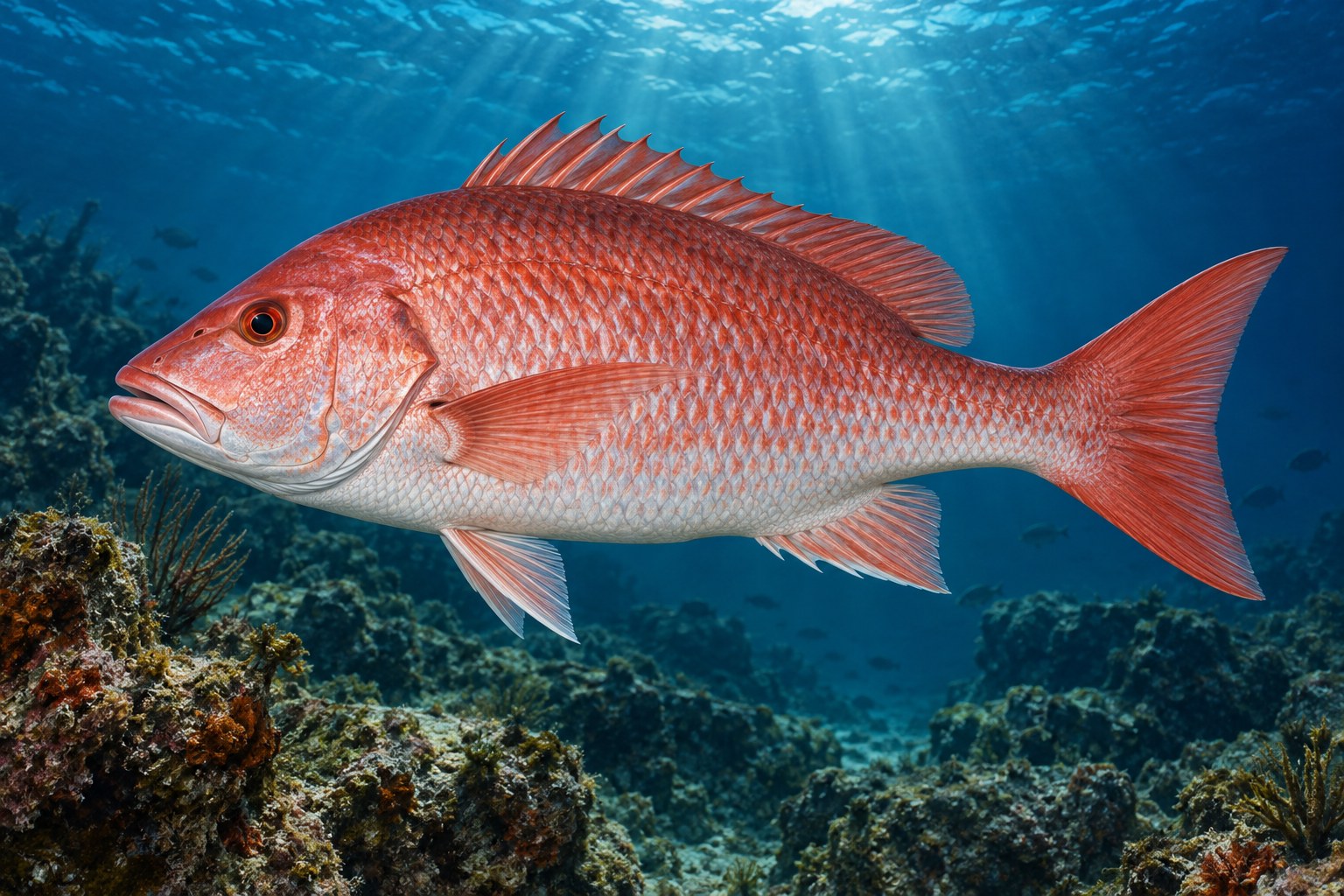
An adult red snapper has a pink to red body, red eyes and a long triangular face. The rear of the anal fin is pointed. Adults do not have the obvious dark side spot seen on some other snappers and on young red snapper.
Silk snapper can look similar but have yellow eyes. Vermilion snapper have a different mouth and body form and a rounded anal fin. Several reef fish may come up during the same drift, so identify them one at a time.
Depth and lighting change color. A fish's red tones may look muted underwater and much brighter on deck. Use shape, eye color and fin details together rather than deciding from redness alone.
Reef habitat and the water above it
Red snapper use natural hard bottom, ledges, artificial reefs, wrecks and other features on the continental shelf. A tall wreck is easy to see on a sounder, but smaller changes in bottom can also hold fish. Productive habitat is not always a dramatic pile of steel.
Fish may suspend above the structure instead of sitting directly against it. If the sounder shows marks above the bottom, test that depth. Dropping every bait into the reef can catch small fish, snag tackle and miss better fish holding higher.
Young red snapper use softer bottom habitats before becoming strongly associated with the structures many anglers target. Protecting the fishery therefore involves more than protecting the exact reef where adults are caught.
Growth, age and reproduction
Red snapper can live for several decades. They begin reproducing while relatively young, but older females can make an important contribution to egg production. A large fish represents years of survival, not simply a heavier version of a recent recruit.
Spawning extends through much of the warm season, with timing varying by location. Eggs and larvae develop in the water column. Survival depends on conditions that are very different from those experienced by an adult beside a reef.
This long life history is one reason harvest and release practices matter. A reef that produces quick bites can still contain fish from a population that needs careful management. Easy catching at one location is not a stock assessment.
Movement and seasonal availability
Red snapper do not make the same kind of obvious beach run as Spanish mackerel. Many use reef areas and surrounding bottom, with movements related to size, habitat and local conditions. Fish can also occupy different depths around the same general reef system.
The fishing season and the feeding season are separate ideas. Fish may be present when harvest is closed. Conversely, an open harvest date does not guarantee favorable weather or a strong bite.
Plan a legal alternative target before leaving the dock. If the desired area is unsafe or closed, a prepared backup is better than trying to justify keeping an incidental catch under the wrong rule.
Food and choosing a bait
Red snapper eat fish and a variety of invertebrates. Squid, crustaceans and other available prey can be part of the diet. Anglers commonly use live baitfish, fresh cut bait or squid, depending on the fish size and local feeding conditions.
A whole baitfish can select for a different bite than a tiny strip. However, a large bait should still fit the hook and remain secure. A loose bait that spins while descending can tangle the rig before it reaches the fish.
Freshness helps. Keep bait shaded and chilled appropriately, and avoid thawing the entire supply at once. Replace pieces that have become soft or repeatedly picked apart.
A sensible bottom-fishing outfit
Medium-heavy spinning or conventional gear is a practical starting point for many recreational trips. Around 30 to 50 pound braid provides useful bottom contact in moderate depths, while leader strength may need to increase around rough structure or larger fish. The correct setup depends on current and the expected fish, not a fixed statewide recipe.
A rod needs enough strength to turn a fish before it reaches the reef. It also needs to handle the sinker safely. Check its rating instead of adding weight until the tip is overloaded.
Reel capacity and a smooth drag matter. A very tight drag on an unbalanced outfit can break a leader or damage tackle. Test the setup before the first drop, especially if the rod has been stored since the previous season.
Bottom rigs and hook choice
A sliding sinker rig keeps the bait close to the bottom while allowing some movement. A dropper rig can hold the bait above the weight. Both need to be matched to current, depth and the structure's shape.
Use the hook type required for the relevant reef fish area and bait. Circle hooks are commonly required in natural-bait reef fisheries. Select a size that leaves enough gap around the bait for the hook to work.
Do not bury the point in a thick bait chunk. With a circle hook, reel into the fish as the line tightens rather than making a violent strike. The goal is a steady pull that allows the hook to rotate into position.
Boat positioning comes before more sinker
Study the drift direction away from the reef before committing to a drop. Wind can move the boat one way while current moves the bait another. A waypoint marks bottom position; it does not show where your bait will be after a long descent.
Start the drift far enough upcurrent for the rig to reach fishing depth near the target. If the line streams at a severe angle, shorten the drift or reposition. More weight may help, but it cannot correct every poor starting position.
When anchoring is legal and appropriate, avoid placing an anchor into living coral or vulnerable habitat. Some managed areas have specific anchoring and fishing restrictions. Use charts and current local guidance, not another boat's position, to decide where you may stop.
Reading the sounder usefully
Look for the relationship between fish marks, bottom relief and current. A cloud of bait just above a ledge can be more meaningful than an isolated large mark. Make a slow pass so you understand the feature before dropping lines.
Record which side produces bites. Fish may favor an upcurrent face or an area slightly away from the main structure. Repeating that line can be more productive than drifting directly across the highest point every time.
Do not stare at the screen while ignoring other boats. Offshore reefs can be crowded, especially during short seasons. Leave room for another vessel's drift and do not cross deployed lines.
Hookup and the first few turns
When the fish loads the rod, apply steady pressure and begin lifting it away from the bottom. The first part of the fight is often the most important because the reef is still close. Avoid creating slack by pumping too widely.
Gain line on the rod's downward movement and keep the bend controlled. If the fish is much stronger than expected, use the drag rather than trying to hold everything motionless. Clear unused lines when they create a tangle risk.
Prepare a net or other appropriate landing method before the fish arrives. A fish intended for release should not be gaffed. Keep hands clear of teeth, spines and hooks as the fish reaches the boat.
Jigs and other artificial offerings
Vertical jigs can catch red snapper when fish feed above the bottom. Choose a weight that reaches the target zone without an uncontrolled sweep. Short lifts, pauses and a controlled fall can be more useful than nonstop fast pumping.
A soft plastic on a suitable jig head can also work in shallower or lower-current situations. Keep its action within the depth where the fish are showing. If baitfish are concentrated above the reef, work through that band deliberately.
Artificial lures do not remove the need to check hook and area rules. They also do not make a closed harvest legal. Decide how a caught fish will be handled before trying a presentation likely to produce one.
Barotrauma and responsible release
Pressure falls as a fish is brought toward the surface. Gas inside the body can expand, making it difficult for a deep-caught snapper to swim back down. A floating fish is not necessarily beyond help, but it needs prompt, informed handling.
A descending device returns the fish to depth, where pressure can recompress expanded gas. Learn the device's operation and have it rigged before fishing. Carry the release equipment required for your coast and water.
Do not puncture a protruding organ or improvise with a knife. Proper venting is a specific technique requiring suitable equipment and training. If fish repeatedly return in poor condition or predators take released fish, move or change the fishing plan.
Florida departure areas
Destin, Pensacola and Panama City are familiar Gulf departure points for red snapper trips. Atlantic ports such as the Canaveral and northeast Florida areas have different grounds and season arrangements. Travel distance and sea conditions vary substantially between ports.
When booking a charter, ask what waters it plans to fish and which season applies to that vessel. Ask about release equipment and the backup plan for poor weather. A responsible operator should be able to explain those practical details plainly.
Harvest rules and caring for the catch
Verify the current red snapper opening, minimum size, bag limit and any applicable permit or reporting requirements. Gulf private recreational seasons should not be assumed to match federal for-hire seasons. Atlantic arrangements need their own check.
For a legal fish kept to eat, use a clean cooler with enough ice and drain arrangements appropriate for the trip. Keep fish out of direct sun while the rest of the boat continues fishing. The care given after landing affects meal quality as much as the choice of bait affected the bite.
Red snapper questions answered
Are red snapper always on the bottom?
No. They can suspend above reefs and wrecks. Use the sounder and bite depth to decide where to present the bait.
Is a Gulf season announcement valid on the Atlantic coast?
No. The fisheries have different management arrangements. Check the coast, waters and vessel category for the planned trip.
Why does my bait miss the reef even when the boat is over it?
Current moves the line during its descent. Start the drift with enough allowance for depth and current rather than dropping only when directly above the mark.
Can a floating snapper survive?
Some can recover when returned to depth promptly with appropriate release equipment. Prepare for barotrauma before catching fish, not after one is floating beside the boat.
Do bigger hooks automatically catch bigger fish?
No. Hook size must fit the bait and allow proper hooking. Presentation, location and the fish present matter more than oversized hardware alone.
What is the best first offshore trip for a beginner?
A well-run trip with suitable weather, clear instructions and a realistic travel distance is a better choice than the longest trip advertised. Discuss experience and expectations before booking.
Match your approach to the water
| What you find | An option to try | The detail that matters |
|---|---|---|
| Fish marked above a reef | Bait held at the marked depth | Avoid dropping below the school simply because the bottom is deeper. |
| Strong flow across structure | Heavier controlled rig or a reset drift | Solve line angle before adding more bait. |
| High numbers of small fish | Another depth or piece of bottom | Reduce repeated handling rather than waiting through endless undersized catches. |
Plan a red snapper trip
Local access guides for red snapper trip planning: Destin, Pensacola Beach, Panama City.
Tides and weather · Florida fishing charters
Read the current FWC rules for red snapper.
Rules review: October 4, 2026.
Research and photograph credits · All fish species · Return to the beginning