
HookCurrent Florida fishing
Greater Amberjack
Understand greater amberjack habitat and behavior, choose tackle for powerful reef fish, and learn how to fish suspended baits and vertical jigs.
Seriola dumerili
Prepare for strength before dropping a bait
Greater amberjack have a reputation for turning an ordinary reef stop into a demanding fight. They can strike well above the bottom and pull hard enough to expose weak knots, poorly set drags and awkward fighting positions.
The answer is preparation, not simply the heaviest possible drag. Tackle should match the fish, structure and angler. A setup that pulls a person off balance is not well matched, even if the line itself is strong.
Identification among similar jacks
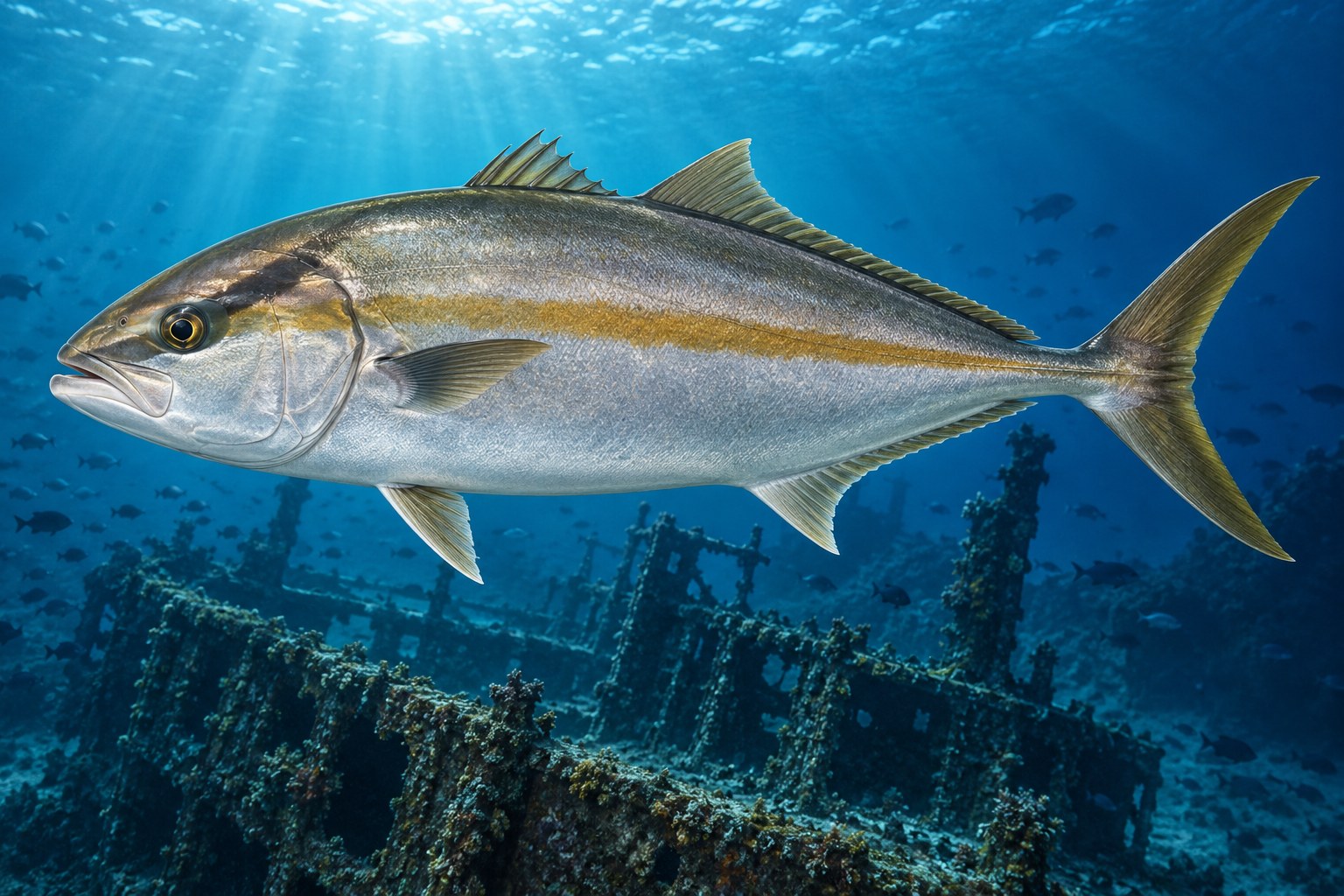
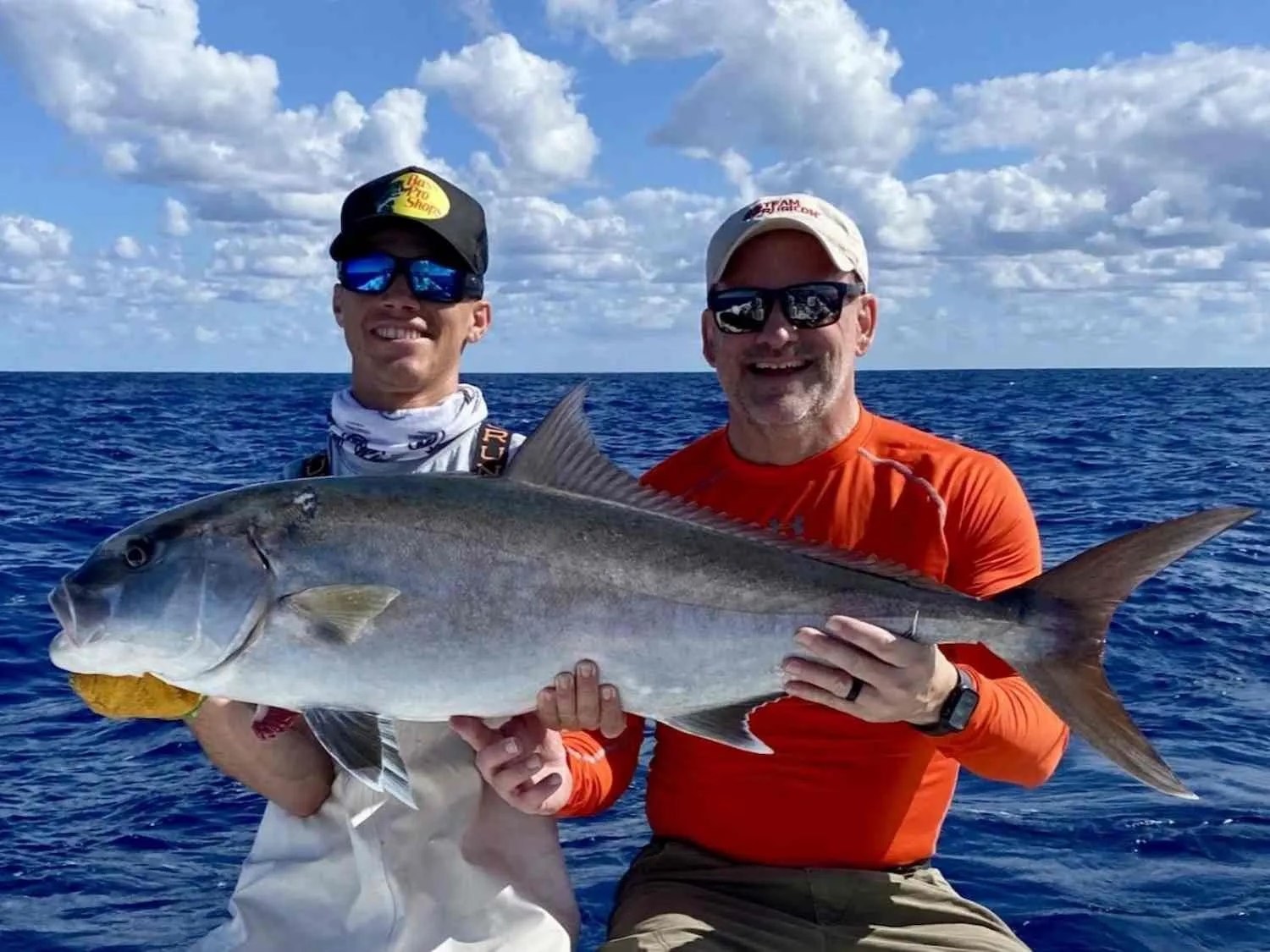
Seriola dumerili has a long, solid body with an olive-brown back and silver sides. A dark band can run from the nose through the eye toward the front of the dorsal fin. Its appearance changes with condition and activity.
Lesser amberjack, almaco jack and banded rudderfish can be confused with it, especially at smaller sizes. Greater amberjack lack the hard tail scutes seen on some other jacks. Overall proportions, fin lengths and reliable identification references are important.
Do not apply greater amberjack harvest rules to every brown jack brought over the rail. When uncertain, resolve identification before retaining the fish.
Wrecks, reefs and the water above them
Adult greater amberjack associate with offshore wrecks, rocky reefs and other structure. They often patrol above it, where they can intercept prey. This is why a bait on the bottom may miss fish clearly marked higher on the sounder.
Young fish can gather around floating objects and use shallower settings. An encounter with small juveniles near surface debris does not describe the habitat of the large adults targeted on a deep wreck.
Florida's Gulf and Atlantic coasts both offer suitable grounds. Panhandle offshore trips, west-coast wreck fishing and South Florida reef trips can all encounter them. The distance and conditions must fit the vessel and crew.
Seasonal behavior and spawning
Greater amberjack reproduce offshore, with spring an important spawning period in regional research. Timing varies across their range. Adults release eggs into the water, and young fish begin life away from the wreck habitat anglers often associate with adults.
Seasonal fishing opportunities and legal retention seasons are separate questions. Fish can be present during a closure. A report of active amberjack should never be treated as evidence that keeping one is allowed.
Current, bait and water conditions shape daily feeding. A wreck that produced last week may have fish suspended at a different depth today, or the visible marks may belong to another species.
Food and aggressive feeding
Amberjack eat fish, squid and crustaceans. Lively baitfish such as blue runners, pinfish and suitable local alternatives can draw strong responses. The bait must be legal to obtain and use in the area.
Keep it healthy and select a size the tackle can present effectively. A very large bait is difficult to handle on a light rod and does not guarantee a larger amberjack.
When fish are excited, they may follow hooked fish or rise toward surface activity. This can create a chance for a jig or plug, but it also increases the need for clear communication among anglers.
Read the sounder before choosing a depth
Locate the wreck or reef and then look for fish above or beside it. Note the current direction and how the boat drifts. The target may sit upcurrent of the main structure rather than directly over its highest point.
Drop to the depth of the marks instead of letting every bait reach the wreck. Counting line marks or using a depth-aware reel can make the presentation repeatable.
If the line angles sharply away, the bait may not be at the depth you assume. Adjust the drift, weight or method. Adding more and more lead without understanding the line angle can create a difficult rig rather than a useful one.
Live-bait rigs
A strong leader, suitable single hook and enough weight to reach the feeding level form a practical starting rig. Hook style must meet the natural-bait requirements for the waters involved.
Attach the bait so it can swim and remain secure through the drop. Avoid burying the hook point in a thick part of the bait. Keep the leader organized so it does not tangle around the sinker during descent.
Once a fish takes, come tight according to the hook type. With a circle hook, steady pressure lets the hook turn into place. An explosive strike followed by slack line can lose the connection.
Vertical jigging
Metal jigs imitate prey moving through the water column. Select weight for current and depth, with a rod that can work it comfortably. A jig too heavy for the outfit quickly becomes tiring and difficult to control.
Work around the marked fish depth. Change speed and pauses, then repeat the movement that produces attention. Constantly dropping into the wreck increases snag risk and may not reach the feeding fish any better.
Keep assist hooks clear of clothing and hands. When a fish strikes during a drop, the line can load suddenly. A clean deck and a stable stance are especially important during fast jigging action.
Drag, stance and the first part of the fight
Heavy reef tackle is often appropriate, with line strengths commonly higher than those used for ordinary inshore fishing. The exact outfit depends on fish size, depth and how close the fish are to structure. Have an experienced crew member help set the drag before the first drop if needed.
Use a stable stance and keep the rod butt supported comfortably. Lift with control and recover line as the rod lowers. Avoid high-sticking, which bends the rod sharply near the tip and can break it.
The first goal is to keep the fish away from the wreck. Once it is clear, maintain pressure without turning the fight into a contest of maximum force. The angler should remain balanced and able to respond to another run.
Handling large fish beside the boat
Clear unused rods before the fish arrives. Follow its circles and keep line away from the hull. Decide on retention or release while there is still time to prepare the correct landing method.
Large amberjack require a sensible handling plan. Use appropriate tools and avoid bringing a heavy thrashing fish into a crowded cockpit. Leave the gaff aside when the amberjack will be released.
Deep-caught fish may show pressure-related problems. Prepare a descending device and know how to deploy it. Do not improvise punctures or other invasive treatment without the correct equipment and training.
Harvest planning and conservation
Greater amberjack rules can differ sharply between Gulf and Atlantic waters, including seasons, minimum sizes and limits. Check current requirements immediately before the trip rather than relying on a previous year's opening date.
If retaining a legal fish, bring enough ice and storage. If releasing, shorten the fight with suitable tackle and minimize time at the surface. Move away from a location where sharks repeatedly take hooked fish.
A productive wreck does not need to be fished until every bait is gone. Catching a few fish efficiently and leaving them in good condition can be a better result than a long series of exhausted releases.
Greater amberjack questions
Do they stay on the bottom?
Often they suspend above structure. Use the sounder to decide where the bait or jig should travel.
Are all amberjack species regulated the same way?
No. Correct identification matters. Similar-looking jacks can have different rules and different adult sizes.
Can beginners fight them?
Yes, with suitable equipment and help from an experienced crew. Drag and rod weight should match the person's strength and balance.
Why do I keep snagging the wreck?
The rig may be dropping below the fish or drifting too far before retrieval. Fish the marked depth and manage the drift more carefully.
Is a closed harvest season a closed ocean?
Rules vary, so read the exact current requirements. The presence of fish alone does not authorize keeping them or using every fishing method.
What should be ready before a deep drop?
Have identification guidance, measuring equipment, suitable landing tools and a descending device prepared before the first fish reaches the boat.
Match your approach to the water
| What you find | An option to try | The detail that matters |
|---|---|---|
| Fish suspended above a wreck | Live bait at the marked depth | Keep the rig above unnecessary snags. |
| Active marks following a jig | Vertical metal presentation | Repeat the productive depth and retrieve speed. |
| Fish too powerful for comfortable control | Better-matched tackle and assistance | Set drag for the angler as well as the equipment. |
Plan a greater amberjack trip
Local access guides for greater amberjack trip planning: Destin, Pensacola Beach, Key West.
Tides and weather · Florida fishing charters
Read the current FWC rules for greater amberjack.
Rules review: October 4, 2026.
Research and photograph credits · All fish species · Return to the beginning