
PANHANDLE
Unit Four Beach
fishing guide
Unit Four Beach is a bay-side St. George Island access at East 6th Street. Shallow oyster habitat and limited facilities make it very different from the Gulf surf beaches.
Explore the guide ↓Find East 6th Street and the correct shore
Unit Four Beach is on the bay side of St. George Island at East 6th Street. County visitor information identifies minimal parking and a picnic table rather than a large full-service beach park. It is not one of the central Gulf-facing swimming accesses.
Confirm lawful parking and the open public route before bringing tackle. Do not park across a private entrance or assume a roadside gap is an approved space. Check shore signs for current restrictions. A short daytime visit with a light bag fits these limited arrangements better than a large beach cart, multiple coolers or a plan that depends on on-site facilities.
Understand why the shell edge draws attention
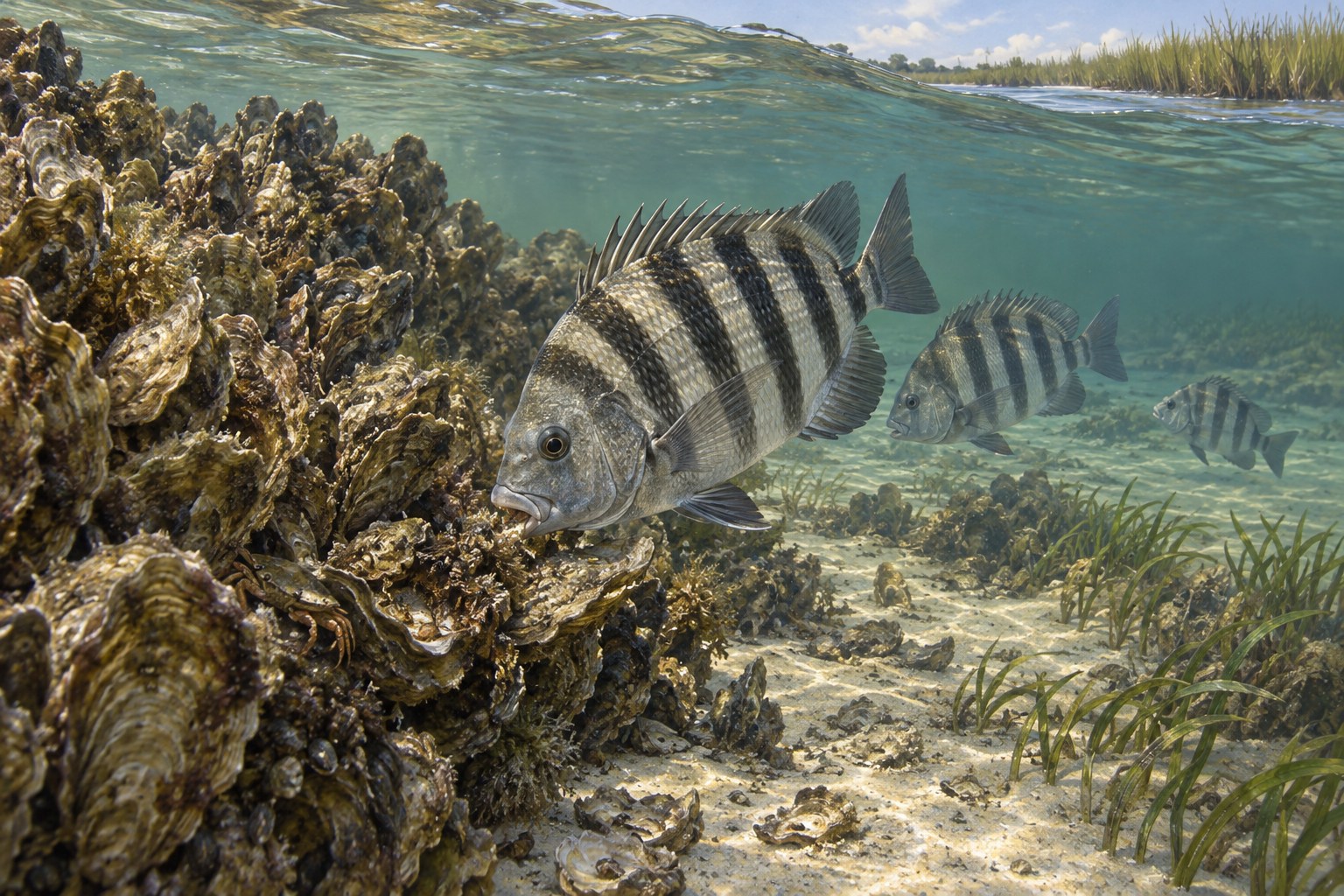
The bay shoreline connects with shallow oyster-bar habitat. Shell creates cover and supports the small organisms that form part of the coastal food web. Predators can search the adjacent cleaner lanes for shrimp and small fish without sitting directly on the roughest shell.
Watch changes in bottom color and water movement from a safe route. Sharp shell can cut feet and leader, while mud between bars can be soft. Do not walk across oyster habitat to gain casting distance. Locate a recoverable sand or water lane beside the cover, where a hook can pass without constant snagging or damage to the bottom.
Place a redfish offering next to the rough ground
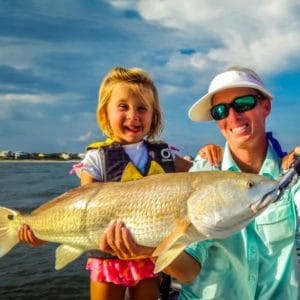
Redfish feed on crabs, shrimp and small fish near shallow bay edges. A natural shrimp or compact soft plastic beside an oyster margin can provide a sensible starting trial. Keep the offering off the densest shell and within a lane you can retrieve.
Use a quiet approach and a cast that lands beyond the intended path rather than on top of a visible wake. Work the bait back with controlled movement. If every retrieve feels rough or produces damaged leader, change position. A lure lost repeatedly into shell is not useful evidence that the fish prefer that precise spot.
Suspend food over mixed bottom for seatrout
Spotted seatrout can hunt over grass and open sand near bay structure. A shrimp float allows a bait to move above the bottom rather than settle into shell. Adjust depth until the hook returns reasonably clean and the drift stays inside the usable lane.
A small baitfish-shaped soft plastic provides another search method. Retrieve at a steady pace, then compare a brief pause. Keep drag pressure smooth and use wet hands for a gentle release. Trout are not guaranteed at every shallow access. Water clarity, prey and temperature should shape expectations more than a broad regional species list.
Keep drum and flounder trials controlled
Black drum can find crustacean food near shell-associated coastal habitat. A small natural bait on a clean adjacent bottom lane can test that possibility without dragging through the oyster bar. Flounder may also use sand transitions and subtle changes in depth in the wider bay.
Move a flounder-style offering slowly along a recoverable edge, not through a pile of rough shell. Use only enough weight to maintain a useful path. Take time to identify any unfamiliar fish before keeping it. A measuring tool and current rule check are more valuable than relying on the size of a neighboring angler's catch.
Build a small abrasion-aware kit
A medium spinning outfit, spare leader and a few light jigs form a practical base. Add a shrimp float and small natural-bait hooks. Oyster edges make leader inspection especially important; a rough section can fail on the next strike even if it has not broken yet.
Pack pliers, a ruler and a pouch for sharp waste. Bring drinking water and any bathroom plan with you, because the small access has limited amenities. Wear protective footwear on the permitted walking route, but do not treat tough shoes as permission to cross fragile shell habitat. Keep the whole setup easy to lift when other users pass.
| Bay condition | Useful adjustment | Protection step |
|---|---|---|
| Exposed oyster bar | Fish a clean adjacent lane | Do not cross living shell |
| Grass and sand mixture | Suspend a small shrimp | Shorten depth if fouled |
| Rough leader after retrieve | Retie with sound material | Contain the discarded section |
Let the exposed shell show how conditions changed
Falling water can uncover oyster bars and reduce the lanes available close to shore. Rising water can reconnect feeding edges, but it may also cover a hazard that was obvious minutes earlier. Notice fixed markers rather than assuming the shoreline remains the same throughout the outing.
Wind can affect bay level and push sediment into suspension. A tide station's times do not describe exact flow beside each bar. Observe the actual drift before choosing float depth or weight. After a front, fish may use more stable water away from the shallowest edge. A short shoreline session should not become a chase through uncertain mud.
Use the access as a wildlife visit too
County information also highlights birding at Unit Four. Wading birds and other coastal wildlife use the mix of shore and shallow water. Watch them from a distance and keep casts out of the lanes they are actively feeding in.
Avoid feeding birds with discarded bait. Remove line before it catches in shell or plants, and keep dogs from disturbing resting wildlife where local rules allow pets. A quiet stretch remains useful even on a fishless day because it reveals how prey and predators use the bay. Observation and fishing can share the place when the tackle stays restrained.
Compare one clean edge with another rather than covering everything
Choose one legal stable position and begin with a small suspended shrimp. Note whether the float drifts smoothly and where it catches. If a second nearby clean lane is available, compare it with the same depth before changing bait. That keeps the lesson clear.
Check license needs and current species limits before harvest. Support a caught fish carefully and avoid leaving it on shell for a photograph. Finish by checking the small access for cut line and hooks. Record Unit Four as a bay-side outing, because its oyster and grass lessons do not translate directly into a Gulf-beach surf-rig distance.
Common questions
Is Unit Four Beach on the Gulf side?
No. County information places it on the bay side at East 6th Street on St. George Island.
Does it have extensive visitor facilities?
No. It is a small access with minimal parking and a picnic table. Plan other needs before arrival.
Should I stand on oyster bars to fish?
Avoid walking over fragile, sharp oyster habitat. Work a clean permitted lane from secure ground.
What presentation helps keep bait out of shell?
A shrimp float set above the rough bottom can provide a controlled drift where conditions and fishing rules allow it.
Prepare for your visit
Check local tides and weather. Read more about permit, spotted seatrout, flounder. Check current FWC saltwater fishing rules.