
FLORIDA KEYS & EVERGLADES
Bahia Honda State Park
fishing guide
Bahia Honda combines beaches, shallow flats and strong nearby channel water. Fishing belongs in authorized park areas, while Calusa, Loggerhead and Sandspur have their own swimming and visitor uses.
Explore the guide ↓Ask for the current fishing areas at the entrance
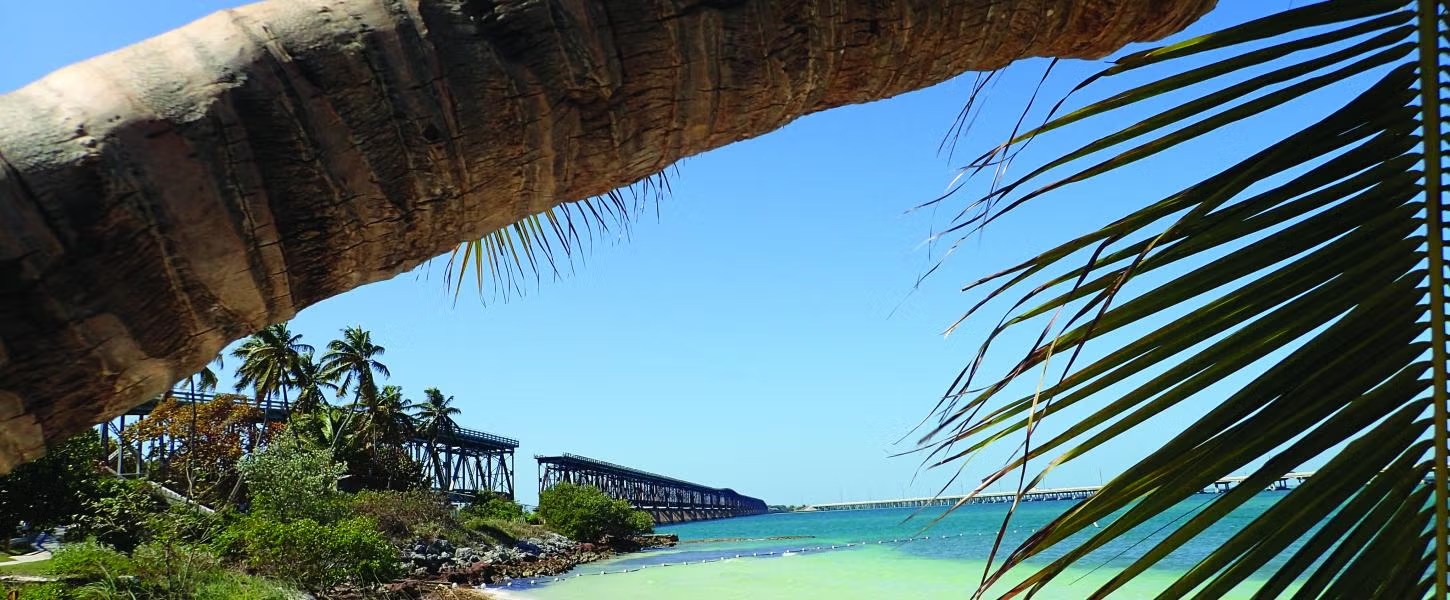
Bahia Honda State Park is at 36850 Overseas Highway in the Lower Keys. The island has several beaches and the distinctive old bridge remains. Those landmarks help orient a visitor, but they do not grant casting permission from every shoreline or viewing platform.
Ask park staff which fishing areas are currently open and where swimming boundaries begin. Older DEP fishing information describes opportunities by the old bridge seawalls. Treat it as background and confirm the present boundary before use. Do not cast from the bridge overlook simply because it provides a high view over fish. Current signs, closures and staff directions take priority.
Separate the three beaches from the fishing plan
Calusa Beach faces the bay side at the southwest end of the park. Loggerhead and Sandspur face the Atlantic side. The official park describes swimming and beach recreation at these areas. A beach view in a fishing article should not suggest that the designated swim space is an angling lane.
Choose a separate authorized fishing position where available. Leave hooks away from people entering the water and keep the park's walking routes clear. If a fishing area is closed or occupied, the beaches still offer an enjoyable observation visit. Do not move into a swimming area to replace a lost casting opportunity.
Understand the food beneath clear shallow water
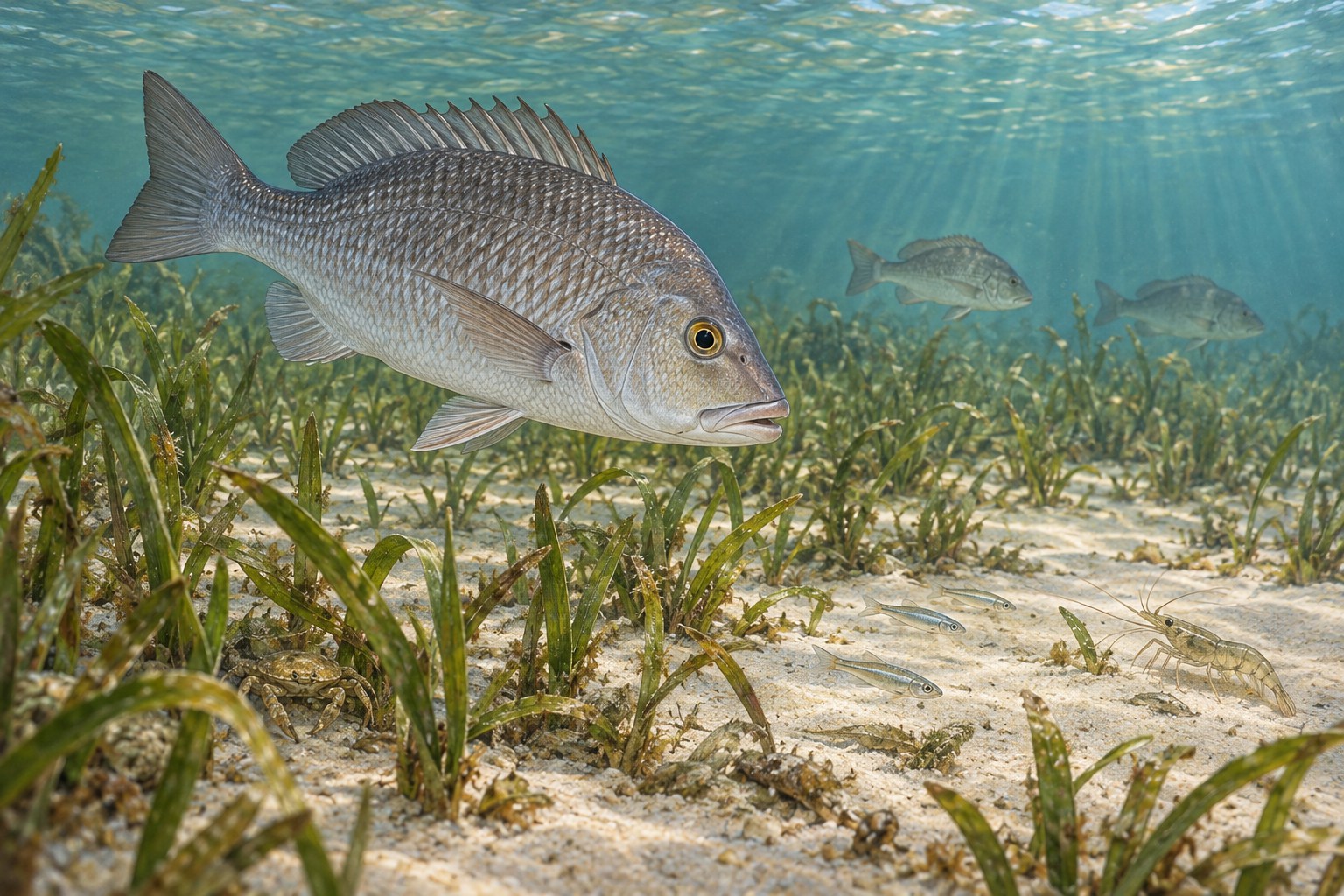
Mixed sand and submerged vegetation can support small crabs, shrimp and fish. Flats species such as bonefish search that food base, while barracuda use small fish as prey. Clear water can reveal feeding routes, but glare and bottom color can make distance and depth hard to judge.
Observe quietly from an authorized bank or appropriate craft position. A fish changing direction near a sand edge tells more than a distant dark patch. Stay off living grass and avoid pushing a boat across water too shallow for it. Healthy flats are the reason the habitat is useful, not an obstacle to remove for a closer approach.
Present a shrimp-sized offering with restrained movement
Where flats fishing is approved, a small shrimp imitation or legally obtained shrimp can match available prey. Keep the presentation light enough to move naturally in the chosen depth. Heavy lead that plows into plants can spoil both the retrieve and the habitat.
Place the offering ahead of a fish's route rather than dropping it directly on its head. Let it settle in clean sand, then use small controlled movement. If the fish turns away, allow space and reconsider the angle. Bonefish are catch-and-release fish under Florida rules, so plan gentle in-water handling rather than preparing a cooler for a flats trophy.
Control a snapper bait beside permitted hard edges
Mangrove snapper can use rough edges and structure in the wider Bahia Honda environment. A compact shrimp or small cut bait can test that habitat from an approved stable fishing position. Keep the bait beside a recoverable edge rather than pulling it through every crevice.
Use leader appropriate for abrasion and set the drag before casting. A hooked fish can turn toward cover quickly. Know how it will be landed without climbing unsafe rocks or lifting it by a damaged line. Protected species and undersized fish need careful release. Do not assume that every fish attracted to a small bait can lawfully be retained.
Use a small organized kit for a busy island park
A medium spinning outfit with spare leader, a few light jigs and small bait hooks covers many ordinary shore options. Carry weights suitable for the actual fishing area instead of assuming a heavy current rig is needed everywhere. Stay within the outfit's limits and adjust to what you can control.
Bring pliers, a measuring tool and a closed pouch for line scraps. Keep natural bait shaded and secure during walks between facilities. For catch-and-release flats fish, think about wet hands and a water-level release before the bite. If a safe landing method is unavailable at the chosen position, choose another approved area or do not cast there.
| Authorized habitat | Opening tactic | Control point |
|---|---|---|
| Clean shallow sand | Small shrimp imitation | Quiet cast ahead of feeding route |
| Recoverable structure edge | Compact natural bait | Leader and landing method |
| Viewing route only | Watch fish and bottom changes | No casting from an unapproved overlook |
A deep channel is a hazard as well as habitat
Bahia Honda Channel carries tidal flow beside the island. Wind and current can combine into rough water while protected-looking beach water remains calmer. Never enter the channel to reach fish, recover tackle or test depth. The bridge setting does not make a casual wading approach acceptable.
For a permitted boat outing, assess the launch, route and return separately. Check marine weather and sanctuary boundaries, wear life jackets and keep clear of navigation traffic. A current seam may carry food, but a small craft needs control and a safe route through the whole area. Tide height alone cannot establish those conditions.
Use season and weather to choose comfort and control
Warm conditions can make flats observation and an early short session pleasant, but afternoon heat and lightning can shorten the day. Cooler fronts can affect both fish behavior and water clarity. Wind direction may determine which authorized side is workable more than the month does.
A tide chart provides expected water level near a station. Look at actual drift before deciding on lure weight or float depth. Do not assume the precise printed high-tide moment starts a bite. Leave time for traffic through the park and the return walk, especially when family members have chosen a separate beach activity.
Leave coral, grass and bridge history intact
The surrounding Keys have sanctuary rules and protected zones. A general park fishing opportunity does not allow casting into closed water, collecting coral or treating catch-and-release as an exception everywhere. Check the current zone map for any boat route beyond the immediate approved area.
Keep pets and beach use within park rules, respect wildlife boundaries and remove all tackle waste. Use the bridge history as an observation opportunity without damaging or climbing structures. A first visit should teach the relationship between channel, flats and beaches while honoring their different uses. Choosing the right boundary is the foundation of every useful Bahia Honda fishing tactic.
Common questions
Can I fish anywhere around the old bridge?
No. Ask staff for current authorized fishing positions. A bridge overlook and a seawall are not interchangeable.
Do all three Bahia Honda beaches allow casting?
Do not assume that. Calusa, Loggerhead and Sandspur have designated swimming and visitor uses; follow the current fishing boundaries.
What bait can suit permitted shallow sand?
A small shrimp or shrimp imitation can represent flats prey, with enough control to avoid dragging through plants.
Should I wade into Bahia Honda Channel?
No. Deep water and tidal flow make it unsuitable as a casual route to a fishing position.
Prepare for your visit
Check local tides and weather. Read more about mangrove snapper, permit, bonefish. Check current FWC saltwater fishing rules.