
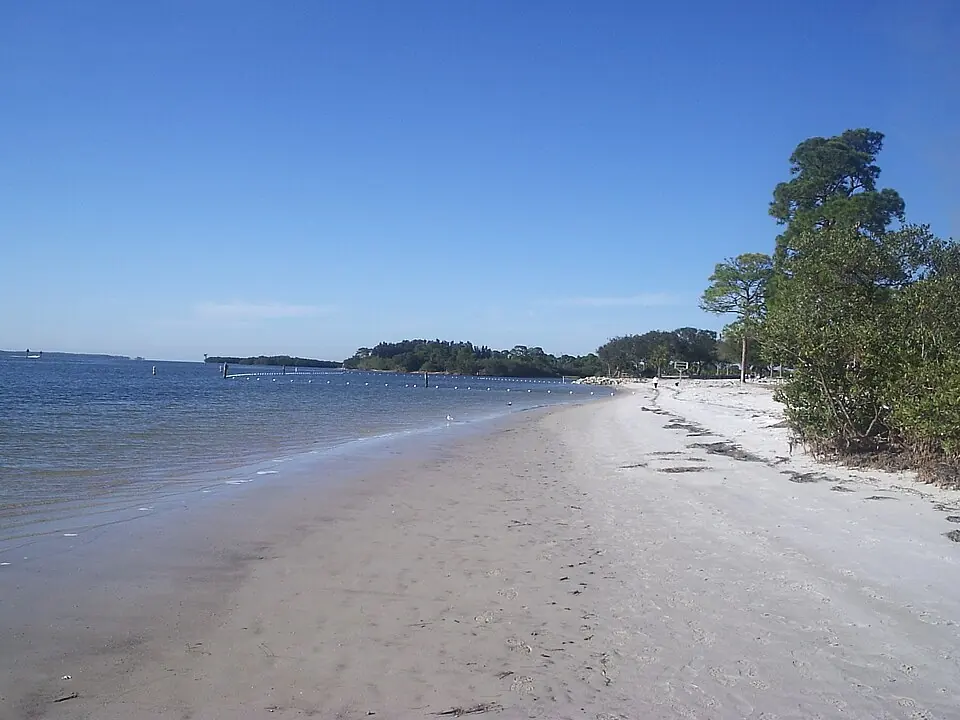
Anclote River Park in Holiday combines beach use, boating and fishing access near the river mouth. Those activities need separate space. A well-placed small bait from a permitted edge makes more sense than a long cast across a busy launch lane.
Featured image: Waterfront at Anclote River Park in Holiday. Photograph dated 2006. Current access may differ. Credit: No machine-readable author provided. Philipp Michel Reichold assumed (based on copyright claims).. CC BY-SA 2.5. Image source. Resized and converted to WebP.
Find the designated fishing area first
Florida DEP's coastal access guide lists fishing, swimming and boat-launch facilities at this park. Confirm the open fishing area and current boundaries on arrival. Do not assume all waterfront sections share the same rules, or that a pier listed in an older guide is fully open today.
Keep the ramp, boat approach and swimming zone clear. Watch for boats before each cast and retrieve if a line could obstruct their route. Fishing beside a river mouth also means wakes can arrive after the boat itself has passed.
Present shrimp along a manageable edge
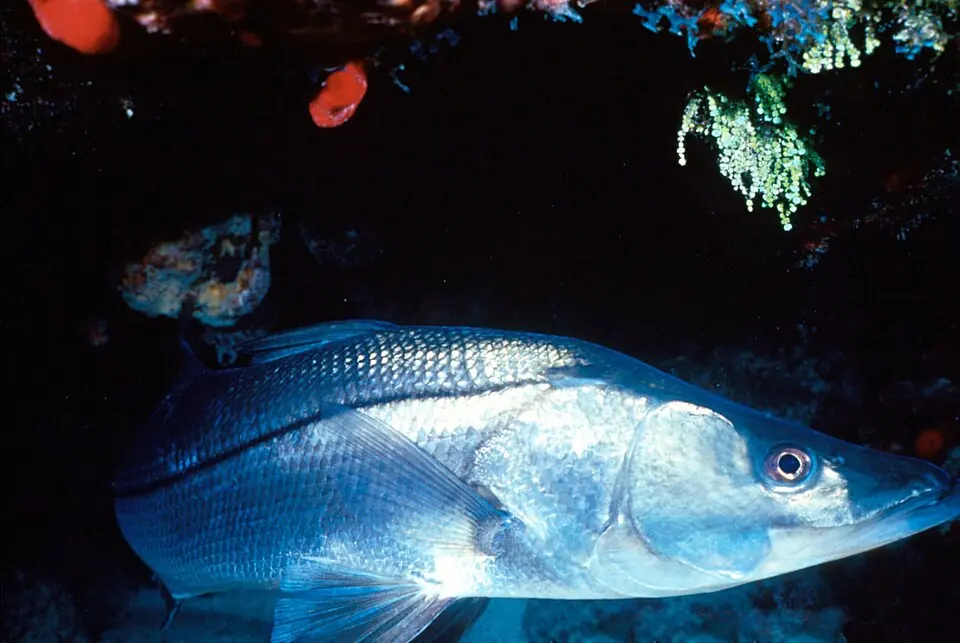
Redfish, snook and small inshore species can use suitable river-mouth habitat. Sheepshead may be worth considering around accessible structure. Start with shrimp on a small hook and enough weight for control. Do not drop a bait directly into an obstruction you cannot fish away from.
For an open shoreline edge, a small paddletail gives you a way to search. Cast across gentle flow and keep contact with the lure. If current sweeps it immediately into boats, rocks or other lines, move to a better angle or stop.
Use abrasion resistance without oversized tackle
A 7-foot medium or medium-heavy rod, 3000-4000 reel and 15-20 lb braid suit moderate inshore work. Use a 25-30 lb leader near rough structure and inspect it often. A small hook with the point exposed is better than hiding it in a large shrimp bundle.
Bring pliers and a landing net for a raised fishing edge. Keep the walking surface clear of bait containers and spare rods. Avoid leaving a hooked fish suspended while searching for tools.
Change plans when the river mouth gets busy
Boat traffic, tide and wind can make an otherwise promising edge awkward. Do not compensate by stepping onto unstable rocks or casting farther across a navigation lane. A shorter fishing window with good control is more useful than spending the afternoon repeatedly crossing boats and swimmers.
A compact packing list
| Pack | Starting choice |
|---|---|
| Rod and reel | 7-foot medium to medium-heavy rod; 3000-4000 reel |
| Main line / leader | 15-20 lb braid; 25-30 lb abrasion-resistant leader |
| First bait | Small shrimp on a hook with an exposed point |
| Landing tool | Suitable net or facility-approved landing assistance |
Fish to recognize
These references help identify possible targets in the habitats discussed above. They do not document catches at this beach or guarantee that a fish is present on your visit.

Plan another nearby fishing stop
- Fred Howard Park Fishing: Causeway and Beach Choices
- Hudson Beach Fishing: Small Baits and Access Checks
- Robert K. Rees Park Fishing: Green Key Shore Advice
Access research checked September 24, 2026, using Florida Department of Environmental Protection. Recheck closures and posted rules before traveling. Confirm your fishing license and current species-specific harvest rules with FWC before keeping fish.