
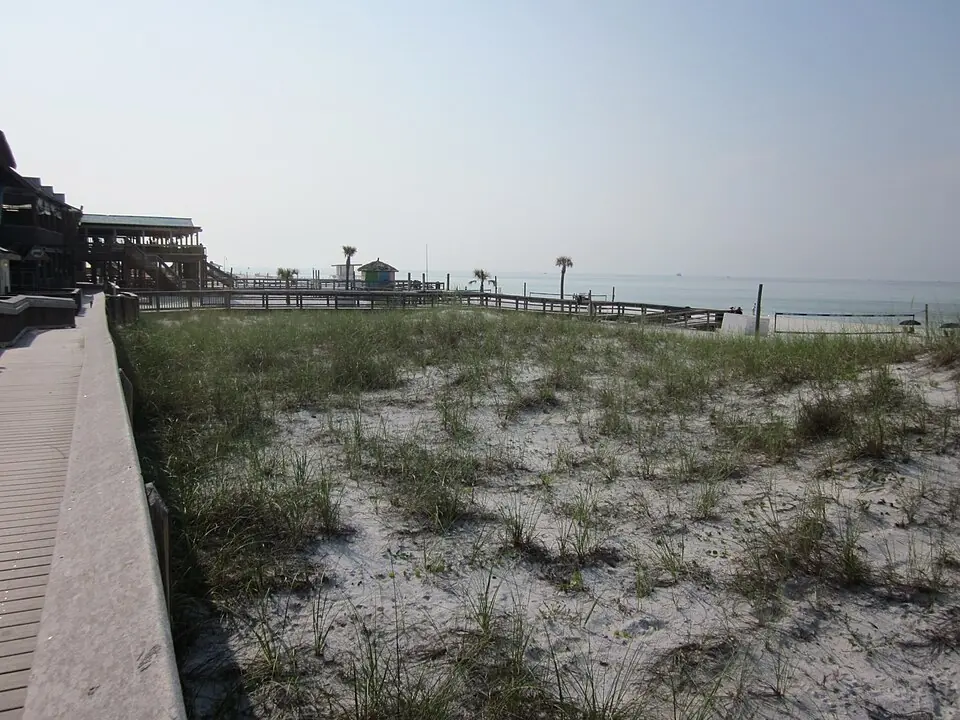
Regional context: White sand dunes and beach on Okaloosa Island. This photograph does not show the specific access described below. Photo: Infrogmation of New Orleans. CC BY-SA 3.0. Image source. Resized and converted to WebP.
Blue Dolphin Beachwalk is Beach Access 1 on Okaloosa Island. Use it as a place to reach the beach, not as a separate fishing pier. For an angler staying nearby, its value is a straightforward walk to the surf with a small amount of gear.
The county lists the access at 372 Santa Rosa Boulevard in Fort Walton Beach, with a pavilion, picnic tables, and parking. The posted operating window is one hour before sunrise to one hour after sunset. Check the entrance signs when you arrive, especially after storms or maintenance work.
Find your casting lane after the walkover
Do not stop at the foot of the boardwalk and cast through the busiest path to the water. Step onto the open beach, look in both directions, and choose an uncrowded legal stretch. Leave room behind you for the rod to swing without crossing the walkway.
This is Gulf surf. For a first try, use a small shrimp bait for whiting or pompano rather than treating the nearby sound as part of the same spot. A short visit works best when you can carry everything in one trip.
Start close before adding distance
A small trough near shore is worth a cast. Look for water that stays darker between sets of waves. Put the bait just beyond the wash and watch whether it settles or rolls away. If it holds, give the fish time to find it.
Carry two sinker sizes that fit your rod. Change weight to maintain control, not just because you have not had a bite. When seaweed builds on the line, clear it early. Weed adds pressure and can move a rig that was holding well a few minutes before.
Fish to recognize before you cast
Two practical sandy-surf targets. Their presence varies with conditions and season.


Keep the exit simple
Rinse sand from your hands before opening the reel, and keep loose hooks out of the picnic area. Pack up with time to leave within the access hours. If the beach becomes too busy, compare another signed island access or the fishing pier rather than using a private condo path.
The useful skill here is finding room and clean water. There is no permanent fish-holding hole tied to the access number; bars and troughs change with weather. Look at what is in front of you each time.
Pack the bait for an hour, not a day
Separate a small working supply from the rest of the chilled bait. Open only that container while rigging. This keeps the main supply cold and reduces spilled bait around the access. If the first hour is quiet, you can leave without having warmed an entire bag of shrimp on the sand.
A starting tackle list for Blue Dolphin Beachwalk
These are starting ranges, not a shopping requirement. Reel sizes vary by maker. Match the rod, line, and total casting weight, and adjust to the conditions you can safely fish.
| Tackle | Starting choice |
|---|---|
| Surf rod and reel | 9-10 ft spinning rod; 4000-5000 reel |
| Main line | 15-20 lb mono, or 20 lb braid with a suitable leader |
| Leader or bait rig | 20-30 lb mono for small-bait surf fishing |
| Bait and hook | Small shrimp piece or sand flea; roughly size 2 to 1/0 hook, matched to bait |
| Sinker | Only enough to hold; remain within the rod rating including bait weight |

Keep a measuring tool and pliers in the bag. Check current Florida Fish and Wildlife Conservation Commission license, season, size, and bag rules before keeping a catch. Access permission and a fishing license are separate requirements.
Access information checked September 24, 2026. Park notices, construction, weather, and local rules can change. Confirm the chosen entrance before travelling.