
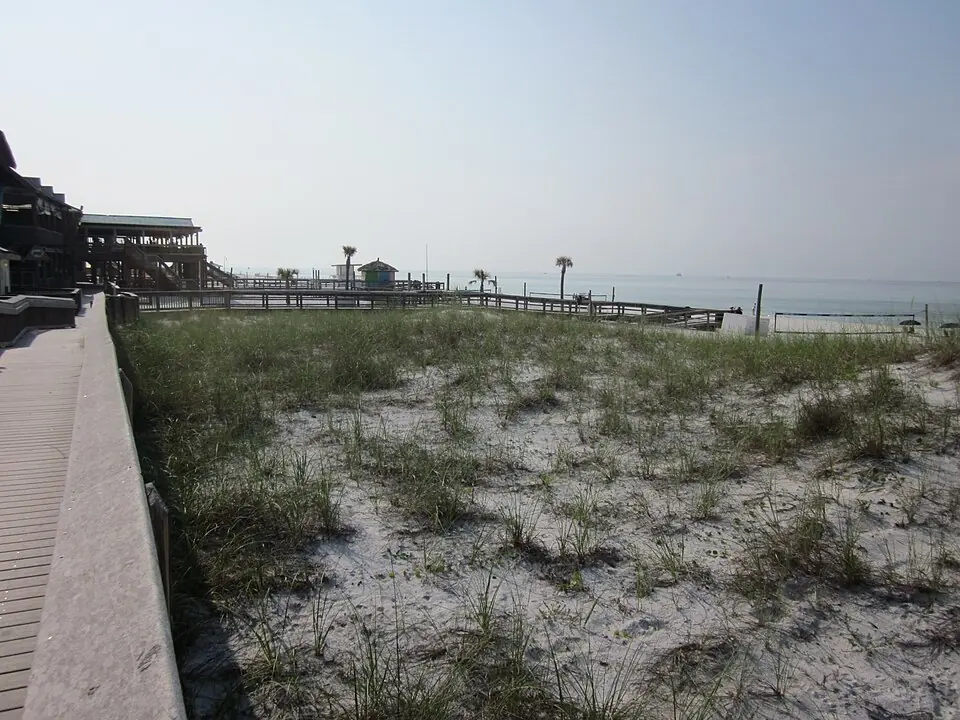
Regional context: White sand dunes and beach on Okaloosa Island. This photograph does not show the specific access described below. Photo: Infrogmation of New Orleans. CC BY-SA 3.0. Image source. Resized and converted to WebP.
Emerald Promenade Beachwalk is Beach Access 7 at 900 Santa Rosa Boulevard. It is a useful name to save when planning an Okaloosa Island surf trip, especially if you want a public entrance with basic facilities rather than relying on a resort walkway.
The county lists a pavilion, grill, restrooms, and parking. Those facilities help with the land side of the trip. They do not tell you whether the water will be clear, the beach will be empty, or fish will be feeding when you arrive.
Use the walkover, then read the shoreline
Carry rods with the tips clear of other visitors and hooks secured. Once on the sand, find a legal casting lane beyond the main path to the water. Keep the access itself open for people moving between the beach and parking.
The operating window is one hour before sunrise to one hour after sunset. Check the posted time before planning an evening session. If you need to walk down the beach to find room, allow time for that walk back.
Keep the bait small and the rig steady
For whiting and a chance at pompano, fish a small shrimp piece or purchased sand flea on a bottom rig. Start where a trough gives the bait a place to settle. A long cast is optional; holding cleanly without crossing another person's water is essential.
Try one distance for a while, then change it. If the bait is untouched, move it closer or farther before emptying the tackle box. If it vanishes quickly, check for small pickers and consider a tougher bait strip. An empty hook catches very little.
Fish to recognize before you cast
Two practical sandy-surf targets. Their presence varies with conditions and season.


Carry a finish-up kit
A few spare leaders, pliers, and a line-scrap bag are worth more than several extra rods. Inspect the leader after every fish or snag. Keep the reel off the sand when you put the outfit down.
The pavilion makes a useful place to sort packed gear after fishing, but keep bait scraps and hooks contained. Leave no line on the beach or in the parking area. For a pier session or a broader choice of access points, use the Okaloosa Island overview before your next outing.
Watch what a wave does to the line
Some rod-tip movement comes from a wave lifting the line, not a fish. Let the sinker settle and learn that rhythm. A sharp sequence of taps or a steady pull that continues between waves deserves attention. Keep a hand close to the rod rather than setting it down and walking away.
A starting tackle list for Emerald Promenade Beachwalk
These are starting ranges, not a shopping requirement. Reel sizes vary by maker. Match the rod, line, and total casting weight, and adjust to the conditions you can safely fish.
| Tackle | Starting choice |
|---|---|
| Surf rod and reel | 9-10 ft spinning rod; 4000-5000 reel |
| Main line | 15-20 lb mono, or 20 lb braid with a suitable leader |
| Leader or bait rig | 20-30 lb mono for small-bait surf fishing |
| Bait and hook | Small shrimp piece or sand flea; roughly size 2 to 1/0 hook, matched to bait |
| Sinker | Only enough to hold; remain within the rod rating including bait weight |

Keep a measuring tool and pliers in the bag. Check current Florida Fish and Wildlife Conservation Commission license, season, size, and bag rules before keeping a catch. Access permission and a fishing license are separate requirements.
Access information checked September 24, 2026. Park notices, construction, weather, and local rules can change. Confirm the chosen entrance before travelling.