
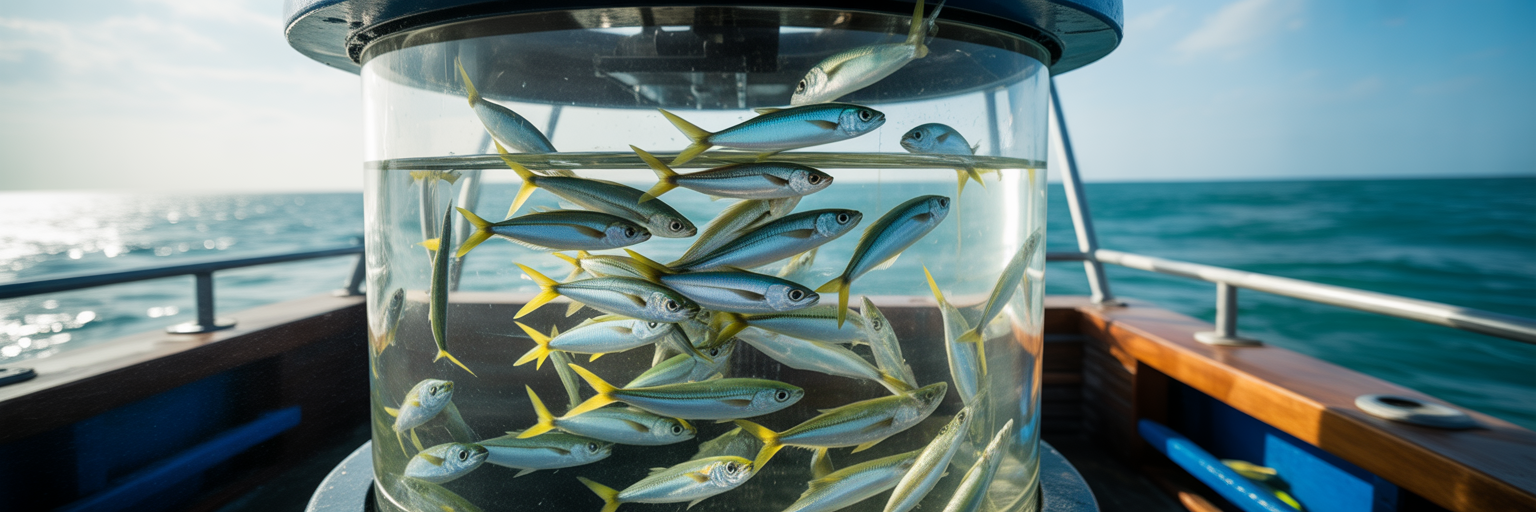
Every Florida offshore trip starts the same way: in the dark, with the hum of a bait pump and the splash of a cast net. You put in the work to black out the well with perfect pilchards or threadfins. But the real measure of success isn’t just getting them on the boat. It’s about keeping them kicking until they hit the water hours later. There is a huge difference between bait that is merely alive and bait that is lively. This is the core of successful Offshore Bait Care. A sluggish, beat-up baitfish gets ignored. A frisky, panicked bait triggers violent strikes from mahi, tuna, and sailfish.
The frustration of watching a well full of prime bait turn sluggish before you even reach the fishing grounds is something every serious angler has felt. This guide is about eliminating that problem. It is about turning your livewell into a high-performance system that delivers hot bait all day long. Mastering these techniques is the first step to putting more fish in the box and is a fundamental part of successful live bait fishing.
We will cover the three pillars of keeping your bait in fighting shape. First, minimizing stress and physical damage from the moment they leave the water. Second, creating and maintaining the perfect livewell environment. And third, adapting your methods to changing conditions like rough seas, blistering heat, and long runs offshore. This is not a chore, it is a critical tactic.
Optimizing Your Livewell System
Your livewell is more than just a bucket with a pump. It is a life support system, and every component matters. Getting the hardware right is the foundation for keeping bait frisky from the dock to the drop. A proper Florida livewell setup is not a luxury, it is a necessity for consistent offshore success.
Why Shape Matters: Round vs. Square Wells
Baitfish are programmed to swim in circles, especially when confined. A round or oval livewell allows them to school naturally without interruption. Square corners are a bait killer. The fish constantly bump their noses into the corners, causing stress, injury, and red-nosed bait that will die quickly. If you have a square well, you are starting at a disadvantage. A smooth, circular flow is what you are after.
The Heart of the System: Water Flow and Turnover Rate
Stagnant water is a death sentence. Your livewell pump is the heart of the operation, and its job is to provide a constant supply of fresh, oxygenated seawater. The rule of thumb is a full water exchange every 10 minutes. To check your system, calculate your livewell’s volume in gallons and compare it to your pump’s Gallons Per Hour (GPH) rating. For a 50-gallon well, you need a pump rated for at least 300 GPH (50 gallons x 6 exchanges per hour). More is often better, especially for sensitive baits like goggle-eyes.
Pressurized Lids: Your Best Friend in Rough Seas
A simple, loose-fitting lid is not enough for offshore runs. When the boat starts rocking, water sloshes violently, turning your livewell into a washing machine. This batters your bait, strips their slime coat, and causes extreme stress. A pressurized lid with a rubber gasket creates a tight seal. It stops the water from sloshing out onto the deck and, more importantly, it keeps the water level stable, protecting your bait from being slammed against the walls and lid.
Intakes and Overflows: The Unsung Heroes
Your pump is useless if it cannot get clean water. A sea-chest intake with a proper screen is critical to prevent grass, plastic, and other debris from clogging your pump and shutting down your entire system. This is a common point of failure that can cost you a day of fishing. Just as important is the overflow. It must be large enough to handle the pump’s full output. If it is too small, your well will overflow, creating a mess and potentially draining your batteries if the bilge pump has to run constantly. As the experts at Salt Water Sportsman have long highlighted, a balanced system where intake and overflow work in harmony is a mark of a well-designed boat.
Handling High-Value Florida Baits
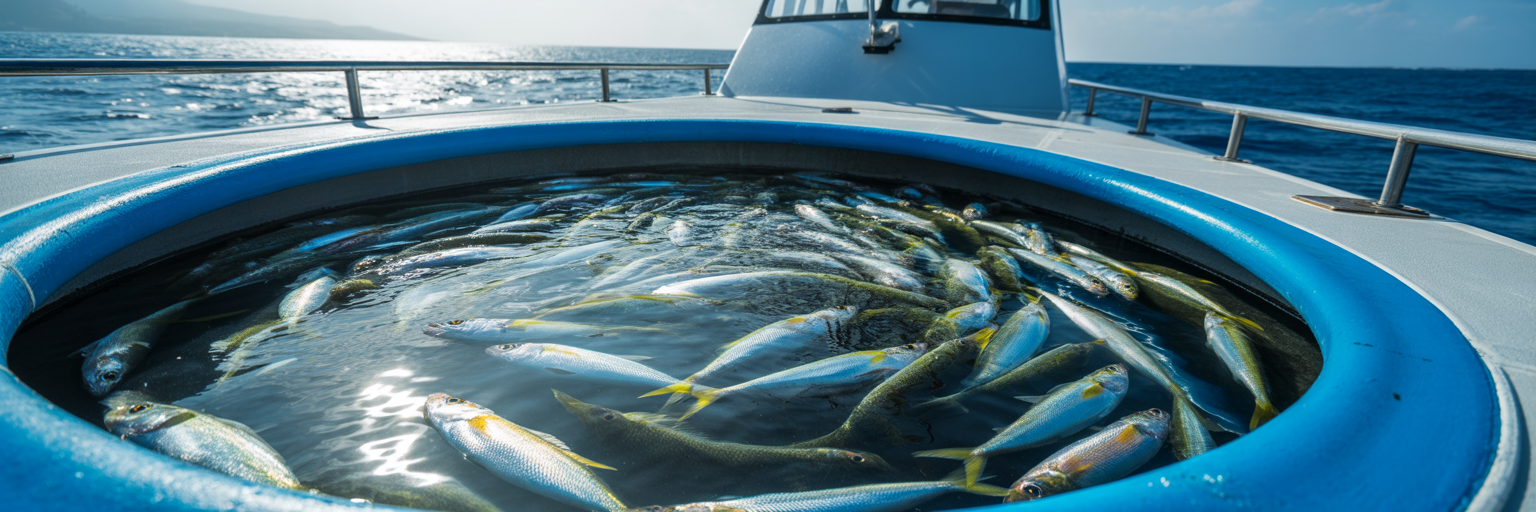
The best livewell in the world cannot save bait that has been mishandled from the start. The moment a baitfish leaves the water, the clock is ticking. Protecting their delicate bodies is just as important as managing water flow. This is especially true when it comes to caring for pilchards and threadfins, which can go from lively to lifeless in minutes if treated poorly.
The ‘No-Touch’ Rule for Scaled Baits
Every scale and every bit of slime on a baitfish is its armor. Your hands, a dry deck, or an abrasive net will strip this protective layer, leading to infection and death. Never let scaled baits like pilchards, threadfins, or sardines hit the deck. When emptying a cast net, shake them into a transfer bucket or culling box that is already filled with water. Use a dehooker to quickly release them without squeezing their bodies.
Choosing the Right Dip Net: Softness is Key
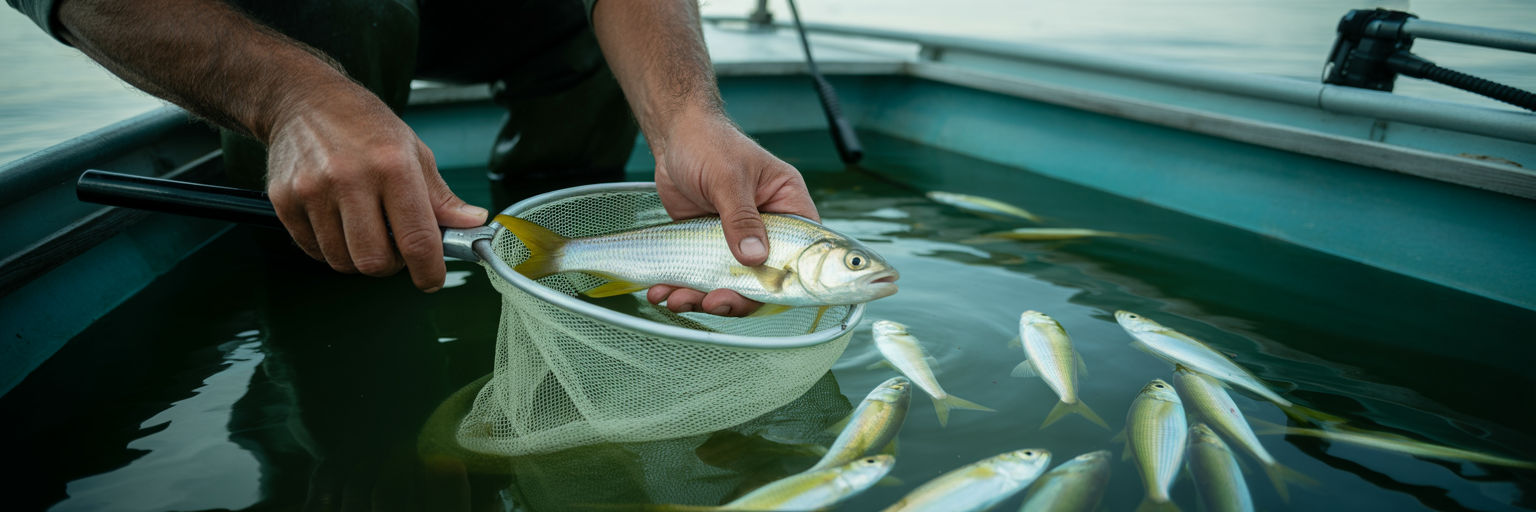
That old, stiff green mesh net you have had for years is probably killing your bait. Abrasive mesh acts like sandpaper, stripping scales and slime with every scoop. Invest in a soft, fine-mesh bait net, preferably one with a vinyl or rubber bottom. When you need to grab a bait for a hook, scoop gently and try to get only one or two at a time. Chasing the whole school around the well with a big net causes mass panic and stress.
The Golden Rule of Bait Density
Overcrowding is the fastest way to crash a livewell. Too many fish in a small space depletes oxygen and creates a toxic buildup of ammonia from their waste. A reliable guideline is one small baitfish per gallon of water. For a 40-gallon well, that means about 40 pilchards. For larger baits like goggle-eyes or blue runners, that number drops significantly. When in doubt, go with less bait. A smaller number of healthy, lively baits is far more valuable than a large well of sluggish, dying ones.
Special Care for Goggle-Eyes
Think of goggle-eyes as elite athletes. They are a prime bait for sailfish and tuna, but their high metabolism demands special treatment. Standard goggle eye bait care requires more space, higher oxygen levels, and maximum water flow. They cannot tolerate overcrowding. You might keep 40 pilchards happy in a well, but that same well might only support a dozen goggle-eyes. They are an investment, and protecting that investment means giving them the five-star treatment they require.
| Bait Type | Primary Challenge | Livewell Density (per 10 gal) | Key Handling Tip |
|---|---|---|---|
| Pilchards & Threadfins | Delicate scales and slime coat | 8-10 baits | Never let them touch the deck; use a transfer bucket. |
| Goggle-Eyes | High oxygen demand; easily exhausted | 2-3 baits | Requires maximum water flow and more space. Avoid overcrowding at all costs. |
| Blue Runners | Hardy but aggressive | 5-7 baits (size dependent) | Can bully other baits; may need a separate well. |
| Pinfish | Very hardy; spiny fins | 15-20 baits | Excellent for beginners; their spines can injure other delicate baits. |
Managing Water Quality During the Trip
Once your bait is in the well and you are underway, the job shifts to managing the invisible factors that determine their health. Water chemistry might sound complicated, but for an angler, it boils down to a few simple principles. Understanding what is happening in your water is the key to knowing how to keep live bait alive all day long, especially under the brutal Florida sun.
The Silent Killer: Ammonia Buildup
Every living creature produces waste, and for baitfish, that waste is ammonia. In a closed environment, ammonia builds up quickly and is highly toxic. It burns their gills and slowly suffocates them. This is why constant water exchange is not optional. A powerful pump running continuously flushes out ammonia-tainted water and replaces it with clean, oxygen-rich seawater. The first sign of trouble is often a dead bait. Remove it immediately before it decomposes and spikes the ammonia level, threatening the entire well.
The Relationship Between Oxygen, Temperature, and the Florida Sun
Here is a critical fact: warmer water holds less dissolved oxygen. As the sun beats down on your boat, the water in your livewell heats up, and the oxygen level drops. This is why bait often looks great in the morning but starts to fade by midday. Running your pumps continuously, even when idling, pulls in cooler water from beneath the boat. This simple action keeps the temperature stable and the oxygen levels high, which is essential for keeping bait energetic.
Raw Water vs. Recirculating Systems: Know When to Use Each
A raw water system, which constantly pumps in fresh seawater, is the gold standard for offshore fishing. It provides an endless supply of clean, cool, oxygenated water. A recirculating system, which just aerates the existing water in the well, is a backup tool. It is useful when your boat is on a lift or when you are in a dirty canal or marina where the outside water quality is poor. But once you are in clean water, switch to the raw water pump. Recirculating systems do not remove ammonia, so they are only a temporary solution.
Adapting Bait Care to Offshore Conditions
A perfect setup is just the beginning. The best captains are constantly adjusting their approach based on the weather, the run, and what the bait is telling them. Active management is what separates a good day from a great one. Applying these offshore fishing bait tips in real time will ensure your bait is as hot on the fishing grounds as it was at the dock.
Surviving the Long Run to the Grounds
That 50-mile run to the ledge can be tough on bait. This is where a pressurized lid proves its worth. In calm seas, you can sometimes slightly reduce the pump flow to let the bait rest and conserve energy. But as soon as you pull back the throttles to start fishing, crank the pumps to full power. This re-energizes the school and gets them ready for action.
Beating the Florida Heat and Temperature Shock
Dumping bait caught in 82-degree water into a livewell that has been sitting in the sun at 90 degrees can cause immediate shock and death. Before you even start catching bait, run your pumps for 15 minutes. This will acclimate the well, matching its temperature to the surrounding water and preventing a deadly shock. On scorching hot days, you can add a sealed block of ice to the well to slowly cool the water, but never let fresh water mix directly with the saltwater.
Managing Your Well in Rough Seas
When the ocean gets angry, your livewell becomes a battleground. Even with a pressurized lid, the constant pitching and rolling will slam bait against each other and the walls. The single best strategy in rough seas is to reduce your bait density. Fewer baits mean less physical contact, less stress, and a higher survival rate. It is better to arrive with 20 perfect baits than 50 beaten-up ones.
Reading the Signs: What Your Bait Is Telling You
Your bait is always communicating. Learning to read their behavior allows you to fix problems before they become catastrophic.
- Gasping at the surface (‘nosing’): This is a clear sign of low oxygen. Immediately check for a clogged intake or a dead pump. If the system is running fine, you have too many baits in the well. Thin the herd.
- Red noses: The bait are hitting the walls. This can be from stress or from the water flow being too strong for calm conditions. If the seas are flat, try slightly reducing the pump speed.
- Scattered and lethargic: This often points to high ammonia levels or warm water. Check for and remove any dead bait immediately and ensure your pump is providing a full water exchange.
- Swimming in a tight, calm school: This is the goal. Your system is balanced, the water is good, and your bait is happy and ready to get eaten.
Advanced Systems for Elite Bait Health
For the serious tournament angler or charter captain, good bait is not good enough. It has to be perfect. When money is on the line or a client’s trip of a lifetime depends on it, investing in advanced systems provides a significant competitive advantage. This is the pro-level gear that ensures every bait is a weapon.
The Ultimate Solution: Tuna Tubes
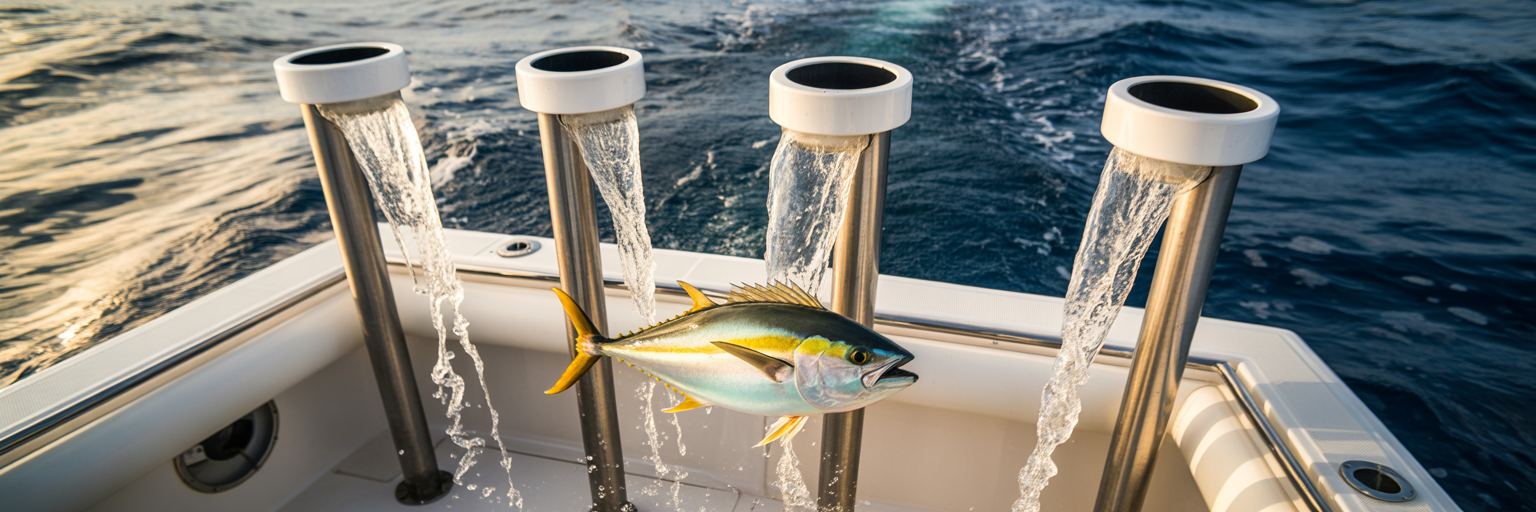
For large, high-energy baits like bonito, small blackfin, or trophy goggle-eyes, a standard livewell will not cut it. Tuna tubes are the answer. These are vertical tubes, each with its own dedicated high-volume pump that forces a constant flow of water directly over the bait’s gills. This allows the fish to remain stationary without suffocating. It is the only reliable way to keep these powerful baits alive and kicking for hours, ready for when a marlin or wahoo shows up.
The Insurance Policy: Livewell Alarms
A high-quality livewell pump can fail, and a plastic bag can clog an intake in seconds. A livewell alarm is not a luxury, it is cheap insurance. These simple sensors monitor the water flow or level in your well. If the pump quits or the well starts to drain, a loud audible alarm at the helm alerts you immediately. That alarm can be the difference between saving a $500 well of goggle-eyes and discovering a tank full of dead bait an hour later.
The Tournament Edge: Pure Oxygen Infusion
This is the pinnacle of bait care, a system used by top-tier professional teams. By using a medical-grade oxygen bottle and a fine-pore diffuser stone, you can super-saturate the water with pure oxygen. This goes far beyond what a standard aeration system can do. It allows you to keep bait at higher densities and maintain an exceptional level of energy and health. The bait comes out of the well visibly hotter and more active. It is a complex and expensive setup, but for those competing at the highest level, it provides an undeniable edge.
Putting It All Together for More Fish
The principles are simple. Handle your bait gently, giving them a well-designed home with a constant supply of clean water. Pay attention to what they are telling you throughout the day and adjust accordingly. The effort you invest in your bait before it ever touches a hook is directly proportional to your success offshore.
This is not just about keeping fish alive. It is about presenting a confident, irresistible offering that a trophy fish cannot ignore. A well full of bulletproof bait means you can run farther, fish harder, and be ready for any opportunity. The real payoff comes when that outrigger clip pops and the reel starts screaming.