
You’ve booked the trip. The anticipation of screaming drags and a full fish box is building. Then, a thought pops into your head: what about the paperwork? The question, “do I need a fishing license on a charter?” is one every angler asks. The good news is that for most trips, the answer is simple. Understanding the rules for a Florida fishing license is the first step to a stress-free day on the water, ensuring your focus stays on the fish, not on potential fines. Let’s get straight to it.
The Florida Fishing License Rule for Charters
The core question deserves a direct answer. For the vast majority of saltwater charters in Florida, you, the paying customer, do not need to buy your own fishing license. The captain’s vessel license covers everyone on board. However, the details matter, and knowing the difference between saltwater and freshwater trips, what a captain’s license truly represents, and the limits of that coverage is what separates a prepared angler from one who might face an issue.
The Bottom Line: Saltwater vs. Freshwater Charters
Here is the rule in its simplest form. If you are on a properly licensed saltwater charter boat in Florida, you are covered. The vessel’s license acts as a shield for every paying angler on board. This is a fundamental piece of the Florida charter fishing rules. It’s designed to make it easy for residents and visitors alike to enjoy the state’s incredible saltwater resources.
Now, contrast this sharply with freshwater guided trips. If you book a guide to chase largemouth on Lake Okeechobee or peacock bass in Miami’s canals, the rule is the exact opposite. Every single angler on a freshwater trip must have their own individual Florida freshwater fishing license. The guide’s license does not cover the clients. This black-and-white distinction is the most important one to remember.
Why the Saltwater Charter License Exists
The system is built on practicality. The Florida Fish and Wildlife Conservation Commission (FWC) created the charter vessel license to act as an “umbrella” or blanket permit. Think of it as a way to remove a major barrier for people who want to fish. Tourists, families, and occasional anglers can step onto a boat and fish legally without navigating the licensing system themselves. The responsibility, both financial and administrative, for meeting the FWC charter license requirements falls squarely on the captain. It’s a smart system that supports Florida’s massive recreational fishing industry.
What ‘Properly Licensed’ Really Means for Your Trip
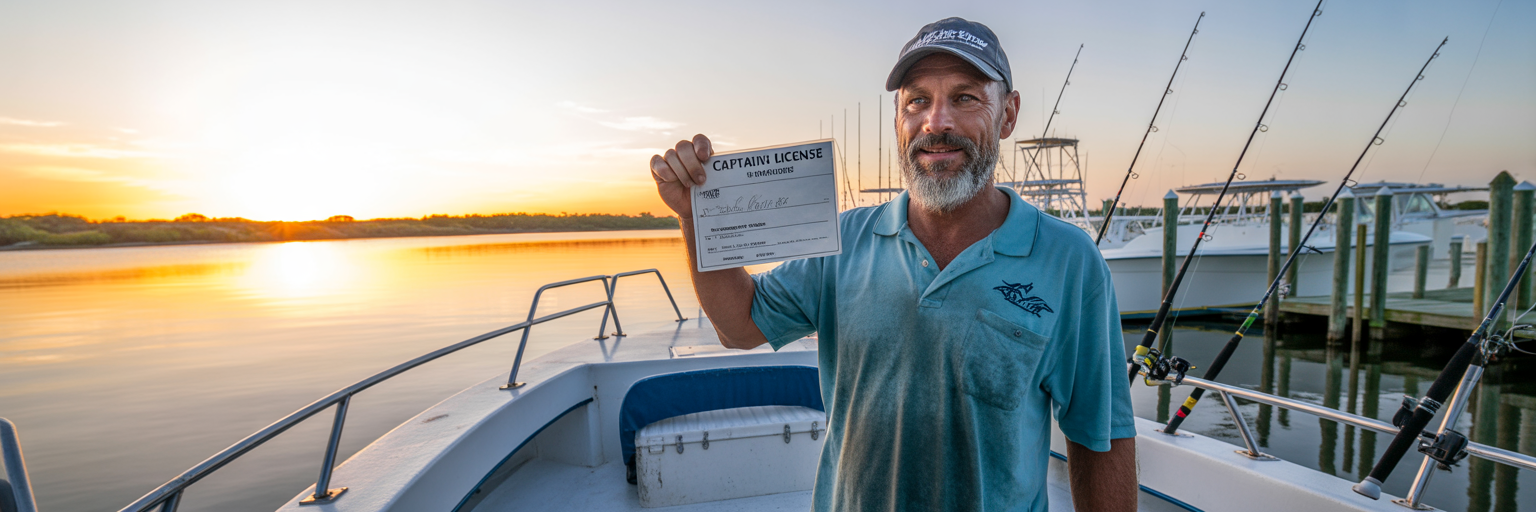
The term “properly licensed” is more than just a phrase. It’s a two-part system that ensures your safety and the legality of the trip. First, the vessel itself must have a valid FWC charter license. Second, and just as important, the captain must hold a current U.S. Coast Guard (USCG) Captain’s License. These credentials are not just pieces of paper. They prove the captain has undergone extensive training in navigation, safety procedures, and rules of the road. It means you are with a professional who is accountable for your well-being. This isn’t just about fishing legally, it’s about fishing safely.
The Limits of Coverage: On the Boat and During the Trip Only
This is a critical point that can save you from a costly ticket. The charter’s license coverage is tied specifically to that boat and the duration of your paid trip. It is not a personal, 24-hour fishing pass. For example, if your charter ends at 2:00 PM and you see snook popping bait by the dock at 3:00 PM, you are not covered to pick up a rod and cast. If you want to fish from the beach the next morning, you need your own license. The captain’s license covers you while you are a paying passenger on their vessel, and that coverage ends the moment the trip is over. While the captain’s license covers you on the boat, understanding the basics of the florida fishing license system is smart for any angler.
When the Charter’s License Covers You
Now that you know the basic rule, let’s focus on the specifics of what that charter license actually covers. This is about understanding the boundaries of the coverage so you can fish with complete confidence. The captain’s license is your ticket to fish, but it’s good to know exactly what that ticket includes. This “umbrella” coverage is clearly defined by the Florida Fish and Wildlife Conservation Commission (FWC), which states that the license authorizes the captain to take paying passengers out for hire to fish in saltwater.
Defining the Scope of a Saltwater Charter Trip
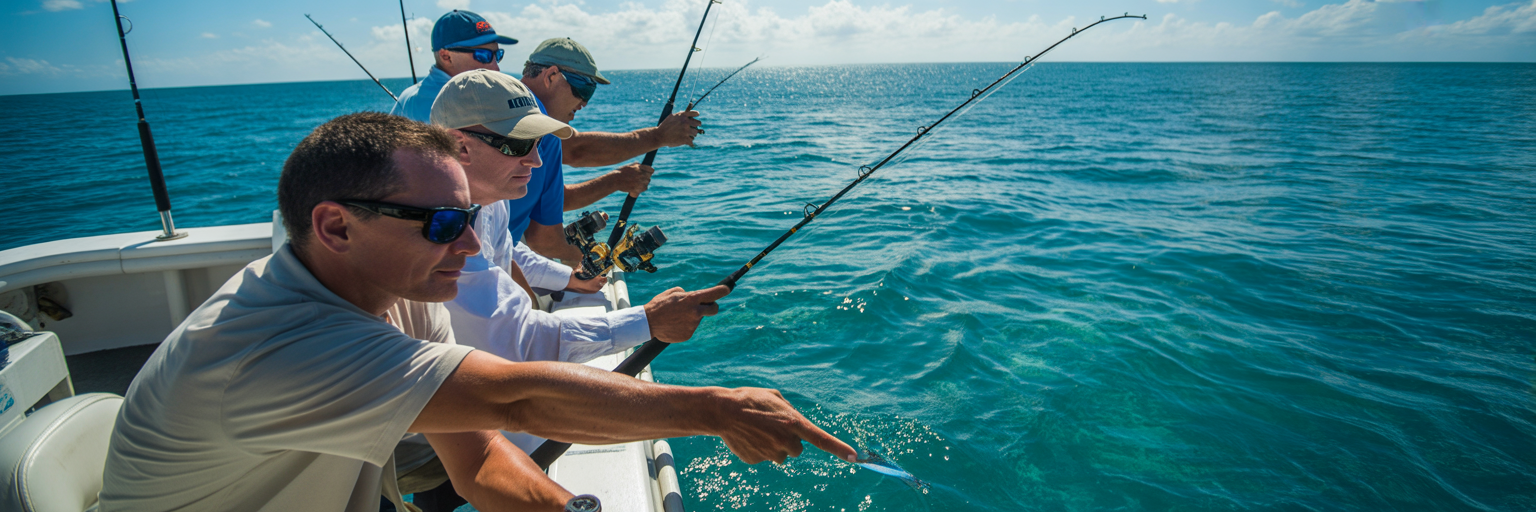
The vessel’s license gives you the legal authority to fish for, take, or attempt to take any saltwater species, as long as you are following all other regulations like seasons, size limits, and bag limits. This covers all the common fishing methods you’ll use on a charter. Whether you are trolling for mahi, bottom fishing for snapper, casting plugs to snook, or live-baiting for kingfish, you are covered. As long as you are a paying passenger actively participating in the fishing activities provided by the charter service, the vessel’s license is all you need. It’s a comprehensive permit that allows you to engage fully in the experience.
Coverage Across Florida’s State Waters
It helps to have a mental map of where you are covered. The standard FWC charter license provides full coverage for all passengers within Florida’s state waters. This is a massive fishing ground. On the Atlantic coast, state waters extend out to three nautical miles from shore. On the Gulf coast, state waters extend much farther, out to nine nautical miles from shore. Within this huge territory, from the shallowest backcountry flats to the edge of state-water reefs, the charter’s license has you protected. This geographical zone is where the vast majority of inshore and nearshore charters operate.
All Paying Passengers are Included, No Exceptions
This point is simple but powerful. It does not matter if you are a Florida resident or a tourist from halfway across the world. It doesn’t matter if you are a seasoned pro or a child holding a rod for the first time. If you are a paying customer on that boat, you are covered by the vessel’s license. There is no ambiguity. This removes any confusion for families or large groups. Everyone who paid to be on that trip is included under the captain’s license umbrella. You don’t need to worry about individual status, age, or residency.
What About Species-Specific Stamps and Permits?
This is a common point of confusion for many anglers. For the overwhelming majority of species you will target on a charter, the vessel’s license is all that is required. This includes popular targets like mahi, wahoo, kingfish, sailfish, and most snapper and grouper species. The charter license covers the act of fishing for them. However, it is important to know that harvesting a few specific “trophy” species may require an extra step from you personally. The charter covers the fishing, but keeping a specific trophy might require a permit you have to purchase yourself. This is a key detail that we will explore next.
Situations Requiring a Personal License
Knowing when you are covered is half the battle. The other half is knowing the exceptions. These are the situations where you absolutely must have your own personal license. Think of this as a heads-up from a fellow angler to help you avoid a simple but costly mistake. These are the hard lines in the sand when it comes to Florida’s fishing regulations, and there is no gray area.
The Hard Rule for All Freshwater Fishing
Let’s state this again because it is the most common mistake. The charter vessel exemption is for saltwater only. If your trip is on any freshwater body in Florida, the rule is absolute: you must buy your own Florida freshwater fishing license before you get to the ramp. This applies whether you are targeting largemouth bass on Lake Toho, chasing peacock bass in Miami, or fishing for bream in the St. Johns River. The guide’s license does not and cannot cover clients on a freshwater trip. There are no exceptions to this rule.
Fishing Outside the Charter Trip’s Time and Place
The charter’s coverage has a strict time and location limit. Once the trip is over, your coverage is over. Let’s use a real-world example. Your charter docks at 2:00 PM. You’re at the cleaning station, and you see jacks busting bait along the seawall at 4:00 PM. If you pick up a rod and make a cast, you need your own license. Another example: you had such a great time that you decide to rent a kayak the next day to explore the mangroves. The moment you put a line in the water, you need your own license. Do not assume the charter coverage extends beyond the paid trip.
Special Harvest Permits: The Snook and Lobster Rule
This is a critical detail that trips up many anglers. The charter’s license allows you to target and catch-and-release certain species like snook and spiny lobster. However, if you want to harvest (keep) one, you, the individual angler, must have purchased your own personal snook or lobster permit beforehand and have it with you. The captain cannot provide this for you. You can fight the snook of a lifetime on a charter, but if you want to put it in the cooler during an open season, the snook permit must be yours.
Fishing from a Private Boat, Kayak, or Shore
There is a hard line between a paid, licensed charter and any other type of fishing. If you are out on a friend’s private boat, even if it’s a top-of-the-line fishing machine, you need your own personal saltwater fishing license Florida. The same rule applies if you are wading the flats, fishing from a jetty, casting from a pier, or surf fishing from the beach. The charter vessel exemption is a very specific, narrow exception to the general rule. For all other saltwater fishing, the responsibility for being properly licensed is yours alone.
| Fishing Scenario | License Required | Key Consideration |
|---|---|---|
| Saltwater Charter Trip | Vessel’s Charter License | Covers all paying passengers for the duration of the trip. |
| Freshwater Guided Trip | Personal Freshwater License | The guide’s license does NOT cover clients. Must be purchased beforehand. |
| Keeping a Snook or Lobster | Personal Permit/Stamp | Even on a charter, the individual angler needs their own harvest permit. |
| Fishing from a Pier/Dock/Shore | Personal Saltwater License | The charter’s coverage does not extend beyond the trip. |
| Fishing on a Friend’s Private Boat | Personal Saltwater License | Only licensed charter vessels have coverage for guests. |
| Fishing in Federal Waters | Vessel’s Federal Permits | Captain needs special permits, but your personal license is not required. |
Federal Waters and Special Permits Explained
For anglers looking to venture further offshore, the conversation moves beyond state regulations. Once you cross into federal waters, a different set of rules applies. This is a more advanced topic, but it is essential for anyone booking a deep-sea trip for species like snapper, grouper, or amberjack. Understanding this distinction empowers you to ask the right questions and book a trip that is fully compliant and aligned with your goals.
State vs. Federal Waters: Knowing the Line
As we covered, Florida’s state waters extend 3 nautical miles on the Atlantic side and 9 nautical miles on the Gulf side. Beyond that line, you are in federal waters. From a regulatory standpoint, it is like crossing into a different jurisdiction. The laws, fishing seasons, and bag limits in federal waters are set by federal agencies like NOAA Fisheries, not the FWC. This is why you might hear about different rules for the same species depending on how far offshore you are. A fish that is legal to keep in state waters might be out of season just a few miles further out in federal waters.
The Captain’s Federal Permits: The Key to Deep Water
A standard FWC charter license is not enough for many offshore trips. For a captain to legally take paying customers to target and keep certain species in federal waters, they must hold specific federal permits. These permits are often for highly regulated and sought-after reef fish, such as red snapper, gag grouper, and amberjack in the Gulf of Mexico. These permits can be extremely limited and expensive for the captain to acquire. This is the captain’s responsibility, but an informed angler should know that these permits are the key to legally harvesting many popular offshore species.
How Federal Rules Can Affect Your Catch
Understanding federal regulations helps manage your expectations for the trip. These rules are the reason for the very short and highly anticipated red snapper seasons in the Gulf. They also dictate why a captain might tell you a fish must be released, even if it looks like a keeper. Federal size limits, bag limits, or aggregate limits (a total number of reef fish per person) might be different from state rules. The captain is legally obligated to follow these federal rules, and knowing they exist helps you understand the decisions made on the water.
Questions to Ask for an Offshore Trip
When you are booking an offshore trip, asking a few smart questions shows you have done your homework and ensures there are no surprises. This is how you confirm the trip you are paying for matches your expectations. Here are a few direct questions to ask:
- “Are we planning to fish in federal waters on this trip?”
- “I’m hoping to target red snapper. Do you have the necessary federal permits for us to keep them if we catch legal-sized ones?”
- “Are there any specific federal regulations or seasonal closures I should be aware of for the species we are targeting?”
A professional captain will appreciate these questions and give you clear, honest answers. It ensures everyone is on the same page before leaving the dock.
Your Pre-Booking Charter Checklist
You know the rules. Now it is time to turn that knowledge into action. This checklist is your step-by-step guide to booking a Florida fishing charter the right way. Following these steps will help you avoid any headaches, align expectations, and ensure you book a safe, legal, and productive trip with a true professional.
1. Verify the Captain’s Credentials
Do not be shy about this. A professional captain is proud of their credentials and will have no problem confirming them. Before you book, ask for confirmation that they have a valid USCG Captain’s License and the proper FWC charter license for their vessel. This is the non-negotiable foundation of a safe and legal trip. While many captains display their credentials proudly, you can also verify license status through the FWC’s online resources or by asking for their license number.
2. Confirm License Coverage Explicitly
Even though you know the rule, get a clear confirmation. A simple question like, “Just to confirm, your vessel’s license covers all passengers for saltwater fishing, right?” removes any doubt. Getting a direct “yes” sets a professional tone and ensures there is no misunderstanding. It is a simple step that provides complete peace of mind.
3. Discuss Target Species and Waters
This is where your new knowledge of the Florida charter fishing rules really shines. Be specific about your goals. Instead of just saying “we want to go fishing,” say “We’re hoping to catch some mahi. Will we be in an area where that’s likely?” or “I’ve always wanted to keep a legal snook. Do I need to buy my own snook permit before the trip?” This conversation clarifies permit needs upfront and makes sure the captain’s plan aligns with your hopes for the day.
4. Clarify What’s Included in the Rate
A great trip is about more than just fishing. When booking, it is crucial to confirm what the price includes to avoid surprise fees. Ask if bait, tackle, ice, and fish cleaning are part of the package. A reputable charter operation will almost always include these essentials in their quoted rate. If a price seems too good to be true, it might be because these items are add-on costs.
5. Understand the ‘No Fish, No Pay’ Gray Area
You will sometimes see charters advertised with a “no fish, no pay” guarantee. While this sounds appealing, these offers often come with many conditions and fine print. The best guarantee of a good trip is not a marketing gimmick. It is booking a captain with a solid reputation, years of experience, and great reviews from other anglers. Focus on the quality of the captain and the overall experience they provide, not just a promise of a fish.
Beyond the License: The Value of a Pro Charter
It is clear that booking a licensed charter handles the legal requirement to fish. But the value of hiring a professional captain goes far beyond just license compliance. It is about safety, expertise, and the quality of your entire experience on the water. When you book a pro, you are investing in a hassle-free, memorable day of fishing, not just a boat ride.
Safety on the Water: A Captain’s First Job
That USCG license is much more than a piece of paper. It signifies that your captain is a trained professional mariner whose first and most important job is your safety. They are skilled in navigation, reading the weather, first aid, and emergency procedures. They know the local waters intimately, including hidden hazards. This is the most important and often overlooked benefit of hiring a pro. You can relax and focus on fishing, knowing you are in capable hands.
Expertise That Puts You on the Fish
A great captain’s true value is their knowledge. They bring thousands of hours of on-the-water experience to your trip. They understand the subtle shifts in tides, the way bait moves with the wind, and the seasonal patterns that put fish on specific structures. This is local knowledge that no app or fishing report can replicate. The license gets you on the water legally, but it is the captain’s expertise that makes the reels scream.
Guardians of the Fishery: Conservation and Ethics
Licensed captains are frontline conservationists. They have a direct economic and personal interest in maintaining a healthy, sustainable fishery for the future. They are experts on the regulations and will ensure you are fishing ethically and legally. They teach clients about proper fish handling, catch-and-release techniques, and the importance of respecting the resource. Booking a licensed charter supports a professional who is invested in the future of the sport we all love.
The Ultimate Benefit: A Hassle-Free Day of Fishing
When you add it all up, the core benefit is simple. When you book a properly licensed charter, you offload all the stress. You do not have to worry about licenses, finding and catching bait, navigating unfamiliar waters, or having the right safety gear. You just show up at the dock ready to fish. It is the ultimate way to ensure a high-quality, productive, and memorable day on the water.