

One of the most common questions we hear from families getting ready to hit the water is, “Do kids need a fishing license in Florida?” The short answer is usually no, but the details are what keep your trip legal and fun. Understanding the rules for different ages and fishing situations is key to a successful day. This guide breaks down the Florida fishing license for kids and teens so you can focus on tight lines, not legal trouble.
Understanding the Florida Fishing License for Minors
Getting the paperwork right before you leave the dock is the first step to any good fishing trip. For families, this starts with knowing who needs a license and who doesn’t. The rules in Florida are straightforward, but they change at a specific age, and it’s your responsibility to know where that line is.
The Under-16 Exemption Explained
Here’s the simple part: kids under the age of 16 do not need a Florida saltwater fishing license. This applies to both Florida residents and visitors. This exemption means young anglers can fish for most saltwater species without having to purchase their own license. However, being “exempt” is not a pass to ignore the rules. They are still required to follow all other fishing regulations, including size limits, bag limits, and seasons. Think of it as an invitation to learn the rules of the water without the cost of entry.
The Transition at Age 16
The 16th birthday is the hard cutoff. There is no grace period. From that day forward, a teen angler is required to have their own license. This is a critical transition for any young angler who has grown up fishing for free. Once they turn 16, they need to get a proper florida fishing license just like any other adult angler. This includes the base license and any additional permits required for species like snook or lobster.
Residency and Its Impact for Teens
For a 16 or 17-year-old, residency makes a significant difference in the cost of a license. To qualify as a Florida resident, a person must have lived in the state for six continuous months and provide proof, such as a Florida driver’s license or ID card. A resident teen can purchase an annual license for a much lower fee than a non-resident. For parents, ensuring your teen has the proper documentation to prove residency can save a considerable amount of money over the years.
Why the Rules Exist
It’s easy to see license fees as just another expense, but that money is a direct investment in the future of our fisheries. The funds generated from license sales go to the Florida Fish and Wildlife Conservation Commission (FWC). This money supports habitat restoration, scientific research, fish stocking programs, and law enforcement. When you buy a license for your teen, you are contributing to the health of the resource, ensuring there will be redfish on the flats and grouper on the reefs for them to catch for years to come.
License Rules for Shore, Pier, and Jetty Fishing
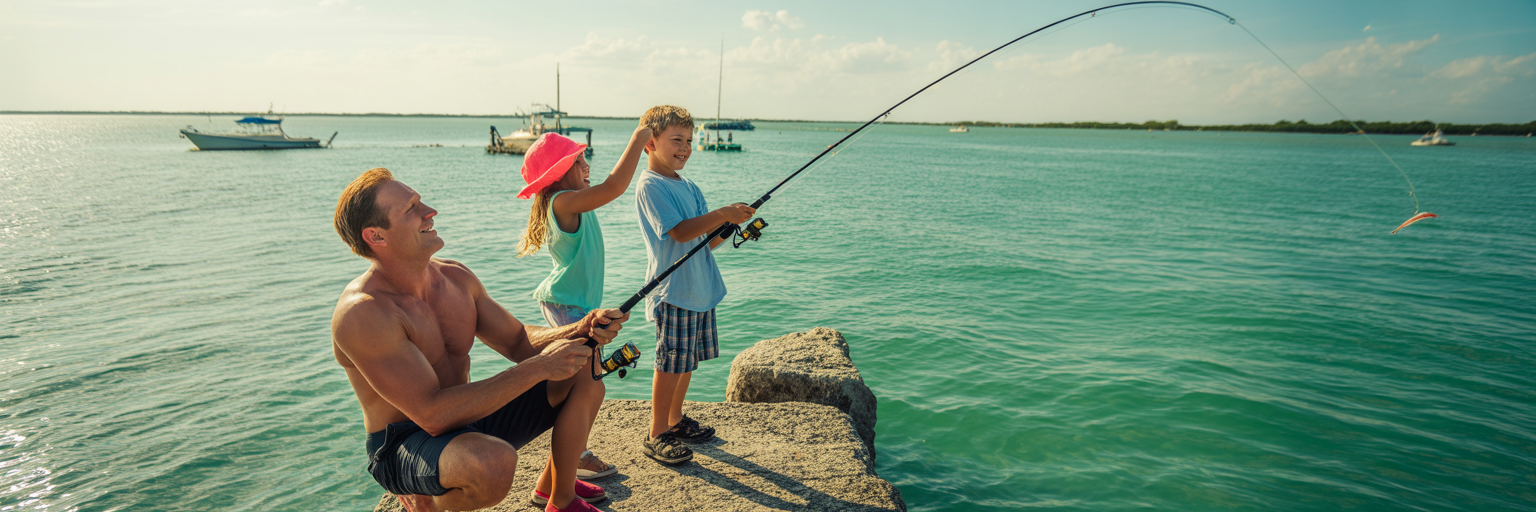
Many family fishing adventures begin with feet planted firmly on the ground. Fishing from a beach, pier, or jetty is an accessible way to introduce kids to the sport. The license rules in this environment have some unique exceptions that every shore-bound angler should know.
Fishing from Land: The Basics
Just as with boat fishing, the under-16 exemption is the primary rule to remember. Any child younger than 16 can fish from shore without a license. This makes a family outing to a local seawall or beach a simple and inexpensive way to get everyone involved. The focus can remain on casting, baiting hooks, and learning to read the water.
The No-Cost Resident Shoreline License
For Florida residents aged 16 and older, the FWC offers a fantastic option: the no-cost resident shoreline license. This license is exactly what it sounds like. It is free of charge and allows residents to fish for saltwater species from land or a structure fixed to land. This is a perfect solution for a 16 or 17-year-old resident who only fishes from the beach or local bridges. Understanding the Florida fishing regulations for minors includes knowing about this specific, money-saving option for teens who stick to the shore.
Licensed Piers: A Key Exemption
Here is a critical tip that can save you time and money. Many public fishing piers in Florida purchase a blanket pier fishing license that covers all anglers fishing from that structure. This means that if you are fishing on a licensed pier, no one in your group, regardless of age, needs an individual saltwater fishing license. Always look for a sign at the pier entrance or ask at the bait and tackle shop on the pier to confirm. This is a huge convenience, especially for visiting families.
What ‘Shoreline’ Does and Doesn’t Cover
The term “shoreline” can be a point of confusion, and getting it wrong can lead to a citation. It is vital to understand what this term includes. The no-cost shoreline license is valid only when your feet are on dry land or a structure attached to it. Here’s a clear breakdown:
- Covered: Casting from a beach, a seawall, a jetty, a bridge, or a dock fixed to land.
- Not Covered: Wading into the water to cast, fishing from a kayak or canoe (even if launched from the beach), or fishing from a float tube.
The moment you step onto anything that floats, the shoreline license becomes invalid, and different rules apply.
Boat and Kayak Fishing License Needs for Families
The rules change the instant you leave the shore. Whether you are on a 30-foot center console, a flats skiff, or a simple kayak, being on a vessel introduces a different set of license requirements. There is no room for ambiguity here; understanding this distinction is fundamental to staying legal on the water.
The Rule on the Water: No Shoreline Exemption
Let’s be perfectly clear: the no-cost resident shoreline license is completely invalid on a vessel. This applies to any floating craft, including center consoles, bay boats, jon boats, kayaks, canoes, and even stand-up paddleboards. If you are on the water and not on a fixed structure, the shoreline license does not cover you. This is one of the most common mistakes anglers make, and it’s an easy one to avoid.
Standard License Requirements for Teens on Private Vessels
On a private boat, the rules are straightforward. Anglers under 16 remain exempt from needing a license. However, any angler aged 16 or older must have a standard saltwater fishing license. This can be an annual license, a 5-year license, or a short-term 3-day or 7-day pass for visitors. There are no exceptions for teens on a private vessel simply because they are with a licensed adult. Each individual is responsible for their own license.
The Boat Captain’s Responsibility
While every angler is accountable for carrying their own license, the captain or operator of the vessel also holds a degree of responsibility. FWC officers can and do cite boat captains for fishing violations committed by their passengers. As the adult in charge, it is your job to ensure everyone on your boat who needs a license has one before you leave the dock. A quick check beforehand prevents a major headache later.
Boating Safety ID Card Requirement
Related to vessel operation is the Boating Safety Education ID Card. This is not a fishing license, but it is a legal requirement for many operators. In Florida, anyone born on or after January 1, 1988, must pass an approved boating safety course and carry their Boating Safety ID Card to legally operate a vessel with 10 horsepower or more. This is highly relevant for families with teens who may want to take the helm. You can find the full requirements and course information directly on the FWC website.
Fishing with a Charter Captain or Guide
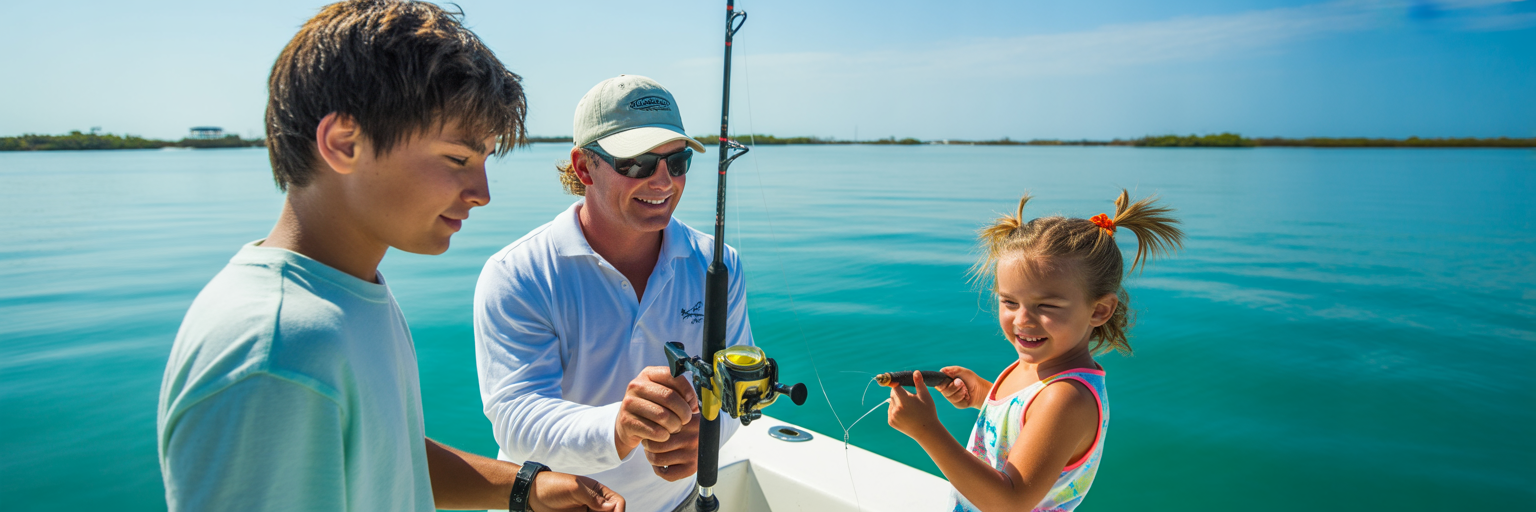
For many families, especially those visiting from out of state or exploring a new area, hiring a professional guide is the best way to guarantee a productive day on the water. When it comes to licensing, this is by far the simplest and most worry-free option for planning a day of saltwater fishing with family Florida style.
The Charter Exemption: The Easiest Option
Licensed charter captains and fishing guides maintain a special vessel license that covers all of their clients. This means that when you are a paying customer on a licensed charter boat, you and everyone in your group are covered under the captain’s license. This exemption eliminates the need for any individual in your party, whether they are a child, a teen, or an adult, to purchase their own saltwater fishing license for the day.
What the Charter License Covers
The charter license is comprehensive for general fishing. It covers all paying passengers on board for the act of saltwater fishing. This convenience is a major selling point for charter trips, as it removes any guesswork or last-minute trips to buy licenses. You can simply show up at the dock ready to fish, confident that the legal requirements are handled by your professional guide.
Verifying Your Captain’s License
While nearly all legitimate charter operations have the proper licensing, it never hurts to confirm. When you book your trip, simply ask the captain, “Does your charter license cover everyone on board?” A professional captain will answer with an immediate “yes.” This simple question provides peace of mind and confirms you are dealing with a reputable operator. You can also use the FWC’s online lookup tools to verify a captain’s license status if you wish.
What Might NOT Be Covered
This is a critical detail that prevents unexpected problems. While the captain’s license covers general saltwater fishing, it often does not cover special permits for certain highly regulated species. The most common examples are spiny lobster and tarpon. If you plan to harvest these species, you or your teen may still be required to purchase the specific permit or tag individually. The best practice is to always ask your captain about permits for your target species when you book the trip.
Special Permits and Endorsements Your Family Might Need
Beyond the basic saltwater license, Florida manages several key species with additional permits or endorsements. Understanding these requirements is the next layer of compliance, especially when targeting popular game fish. Forgetting a required permit can turn a successful catch into an illegal one.
Beyond the Basic License
Think of these as add-ons to your primary license. If an angler is required to have a saltwater fishing license, they are also required to have the necessary permits to harvest specific species. The good news for young anglers is that the under-16 license exemption also applies to these permits. If a child is not required to have a license, they are not required to have the snook or lobster permit either.
Snook and Spiny Lobster Permits
Two of the most popular targets requiring an extra permit are snook and spiny lobster. Any angler aged 16 to 64 who is required to have a license must also purchase the snook permit to harvest a snook, and the spiny lobster permit to harvest lobster. This applies even if you are just catching one for dinner. These permits are tied to your main license and must be current.
Tarpon Tags for Harvest
The tarpon tag is unique. Tarpon fishing is almost exclusively catch-and-release in Florida. A tarpon tag is only required if you intend to harvest a tarpon, which is typically only done when pursuing a state or world record. This is a separate, physical tag that must be purchased in advance.
State Reef Fish Survey for Private Boaters
This is a crucial and often overlooked requirement for anglers on private vessels targeting reef fish. Any angler 16 or older fishing from a private boat in the Gulf or Atlantic who intends to harvest popular reef fish like red snapper, gag grouper, or triggerfish must sign up for the State Reef Fish Survey. It is free to add to your license, but it is mandatory. This helps the FWC gather critical recreational catch data.
Shore-Based Shark Fishing Permit
If you or your teen plan to target sharks from any land-based location, another permit is required. The Shore-Based Shark Fishing Permit is mandatory for all anglers 16 and older who will be fishing for sharks from a beach, pier, jetty, or bridge. This permit is no-cost but requires the completion of an online educational course about shark identification and best handling practices.
For a quick reference, here is a summary of common permits. You can find the most current rules and fees on the official FWC saltwater permits page.
| Permit / Requirement | Who Needs It? | Common Fishing Scenario | Cost |
|---|---|---|---|
| Snook Permit | Anglers 16-64 required to have a saltwater license | Harvesting a snook during open season | Varies (annual fee) |
| Spiny Lobster Permit | Anglers 16-64 required to have a saltwater license | Harvesting lobster during mini-season or regular season | Varies (annual fee) |
| Tarpon Tag | Any angler wishing to harvest a tarpon | Attempting to keep a potential record-sized tarpon | Varies (per tag) |
| State Reef Fish Survey | Anglers 16+ on private vessels | Targeting or harvesting snapper, grouper, and other reef fish | No Cost |
| Shore-Based Shark Fishing Permit | Anglers 16+ targeting sharks from land | Fishing for any shark species from a beach, pier, or jetty | No Cost |
Note: This table summarizes common permit requirements. “Who Needs It?” refers to individuals not otherwise exempt. Anglers under 16 are exempt from these permit requirements because they are exempt from the underlying license. Always verify current fees and rules on the FWC website.
Beyond the License: Rules Every Young Angler Must Follow
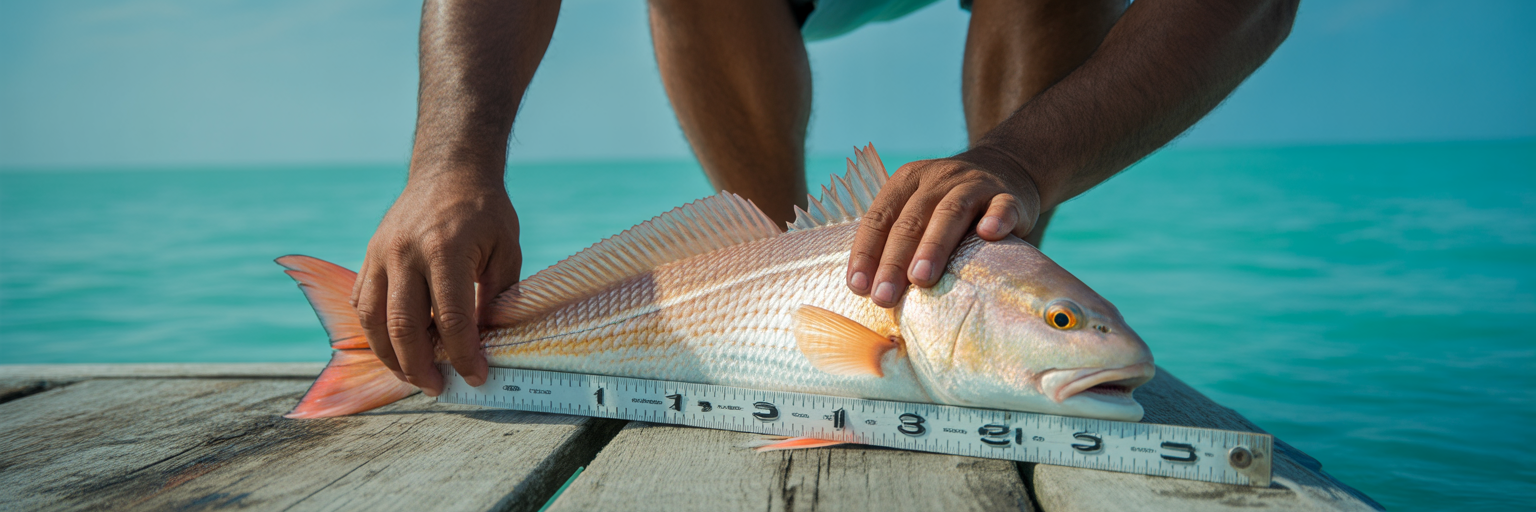
Getting the license right is only half the battle. The most important lesson you can teach a young angler is that conservation rules apply to everyone, regardless of age. This is about more than just avoiding a ticket; it is about instilling a sense of stewardship for the resource.
Exemption is Not a Free Pass
The license exemption for kids under 16 is a privilege, not a free pass to ignore the law. Every angler, licensed or not, must adhere to all FWC regulations. This includes size limits, bag limits, gear restrictions, and seasonal closures. An undersized redfish is illegal whether it was caught by a 10-year-old or a 40-year-old. This is a non-negotiable principle of ethical angling.
Teaching Size and Bag Limits
Use every catch as a teaching moment. Show your kids how to properly use a fish measuring device. Explain what a “slot limit” means for species like redfish and why it protects the most productive breeding fish. Have them help you count the fish in the cooler to ensure you stay within your legal bag limit. Involving them in the process makes them active participants in conservation.
Understanding Seasons and Closures
Explain the “why” behind fishing seasons. Talk about how closing the season for grouper or snook during their spawning period allows them to reproduce successfully. This ensures there will be more fish to catch in the future. Frame it not as a restriction, but as a way of helping the fish populations stay healthy. This connects the rules to a tangible, positive outcome.
Promoting Catch-and-Release Ethics
Teaching a child how to properly release a fish is just as important as teaching them how to catch one. Instill good habits early by demonstrating best practices for catch-and-release.
- Use circle hooks whenever possible to reduce the chance of gut-hooking a fish.
- Wet your hands before handling a fish to protect its sensitive slime coat.
- Handle the fish as little as possible and get it back in the water quickly.
- Show them how to properly revive a tired fish by holding it upright in the water and moving it gently to get water flowing over its gills.
These actions significantly increase a fish’s chance of survival.
The Ultimate Family Fishing Trip Checklist
A great day on the water starts with great preparation on land. Running through a checklist before you go ensures you have all the necessary documents, safety gear, and fishing equipment. This simple routine minimizes stress and maximizes fishing time. Here is a family fishing trip checklist Florida anglers can use to get organized.
Documentation and Legal Items
These are the non-negotiables. Make sure you have them before you leave the house.
- Photo ID for all adults and teens with licenses.
- Digital or printed copies of all fishing licenses and required permits.
- Boat registration and Boating Safety ID Card (if applicable).
- Pro Tip: Save digital copies of your documents to your phone and keep it in a waterproof pouch or dry box.
Safety and First-Aid Essentials
Safety should always be the top priority, especially with kids on board.
- Properly fitting PFDs (life jackets) for every person on the vessel. Florida law has specific requirements for children.
- A well-stocked first-aid kit with supplies for cuts, scrapes, and hook removal.
- Sun protection: hats, polarized sunglasses, UPF-rated shirts, and broad-spectrum sunscreen.
- Plenty of water to stay hydrated and snacks to keep energy levels up.
Fishing Gear and Regulations
Beyond rods and reels, these items are essential for a legal and ethical trip.
- The FWC Fish Rules app on your phone or a printed fish identification guide.
- A proper measuring device, such as a rigid fish ruler or measuring tape.
- A de-hooking tool and a pair of pliers for safe hook removal.
- A copy of the current saltwater fishing regulations, which can be downloaded from the FWC website.
Pre-Trip Checks
These are the last-minute actions to take right before you head out.
- Check the latest marine forecast for wind and weather conditions.
- Review the tide charts for your specific location.
- Confirm boat ramp hours, parking rules, and any associated fees.
- Do one final check of the FWC website for any emergency closures or regulation changes.
Keeping it Legal and Fun on the Water
Navigating Florida’s fishing regulations can seem like a lot to manage, but it boils down to a few core principles. Getting the rules right before you launch is what allows your family to relax and focus on the experience of being together on the water.
The golden rule of fishing in Florida is simple: regulations can and do change. The most important habit you can develop is to check the official FWC website for the latest rules before every single trip. What was legal last season might not be legal today. This five-minute check is the best insurance against a costly mistake.
As a parent, you are your child’s first and most important teacher on the water. How you handle the rules, respect the resource, and interact with other anglers sets the standard. You are not just teaching them how to fish; you are teaching them how to be responsible and ethical anglers for life. The planning pays off by ensuring your day is about making memories, not looking over your shoulder.