
SOUTHEAST ATLANTIC
Dania Beach
fishing guide
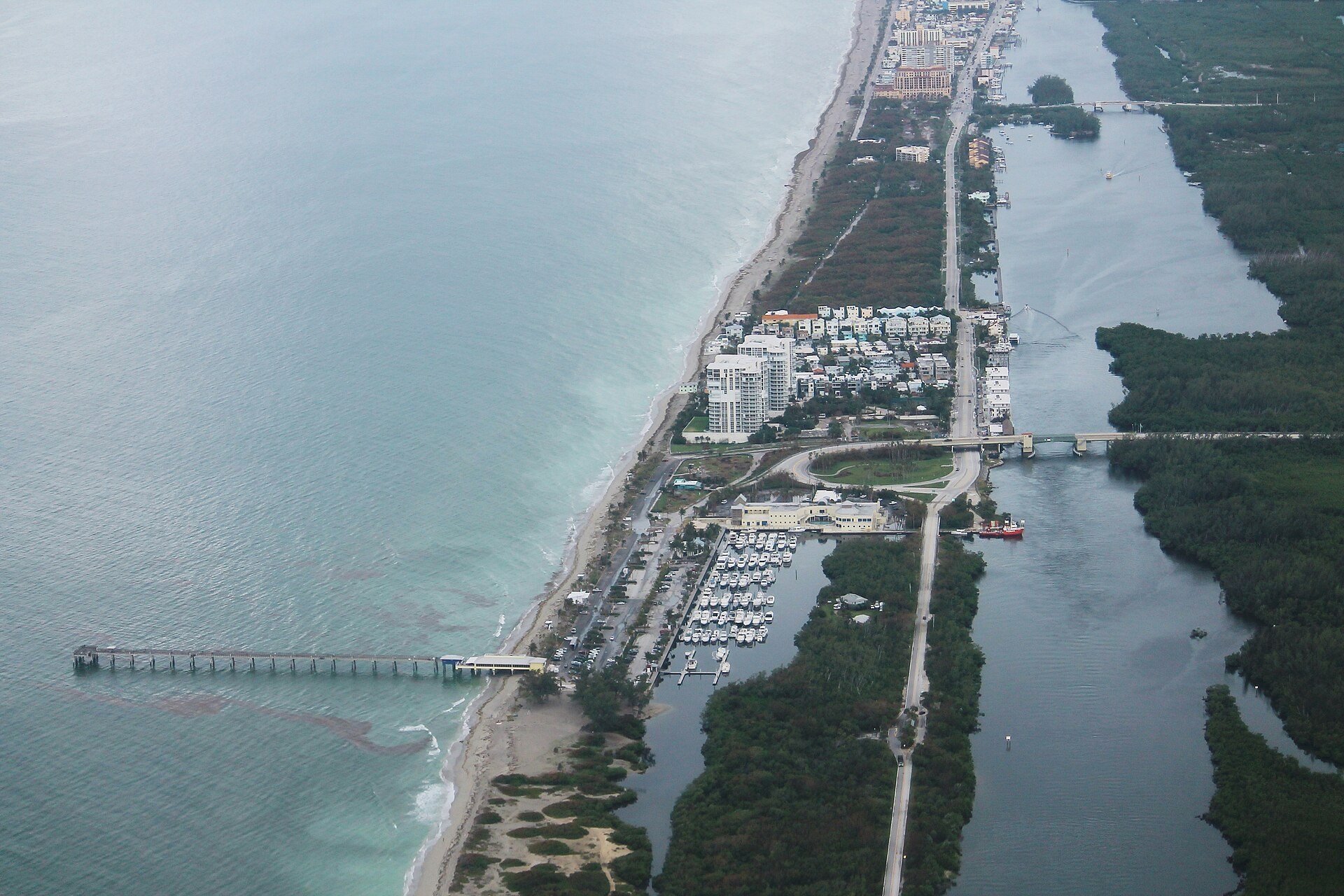
Dania Beach offers a public oceanfront and a fishing pier near the south side of Port Everglades. A pier session is the clearest place to begin, with current access and counter rules checked before the first rig is assembled.
Explore the guide ↓Confirm the fishing pier's current arrangements
Dania Beach's oceanfront pier is an established fishing landmark. City materials describe the facility, but contract and proposal documents are not a reliable substitute for the day's admission and operating information. Check the current counter or city guidance before planning around an old fee or hour.
Ask which sections are open, what tackle is permitted and how larger fish should be landed. A past photograph shows the setting without confirming that every rail is currently usable. Repairs, weather and operating changes can affect a visit.
Parking, pier admission and equipment rental are separate costs or arrangements. Confirm each one for the specific day. Do not assume that paying for the beach lot automatically provides fishing admission.
The adjoining beach has its own swimming and activity rules. A pier fishing permission does not extend to surf casting across the whole oceanfront.
Choose a rail where the line can be watched
A pier reaches beyond shorebreak, but height and pilings complicate bait control. Watch how an unbaited rig moves before selecting the final weight. Current can swing it beneath the structure even when the surface looks quiet.
Choose a clear lane that avoids neighboring lines and walking visitors. Cast only when the motion behind the rod is unobstructed. A sinker swinging beside a busy passage needs to be controlled before it leaves the rail.
The far end is not automatically the best water. Small prey can gather near different depths and structural edges. Let bait movement and available space guide the position.
If repeated snags occur, change the lane or presentation. More weight can hold a bait in the same crack rather than solve the problem.
Use one neat bait to learn the bottom
Small shrimp or baitfish pieces can test suitable coastal feeding water. Begin with a rig that can be lowered or cast and retrieved cleanly. Keep the point exposed and avoid a bait parcel too large for small fish to take.
A short leader gives more control beside pilings than a long drifting loop. Add enough weight for the actual current without making handling clumsy. Check the rig regularly for weed or stripped bait.
Mangrove snapper may use suitable cover, while other small coastal fish may feed over cleaner bottom. The catch is mixed and uncertain, so identify each fish before assuming it shares the target's rules.
Keep bait sealed so birds cannot take it from the rail. A stolen baited hook can create an entanglement problem far beyond the fishing position.
Keep a lure ready for passing baitfish
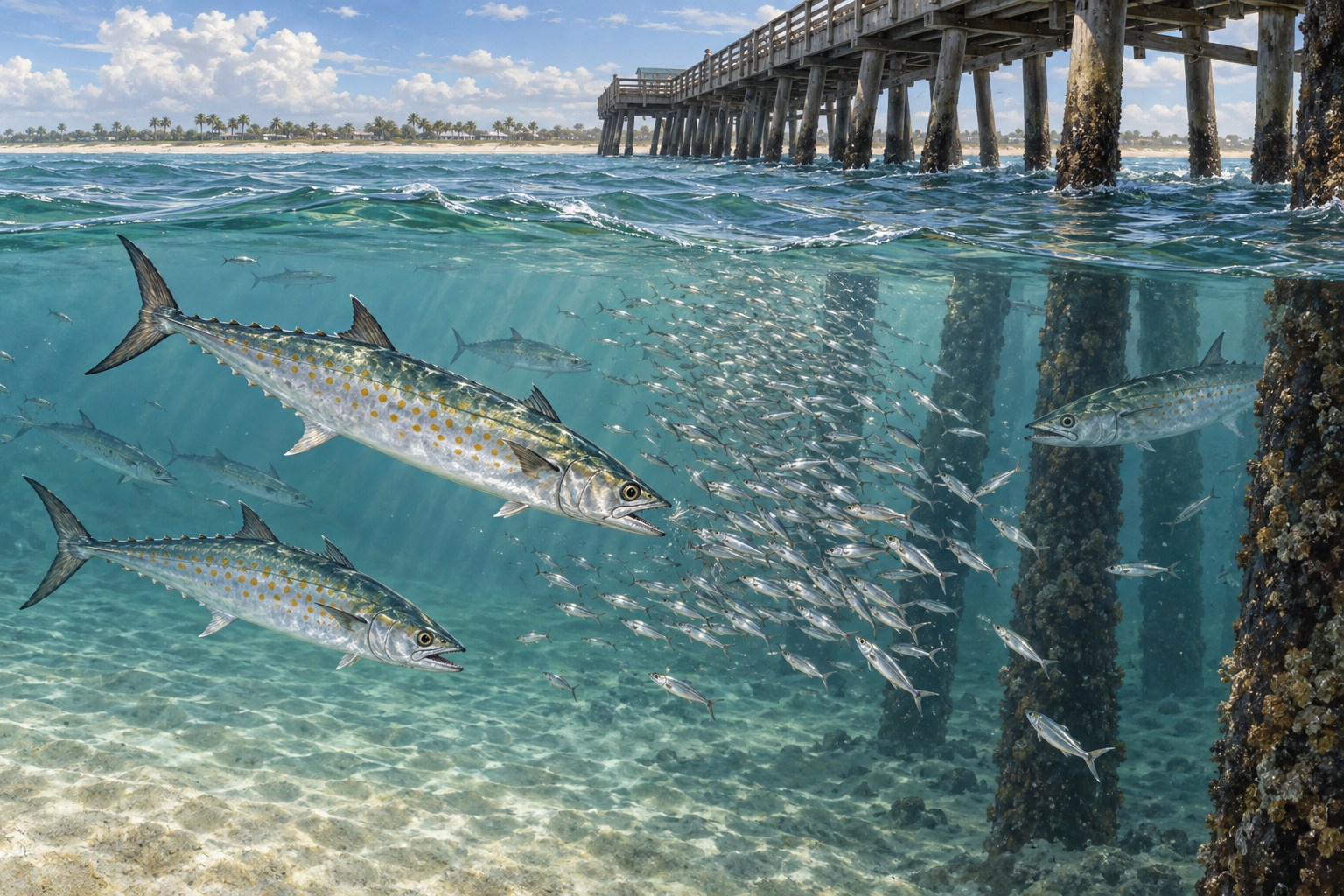
Spanish mackerel, bluefish and jacks can arrive with bait schools along the ocean. Watch for prey scattering or birds repeatedly dipping. A school may pass quickly without staying beside the pier.
A compact metal lure or jig can be worked through a clear lane. Retrieve across the edge of the activity rather than casting through every angler's line. Leave water beneath birds or crowded swimmers alone.
Toothy fish can damage ordinary leader. Inspect it after each strike and use suitable handling tools. Keep fingers away from an unfamiliar fish's mouth even when it appears small.
Set the drag and landing plan before chasing surface action. A hurried cast that hooks a powerful fish can expose problems that should have been solved at setup.
Treat structure as both cover and a landing challenge
Snook may feed around suitable shoreline and pier edges when prey is available. A swimming lure can be passed beside open cover without resting on rough bottom. Avoid a cast that regularly leads behind a piling.
Guide a hooked fish with steady pressure toward a safe approved landing position. Lifting it by the leader is not a proper answer to a high rail. Ask staff about suitable permitted equipment before the bite.
Prepare a quick release for fish that will not be kept. Supporting the body and minimizing air time matters more than a long pose on the pier. Current harvest rules must be checked even for a familiar species.
Choose a separate shoreline option deliberately
If a beach session is considered, confirm its legal timing and swimming boundary with local staff. Do not infer permission from the pier beside it. The surf needs a rig that holds without rolling into other people's space.
Nearby Dr. Von D. Mizell-Eula Johnson State Park has its own beach-fishing guidance and current facility closures. Its published rule allows beach fishing only when swimmers are not in the immediate area. Check the park's detailed guide before substituting it for the pier.
A Port Everglades view does not establish access to port property or navigation structures. Use authorized park and pier routes and keep lines away from vessels.
Choose the simplest useful presentation
One controlled method makes a first visit easier to understand. Change because of observed current or bait activity rather than adding another unattended rod.
| Observation | Possible method | First check |
|---|---|---|
| Quiet clear rail lane | Compact shrimp bait | Drift away from pilings |
| Bait moving in open water | Small metal lure or jig | Neighboring casts and birds |
| Fish using structural edge | Swimming lure beside cover | Landing and release route |
| Pier access does not fit | Separately approved shoreline plan | Beach rules and current closures |
Prepare for sun, wind and changing weather
A sea breeze can feel comfortable while the sun remains strong. Bring drinking water and shade protection suitable for an exposed rail. Keep a dry place for the phone and key.
Wind can move line across neighboring rigs and make long casting awkward. Shorten the presentation or change position if control deteriorates. Leave promptly when lightning or wave conditions make the facility unsafe.
Use weather and tide information together without treating either as a catch guarantee. Note the actual current and bait activity for a return visit. A seasonal idea becomes useful only when the day's legal space and conditions support it.
Pack with fish care and public space in mind
Keep a measuring tool and pliers accessible, and verify current FWC licensing and harvest guidance. Release unwanted catches with appropriate support. Do not leave a fish on hot deck boards while looking for equipment.
Collect leader offcuts, bait packaging and loose hooks before walking out. Leave the rail and public passage ready for the next visitor. A simple note about the usable section and cleanest drift is valuable preparation for another Dania trip.
Common questions
Can I rely on an old Dania pier price or schedule?
Check current operating information. City contract or proposal documents and older visit notes may not describe today's counter arrangements.
Does pier admission allow fishing from the whole beach?
No. The adjoining shoreline has its own activity and swimming rules. Confirm surf permission separately.
What is an easy first pier method?
Use a small neat bait in a clear recoverable lane. Watch the current and piling distance before making the setup more complicated.
Can I use the nearby state park instead?
It is a separate option with its own fishing rule and closure notices. Check those details before changing the destination.
Prepare for your visit
Check local tides and weather. Read more about snook, mangrove snapper, spanish mackerel. Check current FWC saltwater fishing rules.