
FLORIDA KEYS & EVERGLADES
Stock Island
fishing guide
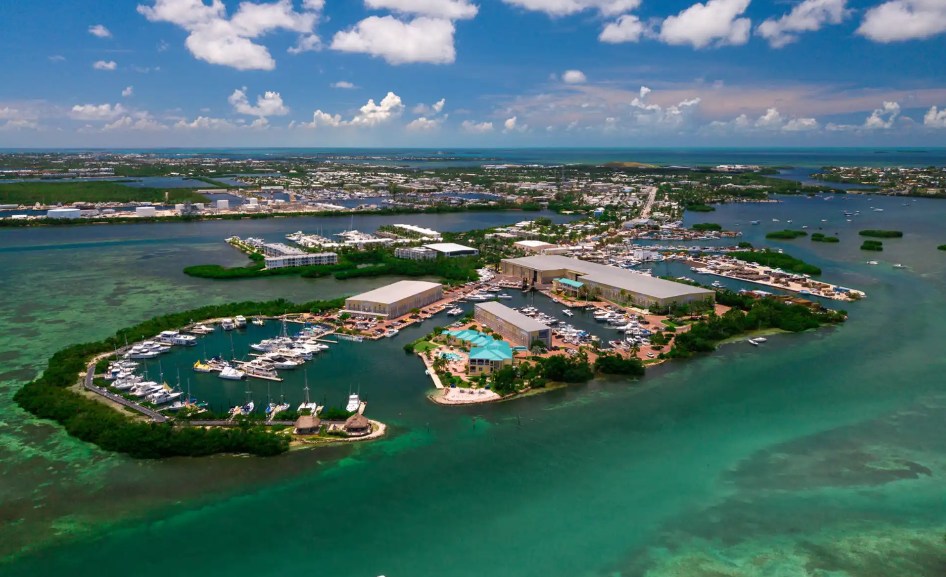
Stock Island is a working waterfront beside Key West. Marinas, channels and neighboring shallows offer varied fishing, but much of the shoreline is private or used by boats. Start with authorized access, then match tackle to a specific water type.
Explore the guide ↓Confirm access on a working island
Stock Island sits just east of Key West and has an active commercial and recreational waterfront. A marina map or waterfront restaurant photograph does not establish public fishing access. Ask the property operator before entering a dock, seawall or parking area with tackle.
A paid slip, room or restaurant visit may carry its own conditions. Find out whether fishing is allowed, where it is allowed and whether it interferes with working boats. Do not place bait buckets or rods on a dock used for unloading equipment.
For a boat outing, use an authorized ramp or marina and confirm trailer parking. Have the launch instructions before arriving with a boat in tow. A public road beside water is not automatically a safe launch or shore-fishing station.
Split the plan into channel and shallow water
Channels concentrate traffic and deeper flow. Neighboring shallow water includes vegetation, mangrove edges and sand patches. These settings require different presentations, so select one as the primary plan rather than carrying tackle for every possible species.
A channel margin may offer feeding water without putting the rig in the main boat route. That is useful only where you have safe permission and enough space. Never cast over a marked fairway or between a vessel and its dock.
On a shallow edge, quiet movement matters. Approach without repeatedly grounding a boat or dragging a paddle through vegetation. The fish benefit from intact habitat, and a calm presentation is easier to judge than one tangled in grass.
Use a precise presentation for mangrove snapper
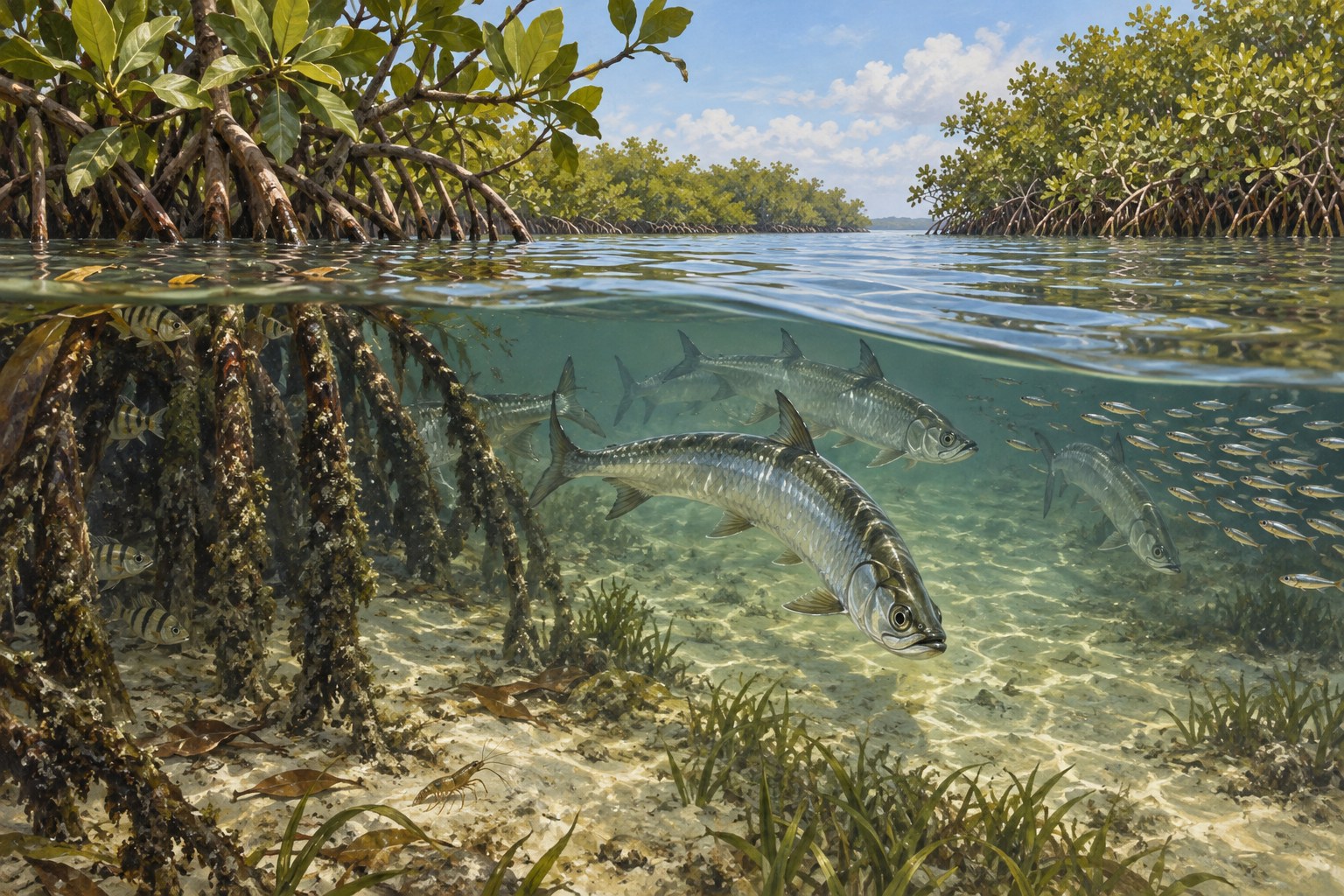
Mangrove snapper can be a sensible target near suitable legal structure. Try a small shrimp or slender piece of fresh bait on a compact hook. Leave the point exposed and use enough leader to withstand modest abrasion.
Present the bait beside the cover rather than directly inside it. A good cast gives the fish room to take the bait and gives you room to bring it back. Heavily snagged tackle wastes bait and adds line to the waterfront.
Once a snapper bites, keep controlled pressure and guide it away from cover. A smooth drag is better than sudden violent pulls. Fish around a permitted dock only when the owner allows it and passing boats cannot reach the line.
Do not turn every visible fish into a chase
Nearby Lower Keys flats can hold bonefish, permit and other shallow-water species in suitable conditions. Finding them involves more than spotting a dark shape. Observe body form, movement and whether the fish is feeding before making a cast.
A small shrimp or crab imitation can be placed ahead of a feeding route. Wait until the fish approaches rather than stripping the lure rapidly across its face. Accuracy and timing often matter more than an elaborate assortment of flies.
Flats habitat is fragile. Stay outside protected or closed areas and avoid walking over coral or thick vegetation. An empty-looking patch may still support small animals and the prey that draws game fish into the shallows.
Respond to jacks and toothy predators
Jacks can move through channels and open nearshore water after baitfish. A small paddle-tail or spoon gives a simple search approach in a clear, legal lane. Follow the prey's location rather than casting repeatedly at a vacant dock corner.
Barracuda and other toothy fish call for target-specific leader and careful handling. If tooth damage appears, replace the compromised section. Use long pliers and keep fingers away from mouths and loose hooks.
Tarpon near marina activity are not an invitation to feed or hook fish beside working vessels. Plan any tarpon outing separately with adequate tackle and lawful handling. A fish's visibility does not make the location suitable for catching it.
Match strength to the cover
For ordinary snapper or modest jacks, a medium spinning outfit is a versatile choice. Around rough structure, increase leader abrasion resistance as needed. Do not make the tackle so light that every hooked fish reaches a piling before you can turn it.
Carry a landing net, measuring board and a contained tackle-waste bag. Put hook-removal tools where you can reach them without searching through a large box. A small cooler should not occupy a marina walkway or block a ladder.
The following options are starting points for authorized access. Conditions and the intended fish can require a different outfit.
| Authorized setting | Starting approach | Avoid |
|---|---|---|
| Rough cover edge | Small natural bait and suitable leader | Placing the hook deep into structure |
| Sand beside vegetation | Quiet shrimp imitation | Dragging gear through seagrass |
| Open baitfish lane | Compact spoon or paddle-tail | Casting across vessel routes |
| Working dock | Follow the operator instructions | Blocking ladders and unloading space |
Compare the flow at your actual position
Tide predictions help organize the day, but water at a marina entrance or channel may not turn at the exact printed time. Watch the direction of debris and how bait drifts. Keep notes about the actual stage when bites occur.
An outgoing flow may pull the rig toward a busy channel. Shorten the drift before it reaches traffic. An incoming flow can bring bait into shallow margins, but do not follow it into a protected or private area.
Near slack water, try reducing weight and presenting closer to suitable cover. If nothing feeds, wait for movement or change the permitted habitat being tested. Adding more chum is not a substitute for following sanctuary rules.
Plan wind protection without losing the return route
Stock Island can be a convenient starting point, but the water outside a marina can become rough quickly. Check the marine forecast for the route you actually intend to take. A calm slip does not describe Hawk Channel or exposed flats.
Winter fronts can make shallow areas windy and cool. Summer trips need a heat and lightning plan. Keep an alternate sheltered return in mind without assuming every private dock will permit you to land.
Protect bait from heat at the dock and on the boat. Keep live bait water suitable for the load being carried. A small supply in good condition often fishes better than a crowded tank of stressed bait.
Check marine boundaries and leave the waterfront clear
The neighboring sanctuary includes protected zones with different fishing rules. Consult the current zone map before leaving the island. NOAA also places limits on feeding or attracting fish from vessels, so do not assume a familiar chumming practice is permitted.
Check Florida harvest rules and any applicable federal rules before retaining fish. Keep the species identifiable and use the correct measurement method. Do not copy a bag limit from an old dock sign or social-media catch photograph.
Finish by removing bait residue, line scraps and hooks from your authorized fishing space. Never discard waste into marina water. The next user may be a boat crew, a swimmer at another site or a bird that cannot tell line from food.
Common questions
Is Stock Island's waterfront all public?
No. Much of it is marina or other private property. Obtain permission for the exact dock or shore position.
What is a simple snapper bait?
A small shrimp or narrow fresh bait strip on a compact exposed hook is a useful starting point.
Can I target visible tarpon inside a marina?
Visibility does not establish permission or safe fishing conditions. Plan tarpon fishing in an appropriate allowed area.
What matters before taking a boat toward nearby reefs?
Check marine weather, current charts and sanctuary zone boundaries as well as the applicable fishing rules.
Prepare for your visit
Check local tides and weather. Read more about mangrove snapper, permit, bonefish. Check current FWC saltwater fishing rules.