
FLORIDA KEYS & EVERGLADES
Sugarloaf Key
fishing guide
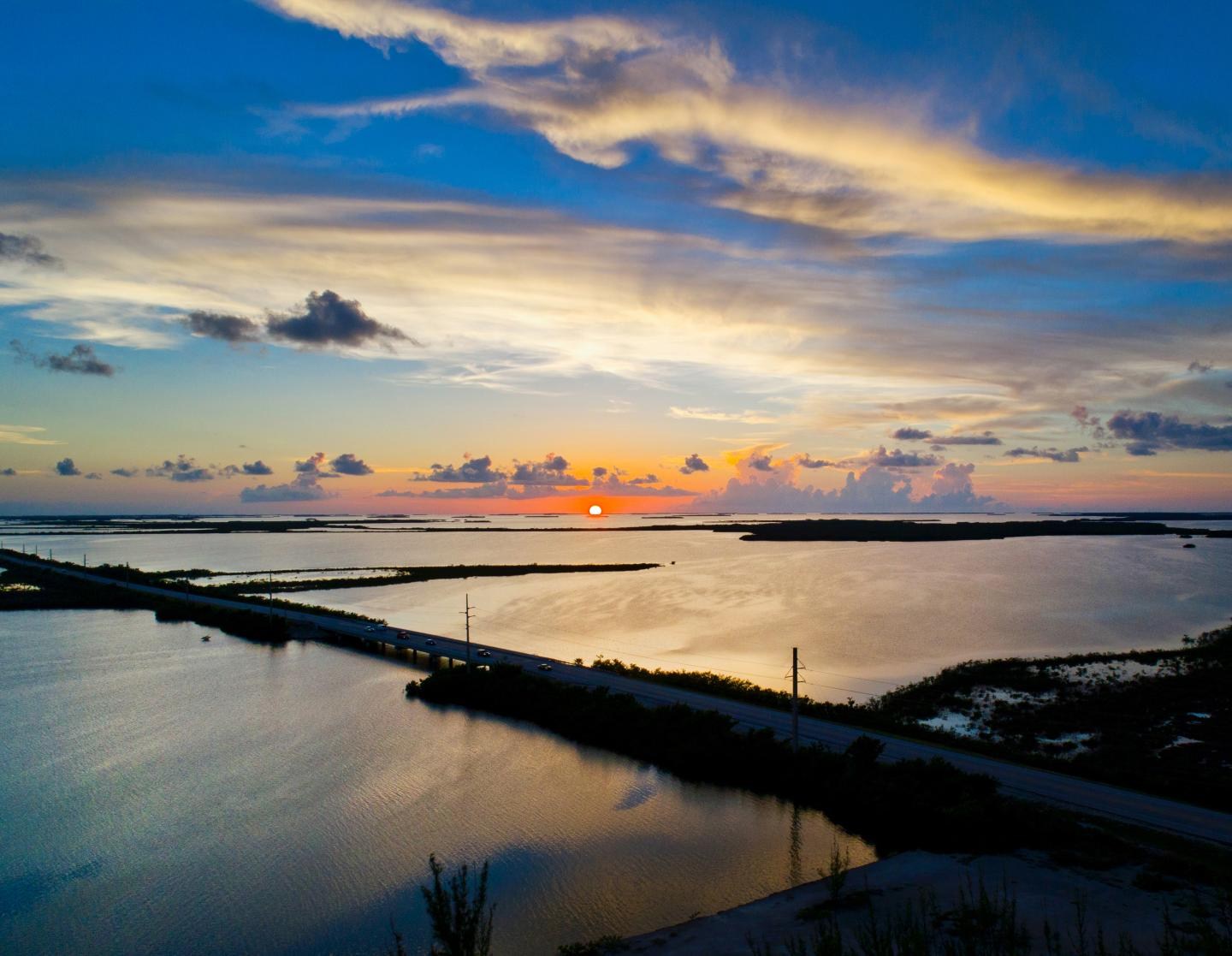
Sugarloaf Key sits among shallow bays, mangroves and protected Lower Keys habitat. It suits careful flats and backcountry planning rather than casual roadside casting. Choose lawful access and a manageable tide window before searching for feeding fish.
Explore the guide ↓Find permission before finding fish
Upper and Lower Sugarloaf form a useful starting region for Lower Keys fishing, but there is no single public beach that represents every shoreline. Homes, private ramps, refuge land and mangroves make access uneven. Establish the exact authorized entry point first.
The county ramp list does not make every small roadside landing public. Use a verified public facility or obtain permission from a marina operator. Confirm whether parking, launching and fishing are separate permissions at that facility.
National Key Deer Refuge has land on Sugarloaf and neighboring keys. Its trails are for land recreation, not automatic routes to improvised shoreline fishing. Read the current refuge instructions and do not push through vegetation to reach a tempting flat.
Learn the difference between a flat and a channel
Broad shallow areas can look easy to cross at high water and become impassable later. Identify deeper routes before leaving a launch. A change from pale sand to darker water needs careful interpretation because vegetation also darkens the view.
Search legal water for sand beside grass, small depressions and channel edges. These changes can let prey and predators move through otherwise shallow habitat. A clean presentation along an edge is often more informative than blind casts across a broad flat.
Use a push pole, paddle or suitable shallow-water approach without damaging bottom plants. If the boat needs more depth, back out along the known route. Repeatedly running the motor against the bottom creates damage instead of a shortcut.
Make a quiet cast ahead of a feeding route
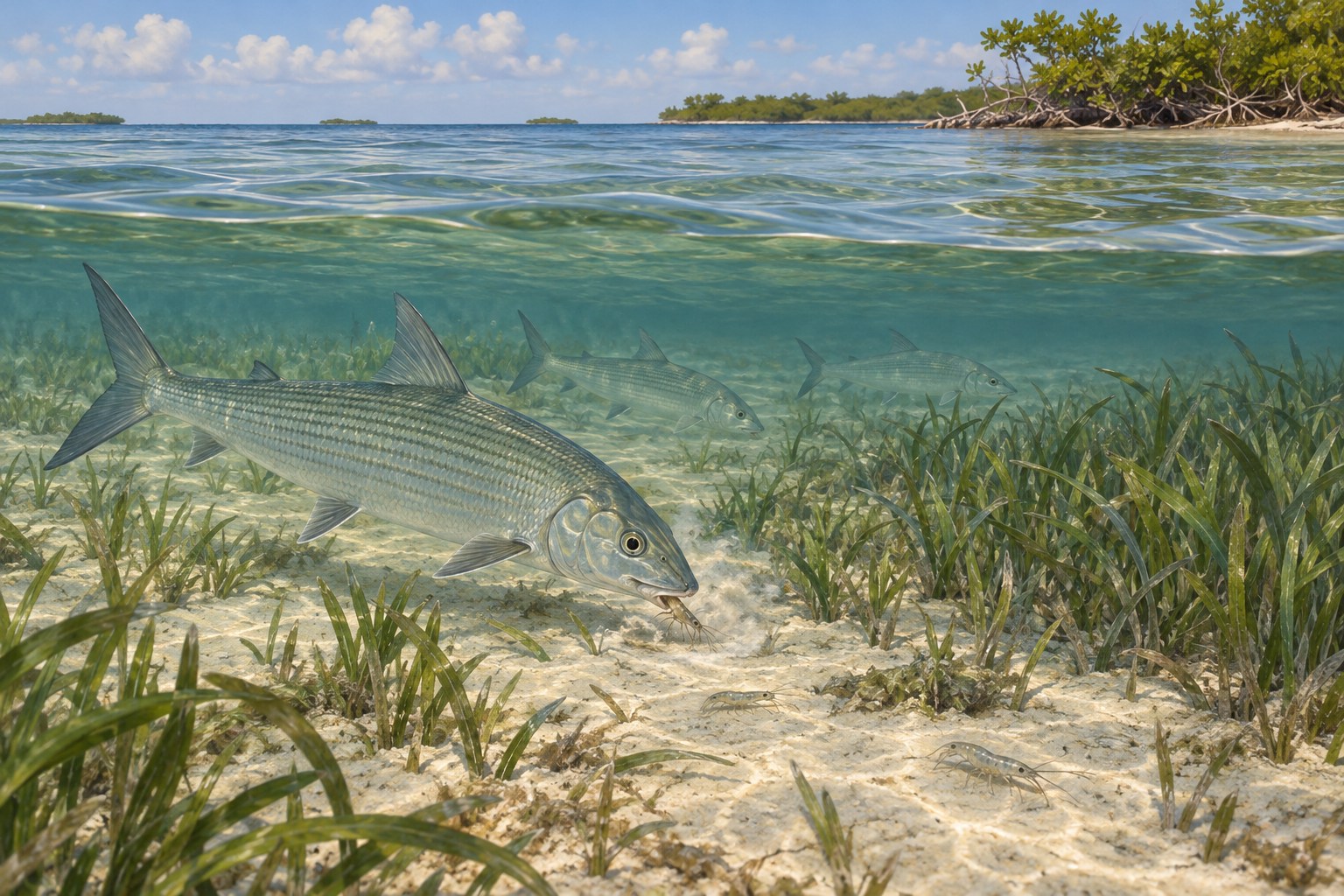
Bonefish are specialized flats targets in the Lower Keys. They feed on small crustaceans and other bottom prey. Sight fishing begins with identifying the fish and understanding its direction, not with casting immediately at the first shadow.
A small shrimp imitation can settle ahead of a fish's path on suitable open bottom. Let the fish approach before moving it gently. Pulling the offering toward the fish's face at high speed can look unnatural and frighten it.
Keep false casts away from the fish when fly fishing. With spinning gear, use a controlled quiet entry and avoid unnecessary weight. Work within your accurate casting distance rather than trying to reach every fish you see.
Treat permit as a patient opportunity
Permit may feed over suitable flats and deeper margins, often on crustacean prey. A crab imitation is a reasonable tool when a fish is clearly identified and the water allows a clean presentation. This is deliberate sight fishing rather than a guaranteed daily catch.
Watch the fish long enough to see whether it is feeding or simply traveling. Place the offering where it can be found without crossing the fish's back. Small adjustments in position can matter more than replacing the lure repeatedly.
Do not collect bait from protected habitat or assume every crab you encounter can legally be used. Bring appropriate lawful bait or artificials from a reliable source. Keep the plan simple enough to release an unexpected fish promptly.
Work open edges for snapper and mobile predators
Mangrove-lined water offers a different approach from sight fishing on bare sand. Small snapper can hold near roots, while jacks may move along the edge after prey. Fish only in permitted areas and keep the boat clear of wildlife boundaries.
A shrimp or small soft plastic can be worked just outside the roots. Aim where the offering can return without dragging through branches. If the rig continually snags, shorten the cast and choose a more open pocket.
Tarpon, barracuda and other larger predators require suitable tackle and handling. Do not target them with the same small outfit chosen for a delicate flats cast. A mixed region is a reason to choose an intended target, not to ignore the size difference.
Choose tackle for one clear purpose
For a general inshore search, a medium spinning outfit and spare leaders keep the kit versatile. For specialized sight fishing, choose a setup you can cast accurately and quietly. Practice before the trip rather than learning a new outfit over feeding fish.
Bring a shallow-water chart, polarized glasses, sun protection and plenty of water. Store hooks in closed compartments and protect the landing net from tangling with fly line or braid. A neat boat makes a precise cast and quick release easier.
These presentations apply to open lawful habitat, with the choice adjusted for actual fish size and water conditions.
| Target or habitat | Presentation idea | Useful restraint |
|---|---|---|
| Feeding bonefish | Small shrimp imitation | Quiet entry ahead of the route |
| Identified permit | Crab imitation on suitable bottom | Observe before casting |
| Mangrove margin | Shrimp or small paddle-tail | Stay outside the roots |
| Falling flat | Known deeper return route | Leave before the crossing becomes too shallow |
Keep enough water for the return
A rising tide can open access to feeding margins, but the boat's draft still matters. Note the depth at narrow crossings as you pass them. The same bank may have less water by the time you return.
Falling water can gather prey near deeper drains. That does not justify following fish into every narrow channel. Know whether a return route remains open if the tide falls farther or wind pushes more water off the flat.
Check a local forecast station and compare predictions with the actual shoreline. Water movement around islands may differ in timing and strength. Use the tide as a planning aid rather than treating its printed time as a navigation guarantee.
Respect wind across broad shallow bays
A flat calm launch can lead to windier open water farther from shore. Check the wind direction against the full route. Small kayaks and paddleboards need a much more conservative range than a suitable powered boat.
Cold fronts can alter both fish behavior and shallow-water depth. On hot days, take short breaks before fatigue affects casting or judgment. Summer thunderclouds require a prompt return, especially where mangroves are the only apparent shelter.
Tell someone where you are launching and when you intend to return. Carry a reliable communication method and navigation backup. A familiar island name is not specific enough for a useful float plan.
Keep refuge land and marine zones in the plan
Give Key deer space on the roads and never feed them. Avoid birds roosting on mangrove islands and follow any marked no-entry or no-motor boundaries. A shallow bay is also wildlife habitat even when there are few visitors.
Use current sanctuary maps to distinguish open fishing water from protected zones. State and federal harvest requirements still apply outside those zones. A regional fishing reputation does not override a site-specific closure.
Keep bonefish and other released fish supported in the water when practical. Minimize air exposure and avoid long fights on undersized tackle. Retrieve broken line, and leave grass, coral and mangrove roots undisturbed after the last cast.
Common questions
Does Sugarloaf Key have unrestricted roadside fishing access?
No. Verify the exact shore or launch permission. Private property and refuge land require different access checks.
Why use a shrimp imitation on a flat?
It can resemble small bottom prey for feeding bonefish when placed quietly ahead of their route.
Is a crab imitation only for permit?
No single lure guarantees a species. Use it when the identified target and bottom conditions suit the presentation.
What is the main shallow-boat concern?
Enough water for the return route. Falling tide and wind can leave a previously usable crossing too shallow.
Prepare for your visit
Check local tides and weather. Read more about permit, bonefish, tarpon. Check current FWC saltwater fishing rules.