
Essential Mahi Tactics for Choppy Florida Seas
Every Florida angler knows the feeling. The best months for mahi often bring sporty seas that test your gear, your boat, and your resolve. This isn’t a problem, it is an opportunity. Those choppy conditions are a filter that separates crews who are prepared from those who turn back to the inlet empty handed. Success out there requires more than just a good weather window, it demands specific mahi tactics designed for when the ocean gets angry. Mastering these adjustments is what builds true offshore confidence and turns a questionable forecast into a memorable trip.
The core challenge is simple: standard, fair-weather trolling techniques fall apart in a sloppy sea. We have all seen it. Lures that should be swimming perfectly instead skip across the surface like flat stones. Lines that were set with precision become a tangled mess as the boat rolls and pitches. Even spotting a lit-up school of fish becomes nearly impossible in the chaotic surface glare and foam. These frustrations are not a sign of a bad day, they are a signal that your approach needs to change.
This is your playbook for adapting that approach. We will cover the critical adjustments needed to keep your spread fishing effectively, how to make the smart go/no-go call before you even leave the dock, and how to use the rough conditions to your advantage to locate fish. Before you can adapt to heavy seas, a solid foundation in the fundamentals of mahi mahi fishing is essential, as these are the principles we will be modifying for control and performance.
The payoff for this preparation is significant. Catching mahi when most boats stay at the dock is not just possible, it is often incredibly productive. The fish are still there, the bait is still concentrated, and the fishing pressure is low. By learning to manage your boat and your tackle in these conditions, you open up more fishing days and gain an edge that few other crews possess. It is about turning a marginal day into a successful one through skill and preparation.
Reading Conditions and Making the Go/No-Go Call
The most important decision of any offshore trip happens before you clear the inlet. Making the right go/no-go call is a mark of a seasoned captain, and it is based on a deeper reading of the environment than just looking at a single wave height number on a forecast. It is about understanding the ocean’s energy and recognizing true danger zones.
Understanding Wave Height vs. Wave Period
This is a concept that every offshore angler must understand. Wave height alone tells you very little. The critical factor is the wave period, which is the time in seconds between wave crests. A three foot sea at a four second interval is a miserable, boat-pounding chop that will soak your crew, beat up your gear, and make fishing nearly impossible. In contrast, a five foot swell at a nine second interval is a comfortable, rolling sea that is perfectly fishable for most offshore boats. Learn to look for the period on your marine forecast. A long period means more space between waves and a much better ride.
The Wind-Against-Current Danger Zone
This is a classic and extremely dangerous Florida offshore hazard, especially for anyone fishing near the Gulf Stream. When a strong wind, particularly from the north or northeast, blows against the north-flowing current, the waves have nowhere to go but up. They become steep, stacked, and dangerously close together, sometimes looking like a solid wall of water. This is a non-negotiable no-go situation. If the forecast calls for a stiff wind opposing a strong current, stay home. The mahi will be there tomorrow, your crew and vessel need to be too.
Strategic Departure and Route Planning
Smart captains do not just point the bow toward a waypoint. They plan their route based on the conditions. With a strong north wind, for example, leaving from an inlet that allows you to run south along the beach for a few miles can provide a much safer and more comfortable start. This lee shore protects you from the worst of the seas, allowing you to get settled before making the turn offshore into deeper water. Understanding these conditions is part of a broader seasonal strategy. As noted by veteran captains in the Florida Keys, knowing when and where mahi are likely to be during different times of the year helps you plan safer, more productive trips. Always look at the wind and sea direction to choose the smartest departure point and route.
Finally, embrace the turn-back rule. Heading out the inlet, feeling the true conditions, and deciding to call it a day is the mark of an experienced, responsible captain, not a failure. Trust your gut. If it feels wrong, it probably is. Florida offshore fishing safety is paramount, and no fish is worth risking your boat or your crew.
Adjusting Your Trolling Spread for Control
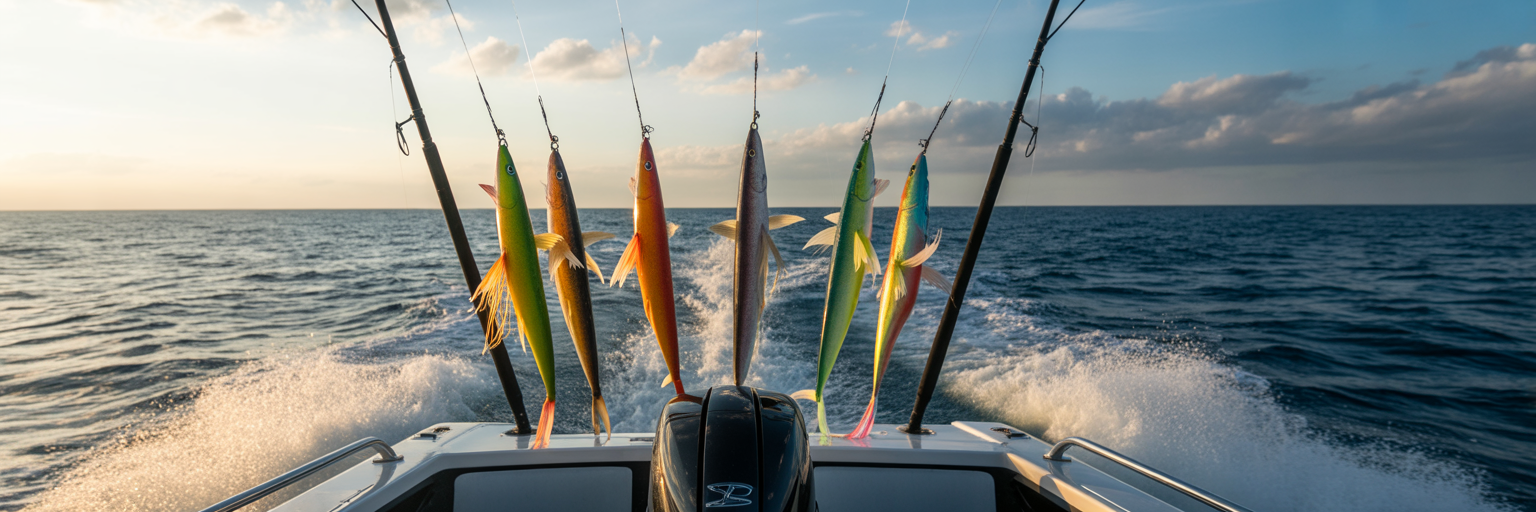
Once you have made the call to go, success depends on adapting your trolling spread for control in a chaotic environment. The goal is to keep your lures in the water and fishing effectively, not just dragging them behind the boat. This requires a complete rethinking of your fair-weather setup, focusing on speed, spacing, and position. This is the core of effective rough water trolling for mahi.
The first and most critical adjustment is to slow down. The typical six to eight knot trolling speed that works on calm days is far too fast for rough seas. At that speed, your lures will spend more time airborne than they do in the water. Pull back the throttles into the four to six knot range. The right speed is the one that allows your lures to stay in the water and swim naturally as the boat climbs and descends waves, not violently skip across the surface.
Next, you must widen the horizontal spacing of your spread. Think of your outriggers as long pendulums. As the boat rolls heavily from side to side, the lines swing in wide, sweeping arcs. If your lures are too close together, they will inevitably cross and create a tangled nightmare that wastes precious fishing time. Push your outrigger lures further out on the riggers and use the full beam of your boat to create maximum separation between your flat lines. This space is your insurance against tangles.
It may seem counterintuitive, but you also need to shorten the entire spread’s length. Bring all your lures twenty-five to thirty percent closer to the boat than you normally would. This accomplishes two things. First, it gives you better visual contact and control, allowing you to see strikes and react faster. Second, it keeps the lures in the cleaner, less turbulent water of the boat’s immediate wake. This zone provides a more stable environment where lure action is more consistent and visible to predators.
Fine-tuning your outrigger release clips is the final piece of the puzzle. The tension needs to be just right. Set them tight enough to handle the shock and jarring of the boat’s motion without prematurely popping the line out. However, they must still be light enough to release cleanly when a mahi strikes. This often means moving from a light or medium setting to a medium or heavy one. It is a balance you will find with experience, but it is essential for keeping your baits in the water and connected to the rod.
| Tactic | Fair Weather (2-3 ft seas) | Rough Water (4-6 ft seas) | Reason for Change |
|---|---|---|---|
| Trolling Speed | 6-8 knots | 4-6 knots | Keeps lures in the water and tracking properly. |
| Horizontal Spacing | Standard width | Wider spacing | Prevents tangles as the boat rolls and pitches. |
| Spread Length | Standard length (long) | Shorter by 25-30% | Improves control and keeps lures in cleaner water. |
| Lure Placement | Staggered through multiple wave crests | Concentrated closer to the transom | Easier to monitor and react to strikes. |
| Outrigger Clip Tension | Light to medium | Medium to heavy | Prevents premature releases from wave shock. |
Lure Selection and Rigging for Heavy Water
In heavy seas, the lures you choose can make or break your day. The wrong lure will spend more time out of the water than in it, rendering it useless. The tackle at the end of your line must be selected specifically for its ability to perform in a turbulent environment. This is not the time for finesse, it is the time for lures that dig in and get to work.
The single most important factor is weight. Lightweight lures, no matter how attractive they look in the tackle shop, are a waste of time in rough water. They will be thrown from the water with every wave and will fail to track properly. The best lures for rough seas are those with heavier, lead-weighted heads. This weight helps them dig into the face of a wave and stay subsurface, where a mahi can actually eat them. This is a non-negotiable principle for heavy-water success.
Lure head shape also plays a critical role in how it performs. Certain designs are simply better suited for the chaos of a choppy sea.
- Chugger / Cupped-Face Lures: These are your top choice for rough conditions. The cupped face grabs water, creating a consistent and noisy smoke trail that attracts fish. This design also makes them highly resistant to tumbling or spinning out, allowing them to run true even when the boat is surging.
- Jet Heads: High-quality jet heads are another excellent option. They are designed to track straight, and the jets create an enticing bubble trail. The key is ensuring they are heavy enough to stay down in the water column. A lightweight jet will perform just as poorly as any other lightweight lure.
- Slant-Head Lures: Use these with caution. While they can be deadly in calm to moderate seas, many slant-head designs will spin out, blow out of the water, or fail to track correctly when the ocean gets angry. It is often best to save these for calmer days and stick with more stable designs in the rough stuff.
This brings us to the ballyhoo versus artificials debate. While ballyhoo is a go-to bait for many mahi anglers, it has significant drawbacks in rough water. A natural bait can wash out, get mangled by wave action, or start spinning unnaturally very quickly. This means you are constantly checking baits and re-rigging. In these conditions, high-quality, well-rigged artificial lures offer superior durability and consistent action, making them a more reliable and far less frustrating choice.
Finally, your rigging must be robust. The violent motion of the boat and lures puts immense strain on every connection. This is the time to step up your leader material, perhaps from 100-pound to 130-pound monofilament. Use high-quality chafe gear on all loops and connections. Most importantly, make it a habit to frequently check your swivels, hooks, and crimps for any signs of wear or fatigue throughout the day. A single weak point will fail under these conditions.
Boat Handling and Crew Coordination
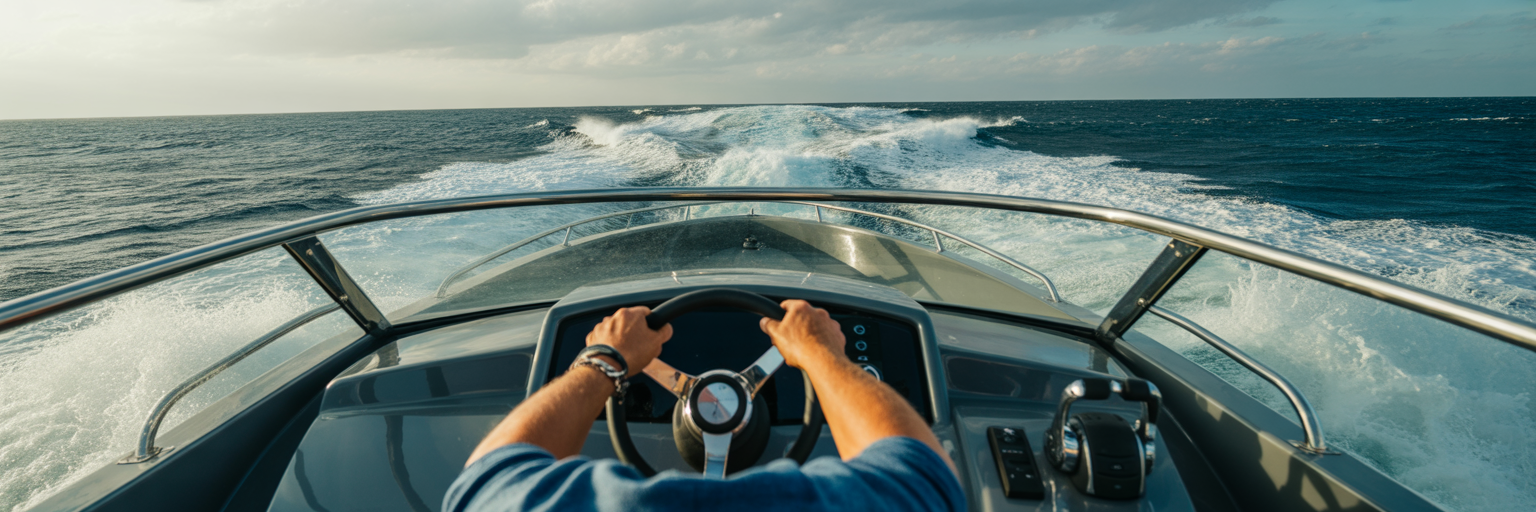
Once you are committed to fishing in rough conditions, how you manage the vessel and the people on it becomes just as important as your tackle. Proper boat handling reduces stress on the hull and crew, while clear coordination in the cockpit ensures safety and efficiency when the bite happens. A calm, disciplined approach is essential.
Trolling with the Seas
Many captains default to trolling into a head sea because it provides the slowest ground speed. However, this is often the most violent and uncomfortable ride. A better approach is often to troll down-sea or on a quartering-sea. Running with the waves results in a smoother, more rhythmic motion that is easier on everyone and everything. It also allows your lures to track more naturally in the water. While you might take some spray over the transom, the trade-off in comfort and improved lure presentation makes it the superior technique. This is a fundamental part of learning how to troll for mahi effectively in tough conditions.
The Autopilot as Your Best Crew Member
In rough seas, a well-tuned autopilot is invaluable. A human at the helm will fatigue quickly from the constant effort of fighting the wheel to stay on course. This fatigue leads to over-steering, an inconsistent course, and a sloppy lure presentation. A good autopilot can steer a much more precise line than a tired captain. This keeps the lures swimming consistently and, just as importantly, frees up the captain to focus on watching the spread, reading the water, and looking for signs of life like birds or debris.
Clear Communication and Cockpit Discipline
A chaotic cockpit is a dangerous one, especially when the boat is moving unpredictably. High winds and engine noise make shouting ineffective. Before you leave the dock, establish predetermined roles and simple hand signals for when a fish is on. Who clears which lines? Who grabs the rod? Who drives the boat? Answering these questions beforehand prevents confusion in the heat of the moment. Furthermore, cockpit management is critical. All gear, gaffs, tackle boxes, and loose items must be securely stowed. A clear deck is a safe deck. In rough water, a simple trip over a misplaced cooler can lead to a serious injury, making discipline a vital component of Florida offshore fishing safety.
Finding Mahi When Conditions Are Tough
When the ocean is churned up, the classic, easy-to-read signs of fish can disappear. Perfect, consolidated sargassum lines are rare, and spotting subtle temperature breaks is difficult. Success requires you to adapt your fish-finding strategy and learn to see the less obvious clues that point to where mahi are holding.
First, you must rethink your approach to weed lines. Instead of searching for a single, perfect line, start looking for the ingredients of one. Scan the horizon for scattered patches of weed, small rips where currents meet, and slight water color changes. These are all indicators of a convergence zone, even if it is not a visually perfect line. The same forces that create a solid weed line on a calm day are still at work, and the fish will be using these less-defined features to ambush bait.
Next, focus your efforts on working current edges. This is a prime strategy for mahi fishing in strong current, especially along the western edge of the Florida Current or Gulf Stream. This convergence of different water bodies acts as a natural wall that concentrates baitfish, and therefore predators like mahi. In rough water, this edge can be a highly productive highway to patrol. Even if there is no visible debris, trolling along this boundary can put your lures in front of schools of fish using it as a travel and feeding lane.
You can also use the wind to your advantage. A steady wind blowing for several hours will begin to organize the surface of the ocean. It will push debris, bait, and warmer surface water into predictable lanes or “wind rows.” These features can be very subtle, often appearing as just a line of slightly different texture on the water’s surface. Learn to identify these rows and troll along them. This tactic can lead to surprise encounters with schools of mahi in what otherwise appears to be open, featureless water.
Finding these subtle features is only half the battle, your presentation has to be right. As detailed in expert guides on how to rig a mahi spread, keeping your lures tangle-free and working properly is what allows you to effectively cover water and turn a sighting into a hookup. Ultimately, success in rough water comes down to flexibility. Mahi are constantly on the move, and rough conditions can alter their patterns dramatically. Be willing to abandon a pre-planned trip to a specific set of numbers if you find better conditions or signs of life elsewhere. The fish are where you find them, not where you want them to be. This adaptive mindset is a core component of successful mahi tactics.
Essential Safety Protocols for Offshore Runs
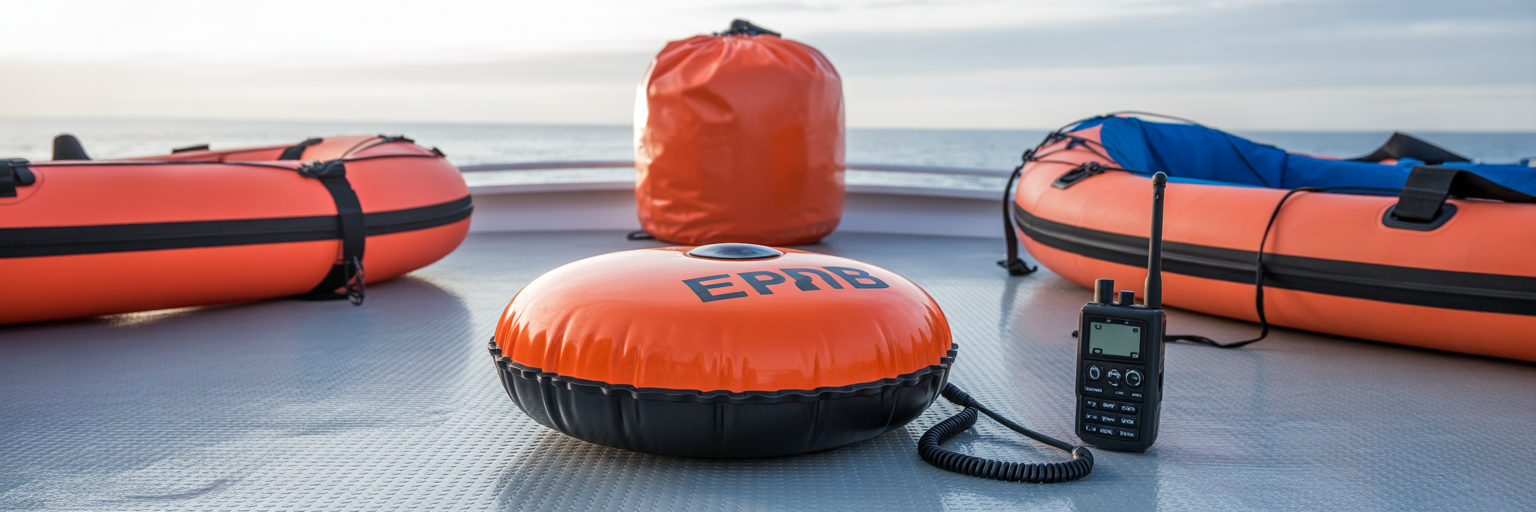
Running offshore in any condition demands discipline, but in rough seas, it is non-negotiable. Your safety gear and procedures are not just for compliance, they are your lifeline. This is not about environmental assessment, it is about the hard-and-fast rules of preparation and discipline that ensure you and your crew come home safely.
Before every single trip, a thorough pre-trip safety check is mandatory. This goes beyond a quick glance.
- Manually test all bilge pumps and float switches. Do not just trust the light on the console. Lift the float switch to ensure the pump kicks on immediately.
- Perform a radio check on your VHF. Also, if you have a satellite communication device like an inReach or SPOT, send a test message to confirm it is functioning before you lose cell service.
- Verify that all required safety gear is accessible. Flares, a horn, and a first-aid kit should be in a grab-and-go location, not buried under gear in a deep hatch. Check all expiration dates.
- Ensure your EPIRB is properly registered and its battery is in date. An unregistered or expired EPIRB is a useless piece of plastic.
Filing a float plan is not optional. Before you leave, give a reliable person on shore a detailed plan. It should include your boat’s description, the names of everyone on board, your specific destination or fishing area, and your expected return time. Crucially, you must contact that person immediately upon returning to the dock to “close out” the plan and let them know you are safe.
You must also change your mindset about Personal Flotation Devices (PFDs). In rough seas, a man-overboard situation happens in an instant and is often silent. By the time you realize someone is gone and try to find a stowed PFD, it is too late. Modern, low-profile inflatable PFDs are comfortable, do not hinder movement, and should be worn by everyone on board from the moment you leave the inlet.
Finally, never underestimate the danger of crew fatigue. Fighting the boat’s motion and maintaining your balance for hours on end is physically and mentally exhausting. Fatigue leads to slow reactions, poor decisions, and accidents. Enforce a rotation at the helm, make sure everyone is staying hydrated, and teach your crew to recognize the signs of exhaustion in themselves and others. This discipline is the ultimate expression of Florida offshore fishing safety.