
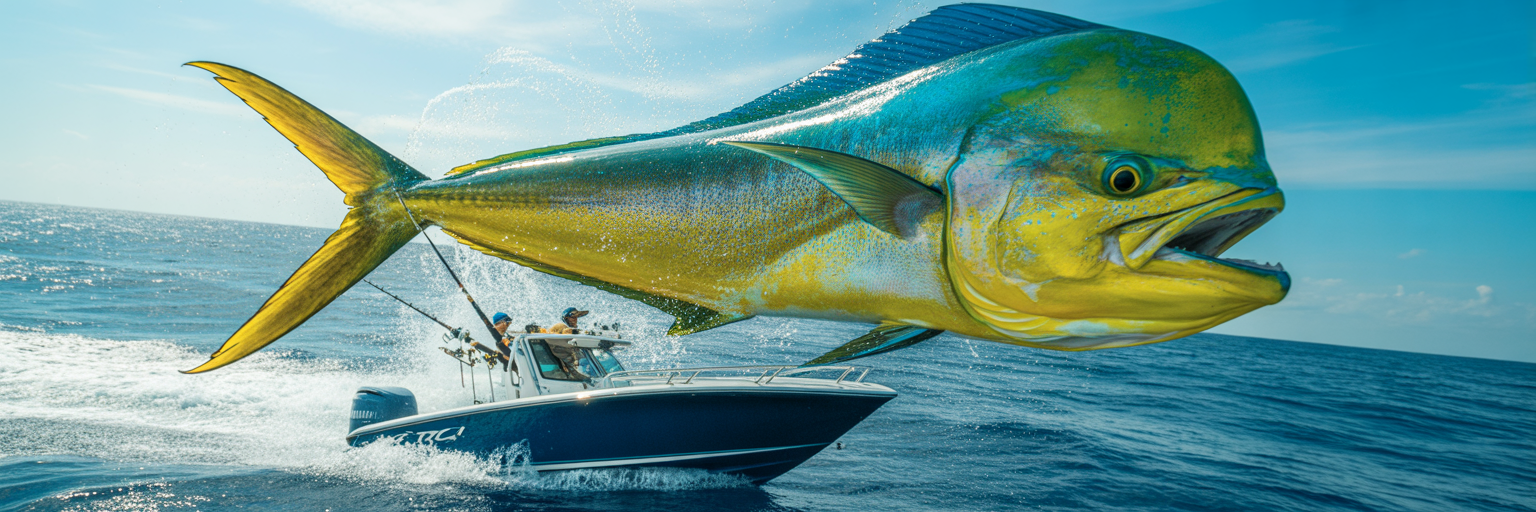
Offshore from Florida, the Gulf Stream acts as a massive conveyor belt, pushing warm, blue water north. This current creates the perfect environment for one of our most iconic gamefish: the mahi mahi. Success out here isn’t about luck. It comes from understanding the water, having a solid game plan, and executing the right Mahi Mahi Fishing Tactics when the bite turns on. This is your playbook for finding, hooking, and landing more dolphin, from the first light of dawn until the coolers are full.
Essential Mahi Mahi Fishing Tactics for Florida
Finding mahi starts with reading the ocean. Forget blind trolling. You need to locate the structure and conditions that concentrate baitfish, because where there’s bait, mahi are never far behind. The most famous of these structures is the sargassum weed line, often called the “Mahi Highway.” These are not just random patches of grass. A productive weed line is a living ecosystem, a floating reef providing cover for bait and an ambush point for predators. You are looking for thick, well-formed lines with a distinct edge where clean water meets the grass. Scattered, thin patches are usually a waste of time.
Beyond weed lines, your eyes are your best tool. Look for current rips, which appear as a change in the water’s texture, a line of calm water in a chop, or a visible color change. These rips are formed by colliding currents and they trap bait. Any piece of floating debris, from a five-gallon bucket to a stray 2×4 or a shipping pallet, is a potential mahi magnet. Never drive past debris without making a few passes. These floating objects create their own small ecosystems, attracting bait and, in turn, hungry mahi.
These physical structures work in combination with environmental factors. Water temperature is the most critical. Mahi are warm-water fish, and they get most active in temperatures above 75°F (24°C). Before you even leave the dock, you should be studying Sea Surface Temperature (SST) charts. Look for temperature breaks, areas where warmer water pushes against cooler water. These breaks act like walls, concentrating fish. Just as important is water color. You want to find that deep, cobalt-blue water that signals the nutrient-poor, clear Gulf Stream current. Green, murky water nearshore typically holds fewer mahi.
Putting it all together is how to catch mahi mahi in Florida. The peak season generally runs from April through September as massive schools migrate up the coast, but fish are available year-round if you find the right conditions. The goal is to find a spot where all these elements converge: a solid weed line in clean blue water, with a temperature break and maybe a piece of floating debris nearby. That’s the spot where you’ll find them.
When you’re scanning the horizon, keep these signs in mind:
- Well-formed Sargassum Lines: Look for thick, clumpy weed with a defined edge.
- Current Rips and Edges: Visible changes in water texture, color, or slicks on the surface.
- Floating Debris: Anything from a log to a pallet can hold an entire school.
- Working Birds: Frigate birds are the ultimate mahi spotters. If you see them circling and diving, get there fast.
- Temperature Breaks: Use SST charts to find areas where water temperatures change abruptly.
- Clean Blue Water: The deeper and clearer the blue, the better the odds.
The Art of Trolling for Florida Mahi
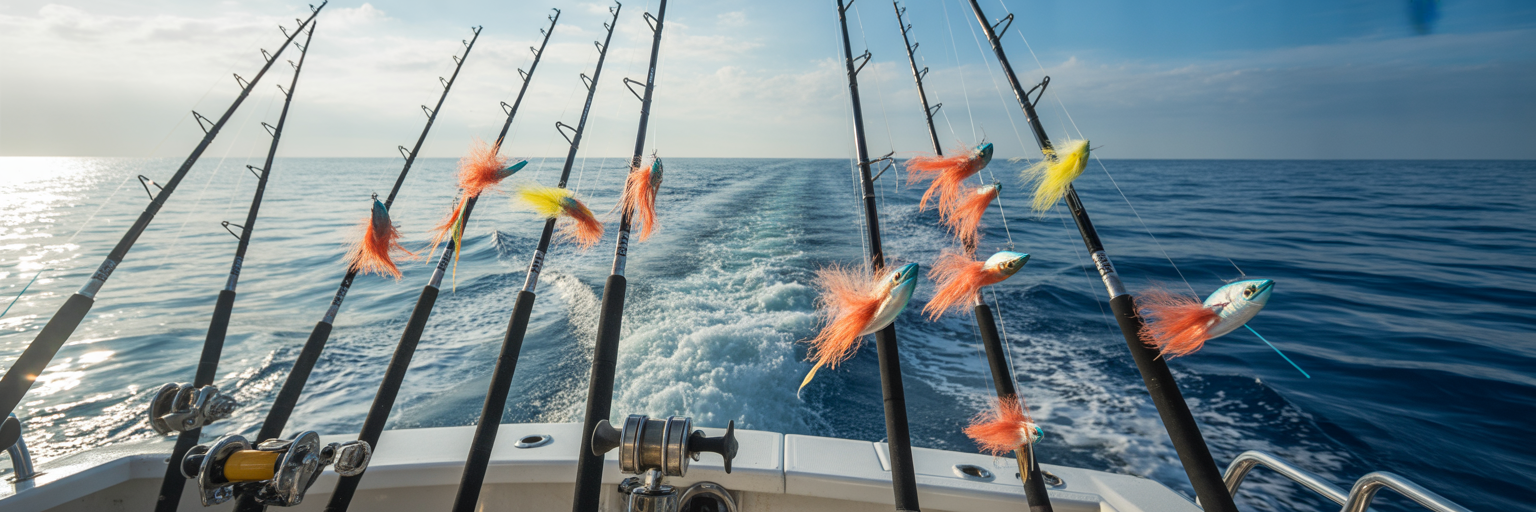
Once you’ve located promising water, it’s time to start hunting. Trolling is the most effective method for covering water and locating active schools of mahi. This isn’t just dragging baits behind the boat. A productive trolling spread is a carefully designed pattern meant to present a variety of baits at different depths and distances, creating the illusion of a fleeing school of baitfish. The goal of trolling for mahi mahi is to find that first fish, because where there is one, there are almost always more.
A standard five-rod spread is a proven starting point. Each position has a specific job, working together to cover the water column both horizontally and vertically. This setup allows you to present baits in the clean water outside the prop wash and at various distances to appeal to both aggressive and wary fish.
| Position | Distance from Transom | Typical Lure/Bait | Purpose |
|---|---|---|---|
| Short Corner | 2nd or 3rd Wave | Skirted Ballyhoo or larger Chugger | Targets aggressive fish close to the boat in clean water. |
| Long Corner | 4th or 5th Wave | Skirted Ballyhoo or Feather Jig | Presents a bait further back, often appealing to slightly warier fish. |
| Short Rigger | 5th or 6th Wave | Skirted Ballyhoo or small Diving Plug | Gets the bait out of the prop wash into a clean lane of water. |
| Long Rigger | 7th Wave or further | Skirted Ballyhoo or Feather Jig | Covers the outer edge of the spread, often gets bit first. |
| Shotgun / Way Way Back | 100-150 yards | Small Feather Jig or ‘Mahi Bullet’ | Targets the most cautious fish, often the largest in the school. |
Note: This spread is a proven starting point. Distances and lure choices should be adjusted based on sea conditions and what the fish are responding to on any given day.
When it comes to bait selection, the skirted ballyhoo is the gold standard for a reason. It is the single best bait for mahi mahi when trolling. The key is rigging it perfectly so it swims naturally with a gentle side-to-side action, not spinning like a propeller. A spinning ballyhoo will never get eaten. Alongside your ballyhoo, mix in some artificials. Small feather jigs, chuggers that throw a smoke trail, and shallow-diving plugs add different actions and colors to the spread. A good rule of thumb for color is bright on bright days (pink, chartreuse, white) and dark on overcast days (purple, black, blue).
Your trolling speed is critical. The sweet spot is typically between 6 and 8 knots. You want to move fast enough to make your lures work but slow enough for the ballyhoo to swim naturally. You’ll need to adjust for sea conditions, slowing down in rough seas to keep your baits in the water and speeding up in calm conditions. When working a weed line or rip, troll in a zig-zag or “S” pattern. This pulls your baits across the structure and then away from it, triggering strikes from fish holding in the cover.
When a rod goes down, the captain’s first instinct should be to resist the urge to stop the boat. Keep the boat moving forward for another 10 to 15 seconds. Mahi are competitive and travel in schools. The commotion of the first hooked fish often triggers multiple strikes as the rest of the school tries to get in on the action. Turning a single hookup into a double or triple is the mark of a good crew.
The Switch: Capitalizing on a Hookup
The moments after the first trolling strike are the most critical of the day. This is where a single fish becomes a full-blown feeding frenzy. Mahi are intensely competitive, and their schooling nature means the entire group will follow a hooked fish right to the boat. Your ability to manage this controlled chaos determines whether you catch one fish or twenty. The mantra is simple: One Hooked, All Hooked.
The single most important technique is to keep the first hooked fish in the water. Do not boat it immediately. The angler should fight the fish, but keep it 50 feet from the transom, where its frantic movements and bright, lit-up colors act as the ultimate live decoy. This holds the attention of the entire school, drawing them in and keeping them close. Once the school is visible behind the boat, the captain should put the engines in neutral. The trolling bite is over, the pitch bite is about to begin.
This transition fails when crews are unprepared. You cannot waste a single second looking for a rod or tying a knot. The school will lose interest and sound, disappearing back into the deep. Before you ever put the trolling lines out, dedicated “bail” or “pitch” rods must be rigged and ready in the holders. These are typically spinning outfits with a live bait, chunk of bait, or a jig ready to be cast at a moment’s notice. As one expert guide from Gomdori Fish Camp notes, the key to success with weed lines is being prepared for this moment, using pitch baits to capitalize on the brawling nature of mahi once they are drawn to the boat.
This is a team effort. The captain is the director, calling out the location of the fish. The angler with the hooked fish manages their line and keeps the decoy in position. Other anglers should immediately clear the remaining trolling lines, reeling them in quickly and getting them out of the way to prevent a massive tangle. As the trolling rods are cleared, the designated pitch-bait anglers grab their ready-to-go spinning rods and move to the transom. The water behind the boat is about to erupt, and you need to be ready to feed the frenzy.
Pitch Baits and Casting to Schooley Dolphin
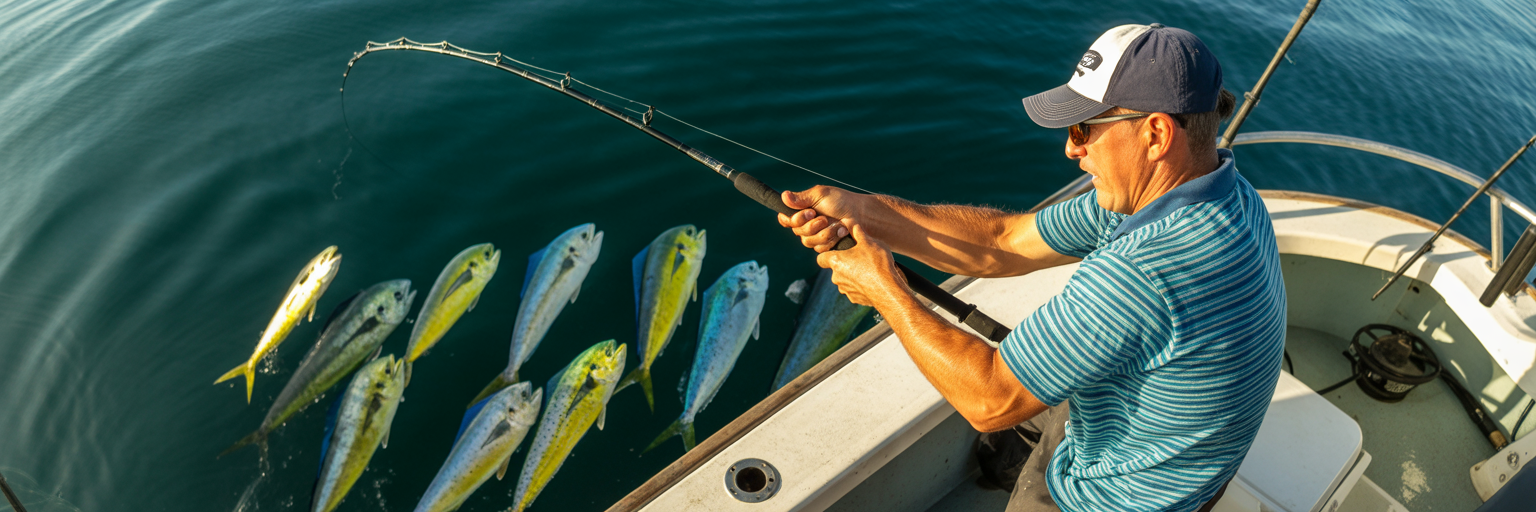
With the school fired up and circling the boat, it’s time to switch from trolling to casting. This is fast, visual, and incredibly exciting fishing. Having a variety of pitch bait options ready allows you to see what the fish want and keep the bite going. The goal is to feed them just enough to keep them interested without filling them up. Here are the primary methods for turning a school of lookers into a cooler full of fish.
- Live Bait: This is the ultimate mahi candy. A live pilchard, goggle-eye, or small blue runner cast into a school of lit-up mahi is almost never refused. Hook the bait through the nose or just in front of the dorsal fin for a natural presentation. The strike is often an explosive surface crash that you can see from the boat. Always have a loaded livewell if you can.
- Chunking: This is a classic and highly effective technique. Cut up ballyhoo, bonito, or squid into 1-inch cubes. Toss a handful of “freebies” into the water to get the fish competing. As they start to feed, cast a hooked chunk out and let it drift down naturally with the others. The key is to make your hooked bait look just like the free offerings.
- Artificial Jigs and Lures: When live bait is scarce or the fish are particularly aggressive, artificials are a great choice. Small, brightly colored bucktail jigs, soft plastic jerkbaits, or shiny casting spoons worked with a fast, erratic retrieve can trigger savage reaction strikes. The speed and unpredictable movement mimic a fleeing baitfish, and the competitive nature of mahi makes them pounce on it.
Success here is about more than just the bait. You need to read the fish and make the right cast. In a school, you can often identify the larger bulls by their blunt, square heads and more vibrant colors. Target them first. Always cast ahead of a cruising fish, leading it by several feet so your bait intersects its path. Casting directly on top of a fish will often spook it. Once you’re hooked up, keep the line tight. Mahi are famous for their acrobatic jumps, and any slack in the line is an invitation for them to throw the hook. Keep steady pressure on, and be ready to reel fast when they charge the boat.
Gearing Up for Offshore Battles
Walking into an offshore battle with the wrong equipment is a recipe for frustration and lost fish. Having the right mahi mahi fishing gear is not about having the most expensive stuff, it’s about having the right tool for the job. Your gear needs to be tough enough to handle a 40-pound bull, but light enough to make casting enjoyable and effective. We’ll break down the two primary setups you need: one for trolling and one for pitching.
For trolling, you need backbone and line capacity. A conventional rod in the 20-50 lb class paired with a lever-drag reel like a Shimano TLD 25 is the workhorse of any mahi fleet. This setup can handle the drag of pulling heavy lures and has the power to turn a big fish. For this application, 40-50 lb monofilament is an excellent choice. Its inherent stretch acts as a crucial shock absorber, preventing pulled hooks during violent headshakes or when the boat is rocking in heavy seas.
For pitching bait to schooled-up fish, you need a completely different setup. Here, casting distance and speed are everything. A 7-foot medium-heavy spinning rod paired with a high-quality 4000 to 6000-size spinning reel is the perfect combination. This outfit is light enough to cast all day but has the guts to handle fish up to 40 pounds. Spool this reel with 30-40 lb braided line. Braid has zero stretch, which gives you incredible sensitivity to feel the bite and superior casting distance compared to mono.
Your line and leader strategy is non-negotiable. For both setups, a fluorocarbon leader is essential. In the clear, blue water offshore, its near-invisibility will get you significantly more bites. Use a 50-60 lb fluoro leader for trolling to handle abrasion, and a lighter 30-40 lb leader for pitching for a stealthier presentation. Connect your braid to your leader with a proven, slim knot like the FG knot. As the experts at Connley Fishing advise, matching the rod and reel to the specific technique is crucial; a 20-50 lb class setup is the workhorse for trolling, while a lighter spinning combo is essential for pitching.
| Component | Trolling Setup Recommendation | Spinning/Pitching Setup Recommendation | Rationale |
|---|---|---|---|
| Rod | 6.5′ – 7′ Conventional, 20-50 lb Class | 7′ Medium-Heavy Spinning | Trolling rods need backbone for heavy lures; spinning rods need casting action. |
| Reel | Lever Drag Conventional (e.g., Shimano TLD 25) | 4000-6000 Size Spinning (e.g., Shimano Saragosa) | Lever drags offer precise drag control; spinning reels allow for quick casts. |
| Main Line | 40-50 lb Monofilament | 30-40 lb Braided Line | Mono’s stretch acts as a shock absorber; braid offers casting distance and sensitivity. |
| Leader | 50-60 lb Fluorocarbon | 30-40 lb Fluorocarbon | Fluoro is nearly invisible. Heavier leader for trolling abrasion, lighter for stealthy pitching. |
| Hook | 7/0 – 8/0 J-Hook (for ballyhoo) | 4/0 – 6/0 Circle Hook (for live bait/chunks) | J-hooks for solid trolling hooksets; circle hooks for safe, effective live baiting. |
Note: These are proven, reliable setups for Florida waters. Gear choices can be scaled up for targeting exceptionally large fish or down for smaller ‘schoolies’.
From Hook to Cooler: Landing and Handling Mahi
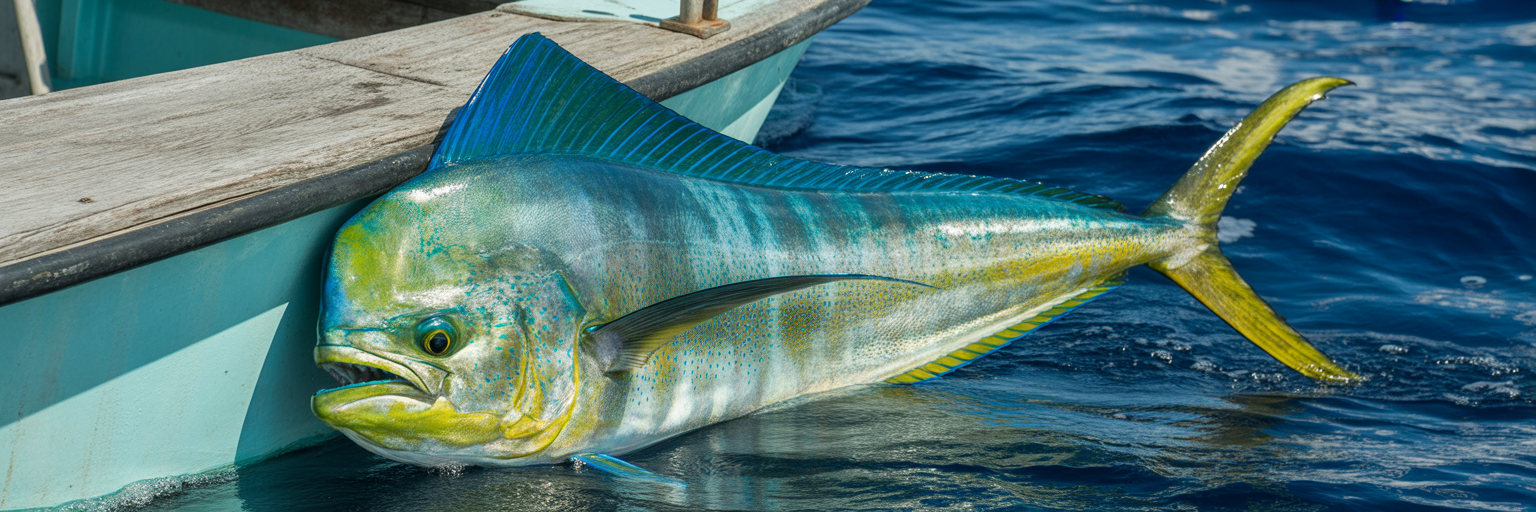
Getting the fish to the boat is only half the battle. The final moments of the fight and the immediate handling of the fish are where many anglers make mistakes. This is about skill, safety, and respect for the animal. A properly landed and cared-for mahi is a beautiful trophy and incredible table fare. A poorly handled one can result in a lost fish, a dangerous situation on deck, or ruined meat.
As the fish gets closer to the boat, maintain steady pressure. Mahi are famous for their spectacular jumps. When a mahi leaps from the water, you must “bow to the king” by lowering your rod tip towards the fish. This creates a small amount of slack, preventing the tension of the line combined with the fish’s headshake from pulling the hook free. This single action will save you countless fish.
The end game is a team effort between the angler and the gaffer. The angler’s job is to lead the tired fish alongside the boat. Do not try to gaff a “green” fish that is still full of energy and running wild. This is dangerous and usually ends with a bent gaff or a lost fish. Wait until the fish is tired and swimming calmly. The gaffer should make a single, decisive move, aiming for the head or upper shoulder area. This provides a secure hold and allows for a quick lift into the boat in one smooth motion.
Once the fish is on deck, it’s important to identify it and be aware of regulations. Male mahi, or “bulls,” have a distinct, blunt, almost vertical forehead, while females, or “cows,” have a more rounded, sloping head. Florida regulations are strict and can change, so always check the latest FWC rules for minimum size limits (currently 20 inches to the fork in Atlantic waters) and bag limits before you leave the dock.
The final step is arguably the most important for ensuring the quality of your catch. Immediately subdue the fish safely and bleed it by cutting the gills. Then, get it into a cooler with a slurry of ice and saltwater. This slurry chills the fish down much faster than just ice alone. This process stops bacterial growth, firms up the meat, and makes a massive difference in the taste and texture of the final product. A properly bled and iced mahi is one of the finest eating fish in the ocean.
Planning Your Florida Offshore Run
A successful day of offshore fishing Florida begins long before the boat leaves the inlet. It starts with meticulous planning, a deep respect for the ocean, and a solid understanding of safety. The open ocean is unforgiving, and your number one priority is always getting back to the dock safely. A well-thought-out game plan not only increases your chances of catching fish but also ensures the well-being of your crew and vessel.
Your first task is to become a student of the marine forecast. Don’t just glance at the wind speed and wave height. Pay close attention to the wind direction and, most importantly, the wave period. A 2-foot chop with a 3-second period is a miserable, boat-pounding day. A 2-foot ground swell with a 10-second period is a gentle, rolling ride. Understanding this difference is key to knowing when to go and when to stay home.
Modern technology gives us an incredible advantage. Before your trip, use satellite imagery services to review near real-time charts for Sea Surface Temperature (SST), chlorophyll concentrations, and current data. These tools allow you to identify promising zones like large temperature breaks, nutrient-rich eddies, and strong current edges before you burn a single gallon of fuel. You can build a series of waypoints to investigate, creating a strategic roadmap for your day instead of just wandering aimlessly.
Fuel management is not optional, it is a critical safety calculation. The offshore standard is the “rule of thirds.” You plan to use one-third of your fuel to get out to the fishing grounds, one-third for fishing and getting back, and you always keep one-third in reserve for emergencies. Know your boat’s fuel consumption and its safe operational range, and never push it.
Finally, remember that every plan is just a starting point. The best captains are those who can adapt. The ocean is dynamic, and conditions change. The weed line you marked on your chart might have broken up, but a new one might have formed a few miles away. A flock of birds working the surface or a sudden change in water color are signs you must be ready to react to. Your pre-dawn game plan gets you in the zone, but your ability to observe, adapt, and execute the right Mahi Mahi Fishing Tactics based on what the ocean gives you is what will ultimately fill the cooler.