
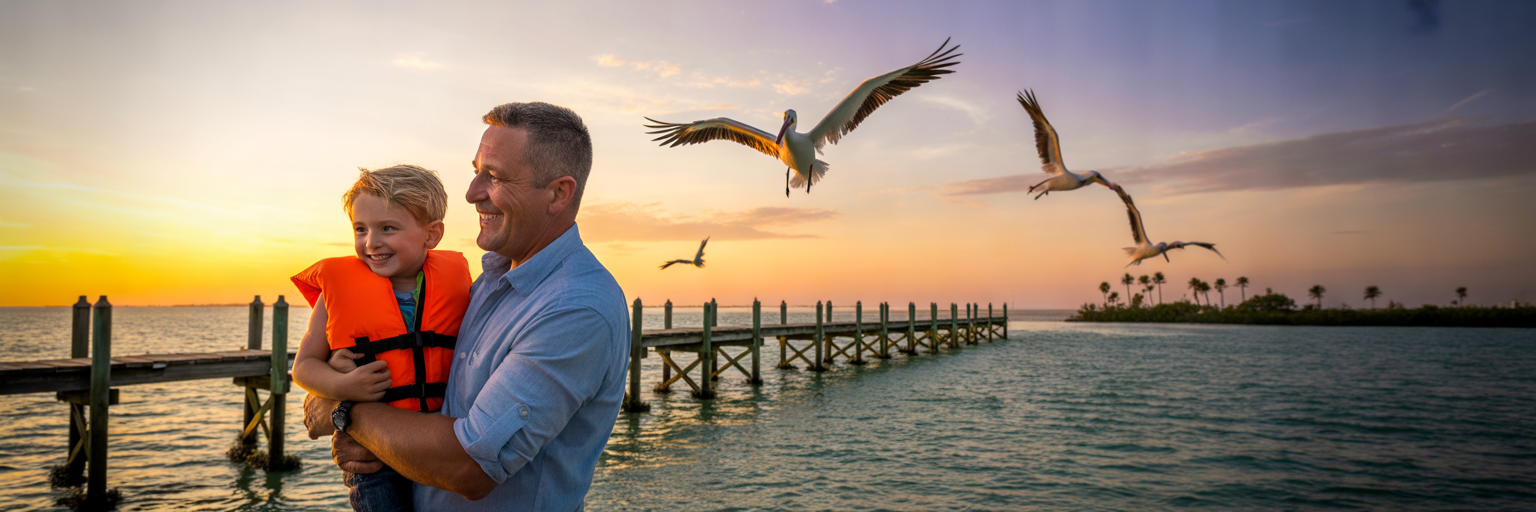
Florida Statute 379.353 grants every angler under age 16 complete immunity from state fishing license fees, from the grass flats of Mosquito Lagoon down to the bridges of the Florida Keys. Yet every weekend at the boat ramp, well-meaning parents learn the hard way that a child’s exemption stops the exact second an adult touches the rod. Understanding standard Florida youth fishing license rules keeps your family trip focused on tight lines rather than dockside citations.
Understanding Florida Youth Fishing License Rules Under Age 16
Before loading the rods into the truck bed or icing down the baitwell, almost every mom and dad asks the same baseline question: do kids need a fishing license in Florida? The short answer is no. When you review our complete guide to the florida fishing license regulatory setup, the youth carve-out is the most generous rule in the state playbook.
How the Under-16 Exemption Works for Residents and Visitors
Any child under 16 years of age is 100 percent exempt from recreational saltwater and freshwater licensing. This rule applies equally to local kids growing up on the canals of Tampa Bay and out-of-state families flying down to fish the Overseas Highway bridges in the Florida Keys. A 15-year-old from Georgia pitching live pilchards at a Sebastian Inlet jetty enjoys the exact same free pass as a local fifth-grader catching bluegill in a neighborhood pond.
Snook, Lobster, and Reef Fish Permit Exemptions for Kids
Adult anglers targeting premier coastal gamefish have to stack several extra stamps onto their base license. According to the official FWC recreational licensing guidelines, anglers under 16 are excused from holding any additional species permits. Your kids can legally target line-siders during the open season without a Snook Permit, dive the summer mini-season or regular season without a Spiny Lobster Permit, and drop cut bait over nearshore ledges without the State Reef Fish Angler designation.
Why No License Never Means No Rules on the Water
Here is where good fishermen keep their kids out of trouble. A license exemption only waives the paper fee. It never waives conservation management laws. Florida Fish and Wildlife Conservation Commission (FWC) officers check a ten-year-old’s cooler with the exact same ruler they use on a tournament pro.
Every fish a child puts on ice must meet strict legal standards:
- Slot limits: Redfish, snook, and spotted seatrout must fall within exact regional minimum and maximum length brackets.
- Daily bag limits: A child is entitled to their own daily bag limit, provided they actually catch the fish themselves.
- Seasonal closures: Closed harvest windows apply to every rod on the water regardless of the angler’s age.
- Gear mandates: Non-stainless inline circle hooks and reef descending devices remain mandatory when fishing bottom structure.
Watch out for the dockside trap experienced officers call double-bagging. You cannot bring a two-year-old toddler who sleeps in the cuddy cabin all morning and claim an extra limit of mangrove snapper or slot redfish in their name. For a child’s individual bag limit to hold up during a ramp inspection, that young angler must be physically capable of handling the rod and landing their own fish.
The Helping Hand Trap and When Parents Need a License
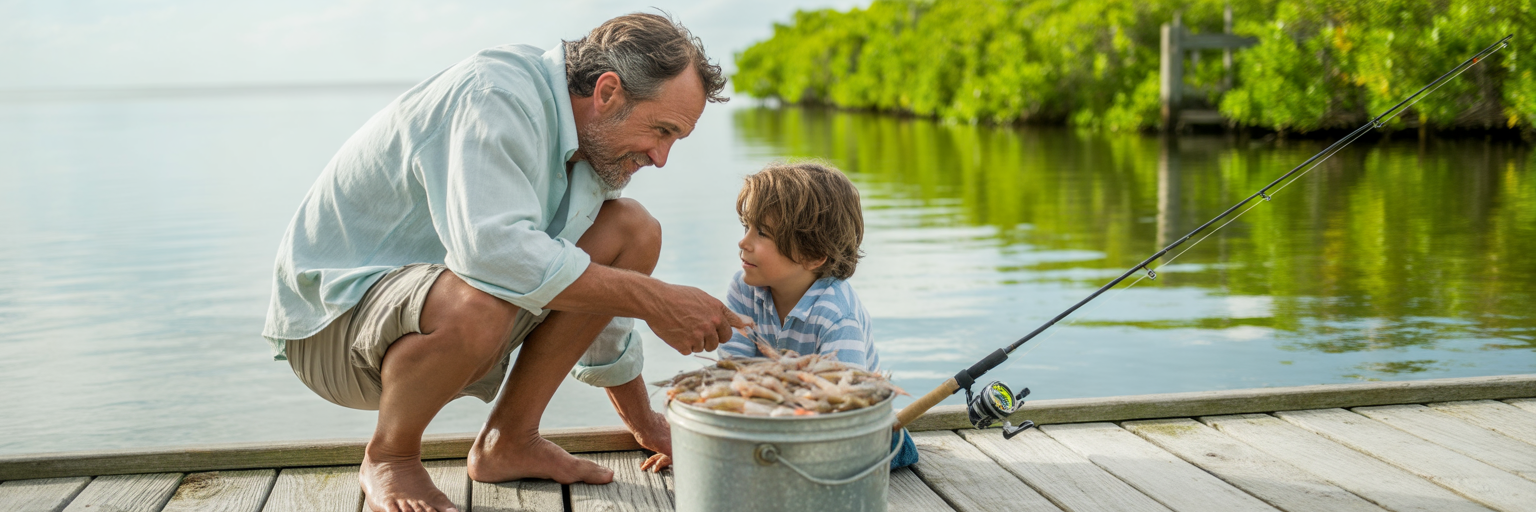
Knowing your kid fishes for free solves half the puzzle. The real trouble starts when a pinfish steals your eight-year-old’s shrimp or a heavy jack crevalle wraps their line around a dock piling. The moment you step in to help, your personal legal status changes instantly.
What FWC Considers Taking or Attempting to Take Fish
Florida law defines fishing not just as reeling in a catch, but as taking or attempting to take marine life, or assisting anyone else in doing so. When parents ask if they need an FWC fishing license for parents just to take their kids out, the answer depends entirely on whether your hands touch the tackle while fishing is underway.
If an FWC officer watches you through binoculars from across a Pine Island Sound flat or down a Ponce Inlet jetty, any physical participation puts you in the angler category. Aboard a family bay boat or skiff, these rules apply to every adult on deck unless the boat itself carries a recreational vessel blanket license, which we break down in our guide to Florida saltwater license rules on private boats.
Where the Line Sits Between Coaching and Active Fishing
Drawing a hard line between parenting and fishing feels unnatural when a kid is struggling with a spinning reel, yet the law treats the boundary as black and white. If you do not hold a valid saltwater license, certain actions will earn you an immediate citation:
- Rigging live or dead bait: Threading a live shrimp onto a circle hook or pinning cut mullet to a jighead counts as attempting to take fish.
- Casting the outfit: Firing a long cast into a pass and handing the rod to your child once the sinker hits bottom requires a license.
- Hooksets and handoffs: Striking a bite when your kid isn’t looking and passing them the bent rod makes you the primary angler.
- Landing the catch: Sliding a landing net under a slot trout, leadering a fish at the rail, or gaffing a pelagic requires full licensing.
Unlicensed parents must restrict themselves to hands-off coaching. You can legally carry the dry rods from the truck to the pier, tie knots back at the tailgate before walking out, call out moving schools of mullet, talk your child through adjusting their star drag, and snap hero photos once the fish is on the deck.
Dockside Gray Areas That Catch Parents Off Guard
Real-world family fishing rarely goes according to script. Suppose your seven-year-old gets a nasty wind knot in 15-pound braided line while their suspending twitchbait is still floating in the current. If you grab the rod and strip line to clear the tangle while that lure remains wet and capable of hooking a trout, an officer can technically view you as tending active gear.
The same problem pops up when a young angler swings a toothy Spanish mackerel or a slimy, venomous hardhead catfish over the gunwale. No sensible parent lets a young kid grab a thrashing catfish near its dorsal spine. Yet grabbing the leader and backing the hook out puts your hands directly in the harvesting chain. Follow one simple dockside rule of thumb: if your hands are going to smell like shrimp, cut bait, or fish slime by the end of the tide, put a valid license in your pocket before leaving the dock.
No-Cost Shoreline Licenses, Licensed Piers, and Charter Coverage
Getting legal to help your kids does not always mean opening your wallet. Depending on your state residency and the platform you fish from, you can cover yourself for zero dollars or piggyback on existing blanket permits.
How the Free Resident Saltwater Shoreline License Works
If you hold a valid Florida driver’s license or state ID card and plan to fish strictly from land, the state offers a zero-cost solution. The Florida shoreline fishing license, officially titled the Resident Recreational Saltwater Shoreline License, costs nothing to obtain. It gives Florida moms and dads full legal clearance to bait hooks, cast heavy surf rods, untangle lines, and net fish alongside their kids from the beach surf, a fixed bridge catwalk, a concrete seawall, or a backyard dock.
Non-resident parents do not qualify for the free shoreline pass and must purchase a standard 3-day, 7-day, or annual non-resident saltwater license even when standing on the beach. You can compare the exact resident and visitor land rules in our resource on shore fishing license exemptions for Florida visitors.
The Vessel Boundary Where Shoreline Coverage Ends
The free resident shoreline license carries one strict geographic boundary that catches local families every summer. As detailed in the official FWC Saltwater Shoreline Fishing FAQ, coverage applies only when you fish from land or a structure permanently fixed to land. The exact second you step onto a flats skiff, launch a pedal kayak, push off on a paddleboard, or wade a shallow sandbar that you reached by boat, your free shoreline license becomes invalid. Any water access involving a vessel requires a paid recreational saltwater license.
Using Licensed Public Piers and Guided Charters for Zero-Hassle Trips
When visiting families or occasional weekend anglers want a stress-free afternoon without setting up individual FWC accounts, two built-in options remove the paperwork entirely.
First, look for major municipal or commercial ocean piers in hubs like Destin, Jacksonville Beach, Cocoa Beach, or Clearwater that carry an FWC Pier License. When you pay the small walk-on gate fee at an FWC-licensed pier, the structure’s blanket permit covers every resident and non-resident parent on the planks.
Second, booking a half-day family trip with a professional inshore or nearshore guide eliminates licensing headaches completely. In Florida, a Coast Guard-credentialed charter captain carries a blanket vessel license that automatically covers every parent and child on board, including Snook and Reef Fish permits. Review our breakdown of Florida charter license rules for first-time guests before stepping onto the dock so you know exactly what your captain handles.
Parent License Requirements by Florida Fishing Scenario
| Family Fishing Scenario | Florida Resident Parent | Non-Resident Parent | Coverage Notes for Assisting Kids |
|---|---|---|---|
| Beach, Seawall, or Fixed Dock | Free Shoreline License | Paid Non-Resident Saltwater License | Covers casting, rigging bait, and netting from land or land-attached structures |
| FWC-Licensed Public Fishing Pier | No Individual License Needed | No Individual License Needed | Pier blanket permit covers all anglers on the structure; small walk-on entry fee usually applies |
| Private Boat, Kayak, or Skiff | Paid Resident Saltwater License | Paid Non-Resident Saltwater License | Required unless the vessel itself carries a separate commercial or recreational vessel license |
| Wading Flats Reached by Boat | Paid Resident Saltwater License | Paid Non-Resident Saltwater License | Shoreline license is invalid any time a vessel is used to access the fishing spot |
| For-Hire Inshore or Offshore Charter | No Individual License Needed | No Individual License Needed | Captain’s valid FWC charter license covers parents and youth for the duration of the trip |
Requirements reflect Florida Fish and Wildlife Conservation Commission (FWC) regulations for adults actively assisting youth anglers under age 16 across common coastal fishing environments.
Turning 16 on the Water and Optional Youth Licenses
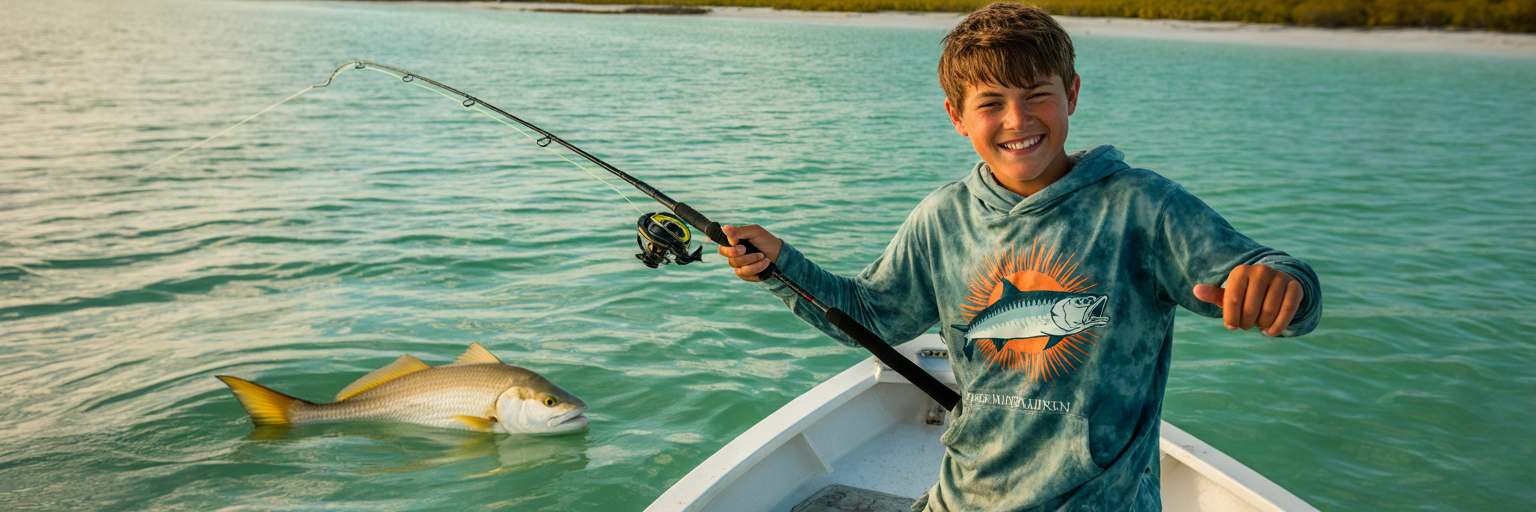
Kids grow up fast on the water. One season they are struggling to crank a palm-sized pinfish to the dock, and the next they are pitching flair-hawk jigs into deep passes at midnight or sight-casting to tailing redfish from the bow platform.
What Changes on Your Teen Angler’s 16th Birthday
The under-16 exemption vanishes the morning of your teenager’s 16th birthday. Before a 16-year-old makes their next cast for snook around Tampa Bay bridges, works a weed line for mahi off Palm Beach, or drops a jig over a Gulf grouper ledge, they must carry a valid recreational license. This rule hits both Florida residents and visiting teens. At age 16, they also need their own Snook Permit, Spiny Lobster Permit, and State Reef Fish Angler designation whenever targeting those species from a private boat or shore.
The $17 Optional Youth License Strategy for 15-Year-Olds
Dig into the FWC catalog and you will spot an odd item: an Optional Resident Youth Hunting and Fishing License for Florida kids ages 8 through 15. Saltwater or freshwater coverage costs $17, or you can grab a Gold Sportsman youth package. New parents often ask why anyone would pay $17 for a license when kids under 16 already fish for free.
Veteran Florida fishing parents know the timing trick built into this pass. When you purchase the Optional Resident Youth License for a 15-year-old, it remains valid all the way through their 17th birthday. Buy it a week before your kid turns 16, and you lock in a full year of legal adult coverage for their entire 16th year at a discount compared to standard rates, which you can verify in our guide to Florida saltwater license costs for weekend anglers.
Buying that optional youth card also delivers a massive conservation bonus for local waters. The federal Sport Fish Restoration program distributes excise tax money back to states based directly on the total number of paid license holders. Every $17 youth license registered in Florida triggers federal matching funds that pay for local boat ramp repairs, artificial reef deployments, and redfish hatchery releases.
Weighing Lifetime Sportsman Licenses for Florida Kids
If your family lives on the water, a Florida Lifetime Saltwater Fishing License or Lifetime Sportsman’s License is the sharpest long-term play in the state. Florida prices lifetime licenses across three youth age tiers:
- 4 years old and younger: The lowest buy-in bracket, offering massive multi-decade savings.
- 5 to 12 years old: A mid-tier bracket that still pays for itself before the child finishes college.
- 13 years and older: The full lifetime rate, which permanently insulates the angler from future fee hikes.
Grandparents love gifting the under-4 tier for first birthdays. A Lifetime Saltwater License automatically includes the Snook and Spiny Lobster permits forever. Better yet, if your child grows up and takes a job in another state, their Florida Lifetime License stays 100 percent valid every time they come home to fish for the rest of their life.
Planning Around Florida License-Free Fishing Days
If you have family flying in for a holiday weekend or want to test the waters with a neighbor’s family before buying annual gear, the state sets aside eight promotional days every year when anyone can fish without a license.
Annual Saltwater and Freshwater License-Free Dates
During official Florida license free fishing days, the FWC waives recreational license requirements for all residents and non-residents alike. Mark these eight recurring dates on your trip calendar:
- First consecutive Saturday and Sunday in April: Freshwater license-free weekend
- First consecutive Saturday and Sunday in June: Saltwater license-free weekend
- Second consecutive Saturday and Sunday in June: Freshwater license-free weekend
- First Saturday in September: Saltwater license-free day (Labor Day weekend)
- Saturday following Thanksgiving: Saltwater license-free day
On the four saltwater dates, parents from anywhere in the country can wade the surf, launch a boat, or pitch shrimp around mangrove roots alongside their kids without buying a pass or a Snook permit. Keep in mind that every biological rule remains locked in place. If redfish are catch-and-release only in your management region, or if snook season is closed on the Saturday after Thanksgiving in your zone, those closures are strictly enforced.
Tactical Tips for Beating the Crowds on Free Weekends
Any experienced Florida captain will tell you that free fishing weekends bring out maximum boat ramp chaos. Show up at a public ramp in Sarasotat or Matlacha at 10:00 a.m. on the first Saturday in June, and you will wait forty minutes just to back your trailer down while kids bake in the humidity.
Smart parents work around the crowd by fishing the water movement rather than the clock. Young anglers lose focus fast when the water goes slack and the bite dies. Before picking your launch time, study our guide on reading Florida fishing tide charts so you can time a tight two-hour fishing window right at the start of a strong incoming or outgoing tide. Hit the ramp at dawn or slide out two hours before sunset when the midday wakeboard traffic clears off the flats and predatory fish pull up onto the grass edges to feed.
Teaching Kids Florida Saltwater Rules and Ethical Fish Handling
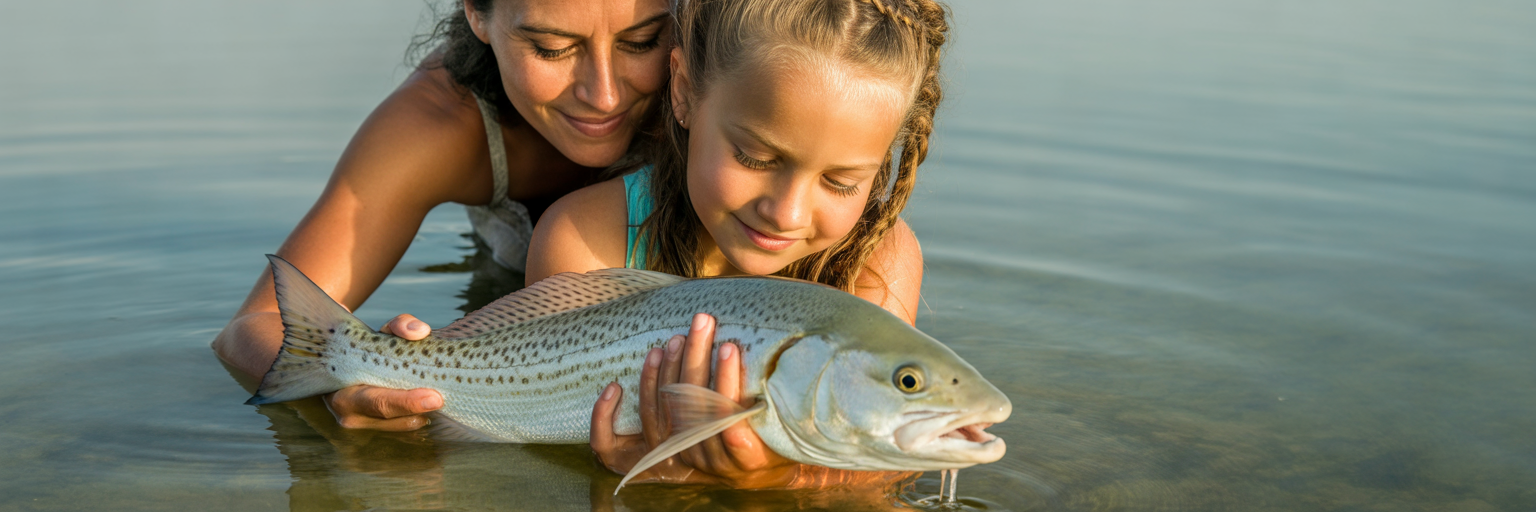
Passing down a love for Florida waters means teaching young anglers how to treat the resource with respect. Giving kids real jobs on the deck builds confidence and turns conservation habits into second nature.
Measuring Pinched-Tail Total Length vs Fork Length at the Rail
Make your child the official boat measurer, and teach them how to do it right. First, train them to always splash water across the measuring board before laying a fish down so dry plastic does not burn the fish’s scales. Next, show them the difference between the two measurement methods FWC officers use on the coast.
Inshore classics like redfish, snook, and spotted seatrout are measured by pinched-tail total length. Have your kid bump the fish’s closed lower jaw firmly against the zero stop on the board, then pinch the top and bottom lobes of the tail fin together to find the longest possible point. By contrast, pelagics and nearshore cruisers like Spanish mackerel, pompano, mahi, and cobia use fork length. You measure straight from the closed snout to the center V indentation of the tail fork. Getting those two methods mixed up at the cleaning table can turn a legal dinner into an expensive ticket.
Slime Coat Protection and Barotrauma Gear for Reef Trips
Rough handling kills just as many undersized fish as bad hook sets. Teach kids to dip both hands over the gunwale before touching a trout or snook. Dry hands act like a sponge, stripping away the protective slime coat that shields the fish from fatal bacterial infections. When your teen lands an oversized breeder snook or big bull redfish, coach them to support the fish’s heavy belly horizontally in the water with one hand while holding the jaw with the other, never hanging a heavy fish vertically from lip grippers.
When taking older kids nearshore or offshore for red snapper, lane snapper, or gag grouper, get them involved in reef conservation. While kids under 16 do not need the State Reef Fish Angler designation on paper, every vessel targeting reef fish must carry a working descending device or venting tool rigged and ready to deploy. Showing a twelve-year-old how to clip an inverted weighted hook or SeaQualizer onto the lip of a bloated grouper and send it back down to bottom pressure teaches them why reef management matters.
Kid-Smart Tackle Tweaks for Safer Unhooking
Nothing ruins a family morning on the flats faster than a thrashing ladyfish driving a treble hook into a child’s palm. Make three quick terminal tackle adjustments before leaving the driveway to keep both the fish and your crew safe:
- Swap trebles for single inline hooks: Replace the factory treble hooks on topwater plugs and hard twitchbaits with single inline hooks so a shaking trout cannot pin a hook into small fingers.
- Pinch hook barbs flat: Use needle-nose pliers to mash down the barbs on jigheads and bait hooks, allowing effortless one-twist releases at the side of the boat.
- Rig non-offset inline circle hooks: Whenever soaking natural or live bait, tie on non-stainless inline circle hooks and teach kids to simply start cranking the reel rather than swinging a big hookset. The hook slides straight to the corner of the jaw every time.
Fastest Ways to Get Licensed and Check Local Regulations Before Launching
If you realize at the trailhead or boat ramp that you need an adult license before grabbing your kid’s rod, you do not have to cancel the trip or hunt down a sporting goods store.
Five-Minute Digital Licensing at the Boat Ramp
Pull out your phone in the parking lot and go directly to GoOutdoorsFlorida.com or download the official Fish|Hunt FL mobile app. Both platforms let you register for a free Resident Saltwater Shoreline License or buy an annual or short-term saltwater pass in under five minutes. The instant your transaction clears, the app generates a digital license card with an active verification number. Take a quick screenshot on your phone in case you run out of cell service offshore; FWC officers accept that digital screen as immediate legal proof on the water.
If you prefer a physical hard card or want to pay cash, stop by any Florida county tax collector’s office, local tackle shop, or Walmart sporting goods counter, or call the state’s 888-FISH-FLORIDA toll-free line to purchase by phone.
Checking Regional Management Zones and Real-Time Water Conditions
Never assume the bag and slot limits from your home waters apply when you take the family on a road trip across the state. Florida manages key inshore species like redfish, snook, and spotted seatrout across strict Regional Management Zones. A daily bag limit or open harvest window that is completely legal up in Jacksonville or the Panhandle can be strictly closed down in Sarasota Bay, Charlotte Harbor, or the Keys.
Pair your regulatory zone lookup with real-time local fishing intelligence before picking your spot. Checking current wind speed, water clarity, salinity, and seasonal migration patterns keeps kids out of rough chop and puts them right on active schools. If you are planning a Panhandle getaway, cross-reference your local zone rules with our Destin fishing calendar for families and new anglers so you bring the exact right tackle for what is biting right now.
Pre-Launch Family Dock Checklist
Run through this five-point dockside check before untying the lines or walking out onto the pier:
- Verify adult licenses: Confirm every parent who plans to bait a hook, cast, or net a fish has an active shoreline or saltwater license screenshot saved on their phone.
- Stage the measuring board: Place a legal, readable measuring board in plain sight near the baitwell where the kids can wet it and measure catches immediately.
- Clip on long-nose dehookers: Keep a pair of long-nose pliers or an arc dehooker within arm’s reach for safe, hands-free releases on toothy or spiky fish.
- Check your circle hooks: Ensure every rod rigged for natural or live bait is tied with legal non-stainless, non-offset inline circle hooks.
- Confirm your local FWC zone: Double-check the exact regional slot and bag limits for the specific bay, pass, or beachfront you are fishing that day.