
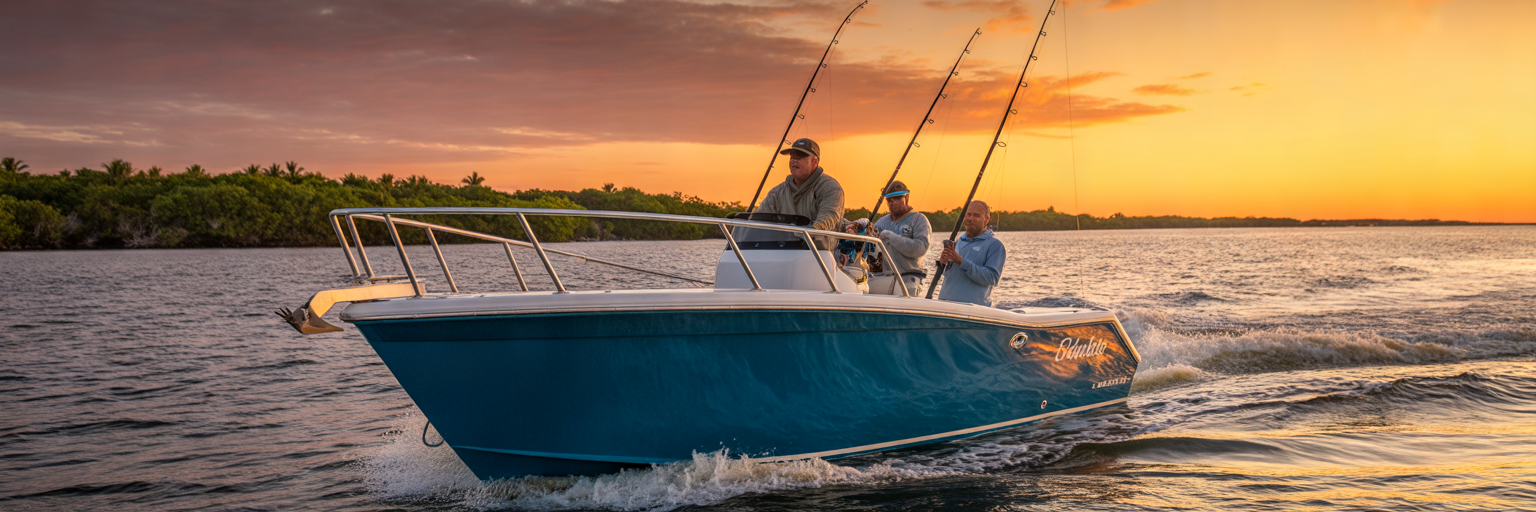
Florida manages over a thousand miles of tidal coastline and records more recreational saltwater fishing trips than any other state in the country. Before stepping aboard a center console or flats skiff, knowing how a Florida charter license covers your rod and cooler keeps your crew compliant from the dock to the cleaning table.
How a Florida Charter License Covers Guests on the Water
Walk down the planks of any marina from Pensacola to Key West at 6:00 a.m., and you will hear first-time guests asking the mate the exact same question while loading their ice chests: do charter guests need a license before untying the lines? The short answer is no, provided you booked a legitimate, full-time guide.
When you hire a commercial saltwater captain in Florida, either the vessel itself or the captain holds a blanket permit issued by the Florida Fish and Wildlife Conservation Commission (FWC). Under standard Florida charter license regulations, that vessel coverage extends directly to the paying customers on the deck. You do not need to visit a tackle shop the night before or log onto a state portal to purchase a personal recreational saltwater permit for your guided day on the water.
What Blanket Vessel Coverage Actually Authorizes
That commercial sticker on the console does more than just make the boat legal to run. From the moment you clear the markers until the hull slides back onto the lift, the captain’s permit authorizes you to take, attempt to take, or possess your legal daily bag limit of saltwater fish and marine organisms. This authorization applies strictly to non-commercial, personal use, meaning the fillets in your zip-top bags are heading to your grill or a local hook-and-cook restaurant, never to a fish house for sale.
Contrast this setup with trailer-boating or wading on your own. When you are not fishing under a hired captain’s commercial umbrella, state law requires you to carry a personal florida fishing license before wetting a line. On a licensed charter boat, the vessel effectively acts as your permit for the duration of the trip.
Why Out-of-State Visitors Get the Same Exemption as Locals
Visiting anglers often assume Florida hits out-of-state guests with extra paperwork. Whether you are a local driving across town to fish Tampa Bay passes or a visitor flying into Destin, Jacksonville, or the Florida Keys with a travel rod tube, the for-hire charter exemption applies equally across the board. The state does not care which state is printed on your driver’s license when you are standing on the deck of a permitted guide boat.
For traveling crews weighing the price of hiring a local pro against renting a skiff and buying individual permits, reviewing our breakdown of weekend saltwater license costs shows how quickly non-resident fees add up for a large family. On a guided charter, those individual state fees disappear into the boat’s daily rate. Your primary job as a charter guest is not buying an individual state permit, but verifying that the guide you booked carries active FWC charter coverage for your specific trip.
Why Passenger Headcount Limits Matter More Than You Think
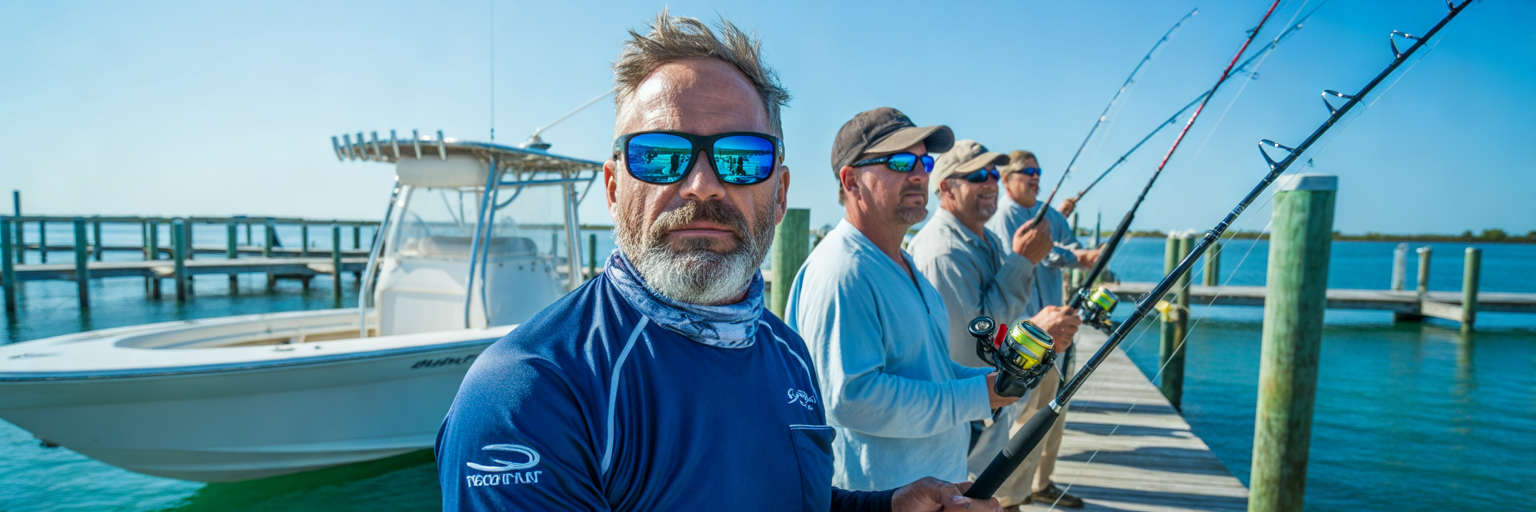
Knowing the boat covers your crew is step one, but understanding the numerical ceiling on that permit is what keeps you out of trouble during a water check. An FWC charter fishing license is never an unlimited pass for everyone who can squeeze onto the beanbags and cooler seats. State wildlife officers enforce strict headcount boundaries that dictate exactly how many people can legally fish or ride under that single vessel decal.
How FWC Charter License Tiers Work by Headcount
The state categorizes commercial for-hire saltwater permits by exact customer capacity rather than hull length. A guide purchases an annual permit covering up to four passengers, up to six passengers, between seven and ten passengers, or eleven or more passengers for large commercial head boats. As outlined in the official FWC Saltwater Charter License regulations, any passengers beyond the exact maximum number specified on the vessel’s permit are not authorized to take or possess saltwater fish.
| FWC License Tier | Covered Customer Limit | Typical Florida Charter Vessel | Guest Coverage Rule |
|---|---|---|---|
| Four Passengers or Fewer | Maximum 4 customers | Technical flats skiffs, bay boats, inshore center consoles | Covers up to 4 guests; a 5th person is not covered under the vessel permit |
| Five to Six Passengers | Maximum 6 customers | Large offshore center consoles, sportfish yachts (Six-Pack) | Covers up to 6 guests matching standard USCG OUPV capacity |
| Seven to Ten Passengers | Maximum 10 customers | Multi-passenger nearshore and custom reef boats | Requires USCG inspected vessel status alongside FWC 7 to 10 tier |
| Eleven or More Passengers | 11+ customers per vessel rating | Commercial head boats, deep-sea party boats | Covers individual rail anglers up to the Coast Guard inspected certificate limit |
Look closely at the four-passenger tier in the table above. Inshore and flats guides running 18-foot skiffs or 24-foot bay boats almost universally stick to the four-person tier. It keeps the hull light enough to pole across shallow grass flats, prevents stray treble hooks in tight casting quarters, and saves the guide hundreds of dollars in annual license overhead.
The Dockside Extra Guest Mistake and Cooler Liability
Here is the classic dockside blunder that ruins mornings: a group books an inshore bay boat for four anglers, and at 6:30 a.m. they show up at the ramp with a fifth friend, spouse, or child who decided to tag along at the last minute. If that bay boat is only licensed by the FWC for four passengers and a fifth customer steps aboard, that extra person is legally uncovered.
Guests often try to argue that the fifth person is just a “rider” taking photos or soaking up the sun rather than an active angler. On the water, that gray area vanishes fast. If FWC pulls alongside and sees five guests with six baited spinning rods in the gunnel holders, or watches an angler hook a redfish and hand the rod to the unlicensed fifth rider to feel the fight, citations come out. Even worse, if the crew pools a collective cooler of fillets calculated on five daily bag limits when the boat permit only covers four people, the whole box becomes an over-the-limit resource violation.
Because passenger tiers directly dictate fuel burn, tackle prep, and state licensing, headcounts heavily influence what standard Destin charter rates include for new guests and how captains price their trips statewide. Always confirm your exact headcount, including non-fishing observers and young kids, with your captain days before departure so your crew stays strictly inside the vessel’s FWC tier.
USCG Captain Credentials Versus FWC Fishing Coverage
Headcount limits get even trickier when you mix federal maritime safety laws with state wildlife rules. Walk around any Florida dock and you will hear captains referred to as “Six-Pack” guides. Assuming that nickname means the boat is automatically licensed for six people to harvest fish is one of the fastest ways a large group gets burned.
The Six-Pack Safety Credential Explained
Every legal for-hire guide running coastal passes or offshore waters must hold a U.S. Coast Guard (USCG) Merchant Mariner Credential. The most common credential is the Operator of Uninspected Passenger Vessels (OUPV) license, universally known in the fleet as a Six-Pack license, while operators of larger sportfishers and party boats carry a higher-tonnage Master Captain’s license.
A federal USCG license strictly governs maritime safety, vessel equipment, random drug testing compliance, and the legal authority to carry up to six paying passengers for hire on an uninspected vessel. It grants zero legal authority to catch or keep a single fish in Florida waters. Maritime passenger transport belongs to the Coast Guard, while resource harvesting belongs entirely to the FWC.
Why a Boat Can Legally Carry Six People Strategy-Wise but Only Fish Four
Both pieces of paper must align on a legitimate charter. Consider a scenario that regularly trips up visiting families: a captain holds a federal USCG Six-Pack credential allowing six paying passengers on a spacious 26-foot center console with plenty of forward seating. However, because that guide spends 90 percent of the year running three-person artificial lure trips for snook and trout, they only purchased the four-passenger FWC charter fishing license to keep annual state renewal costs down.
If that captain takes your family of six out to drift the flats, the vessel is 100 percent compliant with the Coast Guard for passenger transport, but two people on board are fishing illegally under state FWC rules. This dual-agency overlap on commercial vessels is vastly stricter than how we break down saltwater license rules on private boats when you are just taking family out on your own hull. Never assume that a Six-Pack captain automatically equals six covered anglers. When vetting a guide for a group of five or six, verify both their USCG for-hire status and that they hold the six-passenger FWC saltwater charter tier.
The Tarpon Tag Exception and Species-Specific Stamps
Once your headcount matches the boat’s tier, your crew is covered for almost everything swimming in the salt. However, Florida law carves out one massive statutory exception to charter blanket coverage that every inshore angler needs to know before pitching a live pass crab or mullet into a rolling school of silver kings.
How Florida Tarpon Tag Rules Work for Charter Guests
While standard saltwater species endorsements are rolled into your captain’s commercial permit, the annual FWC tarpon tag is strictly excluded from both charter vessel coverage and visitor exemptions. Understanding Florida tarpon tag rules starts with knowing how the state protects this fishery. Since 2013, Florida has managed tarpon strictly as a catch-and-release resource.
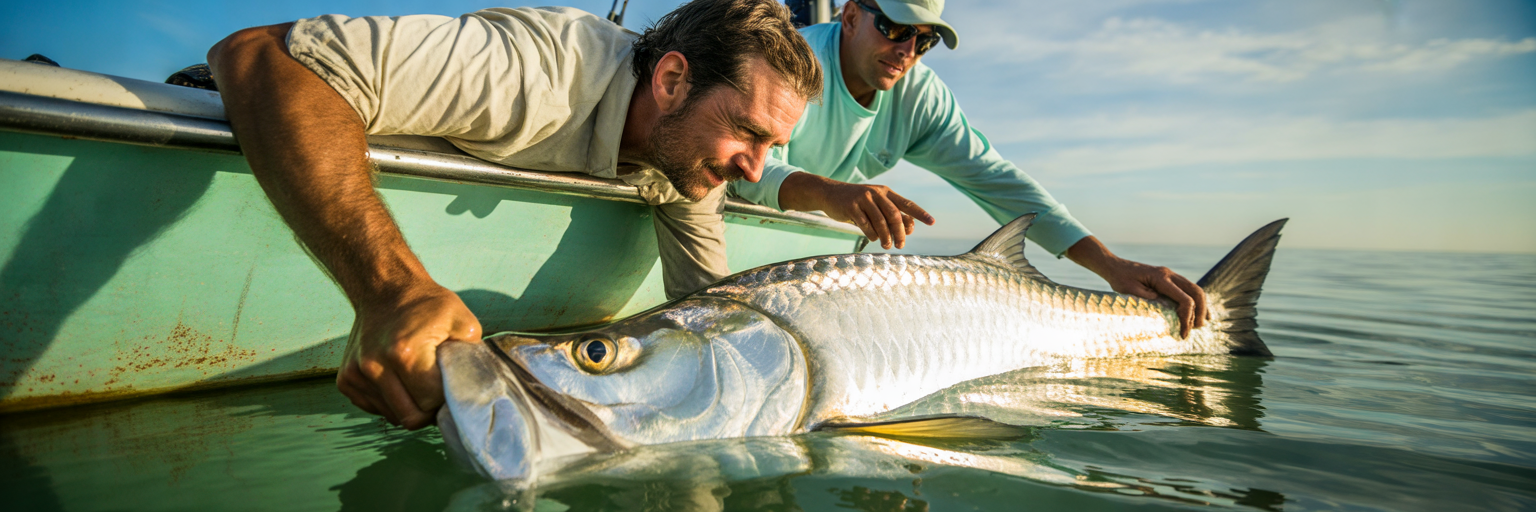
If you book a guide in Boca Grande Pass, underneath the Islamorada bridges in the Keys, or along Tampa Bay’s Skyway channel to jump, fight, and boatside-release giant tarpon, you do not need a tarpon tag. In fact, state regulations mandate that any tarpon over 40 inches must remain in the water during release and photo handling, so your mate will grab the leader for a boatside shot without ever hoisting the fish over the gunnel.
A pre-purchased FWC tarpon tag is only required if an angler intends to harvest or possess a tarpon, which is strictly limited to one tag per person per year and exclusively permitted when pursuing an official Florida state or IGFA world record. As confirmed by the official FWC Visitors’ Licenses guidelines, non-resident guests are exempt from standard recreational permits on a licensed charter except when it comes to annual tarpon tags. Captains cannot supply a blanket boat tag; the individual angler chasing a record must purchase and hold it in hand before landing the fish.
Included Stamps: Snook, Spiny Lobster, and Reef Fish
Outside of record-book tarpon hunting, your captain’s charter license absorbs the extra state endorsements that solo anglers normally pay extra to carry. When you are fishing aboard a properly licensed guide boat, you do not need to buy personal snook permits, spiny lobster permits, or State Reef Fish Angler designations.
Keep one hard boundary in mind at the fish box: being exempt from buying the species stamp never exempts your crew from seasonal closures, strict slot limits, or aggregate bag limits. Furthermore, under Florida fishing charter rules, the captain and mate are legally prohibited from contributing their personal bag limits to the client cooler during a for-hire trip. If your four-person crew is targeting red snapper or slot snook during an open window, only four daily limits go on ice, even if the mate hooks and hands off a fish or demonstrates a jigging retrieve.
Inshore Brackish Lines and Federal Offshore Waters
Your species coverage is locked in, but where the captain points the bow determines whether a standard state saltwater permit is enough. Florida’s coastline features both deep tidal river systems where fresh and salt water collide and an offshore continental shelf where state oversight hands the baton to federal regulators.
The Brackish Water Trap: Saltwater vs. Freshwater Species
Run up the St. Johns River near Jacksonville, push deep into the Everglades backcountry canals out of Flamingo, or work the upper Peace and Myakka rivers feeding Charlotte Harbor, and you enter the brackish mixing zone. In these tannins and creek mouths, it is completely normal to catch a saltwater redfish or snook on a gold spoon on one cast and hook a freshwater largemouth bass on the very next pitch against the lily pads.
Here is the catch: a captain’s FWC saltwater charter license only covers saltwater species. It grants zero authority to take or possess freshwater gamefish like largemouth bass, peacock bass, sunshine bass, or crappie. If your backwater charter specifically targets freshwater bass or mixes both species in upper river systems, every angler on board needs a personal Florida freshwater fishing license regardless of the boat’s saltwater decal. Even temporarily putting a trophy largemouth into the boat’s livewell for a weight check counts as possession, so spend the few dollars online for a freshwater permit before running upriver.
Crossing the Line: State Waters vs. Federal EEZ Permits
Heading the opposite direction through the inlet brings a completely different jurisdictional boundary into play. Florida state waters extend from the shore out to 3 nautical miles on the Atlantic Coast and out to 9 nautical miles on the Gulf Coast. Beyond those lines lies the federal Exclusive Economic Zone (EEZ), stretching out to 200 nautical miles.
A guide operating with only a state FWC charter license is strictly a nearshore or inshore boat. To fish past the 3-mile Atlantic line or 9-mile Gulf line for federally managed species, the vessel must carry active NOAA Fisheries Gulf of Mexico or South Atlantic Charter/Headboat moratorium permits for Reef Fish and Coastal Migratory Pelagics (CMP). A state-only captain cannot legally target or possess red snapper, gag grouper, amberjack, king mackerel, or mahi mahi once the GPS crosses into federal water, nor can they run out to federal reefs, catch grouper, and claim the fish were caught inside state lines on the ride home.
| Fishing Zone | Boundary Definition | Common Target Species | Required Coverage for Charter Guests |
|---|---|---|---|
| Inshore and Nearshore State Waters | Shoreline out to 3 NM (Atlantic) or 9 NM (Gulf) | Snook, redfish, spotted seatrout, tarpon, mangrove snapper | Valid FWC Saltwater Charter License matching guest headcount |
| Brackish Estuaries and Coastal Rivers | Tidal mixing zones (e.g., St. Johns River, Everglades canals) | Largemouth bass, peacock bass alongside snook and redfish | FWC Saltwater Charter License covers marine fish only; guests need personal freshwater licenses for bass |
| Federal Offshore Waters (EEZ) | Beyond 3 NM (Atlantic) or beyond 9 NM (Gulf) out to 200 NM | Red snapper, gag grouper, greater amberjack, king mackerel, mahi mahi | FWC Charter License plus active NOAA Federal Charter/Headboat Reef Fish and Pelagic Permits |
Federal moratorium permits are capped in number and trade for tens of thousands of dollars, which is a primary factor in how we calculate Florida mahi charter costs for first-time crews running deep into the Gulf Stream or open Gulf. Always match your prospective captain’s permit portfolio to the exact water body and target fish on your hit list.
How to Spot Unlicensed Mosquito Fleet Operations
Because legitimate commercial vessel insurance, federal reef permits, and state charter tiers require serious financial investment, every major Florida port attracts a shadow market of unlicensed operators. Full-time guides call these illegal boats the “mosquito fleet” or pirate charters, and they typically troll social media groups, classified boards, or dockside bars offering trips at heavily discounted cash rates.
The Real Risk to Paying Guests During an FWC Boarding
Booking a cut-rate pirate charter does not just shortchange local pros; it puts your own vacation and wallet Directly in the crosshairs. Under Florida fishing charter rules, when an FWC patrol boat or U.S. Coast Guard boarding team pulls alongside an unlicensed for-hire vessel on the water, the hammer falls on everyone aboard.
First, your fishing trip is terminated on the spot, and the vessel is placed under mandatory escort back to the boat ramp. Second, wildlife officers confiscate every fish in the cooler as evidence of illegal commercial harvesting. Finally, after you spend two hours standing in the sun at the dock answering enforcement questions, any guest who does not hold a personal recreational fishing license is handed a personal misdemeanor citation for fishing without a permit, since the boat’s fake charter status offers zero blanket coverage.
Red Flags of an Illegal Pirate Charter
Spotting a rogue operator is easy if you know how professional dock operations run. Walk away immediately if you encounter any of these five warning signs before paying a deposit:
- The operator tells you to buy your own saltwater license: If a “captain” instructs your group to go online and buy individual recreational saltwater licenses before boarding because “it keeps my charter rates lower for you,” they do not hold a commercial FWC charter permit.
- Rehearsed dockside cover stories: If the operator coaches your crew at the ramp to tell FWC officers or the Coast Guard that you are all “just old friends or coworkers splitting gas and bait money” if stopped on the water, you are stepping onto an illegal charter.
- Sketchy pickup locations: Legitimate guides operate out of established commercial marinas, tackle shops, or permitted public ramps where port authorities verify commercial liability insurance. Be wary of operators insisting on unlit backwater ramps or private residential docks where they ask you to walk quietly past the neighbors.
- Cash-only demands with zero paperwork: While many mates prefer cash tips and captains often take cash balances at the dock, an operator who refuses credit card deposits, provides no written booking confirmation, and leaves no digital paper trail is hiding from maritime authorities.
- Dodging federal permit questions: If a boat advertises deep-sea red snapper or gag grouper trips 20 miles offshore at a bargain price but lacks commercial FWC decals on the hull and changes the subject when you ask if they hold a federal NOAA Reef Fish permit, keep your wallet in your pocket.
A legitimate full-time Florida guide builds commercial insurance, USCG compliance, and FWC licensing into their daily rate and respects your questions. Never agree to lie to a wildlife officer to save fifty bucks on a charter.
Pre-Trip Questions Every Smart Angler Asks the Captain
Vetting a guide does not mean interrogating them like a harbor master. Full-time captains are proud of their credentials and appreciate clients who know the difference between an inshore state boat and a federally permitted offshore rig. You can verify everything you need during a smooth, two-minute booking conversation.
Five Quick Questions to Confirm Before Paying a Deposit
Before locking in your date and putting down a card deposit, run through these five quick questions with your captain:
- “We have [X] total people in our group, including kids and non-fishing riders; does your FWC charter license tier cover that exact headcount?” This immediately confirms you will not have an uncovered fifth or sixth person standing on the dock.
- “Are we staying strictly in saltwater, or do we need personal freshwater licenses for any backwater river bass spots?” Crucial if you are booking an Everglades, St. Johns, or Charlotte Harbor backwater trip where bass and snook mix.
- “If the weather lets us run past state waters for snapper or grouper, does the boat carry active federal reef and pelagic permits?” Ensures your offshore run will not be restricted to inside the 3-mile or 9-mile line.
- “Since crew limits cannot count toward our cooler, what are the current open seasons and per-person bag limits for what is biting right now?” Sets realistic expectations for the fish cleaning table before you ever leave the slip.
- “We want to target big tarpon; are we strictly catch-and-release, or do we need to discuss tarpon tags beforehand?” Signals to the captain that you respect state handling laws for fish over 40 inches.
Fishing From the Beach or Pier Before and After Your Charter
One final trap catches visiting anglers every single week: wetting a line from the beach, bridge, resort dock, or fishing pier the evening before or the morning after a guided trip. Remember that a captain’s FWC charter fishing license coverage begins the moment you step onto the charter vessel and ends the exact second your boots hit the dock planks.
If you plan to cast silver spoons into the surf for pompano, drop live shrimp off a rock jetty, or rent a kayak during the rest of your vacation, the boat’s permit does not follow you onto the sand. Check out our Destin shore fishing access and licensing guide to see how personal non-resident short-term permits and resident shoreline licenses work when you are fishing on foot.
Get your headcount straight early, book a properly credentialed local guide, and respect the slot limits. With the paperwork handled, you can study our guide on using fishing tide charts for better Florida trips and put 100 percent of your focus on reading the moving water, pitching the bait, and enjoying the bite.