
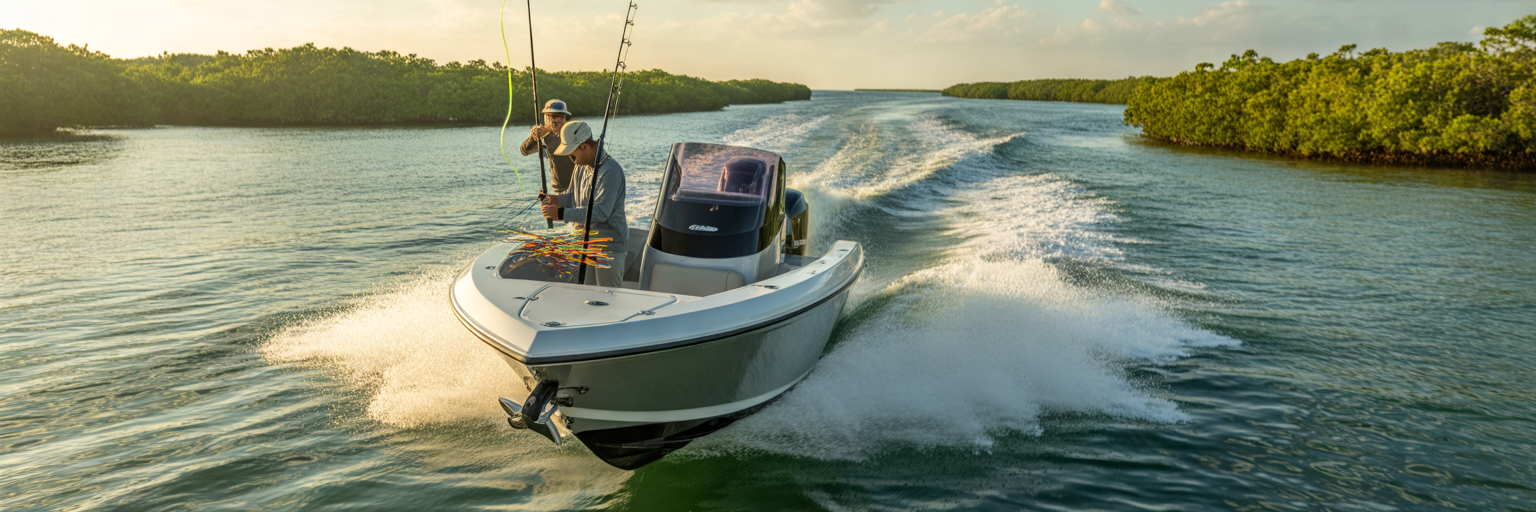
Backed by more than 1,350 miles of coastline and roughly one million registered recreational vessels, Florida manages the heaviest saltwater angling pressure in the United States. Carrying a valid Florida saltwater license on board is just as important as checking your bilge pump or livewell aerator. Before pushing off from the dock, knowing exactly how state wildlife laws apply to every person on your deck keeps a productive day on the water from ending with a citation.
Basic Florida Saltwater License Requirements on Private Vessels
The baseline rule from the Florida Fish and Wildlife Conservation Commission (FWC) is straightforward. If you are fishing from a private skiff, bay boat, or offshore center console in state or adjacent federal waters, every person actively fishing needs a valid recreational Florida saltwater license unless they meet a specific state exemption. Boat owners often assume their hull registration or personal permit extends an umbrella over their guests, which is a fast way to ruin a morning bite. Before inviting friends aboard, review our complete florida fishing license overview to make sure your entire crew is squared away on current state regulations. Unless you purchase a specialized hull permit, there is no automatic blanket private boat fishing license that covers unpermitted buddies simply because they stepped onto your fiberglass deck.
Standard Saltwater Permits Versus the Shoreline License
Anglers frequently mix up the standard saltwater permit with the no-cost resident shoreline license at the boat ramp. A standard resident saltwater license costs $17 for the year, while non-residents pay $17 for a three-day pass, $30 for seven days, or $47 for an annual permit. Meanwhile, the resident shoreline license is completely free, which tempts plenty of casual guests to grab it online the night before a trip. However, that free permit only covers anglers casting from land or a structure permanently fixed to land, like a pier, jetty, or bridge. A common dockside mistake happens when a crew member thinks their free shoreline permit covers them because the plan is to beach the skiff on a sandbar and cast on foot. The moment your hull leaves the trailer, that shoreline permit is useless.
Why Boat Accessed Wading Counts as Vessel Fishing
Even if your guests never make a single cast from the gunwale, using a vessel for transport changes their legal status in the eyes of wildlife officers. According to official FWC shoreline fishing regulations, if you use a motorized boat, kayak, or paddleboard to reach an island, spoil bank, oyster bar, or bridge piling and step out to fish on foot, Florida law classifies this as vessel-based fishing. Traveling by water to reach a wading spot immediately voids the shoreline-only license and requires a full $17 resident permit. Before you back down the ramp at high-traffic spots like Tampa Bay, Mosquito Lagoon, or the Keys, take sixty seconds in the staging lane to verify every crew member’s permit type and expiration date. Catching a shoreline-only license before the hull hits the water saves your guest a citation and lets them buy the standard permit right on their phone.
What Counts as Fishing Versus Passive Observing on Deck
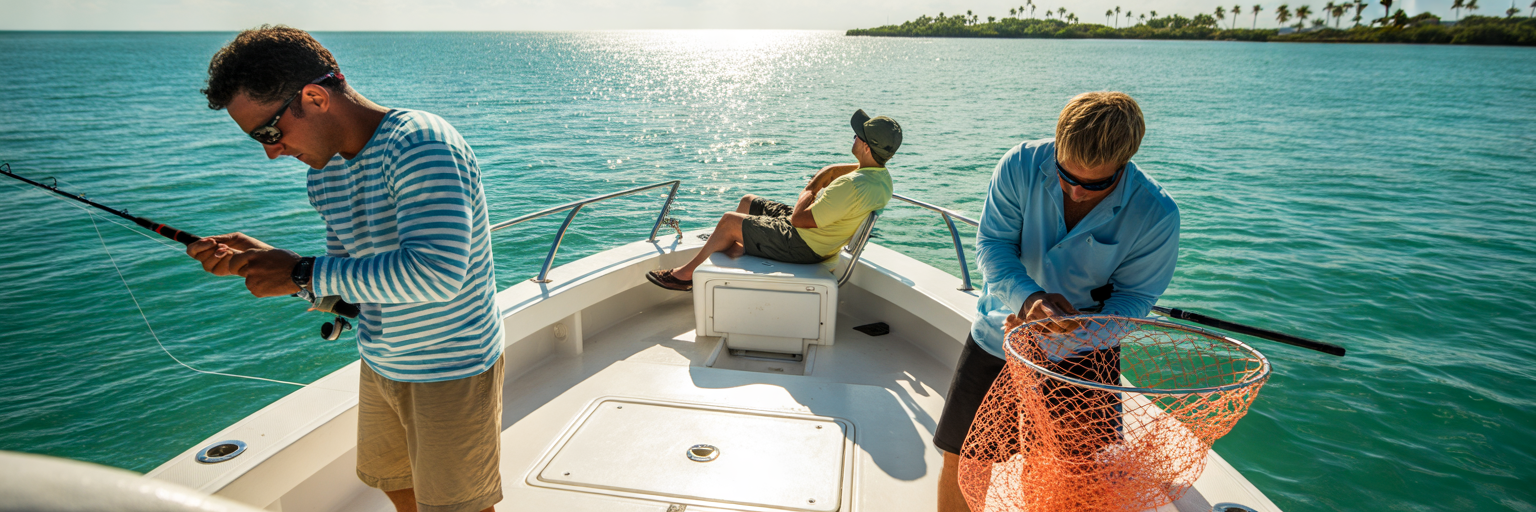
Once your crew understands which permits apply to the boat, the next hurdle is managing what happens on deck during the trip. FWC defines fishing as taking or attempting to take marine organisms, a broad legal standard that covers way more than holding a bent rod when a snook eats. Wildlife officers watching through binoculars from an inlet jetty look at total hands-on participation across the deck. If an unpermitted guest is actively helping the crew locate, attract, hook, or land fish, they are legally fishing.
Deck Duties That Require a Fishing License
Many captains invite family members or friends along just for the boat ride and sunshine, assuming those passengers do not need a permit. That holds true only if those guests act as strictly passive observers. A true observer relaxes on the bow cushion, drinks a cold beverage, or snaps photos of the catch without ever laying a finger on the gear. The moment a passenger pitches in to help the angler during a hectic bite, they cross the legal line. Even seemingly minor deck chores count as attempting to take fish, especially when deploying specialized setups like our live bait rigs over shallow grass flats. You need a valid license to perform any of the following deck duties:
- Casting a spinning rod, fly rod, or conventional setup, even for a single test cast
- Rigging ballyhoo, threading artificial lures, or baiting a circle hook with shrimp or pinfish
- Throwing a cast net to load the livewell with greenbacks, pilchards, or finger mullet
- Tossing live baits or diced menhaden over a grass flat to chum up cobia or Spanish mackerel
- Clearing flat lines, outriggers, or surface teasers when a pelagic fish rushes the spread
- Dipping a landing net under a hooked redfish or trout at the side of the boat
- Sinking a gaff into a mahi or tail-roping a shark beside the gunwale
Keeping Non-Fishing Passengers Compliant During FWC Stops
Good intentions create the biggest gray areas during inlet and pass checks. Picture a busy Saturday afternoon drift through Boca Grande Pass or Haulover Inlet. You hook a heavy fish, realize your pliers are on the center console, and hand the bent rod to your unlicensed buddy for ten seconds so you can grab them. Or maybe a tired kid is struggling to crank a stubborn gag grouper off the bottom, and an unlicensed uncle reaches over to turn the reel handle a few times. If an FWC officer witnesses either moment, that guest is technically fishing without a license. Establish a firm golden rule for your boat before leaving the dock: if a guest does not carry a valid license, their hands stay completely off the rods, nets, bait, and tackle from ramp to ramp.
Who Qualifies for Individual Saltwater License Exemptions
While the state casts a wide net over deck duties, not every angler rigging a bait needs to buy a permit. Understanding saltwater license exemptions Florida provides under state statutes saves your crew money and prevents unnecessary purchases at the tackle shop. These waivers apply strictly to the individual angler based on their personal status, regardless of whose private boat they step onto for the day.
Age, Military, and Disability Exemptions for Anglers
Age is the most common qualifier on family trips, yet residency draws a sharp dividing line for older anglers. Any youth under 16 years old is automatically exempt from needing a saltwater license, whether they live in Orlando or are flying down from Ohio for spring break. On the other end of the spectrum, Florida resident seniors aged 65 and older do not need to purchase a basic license, provided they carry valid proof of age and state residency, like a Florida driver’s license or state identification card, in the console dry box. However, non-resident seniors aged 65 and older do not get this exemption and must buy a standard non-resident permit before wetting a line.
State law also provides relief for military personnel and residents facing specific hardships. According to the official FWC license requirement breakdown, active-duty military members who are Florida residents, stationed outside the area, and home on leave for 30 days or less can fish without a license if they carry a copy of their official leave orders on board. Permanent Florida residents with qualifying disabilities can obtain a no-cost Resident Persons with Disabilities Hunting and Fishing License, while residents receiving food stamps, temporary cash assistance, or Medicaid also qualify for a no-cost exemption permit. When hosting out-of-state family on the Panhandle, running through our Destin license checklist before launch helps you sort out which visiting relatives need to buy a short-term pass and who rides exempt.
Taking Advantage of FWC Free Saltwater Fishing Days
If you want to take unlicensed friends out without anyone opening their wallet, plan your trips around FWC Free Saltwater Fishing Days. The state designates four specific dates every year where the basic saltwater license requirement is completely waived for both Florida residents and out-of-state visitors fishing on private boats:
- The first consecutive Saturday and Sunday in June
- The first Saturday in September
- The Saturday immediately following Thanksgiving
On these four days, anyone can cast, net, and harvest fish from a private vessel without holding a basic permit. Keep in mind that while the license fee disappears for the day, all slot limits, daily bag limits, gear restrictions, and seasonal closures still strictly apply. Whether your guests are relying on an age waiver or military orders on a normal weekend, act like a seasoned captain and ask them to show you their physical ID or leave paperwork at the dock before untying your lines.
How the Recreational Vessel License Covers Your Entire Crew
If you constantly host rotating crews of college buddies, business clients, or out-of-town relatives on your own boat, policing everyone’s individual paperwork gets old fast. That is where the optional Florida vessel fishing license comes into play. Instead of attaching to a specific person, the Recreational Vessel License attaches directly to your registered fiberglass or aluminum hull. Once issued to your boat, it covers every single person fishing aboard that specific vessel for a full year, and it even includes statewide snook and spiny lobster harvest coverage for everyone on deck.
Cost Breakdown of Individual Permits Versus a Vessel Permit
Deciding whether to buy a hull permit comes down to basic dockside math. While commercial and for-hire charter licenses carry four-figure price tags up to $2,000, the private Recreational Vessel License for a non-commercial boat also sits at $2,000 per year. Compare that against individual resident permits at $17 a year and non-resident permits ranging from $17 for three days to $47 annually. You would need to host more than forty annual non-resident guests or over a hundred three-day visitors in a single calendar year just to break even on the raw dollar amount. However, for private boat owners who run a spacious offshore center console every weekend with a revolving door of out-of-state guests, the convenience of never having to nag passengers to download an app at 5:30 in the morning can outweigh the steep upfront cost.
Comparing Florida Saltwater License Options for Private Boaters
| License Type | Primary Coverage | Snook and Lobster Harvest | Portability Across Boats |
|---|---|---|---|
| Resident Individual Annual | Single named Florida resident angler | Requires separate paid permits | Valid on any private boat or shore |
| Non-Resident Short Term or Annual | Single named visiting angler | Requires separate paid permits | Valid on any private boat or shore |
| Resident Shoreline Only | Single resident fishing from land only | Requires separate paid permits | Zero coverage on or from any vessel |
| Recreational Vessel License | All anglers aboard the registered hull | Included for all passengers aboard | Locked strictly to one registered vessel |
This comparison is based on official Florida Fish and Wildlife Conservation Commission recreational licensing regulations, helping private boat owners weigh individual flexibility against whole-crew coverage.
Where the Vessel License Stops Working
The biggest operational blind spot with a vessel license is its complete lack of portability. Because the permit stays locked to the registered hull numbers on your boat, it does nothing for you when you step off your own deck. Say you own a 25-foot center console covered by a Recreational Vessel License and skip buying a personal $17 permit. Next Saturday, you leave your boat on the lift and jump on your buddy’s flats skiff to sight-fish redfish on Mosquito Lagoon. Unless your buddy’s skiff also carries a vessel license, you are fishing illegally the moment you make a cast. Even if you splurge on a vessel permit to cover guests on your big boat, spending an extra $17 on a personal resident license ensures you stay legal whenever you hop aboard a friend’s rig or wade from the beach.
Mandatory State Reef Fish Angler Designation for Bottom Fishing
Once you clear the inlet and point the bow toward nearshore ledges or offshore structure, a standard saltwater license is no longer enough to drop a bait to the bottom. Anyone aged 16 and older fishing from a private vessel in Gulf or Atlantic waters must hold the mandatory FWC reef fish angler designation if they target, harvest, or possess specific bottom species. Formally known as the State Reef Fish Angler (SRFA) designation, this rule applies even if you are strictly catch-and-release fishing over nearshore artificial reefs. The simple act of intending to catch reef species triggers the legal requirement before a single fish hits the ice box.
Target Species That Trigger the Reef Fish Requirement
Before tying on one of our Florida bottom fishing rigs and dropping a live pinfish or squid to the seafloor, make sure everyone holding a bottom rod has the SRFA printed on their permit. The designation is required whenever your crew targets or catches any of these fifteen state-monitored reef species:
- Snappers: Red snapper, mutton snapper, yellowtail snapper, lane snapper, and vermilion snapper
- Groupers: Gag grouper, red grouper, black grouper, and scamp
- Jacks: Greater amberjack, lesser amberjack, almaco jack, and banded rudderfish
- Other Reef Species: Gray triggerfish and hogfish
Whether you are working shallow patch reefs in the Keys for yellowtail or punching in numbers from our Destin offshore spot guide to drop heavy lead for red snapper and gag grouper, every angler working a bottom rod needs this endorsement active on their profile.
Why Exempt Seniors and Veterans Still Need This Designation
Here is the legal catch that trips up veteran Florida boaters at the ramp every single season: almost nobody is exempt from the State Reef Fish Angler designation on a private boat. Even Florida resident seniors aged 65 and older, active-duty military members home on leave, and permanently disabled residents who are 100 percent exempt from carrying a basic saltwater fishing license must still register for the SRFA if they drop a bait for snapper or grouper. The only private boaters who skip this individual registration are youth under 16 and passengers fishing aboard a boat that holds a paid Recreational Vessel License.
Fortunately, the SRFA designation is completely free for everyone. FWC uses the contact list from this registration to run the State Reef Fish Survey, collecting real-world catch data from private boaters to push back against overly restrictive federal closures and fight for longer state red snapper and grouper seasons. Any angler, including exempt seniors, can add the free annual renewal to their FWC profile on their smartphone in less than two minutes before leaving cell range.
Species Permits and Snook or Lobster Stamps on Private Boats
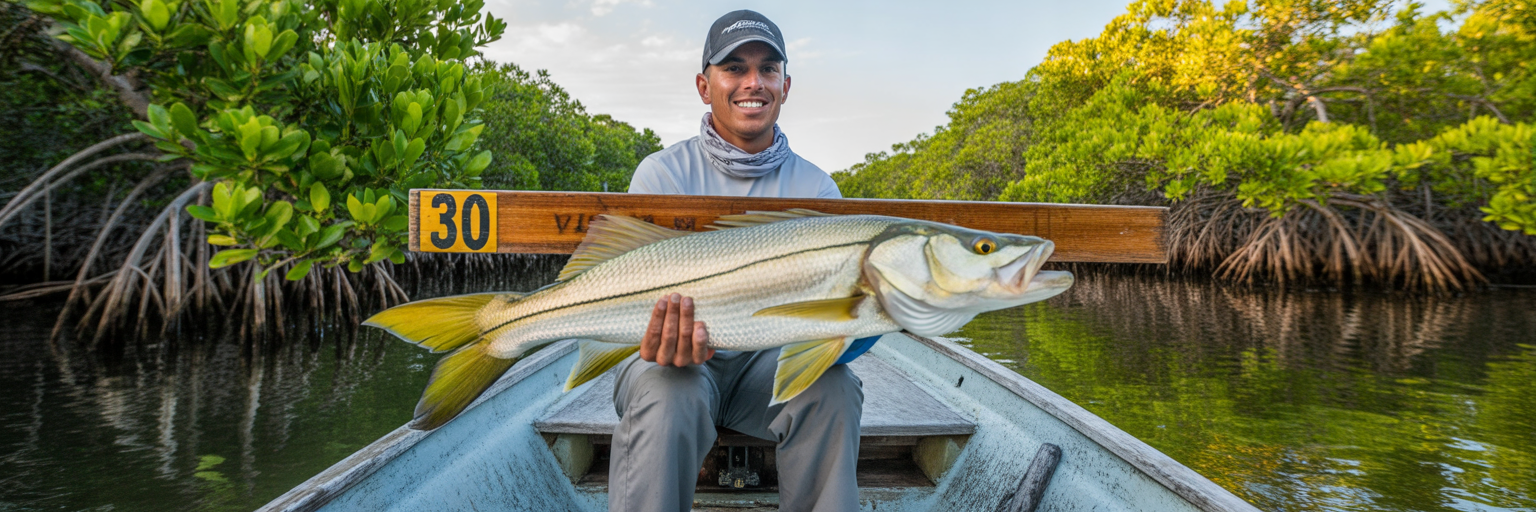
Beyond bottom reef fish, targeting several of Florida’s prized inshore and offshore gamefish requires specialized state harvest stamps or federal permits. While a basic saltwater license lets you chase almost anything in state waters on a catch-and-release basis, putting certain species into the cooler or pushing past the reef into federal waters adds another layer of compliance for private boat crews.
Inshore and Nearshore Harvest Permits for Snook, Lobster, and Tarpon
Florida manages three iconic coastal targets with paid endorsements: the Snook Permit ($10 annual), the Spiny Lobster Permit ($5 annual), and the Tarpon Tag ($51.50 per tag). On a private boat, the legal boundary for snook and tarpon sits squarely between catch-and-release and harvest. Any angler holding a standard saltwater license can pitch live pilchards for snook in Tampa Bay passes or jump silver kings along the beach without paying an extra dime, provided the fish is released immediately. However, the moment you measure and ice a legal slot snook during open season, or drop spiny lobsters into the baitwell during mini-season or regular season, the individual harvesting them must hold the matching permit (unless they are exempt by age and residency, or fishing on a boat with a Recreational Vessel License).
Tarpon operate under an even stricter standard. Florida is a catch-and-release-only state for tarpon, and any fish over 40 inches must stay in the water alongside the boat during release. The $51.50 Tarpon Tag is strictly limited to anglers pursuing an official International Game Fish Association (IGFA) world record, and zero exemptions apply to the Tarpon Tag regardless of age, residency, or vessel license status.
Federal HMS Permits for Offshore Pelagic Runs
When you throttle your center console past the reef into federal waters to troll weed lines or offshore humps, permit rules split depending on which pelagic species eat your baits. Putting together a big catch using our mahi mahi fishing tactics only requires a standard state saltwater license for the anglers on board, and that same base permit covers wahoo and blackfin tuna. However, if your crew targets or keeps regulated tunas (bluefin, yellowfin, bigeye, albacore, or skipjack), billfish (sailfish, blue marlin, white marlin, or roundscale spearfish), or swordfish, your boat must carry a federal NOAA Highly Migratory Species (HMS) Angling Permit. Unlike state stamps that attach to the angler, the federal HMS permit is purchased for the hull and covers everyone fishing aboard that private vessel.
Additional Florida and Federal Species Permits for Private Vessels
| Permit or Stamp | Target Species Covered | When Required on a Private Boat | Coverage Scope |
|---|---|---|---|
| State Reef Fish Angler | Snappers, groupers, amberjacks, triggerfish, hogfish | Targeting, catching, or keeping reef fish | Individual angler aged 16 and up |
| Snook Permit | All Florida snook species | Harvesting and keeping a slot snook in season | Individual angler unless age exempt |
| Spiny Lobster Permit | Caribbean spiny lobster | Harvesting or possessing lobster in state or federal waters | Individual angler unless age exempt |
| Tarpon Tag | Atlantic tarpon | Possessing or killing a tarpon for an IGFA record | Individual angler with zero exemptions |
| NOAA HMS Angling Permit | Sailfish, marlin, swordfish, and regulated tunas | Targeting or harvesting HMS species in state or federal waters | Entire private vessel and all passengers |
Permit triggers reflect combined Florida Fish and Wildlife Conservation Commission rules and NOAA Fisheries federal pelagic regulations for recreational private boats.
Private Boat Rules Versus Charter and For-Hire Licenses
The sharp contrast in licensing complexity is one of the main reasons visiting anglers and even local boat owners regularly book trips with professional guides. When paying customers step onto a legitimate for-hire skiff, bay boat, or offshore sportfisher, they do not need to buy a personal saltwater license, snook stamp, lobster permit, or reef fish designation. Everything is automatically covered under the guide’s FWC Charter Captain or Charter Boat license.
The Legal Line Between Splitting Gas and Running an Unlicensed Charter
With marine fuel, live pilchards, ice, and terminal tackle costing a small fortune, every private boat owner splits expenses with their crew. Under both FWC and U.S. Coast Guard regulations, dividing actual, direct trip costs like fuel, bait, ice, and chum evenly among the buddies fishing on board is 100 percent legal on a private recreational run. However, private boaters get into serious legal trouble when they cross the line into commercial cost-sharing gray areas. Advertising open spots on social media forums to strangers, charging a flat fee per head that exceeds direct trip expenses, or requiring payment as a mandatory condition to step onto the deck turns your recreational run into an illegal, unlicensed charter. Both FWC and the Coast Guard actively sting illegal operators at major Florida ramps, handing out massive fines and vessel termination orders.
When Charter Captains Fish on Personal Fun Trips
There is also a critical permit nuance that catches friend groups off guard when a licensed guide joins the crew for a day off. A charter captain’s blanket license only covers passengers when the vessel is operating on a legitimate, commercial for-hire trip. If a licensed captain takes buddies out on a personal, non-commercial fun trip aboard an unpermitted private hull, or jumps on a friend’s center console to help run the deck, that charter license does not cover the crew. Standard individual saltwater licenses and State Reef Fish Angler designations apply to everyone on board. If you are visiting a major hub like Destin, Jacksonville, or Islamorada and want to skip the permit math entirely, hiring a vetted local guide is the cleanest move. As shown in our Destin charter rates breakdown, booking a legitimate captain handles every state license, federal reef permit, and tackle detail before you even step on the dock.
How to Keep Digital Licenses Ready for On-Water Inspections
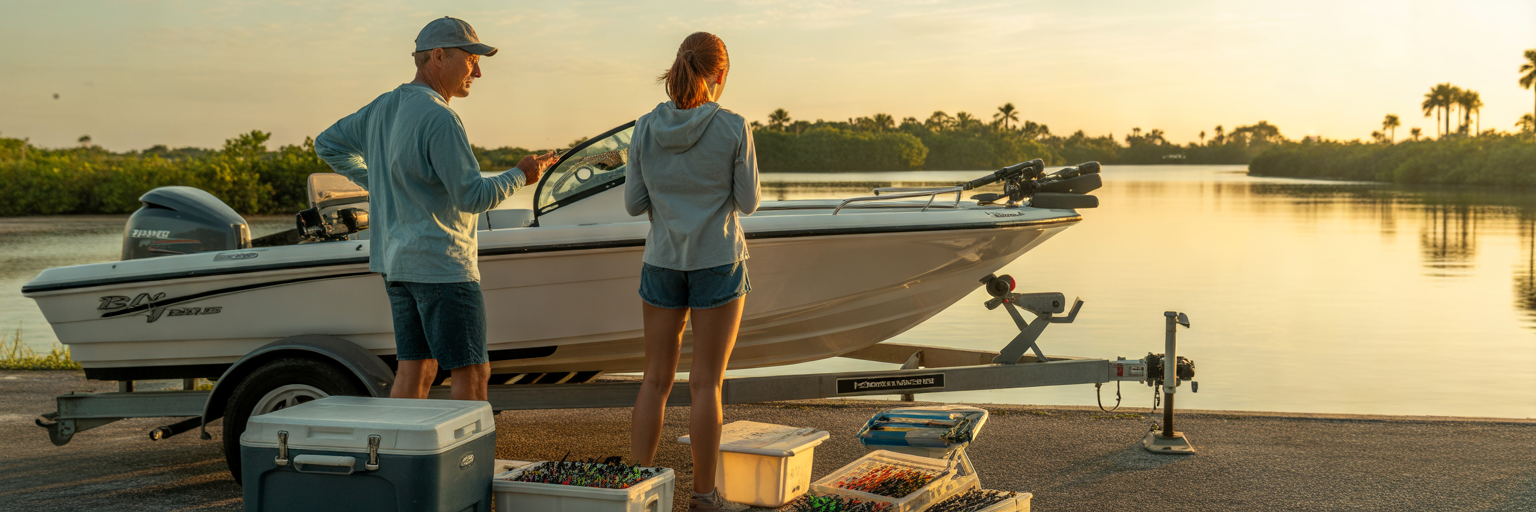
Having the right permits only helps if you can actually pull them up when blue lights flash behind your transom. Digging through a damp wallet with slimy bait hands while drifting a busy inlet is a hassle nobody wants. Smart anglers rely on three proven methods to keep licenses accessible: syncing permits to the official GoOutdoorsFlorida mobile app, saving a high-resolution screenshot of every crew member’s license QR code and SRFA expiration date into a dedicated favorites album on their phone so it loads 30 miles offshore with zero cell service, or stashing waterproof paper copies right beside the hull registration inside the console dry bag.
What Happens During an FWC Vessel Inspection
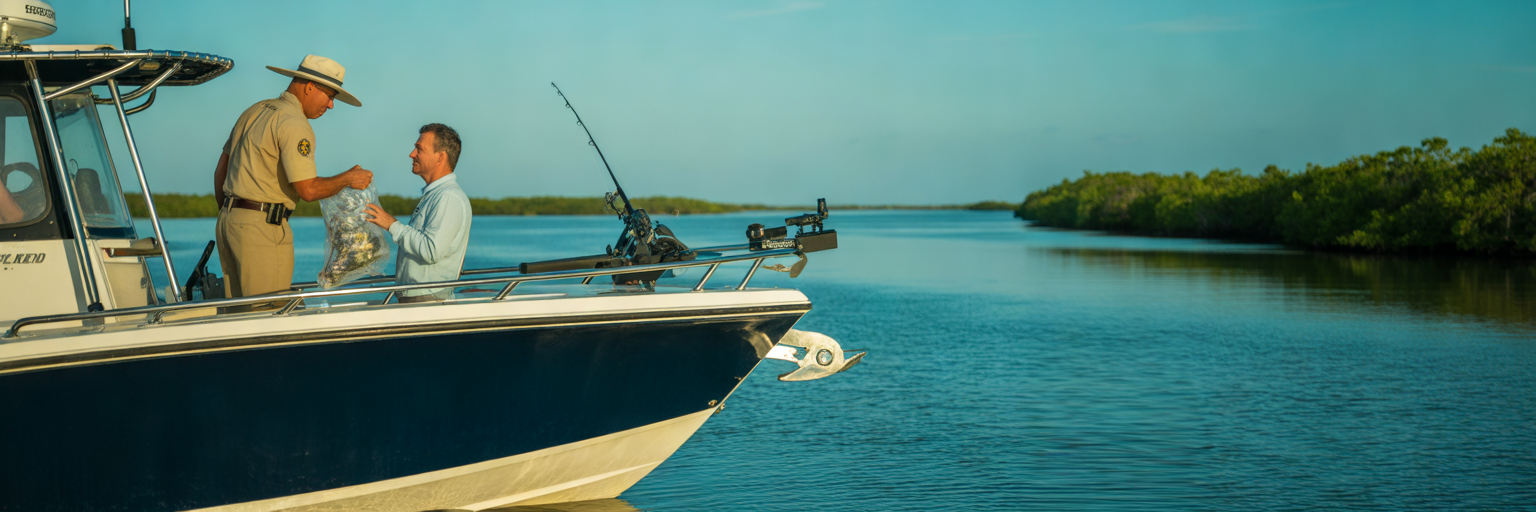
Routine FWC stops in a pass or offshore are quick and professional when your boat is organized. Officers will typically come alongside, ask to see your required Coast Guard safety gear (life jackets for every passenger, a throwable flotation device, visual distress flares, and a sound-producing device), inspect your cooler and livewell to measure catches against slot limits, and ask for fishing licenses from everyone who has been working the rods. A common fear among private boat owners is taking the fall for a hardheaded guest who lied about having a valid permit. In Florida, FWC cites the individual unlicensed angler, not the boat owner. Even so, watching a buddy get handed a court summons or citation on the water kills the mood of the entire trip immediately.
Your Pre-Launch Dockside Compliance Checklist
The best captains build a two-minute permit check right into their pre-trip prep alongside checking wind direction, water clarity, and reading our fishing tide charts to time the moving water. Run through these five dockside checks before backing down the ramp so your crew stays 100 percent legal and focused on putting fish in the box:
- Verify active dates and vessel status: Confirm every angler holds a current saltwater permit that explicitly covers vessel fishing, not just a resident shoreline-only license.
- Confirm State Reef Fish Angler coverage: If there is any chance you will drop a bait to the bottom for snapper, grouper, amberjack, triggerfish, or hogfish, verify that every angler aged 16 and older (including exempt seniors) has an active SRFA designation.
- Check harvest stamps against the seasonal calendar: If snook or spiny lobster are in season and you plan to ice a legal catch for dinner, confirm the person harvesting holds the matching paid endorsement.
- Inspect exemption IDs at the truck: Ask resident seniors (65+) to verify their Florida ID is on board, and confirm active-duty military members on leave have their official leave orders in the dry bag.
- Save offline copies before leaving the dock: Have every angler screenshot their digital license and text a copy to the captain’s phone so the whole boat’s paperwork can be shown from a single screen even without cell service.