
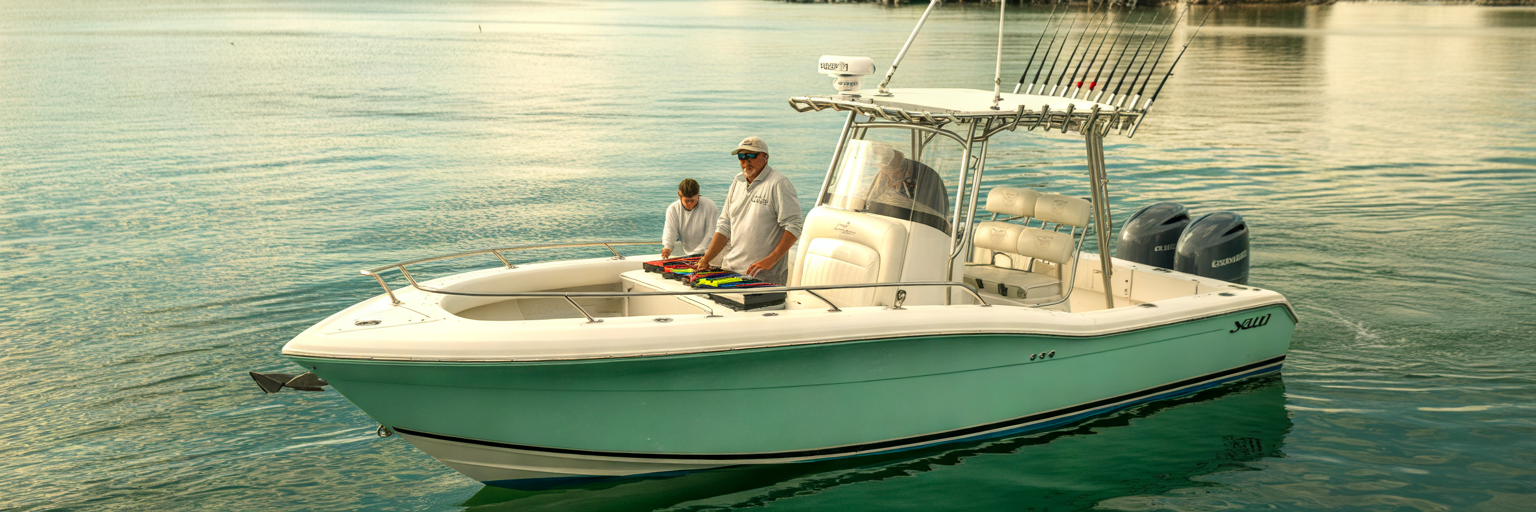
Commercial fishermen founded Destin in the 1840s because the narrow throat of East Pass sits closer to the 100-fathom curve than any other harbor on the Florida Gulf Coast. That exact geography still drives local boat pricing, where running ten miles out puts you over deep reef ledges that take forty miles to reach anywhere else in the Panhandle. Understanding how Destin charter rates are built around that underwater drop-off helps you book the right hull without overpaying for range you do not need.
How Destin Charter Rates Work by Trip Duration and Water
Calculating your total Destin fishing charter cost starts with how you buy space at the rail and how far past the sea buoy you plan to run. Every harbor fleet operates on fixed mechanical realities tied to time, hull displacement, and water depth.
Private Boat Rates Versus Split Party and Headboat Tickets
When you book a private charter, you rent the entire vessel and its crew for a set block of hours. The base price remains identical whether you step aboard solo or bring three buddies to split the tab. That private setup gives you total control over the target species, departure time, and when to move spots.
Walk-on headboats and split-party trips out of HarborWalk operate differently by selling individual rail spots by the head. A party boat ticket keeps your upfront spend low, though you fish alongside twenty to fifty strangers tossing heavy lead over public reefs on the captain’s fixed schedule. Split-party charters bridge that gap by matching you with four or five other anglers on a smaller sportfisher to divide a full-boat rate evenly.
Measuring Actual Lines in the Water Across Half Day and Full Day Runs
Charter durations break down into half-day runs of 4 to 6 hours, three-quarter-day trips running 6 to 8 hours, and full-day or extended endurance trips stretching 8 to 12 plus hours. New guests often overlook how much of a 4-hour block disappears while idling through the Destin Harbor no-wake zone and clearing the East Pass jetties.
A 4-hour nearshore trolling trip gets lines wet within fifteen minutes of clearing the pass, giving you over three hours of active fishing time for Spanish mackerel or kingfish along the beach. Taking that same 4-hour window and asking to bottom fish federal reefs fifteen miles out eats up nearly two hours of round-trip transit time, leaving minimal soaking time over the structure. Matching your trip length to your target water zone is a core part of our destin fishing strategy for maximizing productive hours on the water.
How Hull Size Fuel Burn and Passenger Surcharges Dictate the Base Price
Weighing an inshore vs offshore charter comes down to the machinery required to handle the sea state. Inside Choctawhatchee Bay, captains work calm grass flats and bridge pilings for redfish and speckled trout using a 22-to-24-foot bay boat powered by a single 250hp to 300hp four-stroke outboard. Pushing out to nearshore wrecks and deep-water offshore ledges demands 30-to-36-foot twin or triple outboard center consoles or 45-to-60-foot twin-diesel sportfishers that burn exponentially more fuel per mile.
Most six-pack bay and center-console captains price their base rate around a four-passenger baseline. Adding a fifth or sixth angler increases live bait prep, terminal tackle rigging, and hull drag, which triggers a 15% to 20% surcharge per extra person beyond four guests.
| Water Zone | Typical Trip Duration | Run Time from East Pass | Standard Vessel Type | Primary Target Species |
|---|---|---|---|---|
| Inshore (Choctawhatchee Bay & Grass Flats) | 4 to 6 hours | 5 to 20 minutes (inside pass) | 22ft to 25ft Bay Boat (Single Outboard) | Redfish, Speckled Trout, Flounder, Black Drum |
| Nearshore (Pass Bridges, Beach & State Reefs) | 4 to 6 hours | 10 to 30 minutes | 24ft to 30ft Center Console (Single/Twin Outboards) | King Mackerel, Spanish Mackerel, Bull Redfish, Cobia |
| Offshore Shelf (Federal Reefs & Wrecks) | 6 to 10 hours | 45 to 90 minutes | 30ft to 40ft Center Console or Sportfisher | Red Snapper, Vermilion Snapper, Gag Grouper, Amberjack |
| Deep Offshore (DeSoto Canyon, FADs & Oil Rigs) | 10 to 14+ hours | 2 to 3.5 hours | 36ft+ Triple Outboard Console or 50ft+ Diesel Sportfisher | Yellowfin Tuna, Blackfin Tuna, Wahoo, Blue Marlin, Mahi Mahi |
Before locking in a deposit, align your group’s seasickness tolerance and budget with current bite trends by checking our weekly Destin fishing report. If anyone in your crew struggles with rolling Gulf swells or you want to keep the invoice predictable on a 4-hour budget, stay inside the pass on a bay boat or hug the beach on a nearshore troll.
Standard Gear, Bait, and License Inclusions on the Boat
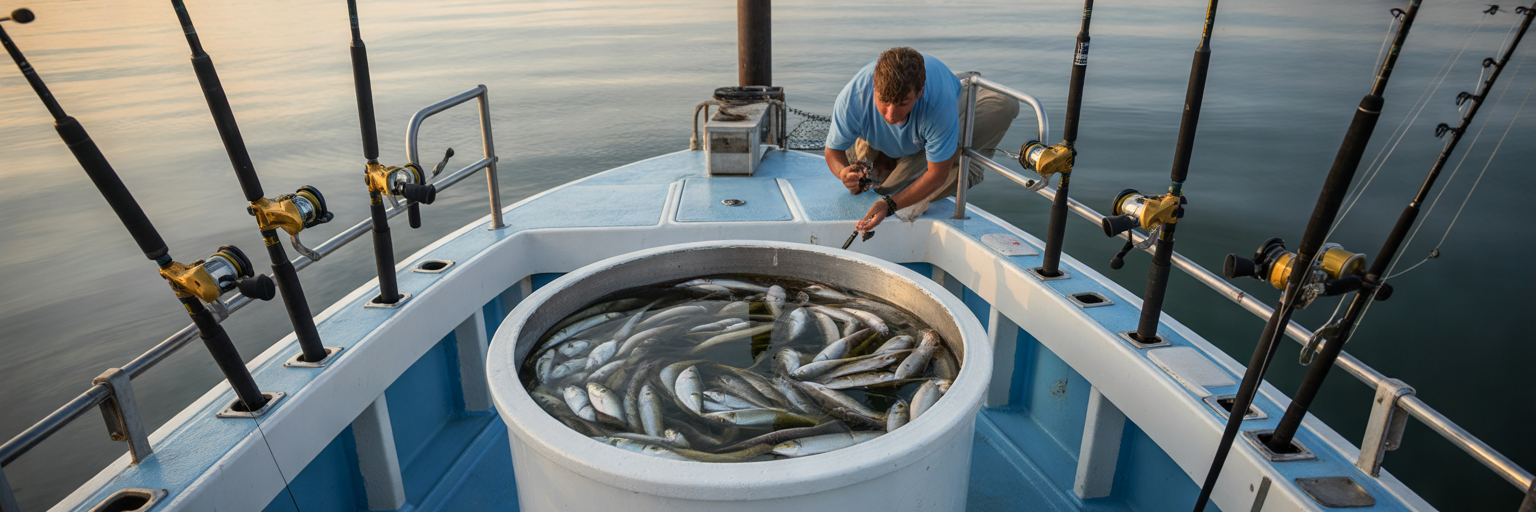
Once you select the right hull and trip length, the value of your booking shows up in the hardware and legal coverage waiting at the slip. Knowing the standard Florida charter fishing inclusions prevents you from buying redundant gear at the tackle shop the night before launch.
How Vessel Blanket Saltwater Licenses Cover Every Angler on Board
Professional Destin captains carry a commercial charter vessel license issued by the Florida Fish and Wildlife Conservation Commission alongside federal NOAA Gulf of Mexico reef fish and coastal migratory pelagic permits. This vessel blanket license covers every paying passenger from the moment you step off the dock until you return.
You never need to buy individual state saltwater fishing licenses, snook stamps, or federal reef endorsements for your charter day. If you plan to surf cast from the beach or rent a skiff on your own later in the week, review our Destin license checklist so you stay legal when fishing without a hired captain.
Rods Reels and Terminal Tackle Provided for Bay and Gulf Trips
Walk onto a reputable charter boat and you will find custom-matched rods and reels already rigged in the gunwales. Bay boats carry 3000 to 5000 series spinning reels spooled with 15-to-30-pound braided line and fluorocarbon leaders built for pitching live shrimp or soft plastics around dock pilings. Offshore center consoles and sportfishers step up to 50-to-80-pound conventional setups for winching red snapper and gag grouper off high-relief structure, paired with heavy 30-wide to 80-wide trolling gear for wahoo and tuna.
Losing hooks, heavy bank sinkers, and fluorocarbon leaders to jagged bottom wrecks or toothy king mackerel is part of saltwater fishing and is baked directly into your trip rate. You can see how captains construct these abrasion-resistant leaders in our Florida bottom fishing rigs guide. However, dropping a $700 rod-and-reel combo overboard or snapping a graphite blank by high-sticking a fish after ignoring the mate’s instructions will almost always require replacing that setup at cost.
Live Bait Provisioning Chum Bags and On Board Ice Management
Captains and deckhands leave the slip well before dawn to throw cast nets over shallow grass flats or pull alongside the harbor bait barge. By the time you arrive with your coffee, the circulating transom livewell is blacked out with live pilchards, cigar minnows, threadfin herring, or pinfish, backed up by insulated boxes holding frozen Boston mackerel, squid, and northern bonito strips.
One rare gray area involves specialty live baits. If you want to target giant tarpon with dozens of pass crabs, load the well with expensive goggle-eyes, or burn through extra blue-water chum blocks for blackfin tuna, the captain may pass through a separate bait tab agreed upon before leaving the dock. On-board ice management is split into two distinct zones: the insulated in-deck fish box stays packed with hundreds of pounds of shaved or crushed salt-ice slurry to chill your catch immediately upon bleeding, while a separate clean cooler holds your personal drinks and sandwiches.
Run through these six verification questions with your captain in two minutes during your pre-trip phone call to eliminate dockside surprises:
- Are all state and federal reef permits active on the boat for the specific species we want to harvest?
- Can you rig two spinning reels for left-hand retrieve or make deck space if I bring my own 9-weight fly rod?
- Does our quoted rate cover all live bait, or is there an optional pass-through tab for extra pilchards, crabs, or goggle-eyes?
- What is the exact replacement policy if a guest accidentally damages a rod blank or drops a combo over the rail?
- Is there a dedicated cooler with ice on board for our food and drinks, or should we pack a small soft-sided bag?
- Are terminal tackle upgrades like heavy tungsten jigs or specialty trolling lures included in the standard gear loadout?
Fuel Surcharges, Dockside Fish Cleaning, and Hidden Variables
While rods, bait, and ice stay locked inside the base quote, variables tied to crude oil fluctuations and post-trip harbor logistics sit outside that initial number. Accounting for these moving parts ahead of time gives you an accurate dock-to-dock budget before you ever leave the truck.
When Marine Fuel Prices Trigger an Offshore Surcharge
Fuel policies divide sharply between shallow bay water and deep blue water. Inshore Choctawhatchee Bay trips and standard 4-to-6-hour nearshore runs almost always bake Rec-90 non-ethanol gasoline directly into the advertised rate because engine run times are short and predictable.
Pushing 8 to 12 hours offshore toward the edge of the DeSoto Canyon or deep-water fads requires burning hundreds of gallons of marine diesel or high-octane gas. Because captains publish their annual pricing months in advance, most establish a per-gallon marina fuel baseline. If fuel dock prices spike above $4.50 or $5.00 per gallon during peak summer months, boats running long range may apply a transparent fuel surcharge calculated by engine burn hours, a dynamic we break down in our guide to Florida mahi charter costs.
Dockside Filleting Bagging and Vacuum Sealing Options
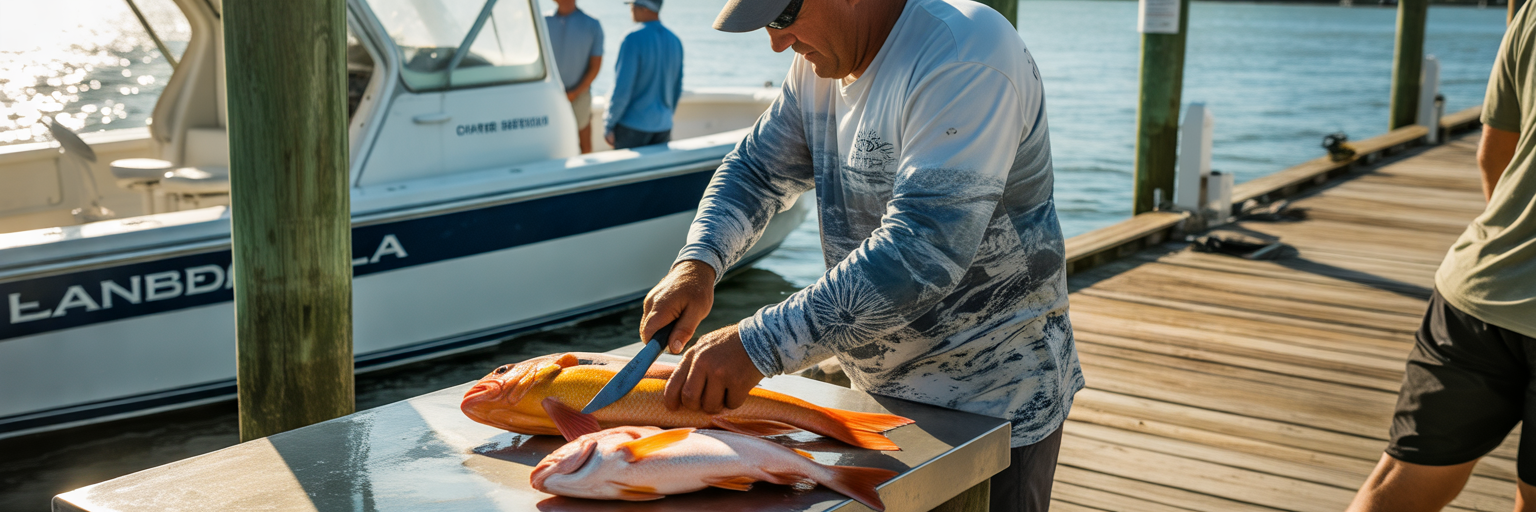
Once the boat backs into the slip at Destin Harbor and hangs the catch on the display board, the fish-cleaning process begins. On the majority of private six-pack charters, the captain or first mate fillets, skins, debones, and packs your meat into heavy-duty gallon zip-top bags right at the dockside cleaning table at no extra charge, as they consider it part of their service factored into their tip.
Certain marinas and nearly all large party boats operate under different rules where independent dockside fish-cleaning concessions handle the knives. These commercial tables typically charge $0.40 to $0.60 per pound of whole fish before the knife touches the scales, and many offer commercial vacuum-sealing and flash-freezing packages for anglers flying or driving long distances home. When packing your fillets on ice for the trip back, always double-bag the zip-tops and pull your cooler drain plug slightly open so fresh meltwater never touches the raw meat and ruins the texture.
Marina Parking Fees Hook and Cook Deals and True Dock to Dock Cost
First-time guests frequently forget the small cash variables waiting along the boardwalk. Paid parking lots around HarborWalk Village and private marinas charge $15 to $25 per day per vehicle, and select municipal slips levy a $3 to $5 per head passenger boarding fee.
If you carry a bag of fresh red snapper fillets straight from the cleaning table to a local harbor restaurant for a hook-and-cook meal, expect the kitchen to charge a flat per-person fee to blacken, grill, or fry your catch alongside two sides. To calculate your true dock-to-dock spend before leaving the truck, add your base charter rate, any applicable offshore fuel surcharge, dockside parking, independent fish cleaning fees if using a party boat, and your crew gratuity.
Deckhand Gratuity Standards and Crew Etiquette
Factoring crew gratuity into that final dockside total is not an optional bonus for a lucky catch, but the foundational way marine employment works along the Gulf Coast. Understanding the mechanics of tipping fishing charter crew ensures you respect the people working hardest to put meat in your cooler.
Why First Mate Pay Relies on the Fifteen to Twenty Percent Benchmark
Gratuity is almost never bundled into the headline charter rate because the first mate or deckhand on a Gulf sportfisher or large center console works primarily for tips alongside a modest daily base wage. While guests sleep in their condos, the mate shows up at the slip at 4:30 AM to load hundreds of pounds of ice, throw cast nets for live bait, and tie dozens of fluorocarbon leaders in the dark.
Throughout your trip, that deckhand baits every hook, clears floating sargassum weed from trolling lines, untangles bird’s nests, gaffs green fish at the rail, and scrubs blood off the fiberglass deck. After you walk away with clean fillets, the mate stays behind for another two hours to scrub the hull, flush salt out of the engines, and reset tackle for tomorrow. The coast-wide benchmark sits firmly at 15% to 20% of the total charter price, and seasoned anglers tip on crew hustle and preparation rather than fish weight alone. A mate who re-rigs four times, shifts anchor ten times, and grinds relentlessly in tough currents during a lockjaw bite deserves the full 20% just as much as on a fast limit day.
Tipping on Solo Captain Bay Boats Versus Full Crew Sportfishers
Tipping logistics shift slightly depending on whether you fish an offshore boat with a dedicated deckhand or an inshore bay boat run by a solo guide. On an offshore vessel, you hand the gratuity directly to the first mate at the cleaning table or to the captain to split among the deck crew.
On a 24-foot inshore bay boat, the owner-operator captain usually runs solo without a mate. While outdated etiquette from decades ago suggested skipping tips for boat owners, modern Florida inshore guides do 100% of the pre-dawn cast-netting, tower spotting, knot tying, and dockside fish cleaning themselves, making a 15% to 20% tip standard for solo captains as well.
Cash Versus Digital Apps and How Crew Hustle Impacts Your Day
Crisp cash handed directly to your mate or solo captain at the fish-cleaning table remains the undisputed gold standard on every harbor dock. Running a tip through a credit card machine or booking platform holds up the mate’s pay for days and eats 3% to 4% in merchant processing fees, though most younger deckhands now keep Venmo or CashApp QR codes taped inside the console as a backup.
Treating the crew like professionals pays immediate dividends on the water. Show up on time, listen closely during the safety and drag briefing, and ask how you can help clear lines when a big fish hooks up; captains and mates routinely reward respectful, engaged crews with extra coaching at the rail and an extra fifteen minutes over the reef when the afternoon bite fires up late.
Deposits, Weather Calls, and Cancellation Rules
Clear communication with your captain starts well before morning launch, right when you put a card on file to lock in your date on the harbor calendar. Knowing the financial rules around booking a Destin charter protects both your vacation budget and the captain’s livelihood when summer squalls build over the Gulf.
Flat Fee Holds Versus Percentage Deposits and Refund Windows
The Destin fleet uses two primary deposit structures to secure a reservation: a flat-rate credit card hold ranging from $100 to $300, or a percentage deposit requiring 20% to 50% of the total trip rate upfront. If you need to cancel for personal reasons, most operators require a strict 14-to-30-day advance notice window to issue a full deposit refund.
Captains enforce these timelines strictly during peak summer red snapper season because inventory is limited to one or two trips per day. Once a captain blocks off your June morning and turns down five other calling groups, a last-minute guest cancellation leaves a commercial vessel tied to the pilings with zero revenue to cover slip fees and insurance.
Understanding the Captain’s Call on Wind Swell and Rain
Every legitimate charter contract leaves weather cancellations strictly up to the Captain’s Call on the morning of the trip. Captains monitor offshore buoys for dangerous sea states: sustained 20-knot winds, steep 4-to-6-foot short-period Gulf chop stacked against an outgoing tide in East Pass, Small Craft Advisories, or active lightning cells will trigger an immediate safety scrub with your choice of rescheduling or a 100% deposit refund.
Newcomers often confuse gray skies with unfishable weather. Overcast cloud cover, a passing 20-minute summer rain shower, or a light 10-knot breeze will not cancel a charter; in fact, low light penetration and surface ripple break up boat shadows and often trigger the most aggressive topwater and reef bite of the week. Because wind direction meeting tidal current in the pass determines wave steepness, checking our guide on reading Florida fishing tide charts helps you see exactly what your captain evaluates before untying the lines.
Pivoting From Blown Out Gulf Seas to Calm Bay Water or Partner Boats
A common mid-tier scenario happens when a stiff south wind blows out the open Gulf for a family nearshore trip, yet the expansive waters inside Choctawhatchee Bay remain protected and calm. Rather than losing the day on the couch, versatile captains running center consoles or bay boats will often offer to pivot the trip inside the pass to target redfish, trout, and black drum around bridge fenders and leeward grass flats at an adjusted inshore rate, while honoring a refund if your contract specified offshore water only.
If an unexpected mechanical breakdown like a spun prop hub, failed livewell pump, or dead radar dome sidelines your boat before departure, established Destin captains tap into their dock network to transfer your crew seamlessly to a vetted harbor peer at the exact same rate, or refund your deposit on the spot.
| Scenario | Who Makes the Call | Standard Deposit Outcome | Best Angler Action |
|---|---|---|---|
| Small Craft Advisory, Lightning, or 4ft+ Steep Gulf Chop | Captain (Safety Call) | 100% Refundable or Free Reschedule | Stay flexible by booking early in your vacation window to allow a weather backup day |
| Light Rain, Overcast Skies, or 1 to 2ft Swell | Trip Runs as Scheduled | Forfeited if Guest No-Shows | Pack a lightweight waterproof rain shell and fish the low-light bite |
| Gulf Blown Out, Bay Protected and Fishable | Mutual Captain & Guest Agreement | Applied to Pro-Rated Inshore Rate or Refunded | Ask if the boat can pivot to Choctawhatchee Bay bridges and flats for redfish |
| Vessel Mechanical Breakdown Before Departure | Captain | 100% Refundable or Transferred to Partner Boat | Let the captain connect you with a vetted harbor peer running similar gear |
| Guest Cancels Within 7 to 14 Days of Trip | Guest | Deposit Non-Refundable (Unless Boat Rebooks) | Notify the captain immediately so they can try to fill the open calendar slot |
Passenger Limits, Catch Expectations, and What to Pack
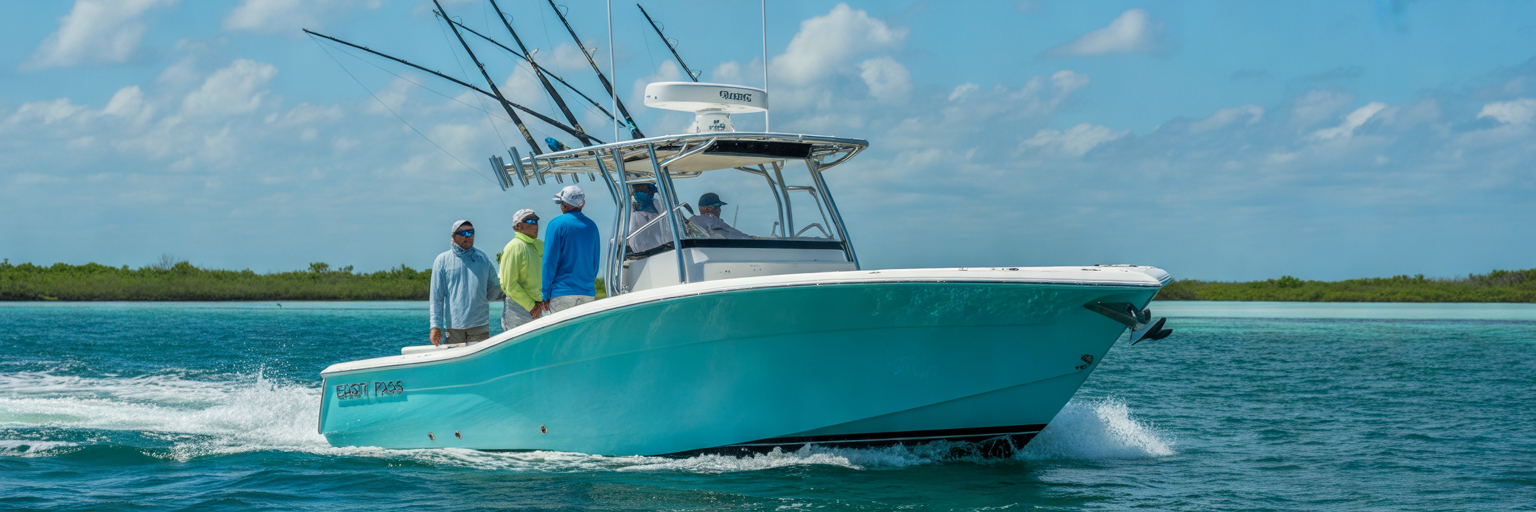
With your date secured and weather contingencies clear, the final step is showing up at the slip prepared for Coast Guard headcount laws and seasonal harvest rules. Dialing in your personal kit and expectations sets you up to step onto the deck acting like a regular rather than a first-time tourist.
USCG Six Pack Rules Versus Multi Passenger Inspected Vessels
Nearly all bay boats, center consoles, and mid-sized sportfishers in Destin operate under a United States Coast Guard Operator of Uninspected Passenger Vessel license, universally called a Six-Pack license. Federal maritime law strictly caps these vessels at six paying passengers maximum, enforced by heavy Coast Guard boarding fines and immediate license revocation.
That six-person ceiling is a hard federal statute based on life-saving capacity, not deck square footage. A six-month-old infant sleeping in a carrier or a toddler held in a parent’s lap legally counts as one of those six souls on board. If your family reunion or corporate crew numbers seven to twenty people, you must specifically book a USCG Multi-Passenger Inspected vessel certified to carry larger groups.
Matching Gulf Seasonality and Harvest Regulations to Your Target Box
Smart anglers separate the thrill of bending a rod on catch-and-release giants from harvesting legal fillets for the fish box. State and federal fishery managers govern high-profile Gulf reef targets through strict seasonal windows and bag limits; for instance, federal red snapper season for federally permitted for-hire charters typically opens in early June and runs through late summer alongside select fall weekends, while gag grouper, greater amberjack, and gray triggerfish rotate through narrower harvest openings.
You can see exactly what is open for the cooler during your trip week by checking our Destin fishing calendar before you book. When trophy reef species are closed to harvest, a skilled captain keeps your rods doubled over by targeting open-season vermilion snapper, white snapper, king mackerel, blackfin tuna, or slot redfish inside the bay while releasing out-of-season monsters unharmed with a descending device.
Essential Personal Gear to Pack and Classic Dockside Mistakes to Avoid
The boat supplies all the heavy fishing machinery, leaving you responsible for a tight personal kit. Pack these seven essentials and avoid the classic dockside blunders that drive crews crazy:
- Polarized sunglasses with amber or copper lenses: Cutting surface glare is mandatory for spotting cruising cobia, tripletail, and redfish on the flats, and you can compare lens tints in our guide to choosing polarized lenses.
- Lotion-only reef-safe sunscreen: Never bring aerosol spray sunscreen onto a charter boat; the overspray coats fiberglass decks into a dangerous ice-skating rink, stains vinyl cushions orange, and delaminates expensive polarized lens coatings.
- Non-marking rubber-soled deck shoes or boat boots: Leave black-soled running shoes at the condo so you do not spend the day slipping on wet gelcoat or leaving black scuff marks across the cockpit.
- Motion-sickness prevention taken early: Take over-the-counter meclizine the night before your trip and again two hours before launch so it enters your bloodstream before clearing East Pass, rather than waiting until you feel green at the sea buoy.
- One consolidated soft-sided cooler for food and drinks: Combine your group’s snacks, water, and sandwiches into a single soft bag instead of lugging three bulky hard-sided coolers onto a 24-foot bay boat with limited deck space.
- Aluminum cans and plastic bottles only: Leave all glass beer and soda bottles off the boat, as rolling swells turn broken glass into an immediate barefoot hazard on deck.
- A dedicated 50-to-70-quart hard cooler locked in your truck bed: Leave a clean cooler with a fresh bag of ice waiting in your vehicle at the marina parking lot so you can load your zip-top bags of fillets without dripping fish slime inside your rental car.
Show up fifteen minutes early with cash for the mate, lotion sunscreen in your bag, and realistic seasonal targets in mind, and you will spend less time sorting out logistics at the dock and more time pulling fish over the gunwale.