
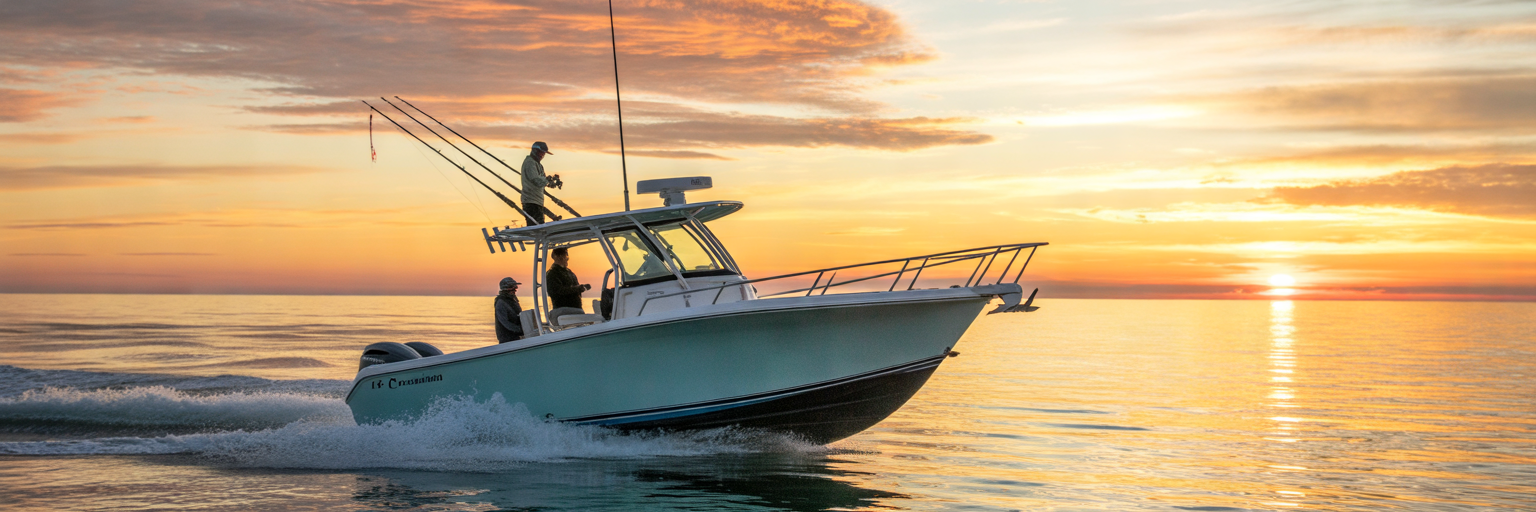
The DeSoto Canyon pushes the 100-fathom curve within 25 miles of Destin’s East Pass, giving Emerald Coast boaters the shortest run to deep water in the Northern Gulf. Reading this week’s tide, wind, and bait movement before backing down the ramp determines whether you capitalize on that geography or burn fuel in dead water.
Reading Current Conditions in a Destin Fishing Report
Every solid Destin fishing report starts with the barometer and the wind vane rather than what somebody caught three days ago. Late October along the Emerald Coast has delivered exactly what local crews wait for all autumn. A steady drop in barometric pressure ahead of a mild continental front, paired with manageable morning breezes, has triggered a high-probability 5 out of 5 feeding window across both the bay and the open Gulf. Baitfish are flushing out of the estuaries in tight, nervous balls, and predators are stacking up at ambush points to intercept them before water temperatures dip any further.
Diurnal Tides at NOAA Station 8729511
If you trailer your boat over from the Atlantic coast, the first adjustment you have to make is respecting our diurnal tide cycle. Unlike East Coast waters that give you two highs and two lows every day, NOAA Station 8729511 at Destin East Pass records just one high tide and one low tide per 24-hour period. If you miss the moving water here, you do not get a second chance six hours later. Moving water is the single most critical trigger for an active bite in the Panhandle. When that single tidal exchange aligns with early morning low light, the entire food chain turns on at once. Before you load the truck, study our breakdown on fishing tide charts for better Florida trips to calculate the exact hours of peak water volume movement through the pass.
Wind Direction, East Pass Rollers, and the Buoy Rule
Wind direction dictates both your water clarity and where you can safely hold a boat. A light north or northeast breeze acts like an iron on the Gulf, flattening the beachfront and scrubbing the nearshore troughs into crystal-clear aquariums ideal for sight-fishing. Conversely, once a south or southwest wind exceeds 15 knots, it pushes open Gulf swell directly against the heavy flushing outgoing tide funneling out of Choctawhatchee Bay. That collision creates steep, dangerous standing rollers right in the throat of the inlet. Checking live East Pass fishing conditions before clearing the jetties is mandatory for small craft. When evaluating offshore buoy data, stick to the practical captain’s rule: verify that the dominant wave period in seconds is at least double the significant wave height in feet. A 3-foot sea at 8 seconds gives you a comfortable, fishable swell, whereas 3 feet at 4 seconds puts you in a steep washing-machine chop that makes holding over deep structure miserable.
Smart trip planning comes down to synthesizing these three metrics the night before departure. Stack the barometric trend against the tidal coefficient and the forecasted wind quadrant. If a stiff southerly blow is set to collide with a max ebb tide at daybreak, skip the inlet headache and keep your hull tucked inside the protected bay grass flats. When the north wind knocks the swell down and the barometer starts sliding, top off the fuel tanks and prepare to push out into the Gulf. You can cross-reference these daily weather patterns with our complete destin fishing seasonal breakdown to match your hull size to the highest-percentage water on the map.
Inshore Targets Across Choctawhatchee Bay and East Pass
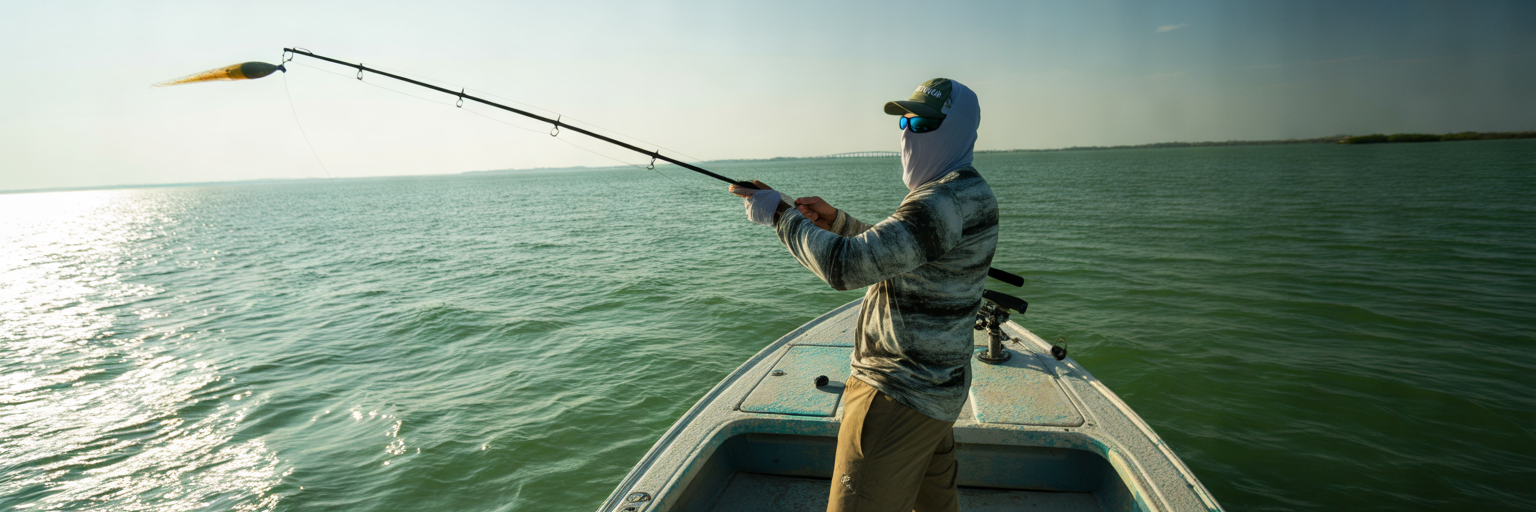
When you stay inside the inlet, autumn Choctawhatchee Bay inshore fishing offers some of the most consistent light-tackle action on the Gulf Coast. Cooling water temperatures across the bayous and shallow flats have pushed baitfish toward the main bay basins, drawing heavy concentrations of speckled trout and upper-slot redfish onto shallow turtle-grass beds, sandy potholes, and residential dock pilings from Mack Bayou all the way to Rocky Bayou.
Working Bay Grass Flats for Speckled Trout and Slot Reds
Success on the shallow flats comes down to keeping your presentation out of the bottom slime while making enough racket to pull fish from a distance. At first light, work suspending twitchbaits over the 3-to-5-foot transition zones where grass meets clean sand. Once the sun gets up, switch to suspending a lively medium shrimp or a scented soft plastic shrimp imitation under a loud, cupped popping cork. Tie an 18 to 24 inch leader of 20-pound fluorocarbon below the cork so your bait hovers just above the blades without fouling. Check out our guide on live bait rigs that clear Florida turtle grass to dial in your leader lengths and hook weights for varying bay depths. As the mid-morning sun illuminates the shallows, stand on the bow and look for the bronze tails and glowing blue edges of slot redfish cruising the sandy potholes. Having the right eyewear makes all the difference when the breeze ripples the surface, which is why we put together our field notes on choosing polarized lenses for spotting redfish in tannic and emerald waters.
Heavy Current Tactics for East Pass Bull Redfish
As the diurnal tide hits maximum velocity, shift your operation toward the Highway 98 Destin Bridge and the rock jetties lining East Pass. A flushing outgoing tide acts as a giant conveyor belt, sweeping blue crabs, finger mullet, pinfish, and menhaden straight out of the bay and through the deep pass channel. Giant bull redfish stage along the drop-offs and jetty boulders to gorge on this easy meal. Fishing this heavy current requires serious terminal tackle adjustments so you do not donate a tackle box worth of lead to the jetty granite. Spool up with 30-pound braid connected to a 40-pound fluorocarbon leader and drop heavy Carolina rigs fitted with 3 to 4 ounce egg sinkers to hold bottom in the rip. Pin a halved blue crab or a lively menhaden onto a 6/0 inline circle hook and let it sit in the eddy pockets just off the rock pile. If you prefer artificials, work a 1 to 2 ounce white or chartreuse bucktail jig tipped with a fresh shrimp vertically beneath the boat, keeping your line angle completely straight by bumping the outboard in and out of gear or riding your bow-mount trolling motor.
Pivoting During Slack Tide at the Destin Bridge
The biggest mistake visiting anglers make in a diurnal system is continuing to blind-cast the pass when the water stops moving. Once that single tide goes slack, the bull redfish bite shuts down almost instantly. Instead of burning daylight waiting for the turn, pivot immediately to the concrete fenders and pilings of the Destin Bridge. Slack water is prime time to ease the boat tight to the concrete and target convict-striped sheepshead and black drum clinging to the barnacles. Drop down to a 15-pound fluorocarbon leader and thread a whole fiddler crab or a pinched piece of fresh shrimp onto a short-shank, heavy-wire 1/4-ounce jighead. Lower the bait right alongside the concrete until it stops, then maintain slight tension to feel the subtle, rhythmic tap of a sheepshead crushing the shell. By rotating from 20-pound leaders on the morning grass flats to 40-pound tackle during the peak pass flush, and scaling down to 15-pound fluorocarbon for slack-water bridge pilings, you stay hooked up across every stage of the tidal curve.
Nearshore King Mackerel Tactics Along Beaches and Reefs
Clearing the East Pass sea buoy puts you directly into the nearshore pelagic corridor stretching from the outer sandbar down to the 80-foot curve. Right now, cooling coastal waters have concentrated massive pods of bait along the beaches, natural hard-bottom ledges, and artificial concrete pyramids, making nearshore king mackerel tactics the headline play for small and mid-sized center consoles this week.
Slow-Trolling Live Bait Stinger Rigs
Nothing beats a live bait struggling on the surface when big smoker kings are patrolling the 40-to-80-foot contours. Load your livewell with lively cigar minnows, blue runners, or pogies and rig them on double-hook #4 or #6 single-strand wire stinger rigs. Hook the bait lightly through the nasal cartilage with the lead single hook and let the trailing treble swing free alongside the dorsal fin or pinned gently near the tail. The critical mechanical detail here is your reel drag. Set your lever drag barely above clicker tension, right around 2 to 3 pounds of strike drag. When a 30-pound king mackerel skyrockets on a bait at 30 miles per hour, a locked-down drag will rip those small #4 treble hooks right out of its jaw or part the wire on impact. Let the fish make its blistering initial run, allow the belly of the monofilament line to absorb the shock, and only ease the lever up slightly after the fish settles down.
Pulling Planers and Spoons When Bait Scatters
When mid-morning sun pushes the bait pods down or scatters them across several miles of open bottom, slow-trolling at 1.5 knots covers too little ground. Shift to high-percentage hardware to locate active fish rapidly. Pull #3 or #3.5 silver or chartreuse drone spoons, or deep-diving lipped plugs, behind #2 or #3 sea-striker planers at 4 to 6 knots. The planer dives into the lower third of the water column where big kings suspend over low-relief ledges. Keep a light spinning rod rigged with a small glass-minnow jig on the console while you troll. Late-season Spanish mackerel and hard-fighting false albacore are slashing through surface glass minnows throughout this zone, and stopping to drift bait chunks over the nearshore concrete reefs is also producing respectable mangrove snapper right now.
Adjusting Wire Leaders for Clear Northern-Wind Water
When a crisp north wind scrubs the nearshore Gulf gin-clear, toothy pelagics get remarkably leader-shy. If you are marking arches under bait balls but not getting bit, scale down your terminal tackle immediately. Drop down to #3 dark coffee-colored single-strand wire, shorten your wire trace to 10 inches, and tie in a 6-foot section of 40-pound fluorocarbon shock leader ahead of a tiny black barrel swivel so the fish never sees bright hardware.
To maximize coverage over nearshore reefs without tangling lines during tight turns, set your four-line staggered spread in this exact sequence:
- Deploy the Shotgun Bait First: Let your liveliest cigar minnow or blue runner out 120 to 150 feet straight down the center of the prop wash on a top-shot of 20-pound monofilament so it rides high in the clean water behind the turbulence.
- Set the Long Rigger Second: Position a live bait or a bait-rigged duster on the windward gunwale rod holder at 80 to 100 feet back, keeping the rod tip elevated to clear the flat lines during turns.
- Drop the Short Flat Line Third: Place a nose-hooked menhaden or runner 40 to 60 feet back in the corner rod holder on the leeward side, right in the edge of the white water where aggressive fish often slash first.
- Send Down the Planer or Downrigger Rod Last: Clip a live hardtail or a #3.5 drone spoon onto a downrigger ball or inline planer and set it 25 to 35 feet deep right beneath the boat, giving you two distinct vertical zones and four horizontal lanes that can pivot cleanly inside a 100-yard circle.
Offshore Wreck and Bottom Fishing in Deeper Gulf Waters
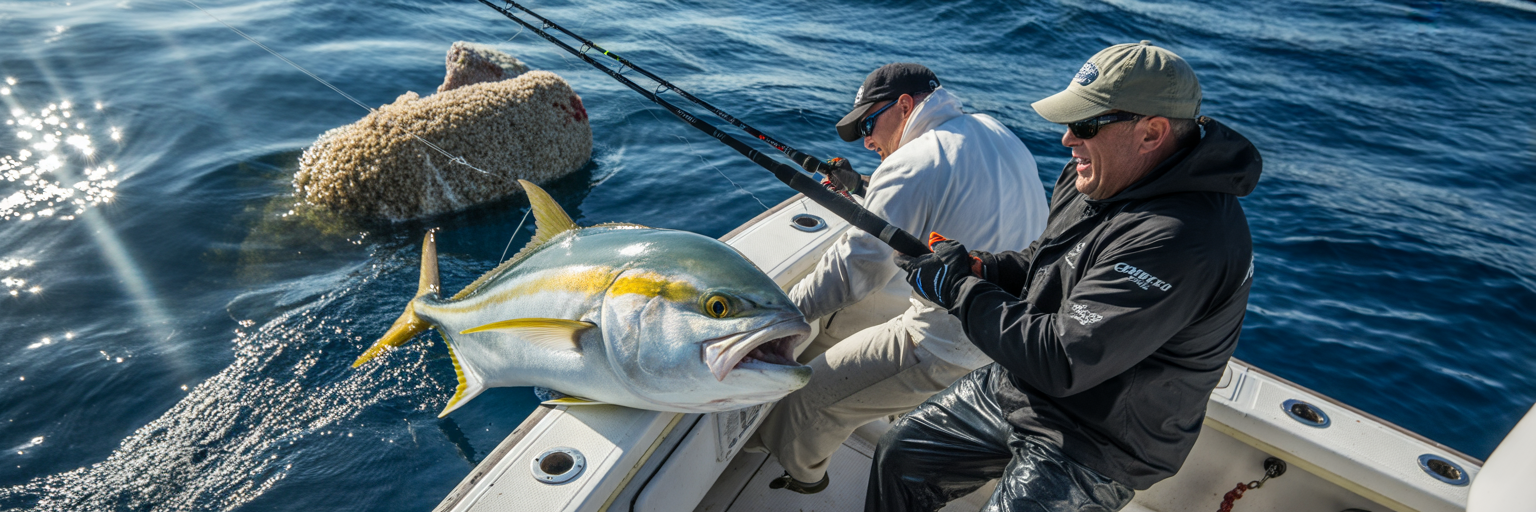
When the sea state settles down, running 15 to 25 miles south of East Pass puts you over the 120-to-200-foot contour where high-relief steel shipwrecks, sunken military tanks, and natural limestone ledges rise off the sand. Destin offshore wreck fishing is firing on all cylinders this week, dominated by powerful greater amberjack and thick clouds of vermilion snapper stacked high above the structure.
Live Hardtails vs. Vertical Knife Jigs for Reef Donkeys
Extracting trophy amberjack from twisted steel takes two distinct approaches depending on how the fish are marking on your bottom machine. When fish are tight to the wreck, send down a lively 8-to-10-inch blue runner on a heavy knocker rig or sliding fish-finder rig weighted with 8 to 12 ounces of lead and an 8/0 to 10/0 inline circle hook. The tough skin and relentless kick of a hardtail survives the descent past pestering red snapper and triggerfish long enough for a big donkey to inhale it. If your sonar shows amberjack suspended 30 to 50 feet off the bottom in mid-water columns, leave the bait well closed and drop a 200-to-300-gram slim profile knife jig right past their noses. Work the jig vertically with long, aggressive sweeps of the rod tip; amberjack will often crush a fluttering metal jig on the fall when they ignore stationary live baits. While the heavy rods are soaked for jacks, keep a lighter bottom rod rigged with a two-hook chicken rig baited with cut squid or cigar minnow plugs to load the cooler with vermilion snapper hovering over the limestone edges. You can review the exact knot geometry and dropper spacings for both setups in our Florida bottom fishing rigs guide before tying up at the dock.
Heavy Tackle Specs for Winning the First Thirty Feet
Hooking a 40-pound amberjack or a thick gag grouper in 160 feet of water is the easy part; winning the first 30 feet of the fight before the fish dives into rusty steel framing is where most crews lose. Leave the medium tackle at home. You need high-output spinning gear like a Shimano Stella SW 6000XG or a heavy-frame two-speed conventional reel with at least 35 pounds of max drag. Spool the reel with 65-to-80-pound braided main line connected via a slim FG knot to an 80-to-100-pound abrasion-resistant fluorocarbon wind-on leader. That zero-stretch braid transmits every head shake instantly and gives you the lifting power to turn a fish’s head upward on the strike. Because deep-water line diameter directly impacts how much lead you need to hold bottom in a Gulf current, read our Florida saltwater braided fishing line guide to match your carrier weave to your reel spool.
Spot-Lock Trolling Motors vs. Anchoring on Deep Structure
Holding position over a sharp shipwreck spire in 150 feet of water tests both equipment and seamanship. On calm days, a high-thrust 36-volt GPS bow-mount trolling motor allows you to hover directly over the up-current edge of a wreck and shift 20 feet left or right with a button press to find the active school. However, when a 2-knot deep Gulf current runs opposite a 12-knot surface breeze, even the strongest electric motor will cavitate and burn through battery reserves by noon. In opposing conditions, do not hesitate to calculate your scope and drop a grapple or Danforth anchor with heavy chain well up-current, letting the boat swing back directly over the target zone.
Always verify current Florida Fish and Wildlife Conservation Commission and Gulf of Mexico Fishery Management Council regulations before untying from the dock. State and federal harvest windows for greater amberjack, gag grouper, and red snapper shift frequently throughout the year. Knowing what is open dictates whether you are icing fish down or keeping a SeaQualizer descending device clipped to a dedicated down-rod for safe, venting-free deep-water releases.
This breakdown synthesizes current depth contours, terminal tackle specifications, and optimal water movement across Destin’s four primary fishing zones based on late-autumn Gulf patterns and standard local charter configurations.
| Water Zone and Depth | Primary Active Targets | Optimal Bait or Lure | Main Line and Leader Spec | Ideal Tide or Current Window |
|---|---|---|---|---|
| Choctawhatchee Bay Flats (2 to 6 ft) | Speckled Trout, Slot Redfish | Live shrimp under popping cork; suspending twitchbaits | 15 lb braid to 20 lb fluorocarbon leader | Early incoming or falling water over grass |
| East Pass and Destin Bridge (15 to 45 ft) | Bull Redfish, Sheepshead, Black Drum | Blue crabs, menhaden on Carolina rig; fiddler crabs on jigheads | 30 lb braid to 40 lb fluorocarbon leader (15 lb for sheepshead) | Peak outgoing flush for reds; slack tide for bridge sheepshead |
| Nearshore Beach and Reefs (40 to 80 ft) | King Mackerel, Spanish Mackerel, Mangrove Snapper | Slow-trolled cigar minnows or blue runners; #3.5 drone spoons on planers | 20 lb monofilament main to #4 single-strand wire stinger | Moving alongshore current with clean green water |
| Offshore Wrecks and Ledges (120 to 200 ft) | Greater Amberjack, Vermilion Snapper, Gag Grouper | Live hardtails on heavy knocker rigs; 250g vertical knife jigs | 65 to 80 lb braid to 80 to 100 lb fluorocarbon wind-on leader | Moderate bottom current allowing a 45-degree or steeper line angle |
Matching Bait, Structure, and Timing to the Daily Bite
Having the right tackle means very little if you arrive on the spot two hours late with a half-dead livewell. Putting together a consistent catch in Destin comes down to disciplined operational execution, starting in the dark before the sun ever hits the emerald water.
Sabiki Runs at the Sea Buoy Before Sunrise
Watch the local charter fleet any morning in late October and you will see stern lights clearing the East Pass jetties in the gray twilight. That first half hour before sunrise is when bait schools ball up tight near the surface around the East Pass sea buoy, the nearshore channel cans, and the shallow public barges inside 60 feet. Keep two light rods rigged at all times with #6 or #8 gold-hook Sabiki rigs weighted with a 2-ounce bell sinker. Tip the tiny hooks with fingernail-sized slivers of squid to jump-start the frenzy when the water is still dark. Dropping into a thick cloud on your sonar lets you load the tank with frisky cigar minnows, threadfin herring, and small blue runners in twenty minutes. Do not overcrowd your livewell; keep the raw-water pump wide open and use a de-hooker tool so you never touch the fragile scales of your cigar minnows with dry hands.
Adjusting Boat Angles for Current Velocity on Structure
Once the bait tank is blacked out with healthy forage, ration your baits according to the bottom relief you are fishing. Save your live shrimp and fiddler crabs exclusively for inshore bridge fenders and grass edges where current is manageable. Deploy your fragile menhaden and cigar minnows over low-relief nearshore concrete pyramids where pelagic strikes happen quickly on the surface. Reserve your rugged, high-endurance hardtails for deep offshore steel where smaller, softer baits get shredded instantly by triggerfish and juvenile snapper before a heavy amberjack or grouper can push in to eat.
Your structural boat positioning must also adapt to the hourly velocity of the diurnal tide. When the tide is ripping hard through the pass or across a deep ledge, predatory fish refuse to burn energy fighting the main flow. In heavy current, position your boat so your baits sweep into the slack-water eddy on the down-current side of bridge pilings, or hold tight to the up-current base of a sunken shipwreck where the hull breaks the bottom flow. Conversely, on weak neap tide days when water movement barely registers, fish leave the bottom cover and suspend high in the water column, allowing you to drift directly across the top of the relief and pick them off mid-water.
Handling Shark Taxation and Mid-Trip Tactical Pivots
Even the best game plan runs into two notorious Destin headaches: relentless bull shark and sandbar shark taxation on deep public wrecks, and clever bottlenose porpoises raiding inshore redfish releases inside East Pass. We hold a firm conviction on this: once the taxman locks onto your outboard pitch and starts cutting off hooked fish halfway up, trying to crank your drag down and muscle fish faster is a losing battle. All that does is pop expensive leaders, burn out your crew, and waste resource by feeding prime reef fish to sharks. The only smart play is to reel up immediately, push the throttles forward, and move at least a mile away to secondary structure. If you need clean backup coordinates away from the parking-lot public reefs, consult our Destin offshore spot guide for private boat crews to build a three-spot rotation before leaving the dock.
This operational schedule aligns departure times, bait gathering, and zone rotations with the Northern Gulf’s diurnal tidal curve and typical morning-to-afternoon wind shifts out of Destin Harbor.
| Time Block | 4-Hour Inshore/Nearshore Half-Day | 8-Hour Offshore/Multi-Zone Full-Day | Primary Crew Objective |
|---|---|---|---|
| 05:30 to 06:30 | Launch at Joe’s Bayou; cast-net menhaden or buy live shrimp at harbor dock | Clear East Pass jetties; Sabiki cigar minnows and hardtails at sea buoy | Secure fresh bait before first light while water is calm |
| 06:30 to 09:00 | Work Choctawhatchee Bay grass flats on early moving water or slow-troll beach line | Run 18 to 30 miles south to 140 ft wrecks; drop live hardtails on initial bite window | Capitalize on low-light barometer drop and peak morning feeding |
| 09:00 to 11:30 | Shift to East Pass jetties or Destin Bridge fenders as diurnal tide accelerates or slacks | Rotate to limestone ledges for vermilion snapper; slow-troll kings on return leg in 65 ft | Adjust to midday sun angle and shifting current velocity |
| 11:30 to 14:30 | Return to ramp, flush engines, and ice down catch before afternoon harbor wake builds | Hit nearshore artificial reefs or East Pass bull reds on afternoon tide flush before heading in | Beat afternoon sea-breeze chop and congested harbor traffic |
Pre-Launch Logistics, Military Closures, and Local Charters
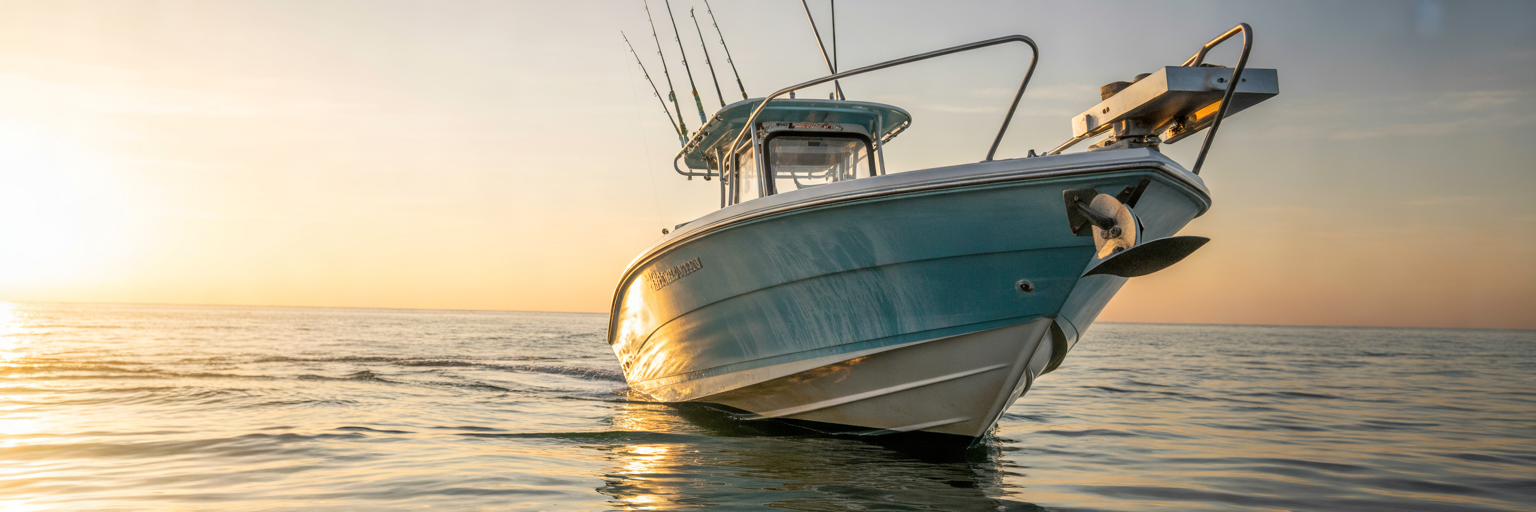
Putting fish on the deck in Destin requires navigating unique local logistics on land and water before you ever wet a line. Unprepared visiting captains frequently lose prime morning fishing hours to boat ramp gridlock or unexpected offshore exclusion zones that locals check out of habit.
Checking Eglin AFB Warning Area W-151 Closures
A critical navigation hazard unique to the Emerald Coast is active live-fire military testing conducted by Eglin Air Force Base across Santa Rosa Island and offshore Warning Area W-151. When the military closes a corridor south or west of East Pass for weapons testing, patrol boats and range safety craft strictly enforce the perimeter and will turn your vessel around regardless of how good the bite is on your numbers. Always check the published Eglin water-range closure schedules the afternoon before your trip, and keep your marine radio monitoring VHF Channel 16 and Channel 81A while underway for real-time range updates and safety broadcasts.
Navigating Destin Boat Ramps and Harbor Wake Zones
If you are trailering your own rig, choosing the right launch ramp dictates how smoothly your morning starts. Joe’s Bayou Recreation Area off Beach Drive offers the closest central access to both East Pass and the southern bay flats, features multiple lanes with good dockage, requires a small launch fee, and fills up rapidly on clean weekend mornings. If your game plan centers on working the northern grass flats and bayous for speckled trout, launching further north at Boggy Bayou in Niceville gives you effortless access to calm water, though it adds a longer open-bay run if you decide to head toward the pass later. When running through the Destin Harbor channel and past the Norriego Point bottleneck in the afternoon, keep a sharp hand on the wheel and trim your bow up slightly; heavy tour-boat, pontoon, and charter-fleet traffic stacks up steep, confused wakes between the jetties and the bridge.
When to Trailer Your Rig vs. Booking a Local Captain
Every honest boat owner has to weigh the fuel, ice, bait, and towing hassle against the return on investment for a weekend trip. Evaluating Florida saltwater fishing charters out of Destin Harbor makes complete practical sense in several scenarios. If East Pass is stacking up with swell that outclasses a 22-foot bay boat, if you lack updated private bottom numbers beyond heavily hammered public coordinates, or if you want to learn deep-water vertical jigging mechanics without burning four hours searching for bait and clean bottom, hiring a seasoned local captain or inshore guide saves money and puts meat in the box immediately. Using our platform streamlines this entire decision matrix by consolidating live NOAA tide curves, water clarity and salinity metrics, proven tackle setups, and a verified local charter directory inside one single planning dashboard.
Before backing your trailer down the ramp this week, run through this final pre-launch operational checklist:
- Verify VHF Radio Transmission on Channel 16: Confirm clear reception and antenna connection before clearing the Destin Bridge, and keep Channel 81A programmed for Eglin range advisories.
- Inspect Livewell Pumps and High-Speed Pickups: Run your raw-water circulation pump at the ramp to clear any grass airlocks so hard-earned cigar minnows and shrimp do not suffocate during the run out.
- Pack a Two-to-One Ice-to-Fish Ratio: Load heavy flaked or block ice into insulated fish boxes before departure to chill down pelagic king mackerel and vermilion snapper immediately upon landing.
- Stage Venting and Descending Gear on Deck: Rig a SeaQualizer descending device or compliant venting tool in a dedicated rod holder before dropping baits on deep wrecks so barotrauma releases happen in seconds.
- Confirm FWC Licenses and Reef Fish Endorsements: Ensure every angler aboard holds a valid saltwater fishing license and the mandatory State Reef Fish Angler designation by reviewing our Destin license checklist for visiting saltwater anglers prior to launch.
- Check Ground Tackle and Trolling Motor Battery Charge: Verify full 36-volt battery banks and inspect anchor rode shackles for chafe before attempting to hold over deep Gulf wrecks or the heavy East Pass rip.
- Match Your Ambition to the Real-Time Pass Sea State: Take a hard look at the throat of East Pass at dawn; if standing rollers are stacking up against the outgoing tide, leave the offshore ego at the dock and pivot immediately to the protected bay flats.