

In 2009, the Florida Legislature ended the state’s long-standing universal beach exemption by requiring shore-bound anglers to hold a formal saltwater permit. Knowing exactly how shore fishing license exemptions for Florida visitors apply today keeps you out of trouble with the law and focused on the bite.
Understanding Shore Fishing License Exemptions for Florida Visitors
Nothing ruins a hot pompano bite in the Panhandle surf or a snook blitz in a Boca Grande pass faster than a surprise visit from a Florida Fish and Wildlife Conservation Commission (FWC) officer when you are unclear on the rules. You have your sand spikes set, fresh sand fleas on the pompano rigs, and fish pushing into the first trough. If an officer walks up to check your bucket and you do not have the right paperwork, that morning session ends with a citation instead of a cooler full of fillets.
The Statutory Baseline for Out-of-State Anglers
Let us establish the legal baseline right out of the gate. According to the official FWC visitor licensing resource, Florida law mandates that all non-residents aged 16 and older possess a valid recreational saltwater fishing license whenever attempting to take marine organisms. That rule applies whether you are wading a Mosquito Lagoon flat for tailing redfish, standing on a Keys bridge catwalk dropping live shrimp for mangrove snapper, or casting spoons from a sandy Atlantic beach. Before you even pack your surf rods, reviewing our complete breakdown of the florida fishing license requirements ensures you understand how the state regulates its coastal fisheries.
The statutory definition of fishing in Florida is remarkably broad. It covers way more than just putting fish on ice. If you are casting a lure, soaking cut bait, tossing a cast net for mullet, or even helping a buddy land a fish in the shore break, the state considers you actively engaged in taking marine life. While true shore fishing license exemptions for Florida visitors do exist, they are strictly tied to specific age brackets, licensed commercial structures, or narrow calendar windows rather than general beach access.
Why the Free Shoreline Permit Does Not Apply to Visitors
We need to kill the most common dockside myth you will hear at local bait shops and hotel parking lots. You might hear a guy rinsing his rods say that fishing from the beach is free in Florida. He is mixing up two completely different rules. Florida does offer a no-cost resident shoreline fishing license, but that permit is strictly reserved for permanent Florida residents who can produce a valid state-issued driver’s license or official proof of residency.
Visiting anglers cannot claim a general beach exemption just because their feet are planted on dry sand. Out-of-state anglers who walk onto a public beach without a paid permit or a valid statutory exemption are fishing illegally. Knowing the exact legal boundaries between resident privileges and visitor rules saves you serious money, prevents gear confiscation or court dates, and lets you focus entirely on reading the water and catching fish.
The Four Legal Ways Non-Residents Can Fish Without a Personal Permit
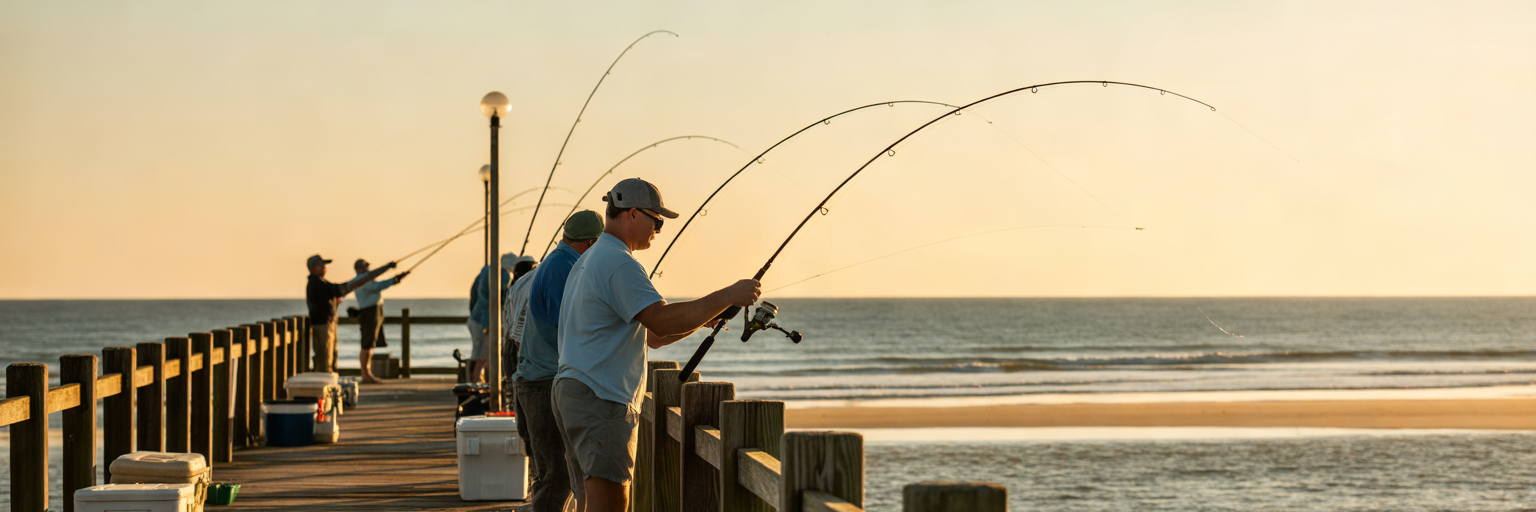
While the state takes saltwater enforcement seriously, you do not always need to pull out your wallet to wet a line. Florida law carves out four specific scenarios where an out-of-state angler can legally target saltwater species from shore or near shore without buying a personal license. If your trip lines up with one of these four setups, you are completely legal.
The Under-16 Youth Exemption
The simplest exception on the books covers young anglers. Any visiting angler under the age of 16 is completely exempt from saltwater licensing requirements across the entire state. This rule makes family surf-fishing sessions for whiting, pompano, or Spanish mackerel totally hassle-free for your kids. They can cast from the beach, work a jig off a public jetty, or pull snapper from a seawall without a single piece of paperwork, though they still have to follow all state bag and slot limits.
Licensed Commercial and Municipal Fishing Piers
Understanding Florida pier fishing license rules is one of the best ways for visiting anglers to target pelagic and structure-oriented fish without buying a state permit. Major commercial and municipal ocean piers in places like Jacksonville Beach, Clearwater, and Destin often purchase a blanket FWC recreational saltwater pier license. When you pay your daily admission fee to walk onto the planks, that facility’s blanket permit covers your fishing license for as long as you remain on the structure.
Never assume a structure is covered just because it looks like a pier. Public boardwalks, park overlooks, and unstaffed county docks almost never carry blanket coverage. You must verify with the pier house attendant before dropping a line to confirm their FWC blanket license is active. Also remember that the second you walk down the pier stairs and make a cast from the adjacent beach sand, that pier exemption vanishes.
For-Hire Vessels and Guided Charter Trips
Many visiting anglers split their vacation between casting from the sand and jumping on a boat. While booking a guide is not shore fishing, it represents a major licensing exception you need to factor into your trip planning. When you hire a licensed inshore guide to chase snook in Tampa Bay or pay for a spot on an offshore party boat out of Key West, the captain’s commercial for-hire vessel license covers every paying passenger on board.
That charter coverage includes all required species endorsements while you are on the deck, which we break down in our guide to Florida charter license rules for first-time guests. Just keep in mind that the captain’s blanket permit stops working the moment your boots hit the dock. If you plan to take your spinning rod back to the beach behind your condo that evening, you will need your own personal non-resident permit.
FWC Designated Free Saltwater Fishing Days
If you time your vacation right, you can take advantage of the four official free fishing days in Florida each calendar year. The FWC designates these specific dates to let any resident or non-resident fish Florida coastal waters without a recreational saltwater license:
- Check the youth age bracket: Confirm if the anglers in your group are under 16 years old, which grants automatic statewide exemption on any shore structure.
- Verify pier house credentials: Before paying admission at an ocean pier, ask the desk staff directly if the facility holds a current FWC blanket saltwater pier license.
- Separate charter days from beach days: Count how many days you will spend on a licensed guide’s boat versus casting from the sand on your own so you do not overbuy permit days.
- Cross-reference the FWC calendar: Check if your trip falls on the first consecutive Saturday and Sunday in June, the first Saturday in September, or the Saturday following Thanksgiving, which are the four annual license-free saltwater days.
- Confirm local bag and slot regulations: Even when fishing legally without a license under any of these four exemptions, check the current FWC management zone rules for your specific county, as all size limits, bag limits, and seasonal closures remain strictly enforced.
Dockside Myths and Resident-Only Exceptions That Trap Visiting Anglers
Spend twenty minutes talking to tourists at a coastal tackle shop and you will hear plenty of bad legal advice. Most citations handed to out-of-state anglers happen because visitors assume the rules from their home state carry over across the Florida border, or they misread exemptions written strictly for locals.
The Senior Citizen and Military Residency Trap
The biggest trap on Florida beaches catches senior citizens. Many states allow anglers aged 65 and older to fish without a license regardless of where they live, or offer cheap senior passes to visitors. Florida does not. Under the official Florida Legislature statute on recreational licensing exemptions, the 65-and-older fishing exemption applies exclusively to documented permanent Florida residents. If you are 70 years old visiting from Georgia or Michigan, you must buy a standard non-resident saltwater license to fish from the beach.
The exact same residency wall applies to military and disability exemptions. Florida provides generous license waivers for permanently disabled anglers and active-duty military personnel home on leave, but only if they are permanent Florida residents or active-duty service members stationed permanently at a Florida base. Visiting veterans, disabled anglers holding out-of-state ID, and active-duty troops stationed in other states who travel to Florida for vacation must purchase a non-resident pass.
The Catch-and-Release and Rod-Holding Gray Areas
Another expensive misconception revolves around catch-and-release fishing and helping out a friend on the sand. Because Florida law defines fishing as any effort to “take or attempt to take” marine life, your intent to keep or release the fish does not change the licensing requirement. If you are wading the surf in Boca Grande tossing plugs strictly for catch-and-release tarpon or snook, you still need a valid license in your pocket.
Be careful with rod-handling rules when fishing with family or friends. If your buddy has a license and hooks a big bull redfish in the surf while you do not have a permit, you cannot take the rod to fight the fish, cast a second rig for him, or wade out with a landing net to scoop it up. The moment an unlicensed person handles the tackle, casts a bait net, or assists in landing the catch, FWC officers view that person as actively participating in the take. If you plan to touch a rod or a net on the beach, get licensed first.
Snowbirds and Seasonal Property Owners
Winter visitors and seasonal homeowners run into a different set of problems. Owning a vacation house in Naples, paying property taxes in Martin County, or renting a beachfront condo in Cocoa Beach for three months does not make you a Florida resident in the eyes of wildlife officers. You cannot claim the free resident shoreline fishing license using a utility bill or a property tax receipt.
To qualify for any resident fishing privilege in Florida, you must declare Florida as your primary state of domicile and hold a valid Florida driver’s license or official Florida identification card issued for at least six consecutive months. Until you surrender your out-of-state driver’s license and establish permanent legal residency, you are classified as a visitor. Never rely on parking-lot advice from other snowbirds when FWC regulations draw a hard line between state residents and seasonal guests.
Non-Resident Saltwater License Costs and How to Pick the Right Tier
If your trip does not fall under one of the four legal exemptions, buying a Florida non resident fishing license is cheap insurance compared to a misdemeanor citation. The state structures its visitor permits into three simple time tiers, letting you match your license cost directly to the length of your stay.
Breaking Down the 3-Day, 7-Day, and Annual Non-Resident Tiers
The FWC sets base statutory rates for visiting saltwater anglers at $17 for a 3-day license, $30 for a 7-day license, and $47 for an annual license, plus a small processing fee of a couple of dollars when you check out online or at a retail counter. Doing the angler math before your trip saves you money. If you are flying into Tampa or Palm Beach for a long weekend and plan to spend Saturday and Sunday morning chasing surf pompano, the $17 3-day pass is all you need, a strategy we detail further in our breakdown of Florida saltwater license costs for weekend anglers.
For a standard week-long family vacation in the Keys or Destin, the $30 7-day permit covers a full week of dawn-to-dusk shore sessions. However, if you are a snowbird or an angler who plans to take two separate week-long trips to Florida within a 12-month window, skip the short-term passes. Buying two 7-day passes over the course of a year costs you $60, whereas buying the $47 annual non-resident license upfront saves you $13 and keeps you covered for 365 days whenever a good weather window opens up.
Species Endorsements That Apply from the Beach
Most inshore and surf species, including redfish, spotted seatrout, pompano, whiting, flounder, and sheepshead, are fully covered by your base non-resident saltwater license. A couple of prized coastal gamefish require extra permits depending on your intentions. If you want to harvest a slot-legal snook during the open season, you must add a $5 Snook Permit to your base license. If you only plan to catch and release snook in the beach trough or inlet pass, you do not need the snook endorsement, just your standard non-resident fishing license.
Tarpon have their own strict rules. Florida manages tarpon as a catch-and-release-only fishery. You only need to purchase a $51.50 Tarpon Tag if you are specifically pursuing an official International Game Fish Association (IGFA) world record and intend to harvest or temporarily possess the fish for certified weighing. For 99 percent of shore anglers jumping tarpon off a bridge or beach, your standard non-resident saltwater license is the only permit required.
| License or Permit Tier | Base Cost | Valid Duration | Best Shore Fishing Scenario |
|---|---|---|---|
| Non-Resident 3-Day Saltwater | $17.00 | 3 consecutive days | Weekend surf sessions or quick coastal layovers |
| Non-Resident 7-Day Saltwater | $30.00 | 7 consecutive days | Single week-long family beach vacations |
| Non-Resident Annual Saltwater | $47.00 | 365 days from purchase | Snowbirds or anglers taking two or more trips per year |
| Snook Permit (Endorsement) | $5.00 | 1 year (tied to license) | Keeping slot-legal snook in open season (not needed for catch-and-release) |
| Tarpon Tag (Endorsement) | $51.50 | 1 per tag (annual limit) | Pursuing an official IGFA record (strictly catch-and-release otherwise) |
Pricing reflects statutory base rates established by the Florida Fish and Wildlife Conservation Commission for non-resident recreational anglers, excluding minor convenience fees applied during online or retail checkout.
Fastest Ways to Buy and Carry Your Permit on the Sand
You have two solid options for picking up your permit before hitting the water. You can stop into a local bait and tackle shop while grabbing live shrimp, sand fleas, and pyramid sinkers to have them print a physical copy right at the counter. Alternatively, you can buy your pass in three minutes through the official GoOutdoorsFlorida web portal or the Fish|Hunt FL mobile app. Buying digitally puts an instant, waterproof license right on your smartphone, and taking a quick screenshot of the permit screen ensures you can show your license number to an FWC officer even if you lose cell service down on a remote stretch of beach.
Matching Florida Shore Structures to Legal Access and Productive Tides
Having the right permit in your pocket is step one, and putting your bait in front of feeding fish is step two. Florida’s coastline offers wildly different shore structures, each carrying its own access rules, tidal sweet spots, and licensing nuances.
Reading Public Beaches and Open Surf Zones
Productive surf fishing in Florida comes down to reading beach topography rather than blindly heaving a bait as far as you can cast. On premier stretches like Melbourne Beach on the Atlantic side or St. George Island and Sanibel on the Gulf, the most consistent action happens within 60 yards of the dry sand. Look for dark, deeper water tucked directly behind the first breaking wave, which marks the inside trough where pompano, whiting, and croaker cruise for tumbled crustaceans.
Scan the wave line for a gap where foam pushes seaward through the outer sandbar. That rip current acts as a conveyor belt flushing bait out of the trough, and predators stack up right on the edges of that cut. In summer, walk the wet sand at dawn with polarized glasses to sight-cast white bucktail jigs to cruising snook right in the ankle-deep shore wash. Remember that every single inch of open public beach requires a standard personal non-resident license for anyone 16 and older.
Licensed Ocean Piers Versus Public Bridge Catwalks
Structure anglers love elevated platforms, but you have to separate commercial ocean piers from public bridge catwalks when checking your legal coverage. As covered earlier, paying to walk onto an FWC-licensed commercial pier covers your license while you cast gotcha plugs for Spanish mackerel or float live pinfish for cobia and kingfish along the pilings.
Do not confuse those commercial piers with public fishing bridges and causeway catwalks, such as the Skyway Fishing Pier State Park walkways around Tampa Bay or the historic fishing bridges spanning the Florida Keys. While these bridges offer world-class fishing for tarpon, black drum, and gag grouper around the concrete fenders, public bridge catwalks never carry a blanket fishing license. Even if you pay a toll or a state park gate fee to drive onto the bridge parking area, every visiting angler on the catwalk must hold a personal non-resident saltwater license.
Rock Jetties, Coastal Inlets, and Brackish River Mouths
If you want to tangle with heavy fish from shore, head to rock jetties and coastal passes like Sebastian Inlet, Ponce Inlet, or the Destin East Pass. We detail how to navigate Panhandle jetty rocks and public beach parking in our Destin shore fishing access guide for visiting anglers. Inlets funnel massive volumes of water between the ocean and the back bays, creating current seams where bull redfish, big sheepshead, and doormat flounder ambush disoriented baitfish. Timing your jetty session around peak tidal movement is critical, so review our breakdown on reading fishing tide charts for better Florida trips before you head out.
Watch out for the state park fee trap at major inlets. Paying an eight-dollar vehicle entry fee at a place like Sebastian Inlet State Park or St. Andrews State Park only pays for your parking and park admission; it does not cover your fishing license. You should also keep a sharp eye on the rules when fishing brackish river mouths, coastal creeks, and the Intracoastal Waterway (ICW). In coastal estuaries where freshwater largemouth bass and saltwater redfish share the same shoreline, Florida law dictates that if you are targeting, catching, or possessing saltwater species, or using saltwater-specific gear and baits in tidal waters, you must carry a valid saltwater fishing license regardless of how fresh the water tastes.
| Shore Structure | Non-Resident License Rule | Prime Target Species | Best Tide Window |
|---|---|---|---|
| Open Sand Beaches and Surf Troughs | Mandatory personal non-resident license for ages 16+ | Pompano, whiting, croaker, beach snook | Last two hours of incoming through high tide over outer bars |
| FWC-Licensed Commercial Ocean Piers | Exempt while on deck (covered by facility blanket permit) | Spanish mackerel, kingfish, cobia, sheepshead | Moving water aligned with baitfish schools along pilings |
| Public Bridge Catwalks and Causeways | Mandatory personal non-resident license (no blanket coverage) | Mangrove snapper, black drum, tarpon, snook | Strong outgoing tide flushing shrimp and crabs through shadow lines |
| State Park Rock Jetties and Passes | Mandatory personal non-resident license (park entry fee only covers parking) | Bull redfish, flounder, sheepshead, gag grouper | Peak incoming or outgoing current transitions at slack water |
Structure rules and species habits reflect standard FWC recreational access regulations and seasonal coastal movement patterns across Florida’s Gulf and Atlantic shorelines.
Shore Gear Essentials and Staying Legal During an FWC Gear Check
When you are dialed in on a good shore bite, an FWC patrol check should be a quick, friendly two-minute conversation. Staying organized with legal tackle and knowing what officers look for keeps you fishing through the prime tide window without missing a drop.
What to Expect During a Routine FWC Beach or Bridge Inspection
Wildlife officers patrol Florida beaches on ATVs, walk bridge catwalks at night, and check jetty parking lots daily. When an officer approaches, keep your hands clear of your tackle bag and have your digital or paper license ready alongside a valid photo ID. After verifying your permit, the officer will ask to inspect your cooler, livewell bucket, or stringer.
Even your bait bucket gets checked if you are using cast-netted mullet, pinfish, or croaker. Every fish in your possession must remain whole with heads and tails intact until you return to your hotel or campsite so the officer can verify species identification and measure pinched-tail or fork length against the current regional management zone slot limits.
Mandatory Conservation Tackle and Corrosion-Resistant Shore Setups
Florida surf and jetty environments destroy cheap freshwater tackle in a single afternoon, and FWC regulations mandate specific terminal tackle to protect released fish. Before walking onto the beach or bridge, make sure your surf bag is stocked with these essential items:
- Non-stainless, non-offset circle hooks: Mandatory under FWC rules whenever fishing with natural baits for reef species (like snapper and grouper) or targeting redfish in specific management zones to prevent gut-hooking.
- Long-nose dehooker or heavy-duty pliers: Required on board and highly scrutinized on shore for safely releasing undersized reef fish, toothy mackerel, or coastal sharks without handling their gills.
- Waterproof measuring tape or bump board: Florida slot limits are enforced down to the fraction of an inch, and coolers with printed ruler stickers warp in the sun.
- Sealed 4000 to 6000 size saltwater spinning reel: A corrosion-resistant reel with sealed drag washers, such as a Shimano Stella SW 6000XG or mid-tier sealed equivalent, survives splash zones and heavy drag runs.
- 15-to-30-pound braided main line: Thin diameter slices through stiff coastal crosswinds and strong inlet currents; check our complete guide to Florida saltwater braided fishing line to match your line weight to the structure.
- Abrasion-resistant fluorocarbon leaders: Pack 20-to-40-pound leader spools for the surf and 50-to-80-pound leaders to survive barnacle-encrusted bridge pilings and jagged jetty rocks.
- PVC sand spikes: Essential for keeping your spinning reel bail and line roller completely out of wet beach sand between casts.
Do not underestimate the physical grind of a true Florida shore session. Hauling heavy surf bags, driving sand spikes into packed shell beds, and fighting strong inlet currents through a six-hour tide swing takes a real toll on your lower back and shoulders. Anglers who treat long days on the sand like an endurance sport often rely on passive recovery tools for athletes after training once the rods are rinsed so their muscles stay fresh for the next morning’s dawn bite.
Using Real-Time Local Intelligence Before You Cast
A valid fishing license puts you on the sand legally, but real-time water intelligence puts fish on the beach. A 20-knot onshore east wind can blow out an Atlantic beach trough overnight, filling the surf with sargassum weed and chocolate-milk water while leaving a sheltered Gulf pass or back-bay bridge crystal clear and firing.
Before you load the truck, check our current local fishing reports, live tide charts, water clarity updates, and wind forecasts to see exactly which stretch of coastline is holding clean water and active bait. If rough surf has the beaches locked down, use our charter directory to jump on a licensed local guide’s boat where your license is covered and the captain knows exactly where the fish are stacked up out of the wind. Respect the fishery, lock in the right permit or pier exemption before your first cast, watch the tide, and fish hard.