

The Ultimate Guide to Florida Sight Fishing Redfish
Sight fishing is not just another technique. It is the ultimate hunt in saltwater angling, a direct one on one challenge between you and the fish. Forget soaking bait and waiting for a bite. This is a game of skill, patience, and precision where you actively stalk your quarry. Successful Sight Fishing Redfish is a chess match on the water, where every move you make is calculated to intercept and deceive a wary opponent on its home turf.
The experience is pure adrenaline. It starts with the patient scanning of the water from a poling platform, your eyes straining to detect any sign of life. Then you see it. A flash of gold as a tail breaks the surface, a nervous push of water, or a dark shadow moving over the sand. Your heart rate quickens as you silently pole into position, calculating the wind and the fish’s direction. You make the cast, your lure lands softly in its path, and you watch as the redfish turns, accelerates, and inhales your offering. That visual confirmation of the eat is a moment of pure predatory satisfaction that passive fishing can never replicate.
Florida provides the perfect arena for this pursuit. The state is defined by its legendary fisheries, from the gin clear waters of the Panhandle to the sprawling grass flats of Tampa Bay. Anglers hunt for tailers on the famous Mosquito Lagoon and stalk cruisers along the Indian River Lagoon’s mangrove shorelines. These are the proving grounds where your skills are tested against some of the most educated redfish in the country. This is about knowing your home waters and using that knowledge to your advantage.
This guide gives you the complete playbook. We will cover exactly how to spot fish by decoding their subtle signs and how to use the sun and wind as your allies. You will learn how to select the right water based on tide and structure, execute a flawless stealthy approach, and choose the perfect lures and gear for the job. Finally, we will break down how to make the perfect presentation to seal the deal.
Decoding the Signs: How to Spot Redfish on the Flats
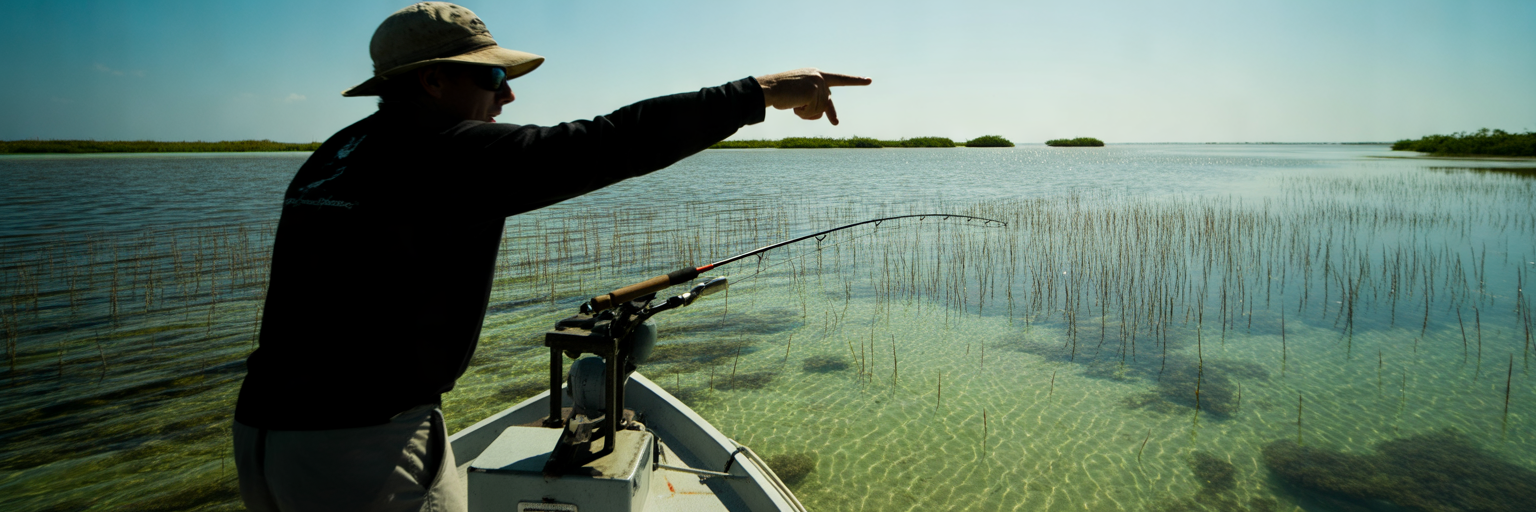
Before you can catch them, you have to find them. Spotting redfish in shallow water is a skill built on recognizing specific visual cues. Learning how to spot redfish is less about having perfect vision and more about knowing what to look for. Each sign tells a story about the fish’s behavior and dictates your next move.
The Telltale Sign: Tailing Redfish
This is the iconic image of flats fishing. A tailing redfish is head down, rooting in the mud or grass for crabs and shrimp. Its golden, spotted tail waving above the surface is an unmistakable beacon. A tailing fish is a feeding fish, meaning it is preoccupied and often less spooky than a cruising fish. This is one of the best opportunities you will get, so take a breath and plan a quiet approach.
Reading the Water: Wakes vs. Pushes
Movement on the surface is a dead giveaway. A V-wake is created by a fish swimming just under the surface, clearly showing its direction and speed. This is a cruising fish, likely moving from one spot to another. A push is different. It is a more subtle hump or bulge of water created by a fish moving deeper. This often indicates a larger, more cautious redfish that is still alert to its surroundings. Reading these signs correctly allows you to anticipate the fish’s path.
Seeing Through the Glare: Shadows and Shapes
On bright days over sand or light grass, you can often spot the fish itself. A redfish appears as a distinct, dark, oblong shape against the lighter bottom. Sometimes you will only see a fleeting shadow. This is where your equipment becomes critical. Without high quality polarized sunglasses, these shapes remain invisible, lost in the surface glare. Spotting these subtle forms requires focus and the right gear.
Subtle Clues: Nervous Water and Mud Stirs
Not all signs are as obvious as a tail. Nervous water is a patch of jittery, agitated surface water that looks different from the surrounding texture. It is caused by a school of redfish moving just below, or by the baitfish they are harassing. A mud stir, or “mud,” is a puff of sediment kicked up by a redfish rooting on the bottom. In slightly off color water, these muds are often the first and only sign that a fish is actively feeding nearby.
Following the Food: Bait Activity
The simplest way to find predators is to find their prey. Keep an eye out for any signs of panicked bait. Shrimp skipping across the surface, a shower of scattering glass minnows, or mullet jumping erratically are all nature’s alarms. A predator is close. Casting toward this commotion, even when you cannot see the redfish itself, is a high percentage tactic.
| Visual Sign | What It Indicates | Angler’s First Move |
|---|---|---|
| Tailing | Actively feeding, preoccupied fish in very shallow water. | Plan a slow, quiet approach. The fish is stationary and less spooky. |
| V-Wake | A cruising fish moving near the surface. | Determine its direction and speed. Position the boat for an interception cast well ahead of its path. |
| Push (Hump of Water) | A fish moving just under the surface, often large and cautious. | Stay back. This fish is alert. Lead it by a greater distance with a very soft cast. |
| Shadow/Shape | A stationary or slow-moving fish on the bottom. | Confirm it’s a fish, not grass. Approach with extreme stealth as it may be resting and wary. |
| Nervous Water | A school of redfish or bait being harassed. | Scan the area for the source. Prepare for a potential school situation and cast to the edges. |
| Mud Stir | A fish actively rooting on the bottom, kicking up sediment. | Cast just beyond the mud cloud. The fish is feeding but its vision may be obscured. |
Using the Elements as Your Ally
The best flats anglers do not fight the conditions, they exploit them. The sun, wind, and your own elevation are tools that can either give you a massive advantage or guarantee failure. Understanding how to use these elements is one of the most valuable redfish sight fishing tips you can learn. It is about turning the environment into your accomplice.
Using the Sun as a Spotlight
This is the number one rule of sight fishing. Always keep the sun at your back or over your shoulder. This simple positioning does two critical things. First, it illuminates the water in front of you, acting like a natural spotlight that makes spotting fish much easier. Second, and just as important, it prevents your shadow from being cast over the water you are scanning. A shadow falling across a redfish is a guaranteed spook.
Leveraging the Wind for Stealth and Casting
The wind is a double edged sword. A light breeze at your back can add significant distance to your casts, helping you reach fish from farther away. However, the quietest and most controlled way to approach a fish is by poling or drifting into the wind. This pushes any noise you make away from the fish. A light chop on the surface created by the wind can also provide camouflage, breaking up your boat’s outline and hiding small movements. The trade off is that this same chop makes spotting fish more difficult. You must constantly weigh these factors.
The Most Critical Tool: High-Quality Polarized Sunglasses
We mentioned this before, but it cannot be overstated. Your sunglasses are not an accessory, they are the single most important piece of equipment for sight fishing. Polarization works by filtering out horizontal light waves, which are the primary cause of surface glare. This allows your eyes to see through the water instead of just reflecting off it. Lens color is also a strategic choice. Copper, amber, or rose lenses excel at increasing contrast in the tannic, lower light conditions common in Florida’s bays and lagoons. Green or blue mirror lenses are built for bright, open sun over sand or grass flats.
Gaining an Edge with Elevation
The higher your vantage point, the better you can see into the water. It is simple physics. A higher viewing angle reduces surface reflection and allows you to spot fish from a greater distance. A poling platform is the standard for this reason, but even a casting platform on the bow makes a huge difference. In a pinch, standing on a secured cooler or the gunwale can give you the extra height needed to turn a potential fish into a spotted target. That extra foot of elevation can be the difference between seeing a fish at 80 feet versus 30 feet, giving you more time to set up the perfect shot.
Choosing Productive Florida Redfish Flats
You can have the best eyes and the quietest boat, but if you are in the wrong place, you are just going for a boat ride. Knowing how to identify productive Florida redfish flats is about learning to think like a fish. You need to understand what drives them to certain areas at certain times. It all comes down to tide, depth, bottom composition, and access to food.
Tide: The Engine of the Flats
Tide is everything in shallow water. An incoming tide is the dinner bell. It floods the flats with fresh, cool water, allowing redfish to push up into extremely shallow areas to forage for crabs, shrimp, and other crustaceans that were inaccessible at low tide. Conversely, a strong outgoing tide pulls bait and redfish off the flats, concentrating them in predictable drains, cuts, and channel edges where they are easier to intercept. Slack tide, the period of minimal water movement between tidal cycles, is often the least productive time to be on the flat.
The Role of Water Clarity and Depth
The ideal scenario for sight fishing is water clear enough to see the bottom in one to three feet of depth. This depth range is the primary feeding zone for redfish on the flats. However, there is a critical trade off. Crystal clear water makes fish easy for you to spot, but it also makes them extremely wary. In these conditions, a redfish can see you just as easily as you can see it, making stealth and long casts absolutely essential.
Reading the Bottom: Sand, Grass, and Oysters
Redfish use different bottom types for different reasons. Hard sand patches make their dark bodies stand out, making them easy targets. Healthy seagrass beds, like those found along the Nature Coast or in the Florida Keys, hold an immense amount of bait and provide ambush cover for predators. Look for sandy potholes within large grass flats, as these are natural holding spots for redfish. Oyster bars are another key feature. They create structure, break the current, and hold tons of food, making them prime feeding stations, especially on a moving tide.
Digital Scouting: Finding Spots Before You Launch
Some of the best fishing trips start at your computer. Using satellite imagery from tools like Google Maps or dedicated marine charts allows you to identify promising zones before you even hook up the boat. This digital scouting helps you find less pressured areas and build a solid game plan for the day.
- Identify a large, shallow flat adjacent to a deeper channel or basin.
- Look for the small cuts or drains that will funnel water and fish off the flat during a falling tide.
- Pinpoint dark patches in the grass, which are often deeper potholes where fish will rest and ambush prey.
- Trace mangrove shorelines or visible oyster bars that provide the structure redfish use as feeding points.
The Art of the Stealthy Approach
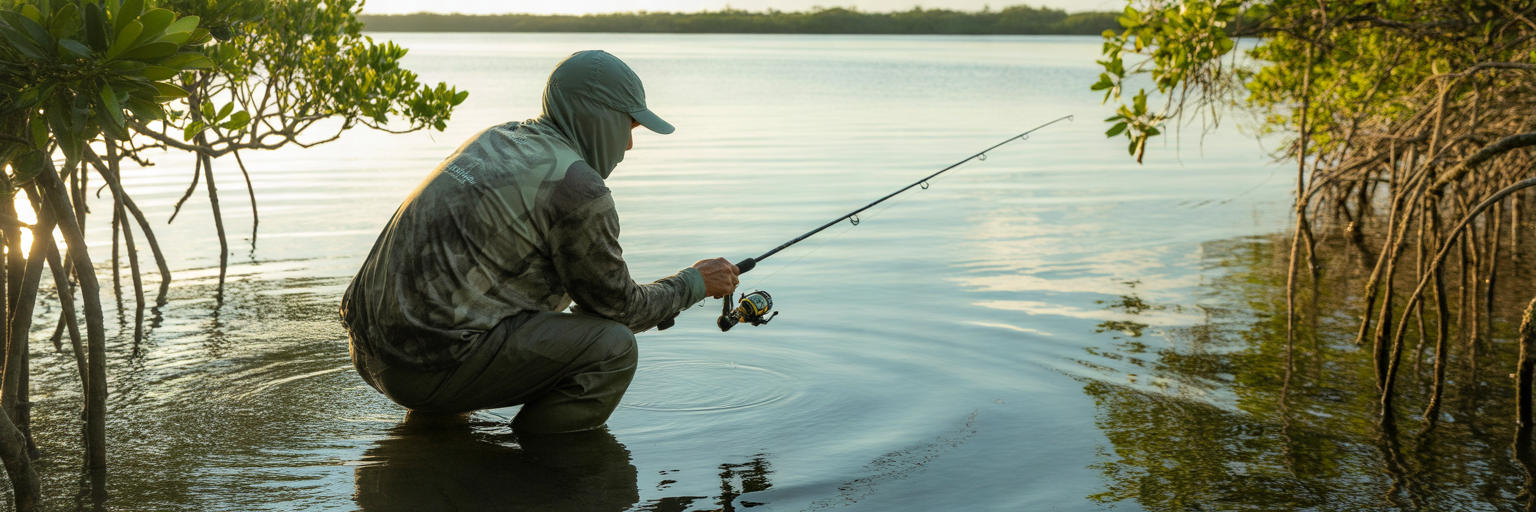
You have found a productive flat and spotted a fish. Now comes the most critical phase: getting into casting range without being detected. This is where most anglers fail. Stealth is not optional, it is mandatory. The shallow water environment transmits sound and vibration with alarming efficiency. One wrong move and the game is over before it begins.
The 200-Yard Rule: Going Silent
This is the first and most important rule of the approach. Kill your outboard motor at least 200 yards away from where you expect to find fish. The low frequency hum and vibration of an engine can alert every fish on the flat. Once the outboard is off, the only acceptable forms of propulsion are a push pole, a bow mounted trolling motor on its lowest and quietest setting, or wading on foot. There are no exceptions.
Mastering the Push Pole
Effective poling for redfish is a core skill that separates the experts from the crowd. It is not about brute force. It is about silent, deliberate, and smooth movements that give you complete control over the boat’s speed, direction, and orientation. The goal is to glide across the water without making a sound. Avoid common mistakes like dropping the pole on the deck, letting it scrape against the hull, or allowing the boat to slap the water in a chop. Every unnatural sound is an alarm.
Tactical Positioning for Different Scenarios
Your approach must adapt to the fish’s behavior. For a cruising single, your goal is to intercept its path. Use the push pole to position the boat well ahead of the fish, giving you a clear casting lane to its future location. For a stationary tailing fish, use the wind and current to your advantage. The best approach is often from upwind or up current, allowing you to drift silently into casting range without your scent or any boat noise reaching the fish first.
The Discipline of Silence
Sight fishing is a game of whispers. Every sound you make is amplified in the shallow, quiet environment. A dropped pair of pliers hitting the deck sounds like a gunshot. A slammed hatch lid will send shockwaves through the water, alerting fish a hundred feet away. Loud conversations are out of the question. Success demands total noise discipline from everyone on board. A well thought out setup is key, which is why we cover everything you need in our complete guide to Florida inshore fishing gear. Slow, deliberate movements are the key to remaining undetected.
Selecting the Right Sight Fishing Arsenal
When you finally get your shot, you need to have complete confidence in your tackle. The best lures for redfish in a sight fishing scenario are not always the same ones you would use for blind casting. Presentations must be subtle, land softly, and accurately mimic the local forage. Your rod, reel, and line must be balanced for making accurate casts and handling a powerful fish in close quarters.
The Workhorse: Weedless Soft Plastics
A small, weedless soft plastic is the go to lure for most sight fishing situations. Look for 3 to 4 inch shrimp or baitfish profiles rigged on a 1/16 or 1/8 ounce weedless, weighted hook. This setup allows for a very soft entry into the water and prevents snagging on grass. Natural colors are king. New penny, rootbeer, white, and motor oil are proven producers. The goal is a lure that looks natural and moves realistically.
The Classic Search Bait: The Gold Spoon
The simple gold spoon has been catching redfish for decades for a reason. It works. It casts a mile, which is a huge advantage on windy days or for extra spooky fish. Its design makes it highly weedless, and the flash and wobble it produces on a steady retrieve are irresistible to redfish. A spoon is an excellent choice for covering water between visible targets or when water clarity is slightly reduced.
For Explosive Strikes: Topwater Plugs
There is nothing more exciting than a redfish blowing up on a topwater lure. Small walking baits, like a Heddon Super Spook Jr. or MirrOlure Top Dog Jr., are deadly in the right conditions. These are best reserved for calm, low light periods at dawn or dusk when fish are more aggressive and willing to feed on the surface. The rhythmic “walk the dog” retrieve creates a commotion that can draw fish in from a distance.
For the Fly Angler: Essential Patterns
For fly fishermen, the game is all about imitation. Your fly box should be filled with patterns that mimic the redfish’s primary food sources. Crab and shrimp imitations like the Merkin Crab, Kwan Fly, or EP Spawning Shrimp are essential. For situations where redfish are feeding on small baitfish, a small, sparsely tied Clouser Minnow is hard to beat. A long, tapered leader of 10 to 12 feet is critical for a stealthy presentation that lays out straight.
Your spinning setup should be built for accuracy and sensitivity:
- Rod: A 7’ to 7’6” rod with a fast action and medium light power provides the perfect balance of casting distance and pinpoint accuracy.
- Reel: A quality 2500 or 3000 size spinning reel with a smooth, reliable drag is all you need.
- Line: 10 pound braided line offers incredible casting performance, sensitivity, and strength.
- Leader: A 2 to 3 foot section of 20 pound fluorocarbon leader provides abrasion resistance and is nearly invisible underwater.
| Lure Type | Best For | Retrieve Style | Pro Tip |
|---|---|---|---|
| Weedless Soft Plastic Shrimp | Tailing or stationary fish; clear water. | Twitch, twitch, pause to mimic a fleeing shrimp. | Use the lightest weight possible for a soft landing. |
| Gold Spoon | Covering water, windy conditions, slightly stained water. | Steady, medium-paced retrieve to create flash and wobble. | Add a small trailer hook if getting short strikes. |
| Topwater Walking Bait | Calm, low-light conditions (dawn/dusk); aggressive fish. | ‘Walk-the-dog’ with rhythmic rod twitches. | Don’t set the hook until you feel the weight of the fish. |
| Crab/Shrimp Fly | Spooky, pressured fish; fly fishing purists. | Short, sharp strips to imitate a fleeing crustacean. | Ensure your leader is long and lands straight. |
The Cast, Presentation, and Hookup
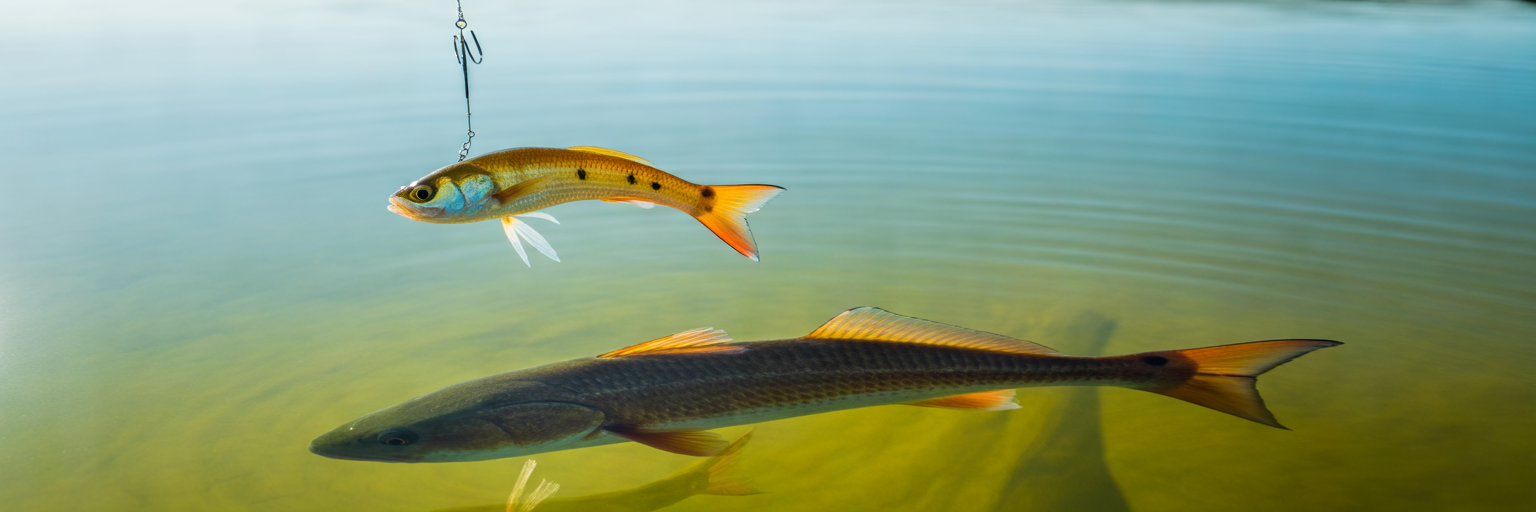
This is the moment of truth. All the work of finding the fish and stalking into position comes down to these final few seconds. A perfect cast and presentation will be rewarded. A poor one will result in a puff of mud and a disappearing fish. Execution here is everything.
The Golden Rule: Lead the Fish
Never cast directly at a redfish. The lure must land far enough in front of and beyond the fish to avoid spooking it, but close enough to enter its cone of vision. The goal is for the fish to discover the lure, not for the lure to attack the fish. As a general rule, lead a cruising fish by 3 to 8 feet, depending on its speed and the water clarity. The faster it is moving or the clearer the water, the farther you need to lead it. You want your lure to intercept its path naturally.
Making a Soft Entry
A lure crashing down on the water’s surface is the fastest way to send a redfish into the next county. A stealthy cast is non negotiable. Use a low, side arm casting motion to keep the lure’s trajectory flat. This allows it to land with a minimal splash, mimicking the subtle sound of a shrimp or crab. This is especially critical when using heavier lures like spoons or weighted plastics. The lighter the entry, the better your chances.
Matching the Retrieve to the Fish’s Mood
Once the lure is in the water, you must read the fish’s body language. If the redfish immediately turns and charges the lure, a simple, steady retrieve is often all that is needed to trigger the strike. If the fish seems tentative or does not react right away, a more animated retrieve is required. A sharp twitch, twitch, pause cadence perfectly imitates a fleeing or injured shrimp and can be the key to flipping a predator’s switch from curious to committed.
The Reel-Set: Hooking a Redfish
This is where many anglers make a critical mistake. When you feel the “thump” of the bite or see the fish inhale your lure, resist the urge to perform a dramatic, overhead bass style hookset. This violent motion will often pull the lure right out of the redfish’s tough mouth. Instead, when you feel the bite, simply begin reeling fast to pick up any slack in the line. Once the line is tight, use a firm, sweeping motion of the rod to the side. This “strip set” drives the hook home securely and ensures a solid connection.
Recovery, Release, and Protecting the Resource
The encounter does not end with the hookup. True sportsmanship extends through the fight, the release, and a commitment to leaving the habitat better than you found it. This final phase is about respect for the fish and the fragile environment it calls home.
The Second Chance Shot
Even with a perfect approach, fish will sometimes spook or refuse your offering. When this happens, do not panic or give up. Remain calm and watch where the fish goes. Often, a spooked redfish will only run a short distance before settling down again. If you give it a few minutes to calm down and then re-approach with even more stealth, you can often get a second chance. Patience pays off.
A Healthy Release
The future of our fishery depends on healthy fish populations. Always practice proper catch and release techniques. Minimize fight time to avoid exhausting the fish. Handle it with wet hands to protect its vital slime coat, and support its weight horizontally with two hands. Never hold a large redfish vertically by its jaw, as this can damage its internal organs. Before releasing, hold the fish boat side in the water, allowing it to catch its breath until it swims away strongly under its own power.
Leave No Trace: Protecting Our Flats
This is the most important takeaway. The seagrass beds on our flats are the lifeblood of the inshore ecosystem, and they are incredibly fragile. A single propeller scar can take years to heal, destroying the very habitat that redfish need to survive. Always run your outboard only in marked channels or deeper water. When you get to the flat, tilt your motor up and switch to your push pole or trolling motor. As the Florida Fish and Wildlife Conservation Commission (FWC) highlights, boaters play a critical role in preventing this damage. Protecting these areas is a shared responsibility.
Successful sight fishing is the ultimate reward for an angler who invests in patience, observation, and a deep respect for the environment. It is a craft honed over a lifetime on the water and represents the pinnacle of inshore angling.