

The biggest mistake anglers make on the beach is thinking they need to cast to the horizon. The truth is, the most productive zone is often right at your feet. The first trough, that deeper channel of water running parallel to the shore just past where the waves break, is a fish highway. It acts as a conveyor belt for crabs, sand fleas, and baitfish, and Florida’s premier predators know it. They patrol this trough relentlessly, looking for an easy meal. Success from the sand isn’t about brute force, it’s about reading this simple piece of structure.
Understanding this trough is the key to consistently catching fish. Once you learn to identify it and factor in the tide and bait, you are in the game. The essential quartet of Florida’s surf includes some of the most sought-after beach fishing species you can find. Pompano are the prized, hard-fighting gourmet meal. Snook are the explosive, cunning ambush predators that test your tackle and your nerve. Redfish are the stubborn, powerful bulldogs that refuse to give up. And whiting are the reliable, year-round crowd-pleasers that ensure you never go home empty-handed. Mastering the surf starts with knowing these fish and where they feed.
Florida’s Premier Beach Fishing Species
The biggest mistake anglers make on the beach is thinking they need to cast to the horizon. The truth is, the most productive zone is often right at your feet. The first trough, that deeper channel of water running parallel to the shore just past where the waves break, is a fish highway. It acts as a conveyor belt for crabs, sand fleas, and baitfish, and Florida’s premier predators know it. They patrol this trough relentlessly, looking for an easy meal. Success from the sand isn’t about brute force, it’s about reading this simple piece of structure.
Understanding this trough is the key to consistently catching fish. Once you learn to identify it and factor in the tide and bait, you are in the game. The essential quartet of Florida’s surf includes some of the most sought-after beach fishing species you can find. Pompano are the prized, hard-fighting gourmet meal. Snook are the explosive, cunning ambush predators that test your tackle and your nerve. Redfish are the stubborn, powerful bulldogs that refuse to give up. And whiting are the reliable, year-round crowd-pleasers that ensure you never go home empty-handed. Mastering the surf starts with knowing these fish and where they feed.
Targeting Pompano: The Prized Surf Catch
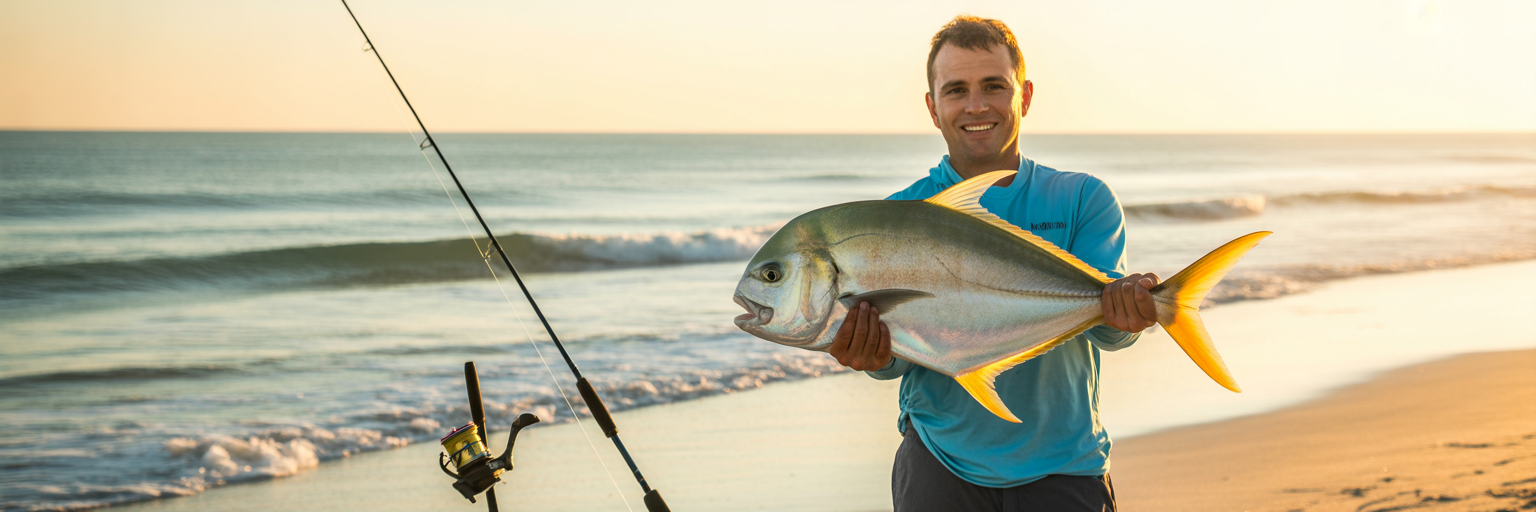
There is a reason seasoned surf anglers speak about pompano with a certain reverence. They are the undisputed king of the surf, not just for their incredible value as table fare but because they are one of the toughest fighting fish you can hook from the sand, pound for pound. Their blistering runs and sharp turns will test your drag and your knots. Catching them consistently requires a specific approach, but the reward is well worth the effort.
The peak seasons are the winter and spring migrations, when schools pour down the Atlantic and Gulf coasts. The magic number for water temperature is between 65 and 72 degrees Fahrenheit. When the water hits that range, the pompano are on the move and feeding aggressively. Your tackle needs to be up to the task. A 9 to 11-foot medium-heavy surf rod gives you the casting distance to clear the shore break and the backbone to handle their powerful runs. Pair this with a quality 4000 to 5000 series spinning reel spooled with 20-pound braid for maximum casting distance and sensitivity.
The core of any serious pompano strategy is the rig. A double-dropper rig, known universally as a “pompano rig,” is the standard for a reason. This rig presents two baits at different depths, doubling your chances. Small floats are often added to the dropper loops, which serve two purposes: they lift the bait just off the bottom, away from crabs, and the bright colors act as a visual attractant in the surf. When it comes to how to catch pompano from shore, your bait choice is critical. Live or freshly blanched sand fleas are non-negotiable for dedicated anglers. They are the natural forage and the absolute best bait for beach fishing when targeting pompano. If you cannot find them, fresh peeled shrimp or synthetic baits like Fishbites in sand flea or shrimp flavor are excellent alternatives. Hook your bait on a sharp #2 to 1/0 circle hook for a solid, self-setting hookup in the corner of the mouth.
Locating them is a matter of reading the water and looking for signs. Often, you can spot “pompano skipping” in the faces of the waves, a dead giveaway that a school is present. Focus your casts right into the first trough or just over the first sandbar. These fish travel in schools, so where you catch one, there are almost always more. Be ready to cast right back to the same spot after landing a fish. A successful day of pompano fishing is a mix of preparation, observation, and quick execution when the bite turns on.
Hunting Snook in the First Trough
Targeting snook from the beach is a different game entirely. This is an active, predatory hunt, not a sit-and-wait affair. The experience is defined by the sudden, violent “thump” of a strike that jolts your entire body, followed by the sound of line screaming off your reel as a silver flank cartwheels out of the water. For many surf anglers, landing a big linesider from the sand is the ultimate challenge, a true test of skill and equipment.
The prime time for snook fishing from the beach is during the summer months. Success hinges on fishing during low-light periods. Dawn, dusk, and well after dark are when these powerful ambush predators leave the security of inlets and passes to cruise the beach troughs. They use the darkness and churned-up water as cover to hunt for an easy meal. Your gear must be significantly heavier than what you would use for pompano, and for good reason. A 7 to 9-foot heavy-action rod paired with a 5000 to 6000 series reel is standard. Spool it with 30 to 40-pound braid, but the leader is the most critical component. A 40 to 60-pound fluorocarbon leader is absolutely crucial to withstand their sandpaper-like mouths and razor-sharp gill plates, which can slice through lighter line in an instant.
There are two primary approaches to hunting snook in the surf: live bait and artificials. For live bait, free-lining a live pinfish, croaker, or large shrimp in the trough is a deadly technique. Let the bait swim naturally with the current. Alternatively, a simple fish-finder rig can present the bait effectively on the bottom. For those who prefer lures, the options are just as effective. A walking topwater plug worked erratically at dawn can draw explosive surface strikes. After dark, a flair hawk jig bounced slowly along the bottom mimics a crab or shrimp and is a time-tested method. Large paddle tail swimbaits retrieved parallel to the shore are also excellent for covering water and drawing reaction strikes.
The key strategy is to walk the beach. This is not a fishery for sand spikes. You need to be mobile, actively moving down the shoreline and casting into every trough, cut, and runout you see. Constantly scan the water for signs of life, like nervous baitfish or the distinct V-wake of a cruising snook. Each cast is a targeted effort to intersect a predator on the move.
Finding Redfish on the Sand
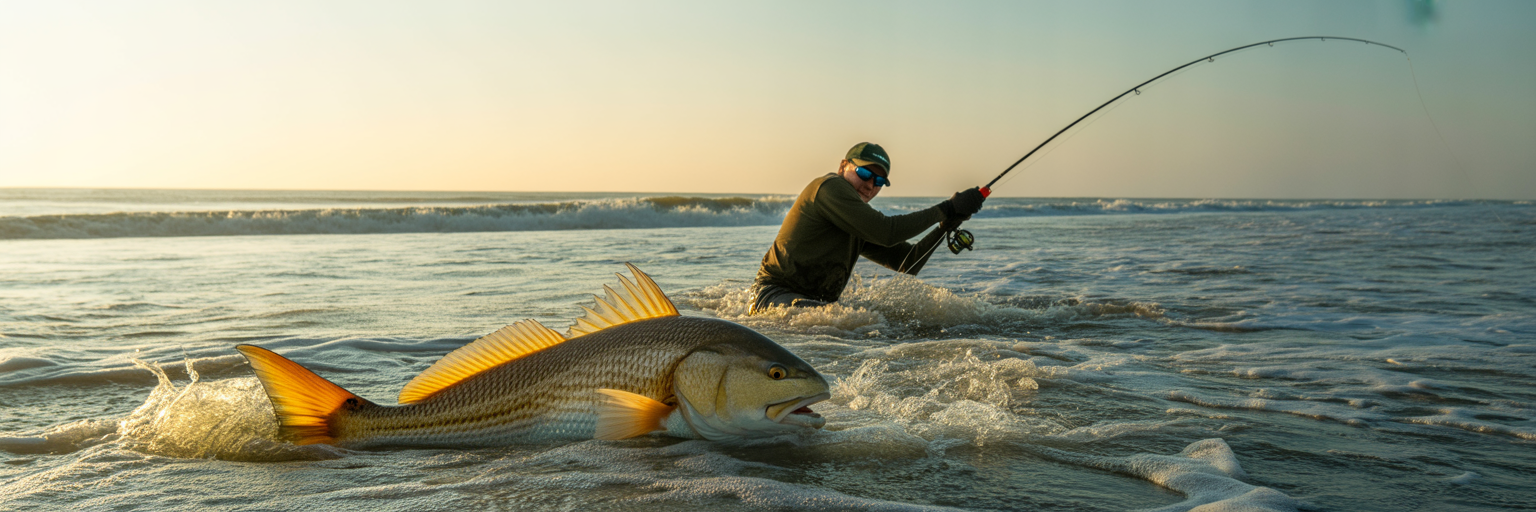
If the snook is the athlete of the surf, the redfish is the bulldog. The fight is not about acrobatic jumps or blistering speed. It is about sheer, stubborn power. A big redfish will use its broad body and powerful tail to catch the current and make you work for every single inch of line, with long, drag-pulling runs that test your stamina as much as your tackle. They are a fantastic target on both the Gulf and Atlantic coasts and offer a rewarding challenge for any surf angler.
While redfish can be caught year-round, the fall run is a prime time to target them as they form large schools near passes and along the beaches. One of the biggest advantages of targeting redfish is that they are often less picky about conditions than other species. They will frequently feed aggressively right through the middle of the day, especially on overcast days or when the surf is churned up. That turbulent water disorients baitfish, creating an easy feeding opportunity that redfish are quick to exploit.
For tackle, a versatile setup is best. A 9 to 10-foot medium-heavy rod paired with a 4000 to 5000 series reel is a perfect all-around choice. The most effective rig is a simple fish-finder rig, also known as a Carolina rig. This setup allows your bait to move naturally in the current while the pyramid sinker stays anchored to the bottom, creating a direct line to feel the bite. When it comes to bait for redfish, scent is everything. They are opportunistic bottom feeders that rely heavily on their sense of smell. Cut mullet, chunks of ladyfish, or cracked blue crabs are top choices because they create a strong scent trail in the water that draws fish in from a distance. A large live shrimp pinned to a hook is also a can’t-miss option.
For location, redfish patrol the same troughs as other species, but they have a special affinity for cuts and passes. Look for areas where water from a bay, river, or lagoon empties into the ocean on an outgoing tide. Redfish will stack up at these ambush points, waiting for bait to be washed out to them. Finding one of these runouts is often the key to a successful day of redfishing from the sand.
Whiting and Other Reliable Catches
Whiting are the unsung heroes of the surf. They are the most dependable catch on the beach, perfect for introducing kids to fishing, and the key to ensuring you do not go home empty-handed. They are available year-round and often bite when nothing else will. Plus, they make for excellent fish tacos. The approach is simple and effective. A standard pompano rig or any light tackle setup will work perfectly. The key is to downsize your presentation. Use small #4 or #2 hooks baited with small pieces of fresh shrimp or scented synthetic baits like Fishbites. You will find them almost exclusively in the first trough, often in surprisingly shallow water right at your feet.
Beyond the whiting, several bonus species can add a jolt of excitement to any day on the sand. Spanish mackerel and bluefish are fast, aggressive, and toothy predators that often show up in blitzing schools. You will know it when they hit. One moment you are waiting for a pompano bite, the next your rod is bent double and line is peeling off the reel. A standard pompano rig might get cut off by their sharp teeth, but you will have a blast while it lasts. It is a smart move to keep a separate rod rigged with a silver spoon or a Gotcha plug to cast at these schools when they suddenly appear.
Finally, do not be surprised if you hook into a small shark, like a blacktip. They are a common and exciting bycatch, especially during the warmer summer months. If you are catching a lot of fish, the sharks will notice. Their presence is a sign of a healthy ecosystem. If they become a frequent catch, it is wise to switch to a heavier leader to avoid break-offs and have long-nosed pliers or a dehooker ready for a quick, safe release.
Essential Tackle for Florida Surf Fishing
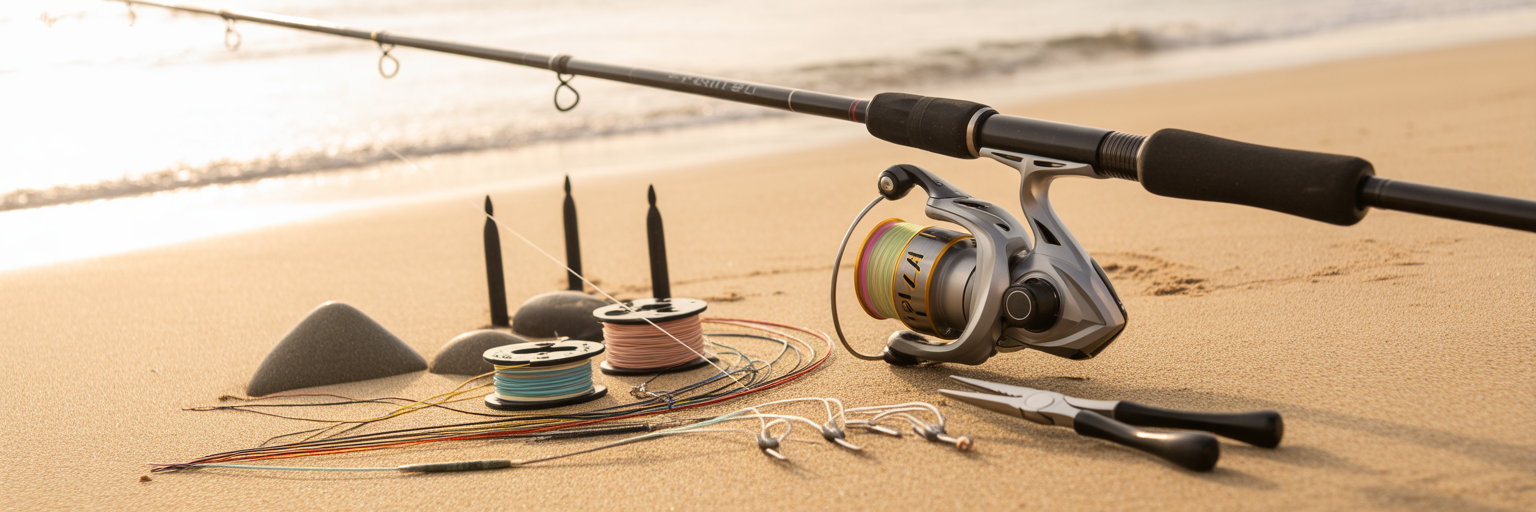
Having the right gear is not about having the most expensive equipment, it is about having the correct tools for the job. A 9 to 12-foot spinning rod is the workhorse of the surf for a reason. It provides the leverage to cast heavy sinkers over the waves and the length to keep your line above the crashing shore break. Pair this with a 4000 to 6000 size spinning reel. When selecting a reel, prioritize one with sealed bearings to protect it from the inevitable exposure to sand and salt spray, which will destroy a lesser reel in short order.
Your line and leader setup is just as critical. Spool your reel with 20 to 30-pound braided line. Its thin diameter allows for longer casts, and its no-stretch property provides incredible sensitivity to feel even the most subtle bites. This main line should be connected to a 20 to 40-pound fluorocarbon or monofilament leader using a strong line-to-line knot. The leader provides crucial abrasion resistance against structure and sharp teeth while being less visible to wary fish. These are some of the most important Florida surf fishing tips you can get.
Your terminal tackle box should be simple but well-stocked:
- Rigs: The double-dropper “pompano rig” is the go-to for most bottom fishing applications, effective for pompano, whiting, and more. A fish-finder rig is essential for presenting larger baits for redfish and snook.
- Sinkers: Have a supply of pyramid sinkers from 2 to 5 ounces for calm to moderate surf. For days with strong currents and heavy waves, sputnik or “spider” sinkers are necessary to hold your bait in place.
- Hooks: A selection of circle hooks from size #4 for whiting up to 2/0 for redfish is a must. Circle hooks are key for conservation, as they almost always ensure a clean hookset in the corner of the fish’s mouth.
Finally, there are a few accessories that are not optional for a successful and comfortable day:
- Sand Spikes: You need at least two sturdy rod holders to keep your reels out of the sand.
- Cooler and Bait Bucket: One for keeping your bait fresh and another for your catch.
- Tools: Long-nosed pliers for dehooking, a sharp knife, and a fish gripper are essential for safely handling fish.
- Measuring Device: A simple tape measure is required to ensure every fish you decide to keep is of legal size.
| Species | Rod | Reel Size | Main Line | Leader | Primary Rig / Lure |
|---|---|---|---|---|---|
| Pompano | 9-11′ Medium-Heavy Spinning | 4000-5000 | 20 lb Braid | 20-25 lb Fluorocarbon | Double-Dropper (‘Pompano’) Rig |
| Snook | 7-9′ Heavy Spinning | 5000-6000 | 30-40 lb Braid | 40-60 lb Fluorocarbon | Flair Hawk Jig or Large Swimbait |
| Redfish | 9-10′ Medium-Heavy Spinning | 4000-5000 | 20-30 lb Braid | 30-40 lb Fluorocarbon | Fish-Finder (Carolina) Rig |
| Whiting | 8-10′ Light-Medium Spinning | 3000-4000 | 15-20 lb Braid | 20 lb Monofilament | Double-Dropper (‘Pompano’) Rig |
Know the Rules Before You Go
Being a good angler means being a responsible one. That responsibility starts with knowing the regulations before your line ever hits the water. The rules on seasons, size limits, and bag limits are not suggestions. They are the law, designed to protect Florida’s incredible fisheries for future generations, and they change frequently. Ignorance is not an excuse.
Snook serve as a prime example of a tightly managed species. They have strict slot limits, closed seasons that vary by region, and require a mandatory snook permit on your license just to target them. Similarly, redfish are managed in different zones across the state, so the rules for Florida beach fishing locations on the Gulf coast might be different from those on the Atlantic. The single most important action you can take is to check the official Florida Fish and Wildlife Conservation Commission (FWC) website for the most current saltwater fishing regulations before every single trip. Make it a non-negotiable part of your trip planning, just as critical as checking the tide chart.
Beyond the letter of the law, practice ethical angling. If you plan to release your catch, handle the fish with wet hands to protect their slime coat, minimize the time they are out of the water, and use circle hooks to prevent gut-hooking. A quick, healthy release ensures that fish can be caught again. Finally, practice good stewardship. Leave the beach cleaner than you found it by packing out all your trash, including discarded fishing line and bait containers. Protecting our resources is a responsibility we all share.