
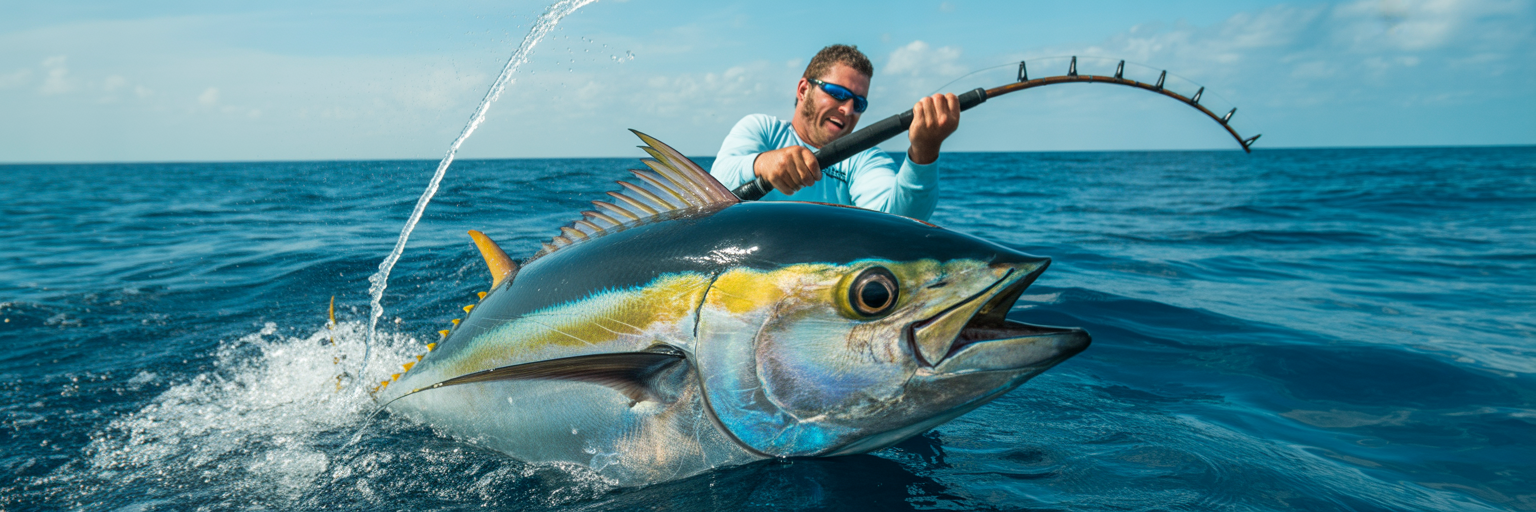
Few fish in the Florida Keys offer the same blend of brutal power and prime sashimi as the blackfin tuna. They are an accessible offshore prize that punches well above their weight, making successful blackfin tuna fishing a true badge of honor for any angler. While you can find them year-round, the real action ignites during the spring and fall migrations when larger schools push through, offering the kind of consistent, explosive bites that define a trip to the Keys. These are schooling predators, notoriously boat-shy, and they almost exclusively hunt in clean, warm blue water.
Understanding these core behaviors is the foundation for every tactic that follows. The experience is unforgettable. An explosive surface strike shatters the calm, followed by a screaming run that tests your knots, your drag, and your nerve. The reward for your effort is some of the highest quality meat you can pull from the ocean. This is not a fish you stumble upon by accident. Success requires a plan built on knowing where to find them, the right methods to fool them, and the proper gear to land them.
This guide is your pre-trip briefing. We will cover exactly where to find these fish, the most effective methods for how to catch blackfin tuna, the specific gear you need for the job, and how to handle your catch to ensure its quality from the gaff to the grill. Forget the guesswork. This is what works.
Pinpointing Productive Blackfin Zones
Blackfin tuna are not wandering aimlessly in the open ocean. They are structure-oriented predators, and your success depends on finding the specific underwater features that concentrate their food source. Think of it this way: find the bait, and you will find the tuna. These zones are predictable, reliable, and the absolute starting point for any successful trip.
The Legendary Florida Keys Humps
The most famous and productive blackfin spots are the offshore seamounts known as the “Humps.” These are essentially underwater mountains that rise sharply from the seafloor, forcing deep, nutrient-rich currents upward. This upwelling creates a buffet for baitfish, and in turn, a hunting ground for blackfin. The Islamorada Hump is the most celebrated of these, a magnet for pelagic species and a hotspot for tuna fishing Islamorada. Other key locations include the Marathon Hump and the West Hump, each offering similar dynamics. Showing up to a hump without a plan is a mistake. The key is to find where the current is hitting the structure and where the bait is stacked up.
Beyond the Humps: Wrecks and Reef Edges
While the humps get most of the attention, they are not the only places to find fish. Any abrupt change in bottom contour in deep water can hold blackfin. Deep-water wrecks, especially those in 200 to 400 feet of water, create their own ecosystems that attract bait and predators. Likewise, sharp offshore reef ledges and significant drop-offs serve as natural ambush points. The principle is the same as the humps. Look for structure that interrupts current flow and gives tuna a place to stage and feed.
Reading Your Electronics Like a Pro
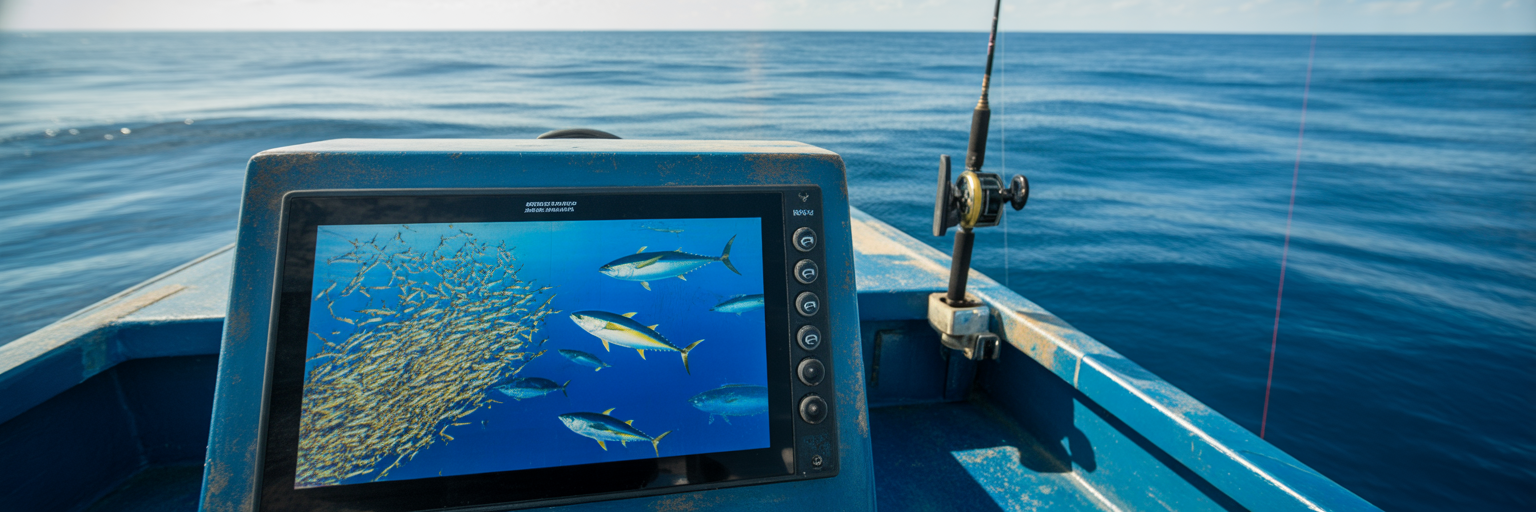
Your fishfinder is your eyes underwater, but you need to know what you are looking for. Do not just scan for big individual marks. First, find the bait. You are looking for dense, tightly packed balls of baitfish on your sounder. Once you locate the bait, start looking for the distinct, often boomerang-shaped marks of tuna holding below or to the sides of the bait school. They will not always be stacked up neatly. Sometimes they appear as scattered lines or arches, but their relationship to the bait is the giveaway. A screen full of bait with no predator marks is less promising than a smaller bait ball with tuna actively working its edges.
Finding the Right Water
Beyond structure and electronics, your own eyes are a critical tool. Blackfin are visual hunters that thrive in specific water conditions. Look for the tell-tale signs of productive water before you even start fishing. A distinct temperature break, where warmer and cooler water meet, can create a wall that concentrates bait. Current rips, visible as lines of choppy or smooth water on the surface, also signal converging currents that trap food. Most importantly, look for color. Blackfin prefer the clean, cobalt-blue water of the Gulf Stream. Finding that deep blue water is often the first and most important step in locating fish.
Mastering the Live Bait Game
When it comes to consistency, one technique stands above all others for blackfin tuna fishing in the Keys: live chumming. This method is the single most effective way to draw wary tuna away from deep structure and into a feeding frenzy right behind your boat. It requires planning and effort, but the results are unmatched. Forget trolling aimlessly. This is a targeted, strategic approach that turns the odds squarely in your favor.
Why Live Chumming is King
Blackfin tuna are notoriously cautious, especially the larger, more experienced fish. They are wary of engine noise, hull shadows, and any unnatural presentation. Live chumming overcomes this by creating an environment of competitive feeding. When you introduce a steady stream of live, panicked baitfish into the water, it triggers a primal instinct in the tuna. They rise from the depths to compete for the easy meal, their caution is replaced by aggression, and they become far more likely to eat a hooked bait presented among the free offerings.
Getting the Right Bait
The success of live baiting for tuna begins and ends with the quality and quantity of your bait. The undisputed top choice is live pilchards. Their size, flash, and frantic swimming action are irresistible to blackfin. You will need a lot of them. A typical trip requires anywhere from 500 to 1000 baits, and sometimes more. This is not an afterthought. You must plan to either buy them from a local bait boat at the crack of dawn or dedicate time to cast-netting them yourself on patch reefs before heading offshore. Showing up with a few dozen baits is a recipe for a short, frustrating day.
Executing the Perfect Chum Slick
The process is methodical. Once you arrive at your chosen structure, like the Islamorada Hump, position your boat up-current of the spot where you are marking fish. You want to drift over the zone, allowing your chum to create a trail leading directly to you. Begin by tossing out small handfuls of live pilchards every 30 to 60 seconds. The goal is to create a continuous, unbroken “highway of food” that draws the tuna up from the depths and toward your boat. Do not dump a whole bucket at once. Consistency is key to building their confidence and keeping them in your slick.
The Art of the Presentation
With the chum slick established, it is time to present your hooked bait. This is where finesse comes in. Hook a single, lively pilchard through the nose or belly on a fluorocarbon leader with no weight. The goal is to have your hooked bait look and swim identically to the free-swimming chum. Free-spool the line, letting the current carry the bait back into the slick, hundreds of feet behind the boat. This is critical. The biggest and smartest tuna will hang back, feeding at the far end of the chum line, well away from the boat’s pressure wave and shadow. Your bait needs to get back to them to get bit.
Gearing Up for the Fight
Hooking a blackfin is only half the battle. These fish are pure muscle, and their initial run will expose any weakness in your tackle. Using the right gear is not about preference, it is about necessity. This is the definitive setup for live baiting blackfin in the Keys, a combination of casting distance, sensitivity, and raw power.
The Ideal Rod and Reel Combo
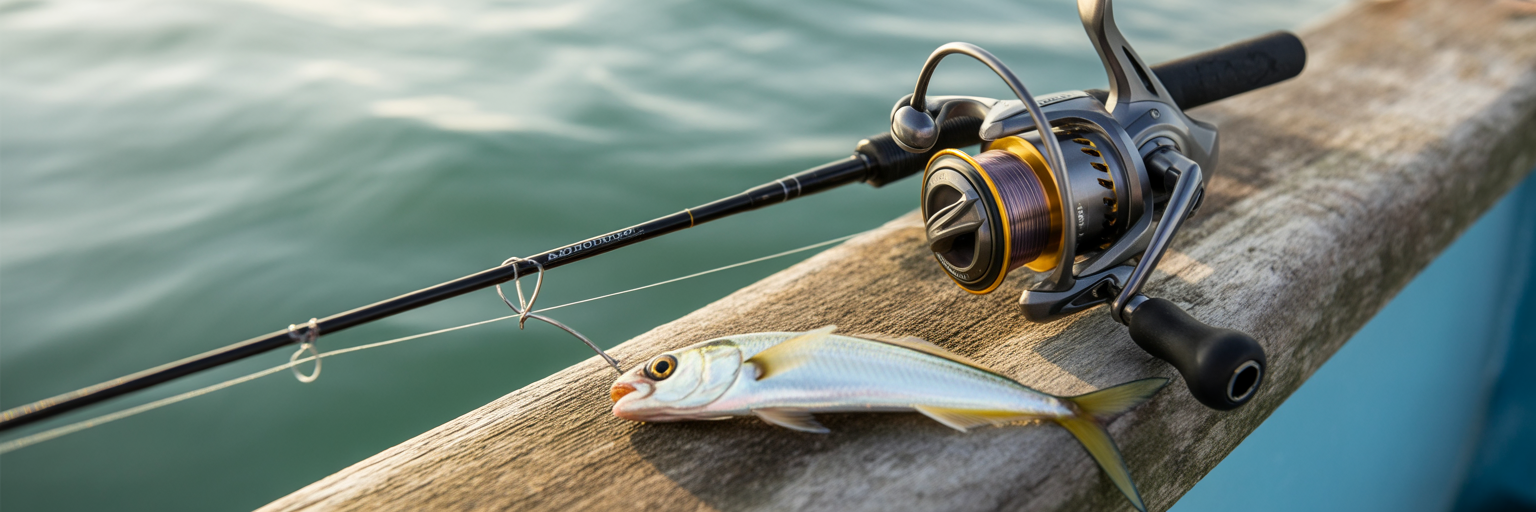
You need a setup that can cast a light bait far but has the backbone to stop a freight train. The perfect tool for this job is a 7-foot, fast-action spinning rod rated for 20-40 lb line. This length and action provide the whip needed to send a free-lined pilchard sailing, while the power in the lower section of the rod gives you the leverage to lift a stubborn tuna. Pair this with a high-quality 5000 to 8000-series spinning reel. Look for a reel known for its smooth drag and solid construction. This combination is light enough to handle all day but strong enough for fish pushing 30 pounds or more.
Line and Leader: The Critical Connection
Your connection to the fish is everything. Spool your reel with 30-50 lb braided line. Braid offers superior strength with a thin diameter, allowing for more line capacity and better sensitivity to feel the bite. More importantly, its lack of stretch ensures a solid hookset, even with hundreds of feet of line out. At the business end, you need a leader that is both strong and invisible. A 6 to 10-foot section of 25-40 lb fluorocarbon leader is the standard. Fluorocarbon is nearly invisible underwater and highly abrasion-resistant. Connect your braid to the leader with a slim, strong knot like the FG knot. Its streamlined profile passes effortlessly through the rod guides during a long, screaming run.
Hook Selection for a Solid Set
Hook choice is critical for landing these fast-moving fish. The go-to for live baiting is a 2/0 to 4/0 in-line circle hook. When a tuna eats the bait and turns, the circle hook is designed to slide to the corner of the jaw and lodge itself securely without the need for a hard, jerking hookset. This results in a much higher landing ratio and is better for the fish if you plan on releasing it. Simply point the rod at the fish and come tight with steady pressure. The hook will do the work.
The Importance of a Flawless Drag
A blackfin’s first run is its most powerful. It can peel 100 yards of line off your reel in seconds. If your drag is sticky, jerky, or set too tight, the line will snap instantly. Before you ever make a cast, test your drag. It must be perfectly smooth, giving up line under steady pressure without any hesitation. A jerky drag is the single fastest way to lose a quality fish. Trust your drag system to do its job and absorb the initial shock of the run.
Terminal Tackle Checklist:
- Spools of 25 lb, 30 lb, and 40 lb fluorocarbon leader
- Packs of 2/0, 3/0, and 4/0 in-line circle hooks
- A high-quality dehooker for safe releases
- A reliable gaff for keeper-sized fish
- A sharp pair of braid-cutting scissors
Jigging and Trolling Strategies
While live baiting is king, it is not the only way to fill the fish box. There will be days when bait is scarce, or when the tuna are holding deep and refusing to rise to a chum slick. On these days, having a solid plan B and C is what separates a good angler from a great one. Vertical jigging and trolling are deadly tactics that allow you to adapt to the conditions and keep catching fish.
Vertical Jigging for Deep-Holding Fish
This is your go-to method when your sounder is lit up with tuna marks deep on the structure, but they will not come to the surface. Vertical jigging is an aggressive, hands-on technique designed to trigger a reaction strike. Position your boat to drift over the marks, drop your jig to the bottom, and begin a fast, erratic retrieve. Rip the rod tip up sharply and then let the jig flutter back down as you reel in the slack. The combination of the fast upward dart and the wounded flutter on the fall is often more than a deep-holding tuna can resist. It is hard work, but incredibly effective.
Some of the best lures for blackfin tuna when jigging include:
- Butterfly Jigs: These center-weighted jigs have an erratic side-to-side flutter on the drop.
- Slow-Pitch Jigs: Designed for a more technical presentation, they offer a wide, sweeping action.
- Knife Jigs: These are long, slender jigs that drop quickly and are ideal for speed jigging in heavy current.
Choose jigs in the 100-200g range, with colors like silver, pink, blue, and glow being consistent producers.
Trolling to Cover Ground and Find Schools
Trolling is the ultimate search tactic. When you arrive at a zone and are not marking fish or bait, trolling allows you to cover large areas of water efficiently to locate scattered schools. The optimal speed is typically between 6 and 8 knots. A simple but effective trolling spread is all you need. Set your lures far back behind the boat, anywhere from 100 to 300 feet, as blackfin are wary of prop wash and engine noise. Using small bird teasers ahead of your lures can create surface commotion that attracts attention from a distance. Focus on trolling over drop-offs, along current rips, and around the edges of the humps until you find an active school.
For your trolling spread, stick with small, simple lures. Four to six-inch trolling feathers in colors like black and purple, natural cedar plugs, and small skirted lures are all proven winners. Once you get a bite while trolling, mark the spot and consider switching to jigging or live baiting to work the school more thoroughly.
| Factor | Vertical Jigging | Trolling |
|---|---|---|
| Best For | Targeting fish marked deep on structure | Covering water to locate scattered schools |
| Boat Position | Drifting over or anchored up-current of structure | Moving at a steady 6-8 knots |
| Depth Control | Precise; you work the exact depth you see fish | Less precise; lure depth depends on speed and weight |
| Lure Types | Metal jigs (Butterfly, Slow-Pitch) 100-200g | Small feathers, cedar plugs, small skirted lures |
| Angler Effort | High; requires constant, aggressive rod work | Low; primarily setting lines and waiting for a strike |
| When to Use | When fish are concentrated but deep | When searching for fish or bait is unavailable |
This table provides a quick reference for deciding between jigging and trolling. The choice depends on whether you’ve already located fish on your sounder or if you’re still in search mode.
Capitalizing on Prime Biting Windows
Finding the right spot and using the right technique are only two parts of the puzzle. For consistent success with blackfin tuna florida keys, you must be there at the right time. Timing is everything. These fish feed aggressively during specific windows, and being on the water during these periods can make the difference between a slow day and non-stop action. An early start is not a suggestion, it is a requirement.
Seasonal Peaks
While blackfin are present year-round, their numbers swell dramatically during their spring and fall migrations. These are the times when large schools of fish move through the Keys, offering the most consistent action and the best chance at encountering bigger fish. Planning your trips around these seasonal peaks, typically from March through June and again from September through November, immediately puts the odds in your favor.
The Daily Low-Light Ambush
This is the most critical timing factor on a day-to-day basis. Blackfin are ambush predators that feel safest feeding near the surface under the cover of low light. The hours surrounding dawn and dusk are non-negotiable. The first hour of daylight is often the most explosive bite of the day, as tuna push bait to the surface in a feeding frenzy. The same pattern repeats itself in the evening as the sun begins to set. If you are not in position and fishing actively during these windows, you are missing the best opportunity.
Weather and Water Movement
Pay close attention to the daily conditions, as they can extend or create feeding windows. A day with heavy cloud cover can mimic low-light conditions, often keeping the tuna feeding closer to the surface for longer periods than on a bright, sunny day. Water movement is another powerful trigger. Strong moving water over the humps and other structure acts like a conveyor belt for bait, concentrating it and positioning the tuna in predictable feeding lanes. The stronger currents around the new and full moons can be particularly productive, often triggering more aggressive feeding behavior and making them prime times to plan a trip.
From Hookup to Icebox: Handling Your Catch
The work is not over when the fish hits the deck. Proper handling from the moment of landing is absolutely essential to preserve the incredible quality of blackfin tuna meat. A few simple, immediate steps will ensure your catch is as good on the plate as it was on the line.
- The Fight: Once you are hooked up, maintain steady pressure and let the drag do its job, especially on the initial blistering runs. Avoid high-sticking the rod, which can lead to a break. Keep the line tight and gain line when you can.
- Landing: For a keeper-sized fish, a clean and decisive gaff shot is the safest and most efficient way to bring it aboard. Aim for the head or the solid shoulder area to secure the fish quickly and avoid damaging the valuable loins.
- Bleeding: This is the single most important step for ensuring sushi-grade quality. As soon as the fish is on board, make a deep, swift cut across the throat latch, just behind the gills, severing the main arteries. You can also make cuts along the lateral line near the tail. This allows the fish to bleed out completely, which prevents the meat from spoiling.
- Icing: Immediately after bleeding, plunge the fish into an ice slurry. This is a mixture of ice and saltwater, not just ice alone. The slurry chills the fish much faster and more thoroughly than plain ice, dropping its core temperature rapidly and locking in the freshness and flavor of the meat.
Finally, a crucial reminder on regulations. In Florida state waters, blackfin tuna are managed by the Florida Fish and Wildlife Conservation Commission (FWC), not by federal Highly Migratory Species (HMS) permits. This means state bag and size limits apply. Always verify the current daily bag limits before every trip, as regulations can change. Responsible angling ensures a healthy fishery for years to come.