
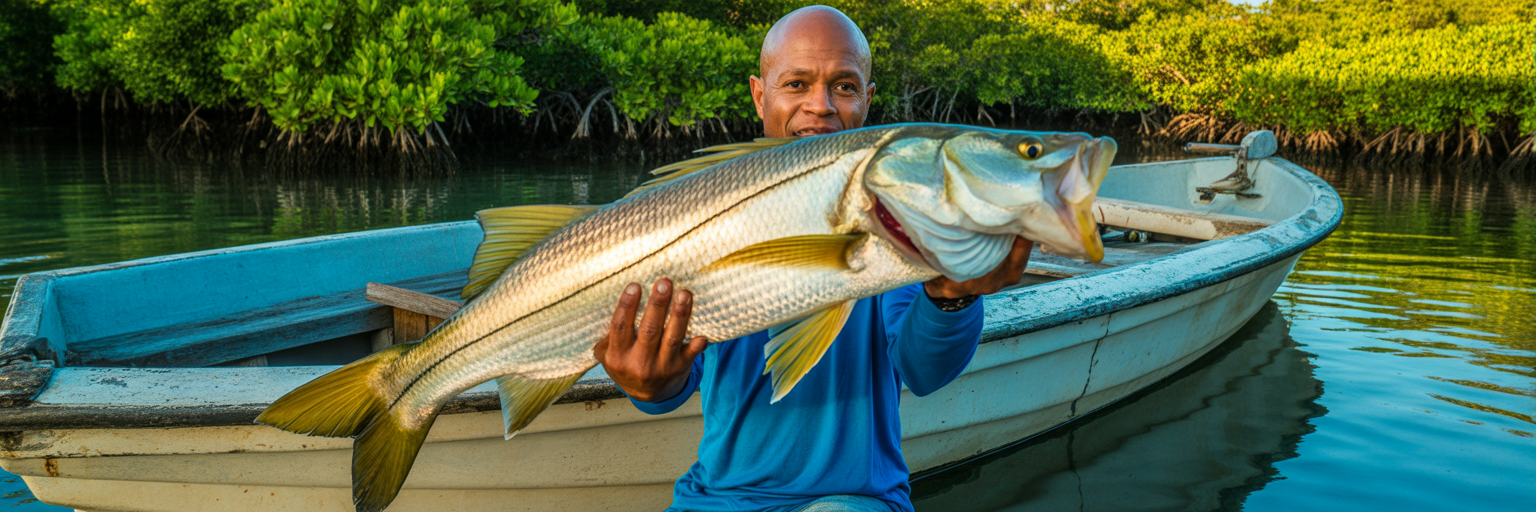
Every Florida angler knows the feeling. It is not a nibble or a tap, but a solid, unmistakable thump that telegraphs straight up the line and into your hands. That is the signature of a snook strike. These powerful, intelligent linesiders are the ultimate inshore prize, but they do not give themselves up easily. Understanding how to catch snook is not about luck. It is about getting inside the predator’s head and using its own instincts against it. Forget random casting. Success comes from knowing why a snook sits where it does and what will make it attack.
Understanding How to Catch Snook: The Predator’s Playbook
To consistently hook snook, you have to think like one. These are efficient, ambush predators that value energy conservation above all else. They are not going to burn calories chasing a meal across an open sand flat if they can wait for it to be delivered. This is the first rule of the playbook: snook use structure as a weapon. Mangrove roots, dock pilings, bridge fenders, and oyster bars are their hunting blinds. They hold tight to this cover, waiting for an unsuspecting baitfish or shrimp to drift by. Casting into empty, featureless water is one of the fastest ways to get zero bites.
If structure is their hiding spot, then moving water is their dinner bell. Current acts as a conveyor belt, pushing bait directly to a waiting snook. This is why the most repeated advice among seasoned anglers is a simple truth: no current, no snook. A tide chart is not just a suggestion, it is your primary planning tool. The hours when water is moving fastest, either incoming or outgoing, are when snook position themselves to feed. A slack tide is often a dead zone for the bite.
While current gets them feeding, water temperature dictates their location. Snook are highly sensitive to the cold, and this is their Achilles’ heel. When the water temperature drops below 60°F (15.5°C), their metabolism slows dramatically. They become sluggish and retreat to find thermal refuges. These are predictable winter spots like sun-warmed mud flats, deep residential canals, river basins, and the warm water outflows of power plants. In contrast, summer finds them spread out along beaches and in passes for their annual spawn. Knowing these temperature-driven movements is one of the most critical snook fishing tips for year-round success.
Finally, a snook’s large, reflective eyes give it a distinct advantage in low light. They can see their prey far better at dawn, dusk, and through the night than the baitfish can see them. This biological edge translates directly into a core strategy for any angler. The best fishing is almost always during the first and last hours of daylight or after the sun goes down entirely. If you want consistent action, set your alarm clock early or plan to stay out late. It is a requirement for putting the odds in your favor.
Florida’s Top Snook Fishing Spots
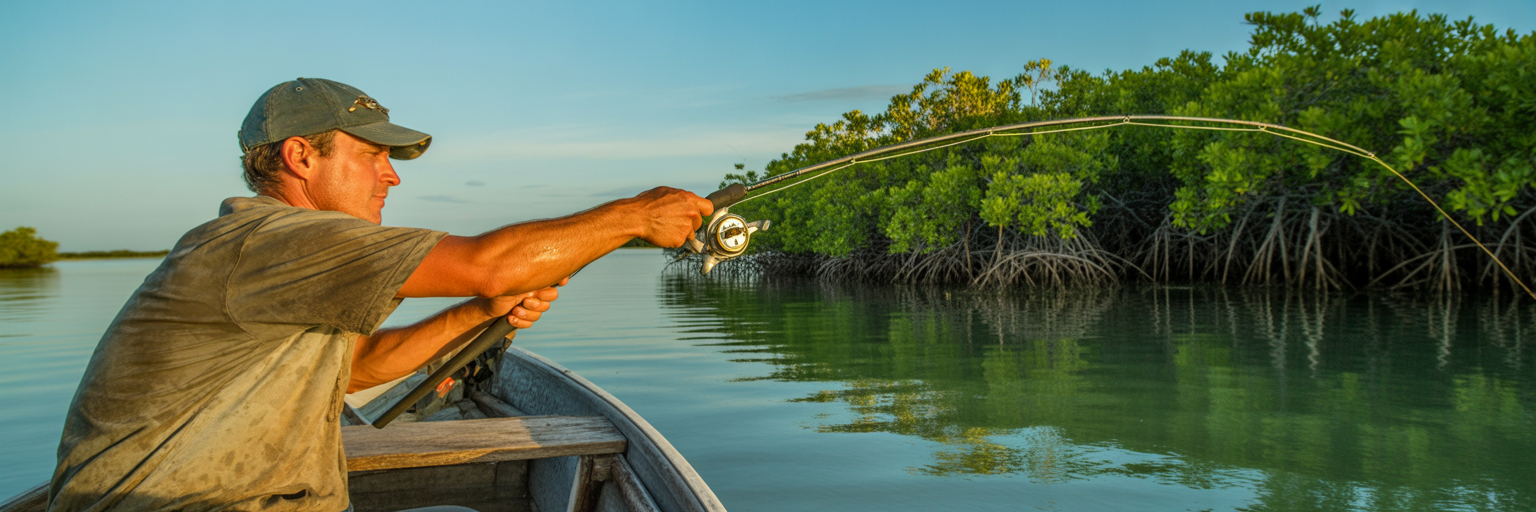
Knowing how a snook thinks is half the battle. The other half is knowing where to find them. Florida’s coastline offers a diverse range of habitats, and each one requires a specific approach. These are some of the best snook fishing spots Florida has to offer, along with the tactics to fish them effectively.
Mangrove Shorelines and Oyster Bars
This is the classic snook battleground. Look for mangrove shorelines with distinct features like points, small cuts, and deep pockets where current is funneled. An outgoing tide pulling bait out from the roots is a prime feeding scenario. Cast your lure or bait as close to the mangrove overhangs as possible. For oyster bars, the key is to position your boat up-current and let your offering drift naturally over the structure, just like a real shrimp or baitfish would be swept along.
Bridges and Causeways
Think of bridges as vertical, concrete reefs. Snook use them with precision. They will stage on the up-current side of a piling, using it as a break from the flow while waiting to ambush anything that gets swept past. They then rest in the calm eddy on the down-current side. The most productive tactic, especially at night, is to fish the shadow lines. Snook stack up just inside the darkness, waiting to attack bait that becomes illuminated as it passes through the light cast from the bridge.
Dock Lights and Residential Canals
This is the premier opportunity for night fishing and a critical sanctuary during winter cold snaps. The food chain is simple and reliable: the light attracts plankton, which attracts small baitfish and shrimp, which in turn attracts hungry snook. Look for docks with deep water and good current flow. A quiet approach is essential. Be respectful of homeowners by keeping noise to a minimum and avoiding shining bright lights toward houses. The deep, dark water of these canals provides a stable, warm environment that draws in fish when the flats get too cold.
Inlets, Passes, and Jetties
These are high-traffic highways for big fish. The water moves faster, and the snook are often larger and more aggressive. The strategy here is to focus on the edges of the main channel and the eddies formed by jetty rocks during a strong incoming or outgoing tide. This is where you will find the bruiser snook that have the power to handle the heavy current. Heavier tackle is often required to control these fish in such a turbulent environment.
Beach Troughs and Swash Channels
Success here comes from learning to read the beach. In the summer, especially during calm mornings, you can spot a darker strip of water running parallel to the shore. This is the trough, a deeper channel where snook cruise for food. This is a prime sight-fishing opportunity. Walk the beach slowly, looking for the telltale dark shapes of cruising fish. A well-placed cast far ahead of a cruising snook can result in a spectacular and visual strike in the clear, shallow water.
Gearing Up: The Right Tackle for Linesiders
When a big snook explodes on your lure next to a dock piling, your gear is the only thing preventing a break-off. Choosing the best tackle for snook is about function and reliability. This is not the place to cut corners. You need a setup that provides casting accuracy, sensitivity, and the raw power to control the fight.
The Workhorse Rod and Reel Combo
The ideal all-around setup is a 7 to 8-foot, medium-heavy power, fast-action spinning rod. The length gives you excellent casting distance for covering flats and beaches, while the strong backbone provides the leverage to pull a snook away from mangroves or pilings. Pair this with a high-quality 3000 to 4000-size spinning reel. The single most important feature on the reel is a smooth, sealed drag system that keeps saltwater and sand out, ensuring it performs flawlessly when a fish starts peeling line.
The Braid and Leader Connection
Modern braided line is a must. Spool your reel with 15 to 30-pound braid. Its thin diameter and lack of stretch give you three huge advantages: you can feel every subtle bump, it cuts through the wind for longer casts, and it has incredible strength. However, braid is highly visible and susceptible to abrasion. That is why a fluorocarbon leader is non-negotiable. A 3 to 4-foot section of 30 to 60-pound fluorocarbon is essential. It is nearly invisible to wary snook and, more importantly, it can withstand the fish’s sandpaper-like mouth and razor-sharp gill plate, which will slice through braid instantly.
Essential Knots That Won’t Fail
You only need to master two knots. First is your braid-to-leader connection. The FG Knot or a Double Uni Knot are the top choices. They are incredibly strong and create a slim profile that flies through the rod guides without catching during a cast. Second is the loop knot you use to attach your lure, like the Rapala Knot. This knot creates a small, open loop that allows your lure to have a more natural, free-swinging action in the water, which triggers significantly more strikes.
Tackle for Heavy Structure
When you are fishing tight to bridge pilings, deep jetties, or heavy dock structure, you need a setup built for stopping power. This is not about finesse. It is about ending the fight quickly. Step up to a heavier 7-foot rod, or even a conventional setup, paired with a 5000 or 6000-size reel. Your line should be 40 to 50-pound braid connected to a stout 60 to 80-pound fluorocarbon leader. The goal is to hook the fish and immediately turn its head, stopping it cold before it can get back into the structure.
| Component | Workhorse (All-Around) Setup | Heavy Structure (Stopping Power) Setup |
|---|---|---|
| Rod | 7′-8′ Medium-Heavy, Fast Action Spinning | 7′ Heavy Power, Fast Action Spinning or Conventional |
| Reel | 3000-4000 Size Spinning Reel | 5000-6000 Size Spinning or Conventional Reel |
| Main Line | 15-30 lb Braided Line | 40-50 lb Braided Line |
| Leader | 30-60 lb Fluorocarbon | 60-80 lb Fluorocarbon |
| Primary Use | Flats, Mangroves, Beaches, Light Docks | Bridges, Jetties, Inlets, Heavy Dock Pilings |
| Key Advantage | Versatility and Casting Distance | Maximum Stopping Power and Abrasion Resistance |
Matching the Hatch: Best Baits and Lures for Snook
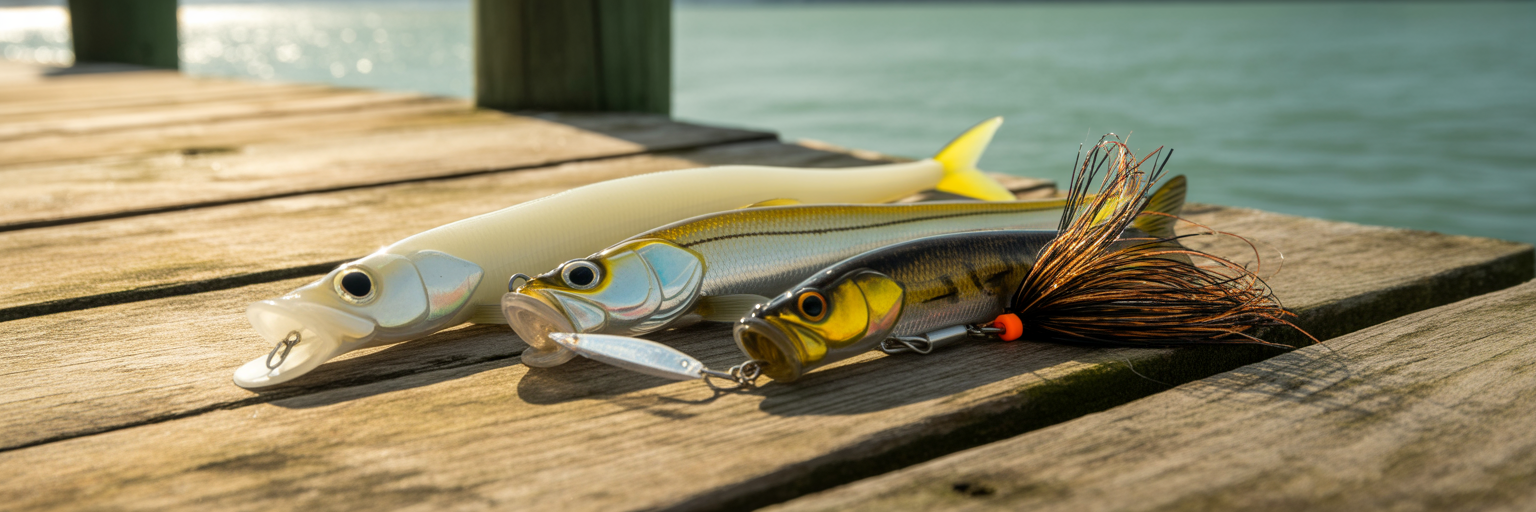
Snook are opportunistic feeders, but they can also be incredibly selective. Having the right selection of snook bait and lures and knowing when to use each one is critical. Matching your offering to the available forage and conditions will dramatically increase your hook-up ratio.
Live Bait: The Gold Standard
Using live bait is as close to a guarantee as you can get in fishing. It is hard for any predator to resist the real thing. Learning to throw a cast net to “make bait” on-site is a skill that pays huge dividends.
- Pilchards (Whitebait): This is the go-to bait for much of the year. Hook one through the clear spot in its nose or “bridle” it with a small rubber band for the most natural and lively presentation.
- Finger Mullet: A larger, hardier bait that is perfect for targeting bigger snook. Hook it through the lips to allow it to swim freely.
- Live Shrimp: This is universal candy for inshore fish. For a natural drift, hook the shrimp under the horn on its head, being careful to avoid the dark spot, which is its brain. Shrimp are especially effective around docks and during the winter.
Soft Plastic Paddletails
The soft plastic paddletail is the ultimate search bait. A 3 to 5-inch model rigged on a jighead or a weedless hook allows you to cover water efficiently and find active fish. The steady “thump-thump-thump” of the tail as it moves through the water creates a vibration that snook find irresistible. Proven colors like white, chartreuse, and root beer are staples in any snook angler’s tackle box.
Topwater Plugs for Explosive Strikes
There is nothing in fishing more exciting than the heart-stopping explosion of a snook blowing up on a topwater lure. This is a low-light game, best played at dawn and dusk. The key is the retrieve. For a “walk-the-dog” style lure like a Zara Spook, use a steady “twitch-twitch-pause” cadence to make the lure dart back and forth on the surface. Poppers are another great option, creating a commotion that calls fish up from a distance.
Jigs for Deep Water and Heavy Current
When snook are holding deep in inlets or along bridge channels, you need a lure that can get down to them through strong current. This is where bucktail jigs or Flair Hawk-style jigs excel. Their weight and hydrodynamic design allow them to cut through the water and reach the bottom. The technique is simple but deadly: cast up-current and let the jig sink. Then, use sharp hops to bounce the jig along the bottom as the tide sweeps it through the strike zone.
Timing Your Attack: Tides, Seasons, and Time of Day
You can have the best spots and the perfect lures, but if your timing is off, you will struggle. The previous sections explained why factors like current and light matter. This section provides the specific, actionable plan for when to put them to use. A strategic approach to timing is what separates consistently successful anglers from the rest.
First, you must master the tides. The core rule is absolute: moving water triggers feeding. Plan your trips around the periods of strongest flow, which are typically the two hours before and after the high or low tide. This is when bait is forced to move, and snook set up in predictable ambush points. A slack tide, when the water is still, is usually the time to take a break, re-rig, or move to a new spot. Do not waste prime fishing time on dead water.
Next, align your efforts with the snook’s seasonal migrations. Their location changes dramatically throughout the year.
- Winter: Fish retreat to find stable, warm water. Concentrate your efforts in the back bays, residential canals, and the deep, dark water of coastal rivers.
- Spring and Fall: These are transition periods. Snook are on the move and feeding aggressively as they travel between their wintering grounds and summer spawning areas. They can be found almost anywhere along this migration route.
- Summer: This is the spawning season. Large numbers of big fish congregate in and around passes, inlets, and along the beaches.
The low-light advantage must be exploited. The first hour of daylight and the last hour before complete darkness are the “golden hours” for snook fishing. During these times, snook feel more secure under the dim light and will push into shallower water to hunt, making them more accessible. Finally, do not overlook fishing through the night. The two primary night strategies are targeting lighted structure like docks and bridges, where you stay in the darkness and cast into the light, or fishing unlit areas like mangrove shorelines on a bright full or new moon, where the ambient light is just enough to trigger a bite.
Proven Tactics for Hooking a Trophy Snook
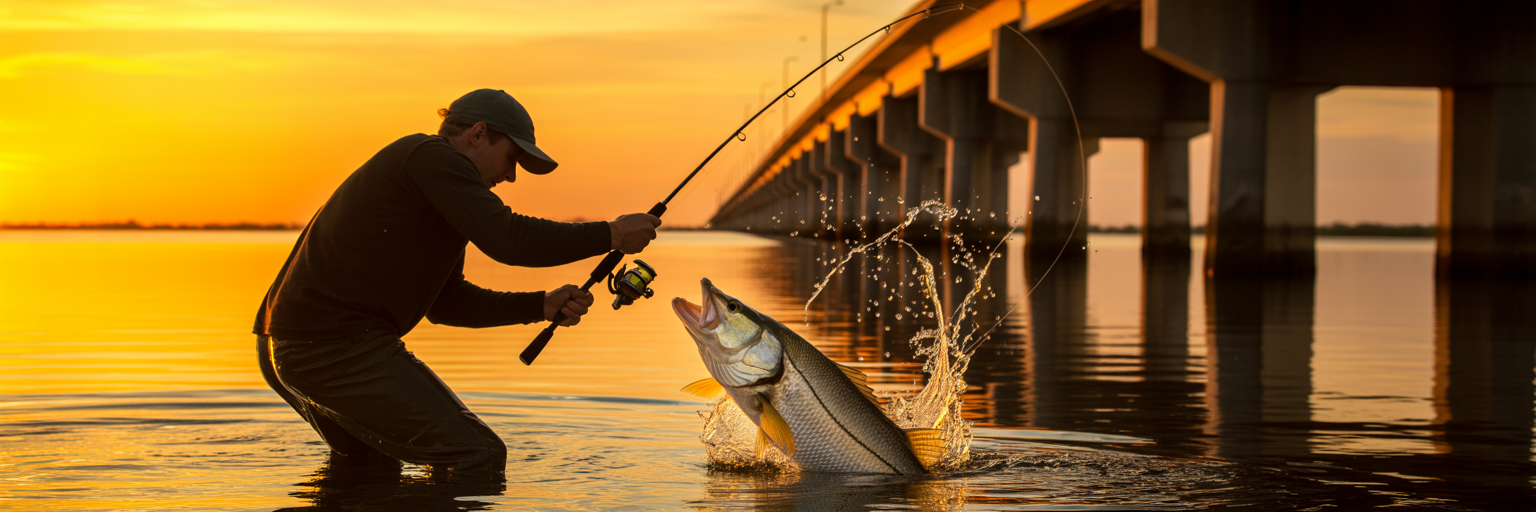
Executing the right technique at the right moment is what turns a good day into an unforgettable one. These are the proven tactics that elevate your game from simply fishing to actively hunting. Mastering these skills is fundamental to learning how to catch snook, especially the larger, wiser trophy fish that have seen it all.
The Art of the Pitch Cast
This is a non-negotiable skill for serious inshore fishing. The pitch cast is a low, underhand motion that allows you to send a lure skipping across the water’s surface, far under low-hanging mangrove branches or deep beneath a dock. The biggest and smartest snook are often tucked way back in the darkest parts of this cover where they feel safe. A standard overhead cast cannot reach them. Learning to pitch and skip a lure is the only way to present your offering in the strike zone of these reclusive giants.
Working the Current Seams
Learn to read the water’s surface. A current seam is the visible line that forms between fast-moving water and slower, calmer water. Snook are masters of energy efficiency and will hold in the slower water right on the edge of the seam, waiting to dart out and grab bait being swept by in the faster current. The tactic is to drift your bait or retrieve your lure directly along that visible line, presenting an easy meal to a waiting predator.
Fighting the Fish, Not Just Reeling
What you do in the first five seconds after the hookup usually determines the outcome of the fight. The instant you feel the strike, you must apply heavy pressure and use the rod to turn the fish’s head away from structure. Do not just start reeling. If you let a big snook make its initial run straight for a dock piling, mangrove root, or oyster bar, the fight is already over. It will cut your line in an instant. The battle is about leverage and control, not just winding the handle.
Sight-Fishing: The Ultimate Challenge
This is the pinnacle of inshore angling, a true game of hunting. Success requires three things: high-quality polarized sunglasses to cut the glare and see into the water, a stealthy approach using a push pole or a quiet trolling motor, and the ability to lead the fish. You cannot cast directly at a cruising snook. You must cast well ahead of its path and let it swim to your lure or bait. A cast that lands too close will spook it every time. It is a thrilling game of patience, precision, and nerve.
Know the Rules: Florida Snook Regulations for 2026
Being a responsible angler is just as important as being a successful one. Snook are a carefully managed species, and knowing the regulations is not optional. The rules are in place to ensure a healthy fishery for generations to come. The tone here is direct because there is no room for error.
Before you even think about keeping a fish, you must understand the following snook fishing regulations Florida has in place.
- It’s Not Optional: The Snook Permit. To possess or harvest a snook, you must have both a valid Florida saltwater fishing license and a snook permit. There are no exceptions to this rule.
- Understanding Slot and Bag Limits. Snook are managed with a “slot limit.” This means a fish must measure between two specific lengths to be legal. Any fish that is shorter than the minimum size or longer than the maximum size must be released immediately. The bag limit is one fish per person, per day. This protects both the juvenile fish and the large, prime breeding females.
- Regional Seasons and Closures. This is a critical point. Snook seasons are not the same across the state. The Gulf coast has different open and closed dates than the Atlantic coast. Regulations can change due to stock assessments or environmental events, so you must always verify the latest rules for the specific region you are fishing before your trip. You can find the official and most current snook fishing regulations Florida on the Florida Fish and Wildlife Conservation Commission (FWC) website.
- Proper Catch and Release. Since the vast majority of snook you catch will be released, handling them properly is vital for their survival. Use barbless or single circle hooks when possible, land the fish quickly, and always support its body horizontally by holding its jaw and belly. Never hold a large snook vertically by its jaw, as this can cause fatal injury. Revive the fish boat-side in the current until it is strong enough to swim away on its own.