
The thought of a drag-screaming run from a Florida snook or tarpon is what brings anglers from all over the world. But before you make that first cast, the most important piece of gear you need is the right license.
Your Guide to a Florida Fishing License
Let’s get straight to it. Any non-resident 16 or older who wants to fish in saltwater needs a Florida fishing license. This applies whether you are keeping fish for dinner or practicing catch-and-release. This is not a suggestion; it is the law, and it is enforced to protect the fisheries we all love to use.
The first thing to get straight is that your home state’s fishing license has no value here. Florida’s marine resources are managed by the Florida Fish and Wildlife Conservation Commission (FWC), and their rules apply in their waters. Buying a license is your part in supporting that management.
Another common and costly mistake involves the shoreline license. The no-cost shoreline license is for Florida residents ONLY. As a visiting angler, you must purchase a non-resident license even if you are only fishing from a beach, pier, or jetty. Believing otherwise is a quick way to earn a fine and put a damper on your trip.
Getting licensed is simple when you know the rules. This guide will walk you through exactly which license to buy for your trip, what special permits you might need for trophy species, and the different ways to make your purchase. By the end, you will be fully compliant and ready to focus on what matters: catching fish. For a complete overview of the requirements, you can review our guide to the florida fishing license.
Choosing the Right Non-Resident License
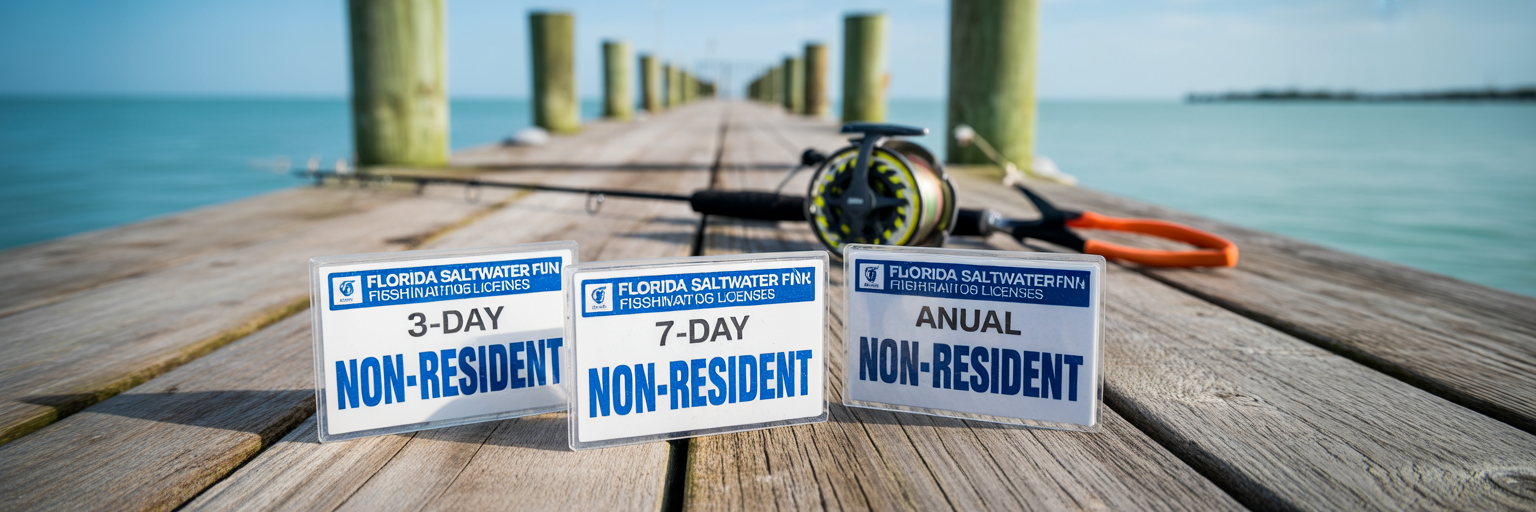
Your trip’s duration dictates your best license option. The FWC offers three straightforward choices for visiting anglers, and picking the right one saves you money and keeps you legal. Think of this as your game plan for a smart purchase.
The main options are a 3-day, 7-day, or annual non-resident saltwater license. The prices are set by the FWC at $17, $30, and $47, respectively. Knowing these costs upfront helps you budget and avoid surprises. There is no guesswork involved.
| License Type | Duration | Cost | Best For |
|---|---|---|---|
| 3-Day Non-Resident Saltwater | 3 Consecutive Days | $17 | Long weekend trips or anglers with a short fishing window. |
| 7-Day Non-Resident Saltwater | 7 Consecutive Days | $30 | The standard week-long vacation or a dedicated fishing trip. |
| Annual Non-Resident Saltwater | 365 Days from Purchase | $47 | Anglers planning multiple trips per year, ‘snowbirds’, or for maximum convenience. |
Note: Prices are set by the Florida Fish and Wildlife Conservation Commission (FWC) and are subject to change. This table reflects the costs at the time of publication.
Your fishing plans make the choice simple. Coming down for a long weekend to fish Tampa Bay? The 3-day license is your ticket. Planning a week-long family vacation in the Keys with a few days of fishing mixed in? The 7-day license has you covered. It is critical to know that these short-term licenses run for consecutive days from the start date you select.
For anyone making two or more trips a year, the annual non resident Florida fishing license is the smartest move. If you are planning even two separate weekend trips, the annual license already pays for itself. It is valid for a full 365 days from the date of purchase, giving you the flexibility to return for a spontaneous trip without repeating the purchase process.
Essential Permits for Target Species
Your standard saltwater license is just the base. For some of Florida’s most prized species, you need an additional permit to legally target or possess them. Getting this right prevents a trophy catch from turning into a major violation.
Think of your saltwater license as the key to your boat. It gets you on the water, but a species permit is the key to a specific spot where the big ones are. These Florida fishing permits are your responsibility, so know the rules before you go.
The most common permit for visiting anglers is the Snook Permit. It is required to target or possess snook, and “targeting” includes catch-and-release. Even if you plan to let every fish go, you must have this permit to legally cast for them. It is required year-round, though harvest is still limited to specific open seasons.
If you plan to chase spiny lobster, especially during the popular mini-season in July or the regular season from August to March, you will need a Spiny Lobster Permit. This applies to anyone who attempts to take or possess lobster.
The Tarpon Tag is unique. It is only required if you intend to possess or kill a tarpon, which is now almost exclusively done to submit a potential state or world record. For the vast majority of anglers practicing catch-and-release tarpon fishing, no tag is needed. Knowing this distinction saves you from buying something you do not need.
Buying Your Annual License Online
For an annual license, the quickest and most efficient method is to buy Florida fishing license online. The key is to use the one and only official source: GoOutdoorsFlorida.com. Be aware of unofficial third-party sites that mimic the official portal but charge extra service fees. Stick to the official FWC site.
For a first-time user, the process is straightforward:
- Create Your Account: This establishes your digital profile with the FWC. You will provide your personal details to create a unique customer ID.
- Enter Your Details: You will need your full name, date of birth, and address exactly as they appear on your government-issued ID.
- Find the License: In the license catalog, look for “Saltwater Fishing” and then carefully select the “Non-Resident Annual” option. Double-checking that you have selected the non-resident version is critical.
While you are in the system, you can add any necessary species permits, like the Snook Permit, to your cart in the same transaction. It is best to get everything you need in one go so you are fully legal from day one of your trip.
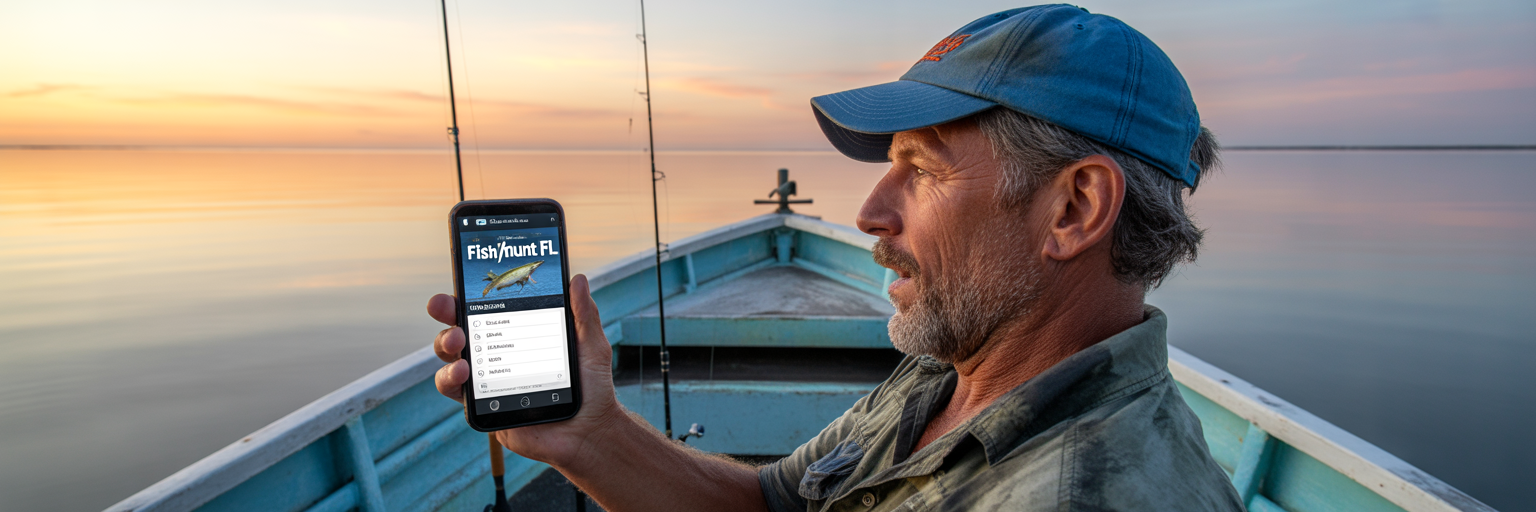
Once purchased, the best way to manage your license is with the Fish|Hunt FL mobile app. This official FWC app stores your license digitally on your phone, so you never have to worry about a wet or lost paper copy. For more detailed instructions, the FWC’s official ‘How to Order’ page provides additional guidance.
In-Person Purchase for Short-Term Trips
If you are planning a shorter trip, there is a critical rule you need to know. The 3-day and 7-day non-resident saltwater licenses can only be purchased in person. You will not find them available for purchase online, so do not waste your time looking.
You have two primary options for an in-person purchase. The first is any county tax collector’s office. The second, and often more strategic option, is an authorized license agent. This includes many big-box sporting goods stores and, more importantly, hundreds of independent tackle shops across the state.
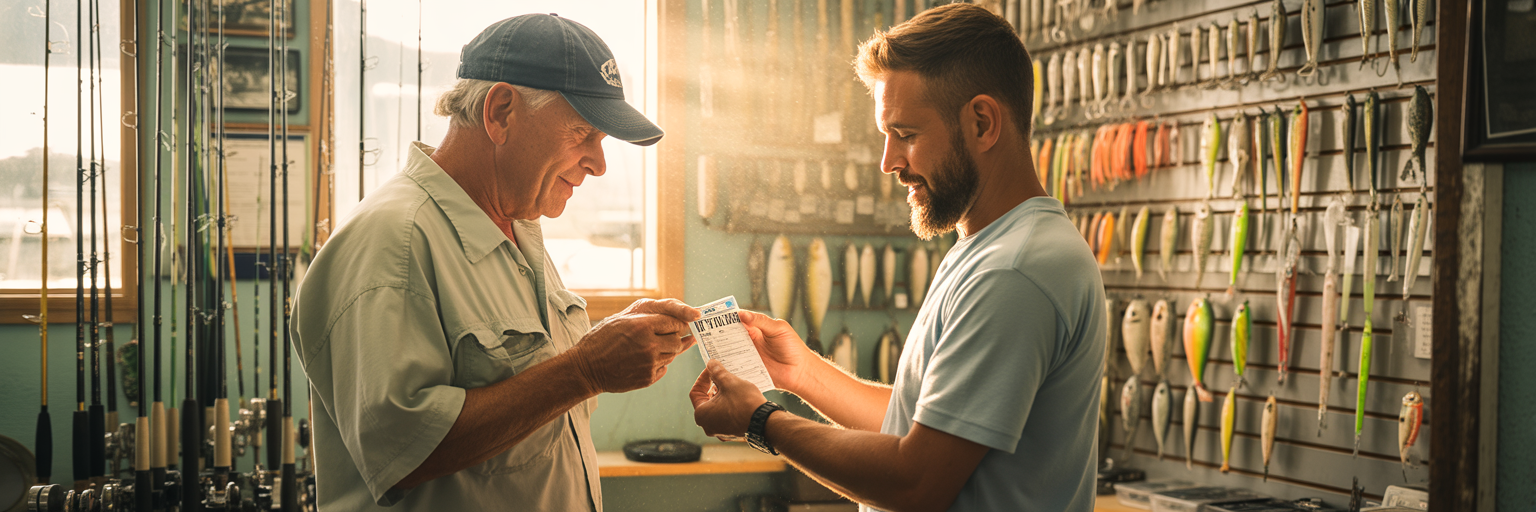
This is where knowing how to get a fishing license in Florida becomes a tactical advantage. Buying your license from a local tackle shop is more than just a transaction; it is an intelligence-gathering mission. The person behind the counter is a local expert who can give you the most current information on what is biting, which baits are working, and where the action has been. This turns a simple errand into a valuable part of your trip planning.
The process is simple. You will provide your ID and personal information to the clerk, who enters it directly into the FWC system. The printed receipt they hand you is your official license. Treat that piece of paper like cash and be prepared to present it if requested by law enforcement.
The Charter, Headboat, and Pier License Rules
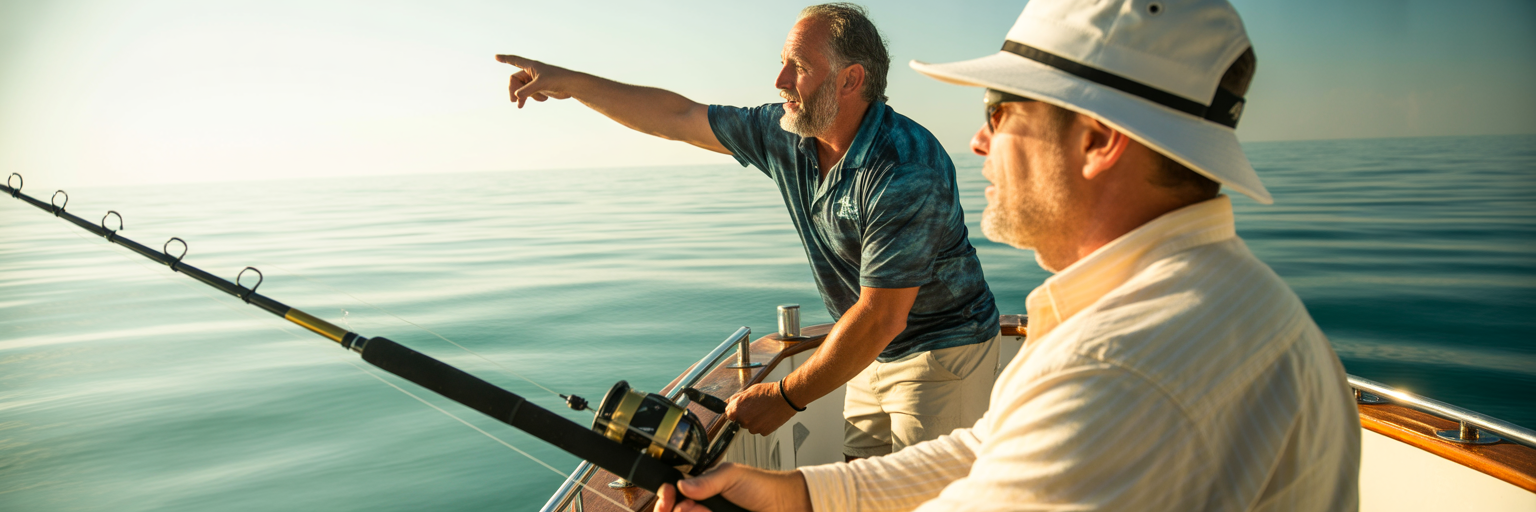
Some of the biggest confusion for visiting anglers revolves around charters, headboats, and fishing piers. The good news is that when you fish on a properly licensed saltwater charter boat, headboat, or fishing pier, you are typically covered by that operation’s license. This means you do not need to buy your own individual saltwater fishing license.
BUT, and this is the part that gets people into trouble, that vessel or pier license does not cover species-specific permits. The individual angler is still 100% responsible for purchasing their own Snook Permit, Lobster Permit, or Tarpon Tag if they plan to target or possess those species. This is the most important rule to remember. Your captain’s license covers your right to fish, but your permit covers your right to target a specific regulated species.
To avoid any issues, ask your captain this direct question before your trip: “Does your license cover me for general saltwater fishing, and are there any species we might target, like snook, where I need to buy my own permit beforehand?” This simple question empowers you and prevents an awkward and potentially costly situation at the dock or on the water.
Whether you are on a private charter or a larger headboat with other anglers, the rule remains the same: the vessel’s license covers the fishing, but the permits are on you. When in doubt, ask the captain. The official FWC visitor license page is the primary source for these regulations.
Your Pre-Purchase Checklist
To make the purchase process fast and smooth, have your information ready before you start. Whether you are buying online or in person at a tackle shop, having these details on hand will get you through the process in minutes.
Here is your checklist:
- Required Personal Details: Your full legal name, date of birth, and current physical address. The name and date of birth must match your identification exactly.
- Valid Identification: A non-resident will need an out-of-state driver’s license or another form of government-issued photo ID. The ID number itself is required for the application.
- Contact Information: A phone number and email address are necessary, especially for online purchases where your confirmation and digital license will be sent.
- The FWC Customer ID (for returning anglers): If you have ever purchased a Florida hunting or fishing license in the past, the FWC assigned you a unique Customer ID. Using this number links your history and prevents duplicate accounts, which can cause issues. If you do not have it, you can look it up on the FWC’s licensing website.
Carrying and Showing Proof of Your License
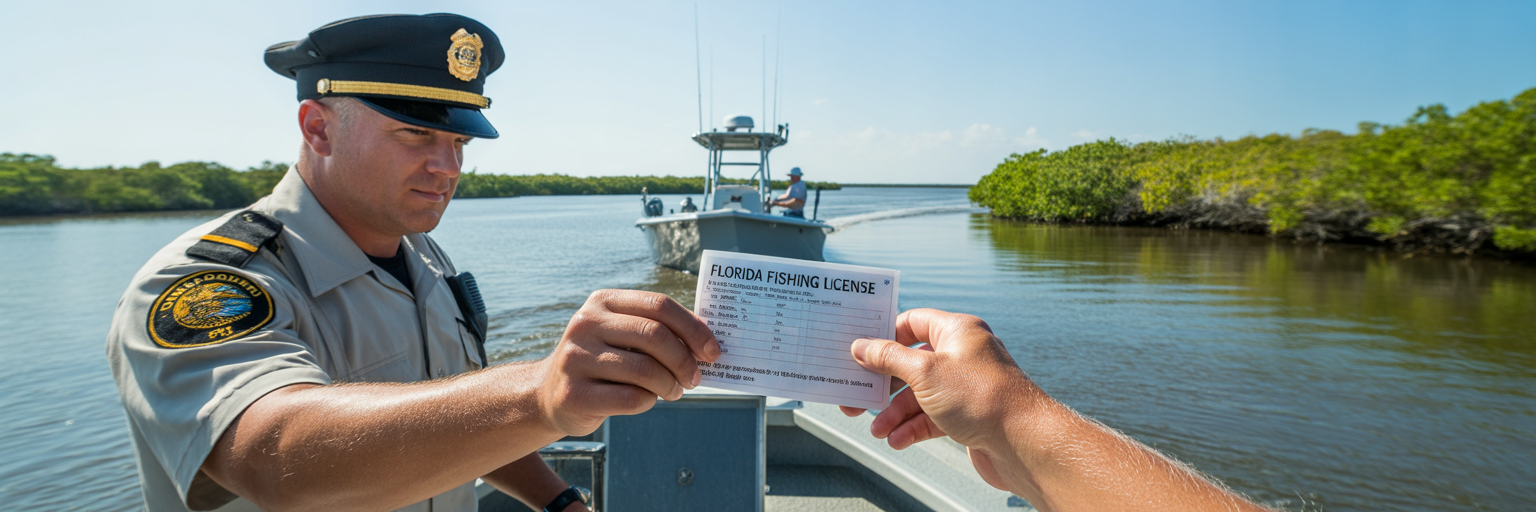
Buying the license is step one; proving you have it is step two. You must be able to present your license and any required permits to an FWC officer or other law enforcement official immediately upon request. An excuse like “it’s back in the truck” will not work.
Fortunately, you have several convenient ways to show proof:
- The Fish|Hunt FL App: This is the preferred method for modern anglers. Your license is stored securely on your phone, accessible anytime.
- A Digital Copy: A screenshot of your license, a photo of the paper copy, or the confirmation email saved to your phone are all acceptable forms of proof.
- A Printed Paper Copy: The classic method still works. This can be the receipt from an in-person purchase or a printout from the online portal.
Here is a piece of veteran advice: always have a backup. Your phone battery can die, or worse, take an unexpected swim. Keeping a paper copy in a waterproof bag inside your tackle box or a ziplock in your wallet is the best insurance policy against digital failure.
If you are inspected by an FWC officer, think of it as a routine check, not a confrontation. They are professionals protecting the resource for everyone. Having your license and ID ready shows respect, makes the interaction quick and painless, and gets you back to fishing faster.
Avoiding Common Licensing Mistakes
Getting your license right is easy, but a few common pitfalls trip up visiting anglers every year. This is your cheat sheet for staying out of trouble and ensuring your compliance with Florida saltwater fishing regulations.
- Mistake 1: Buying a Resident License. Be absolutely certain you select “Non-Resident” when purchasing. Buying a resident license as a visitor is not a clever way to save money; it is an invalid license that will result in a fine, just as if you had no license at all.
- Mistake 2: Forgetting Species Permits. This is the most frequent and frustrating error. That beautiful, legally-sized snook is a major problem without the required permit. This mistake can lead to fines and even the confiscation of your catch and gear.
- Mistake 3: Assuming a Charter Covers Everything. We are repeating this for a reason. The charter’s license is for the boat; the snook or lobster permit is for YOU. It is personal and non-transferable. Always confirm with your captain.
- Mistake 4: Not Checking the Dates. A simple but critical detail. Before you finalize your purchase, confirm the start and end dates cover your entire fishing plan. Do not buy a 3-day license for a 4-day trip.
Where Your License Dollars Go
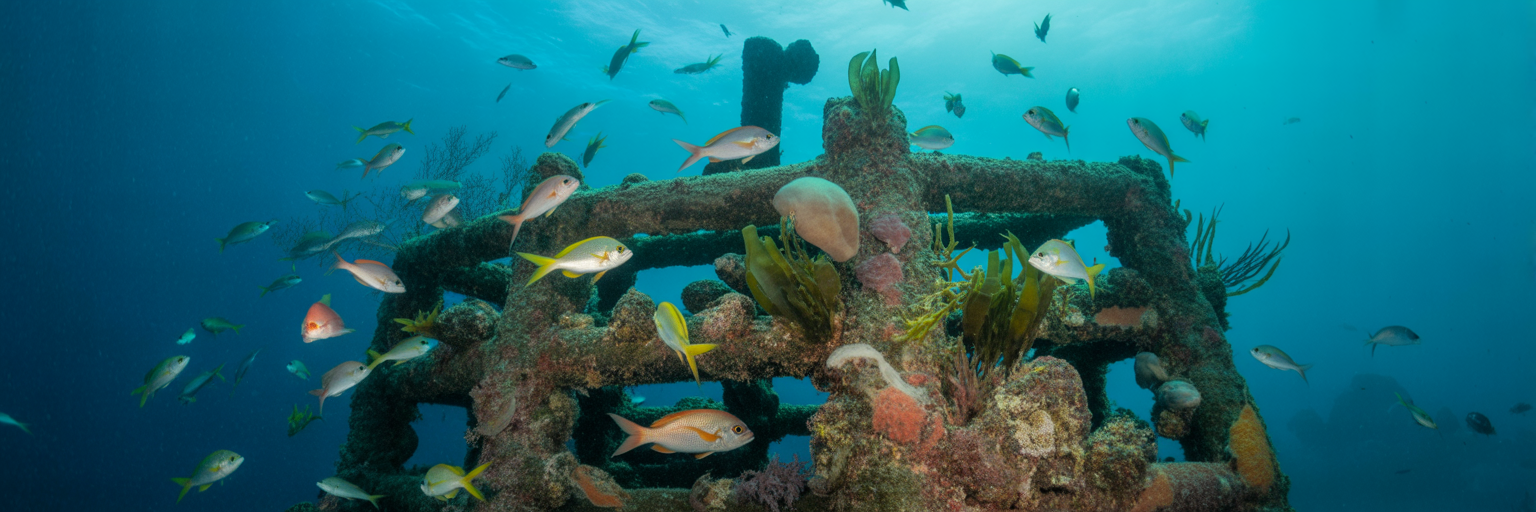
It is easy to view a license fee as just another vacation expense, but it is much more than that. Your purchase is a direct investment in the future of the world-class fishery you are here to enjoy. It is not a tax; it is a contribution to conservation.
The funds generated from license sales support the FWC’s Division of Marine Fisheries Management. This is what your money accomplishes in tangible terms:
- Fisheries Science and Research: Your fee funds the scientists who conduct stock assessments, ensuring that harvest regulations are based on sound data to keep fish populations healthy.
- Data Collection: It pays for programs that gather information from anglers like you, which helps inform management decisions and improve fishing for everyone.
- Habitat Restoration and Creation: Your license fee helps build new fishing spots. It funds the creation and maintenance of artificial reefs that attract baitfish, grouper, snapper, and other species.
- Law Enforcement: A portion of the funds supports the FWC officers who patrol the waters, protecting the resource from poachers and ensuring a fair and sustainable fishery for all who follow the rules.
By buying a license, you become a partner in the stewardship of Florida’s legendary fisheries. Your contribution helps ensure that the incredible fishing you are about to experience will be here for generations to come. Tight lines.