

There is nothing more frustrating than burning fuel all day offshore, staring at a spread of lures that might as well be invisible. We have all been there. The solution is not to just throw more lures in the water. A successful day chasing dolphin comes from a deliberate system, not a random assortment of tackle. The best spreads of trolling lures for Florida mahi are designed to mimic a panicked school of baitfish, an offer a hungry mahi simply cannot refuse. This system approach is the foundation of all successful mahi mahi fishing.
Everything starts with your trolling speed. Your target is a baseline of 6 to 8 knots. This is the fundamental variable that dictates every other choice you make, from lure selection to placement. Think of your spread as a wide net of opportunity. You are creating a presentation that covers different depths and distances from the boat to locate fish efficiently. Before you even think about what color skirt to run, you need to adopt this strategic mindset. Your goal is to present a cohesive, irresistible picture of a meal on the run.
The Foundation of Trolling Lures for Florida Mahi
A successful mahi trolling spread is a coordinated system, not just a collection of lures. The goal is to create a presentation that imitates a panicked school of baitfish, an offer a hungry mahi cannot refuse. This starts with a baseline trolling speed of 6 to 8 knots, the fundamental variable that all other choices depend on. Your spread should create a wide net of opportunity, covering different depths and distances to locate fish. This strategic mindset is the first step. You are not just dragging plastic through the water. You are hunting.
The commotion begins right behind the boat in the prop wash. This turbulent water is your friend. It hides your leader and makes lures appear frantic. Further back, in the cleaner water outside the wake, your presentation needs to be more natural and convincing. Each lure in your spread has a specific job. Some are there to make noise and draw attention. Others are there to look like an easy, natural meal. Understanding these roles is what turns a good day into a great one. It is about building a complete picture that convinces fish to commit.
Essential Lure Styles for Your Mahi Arsenal
Your mahi trolling bag needs a versatile lineup. Having the right lure for the right position and condition is non-negotiable. This is not about owning every lure on the market. It is about carrying a proven arsenal that covers the key presentations mahi respond to. Each style has a specific job, and knowing when to deploy them is what fills the fish box.
Chuggers and Poppers: Making a Ruckus
These are your attention grabbers. A chugger or popper with a concave head is designed to do one thing: create surface commotion. They splash, spit, and smoke, simulating a fleeing baitfish in distress. Their job is to make a scene and draw curious mahi into the spread. This makes them perfect for the turbulent water of the prop wash on your flat lines. On calm, glassy days when the surface is dead, a chugger can be the trigger that ignites a bite by creating its own excitement.
Skirted Lures and Ballyhoo Combos: The Natural Look
These are the workhorses of any serious mahi spread. A skirted lure like a Sea Witch or Ilander paired with a fresh or brined ballyhoo is the most natural presentation you can offer. The skirt adds color and protects the bait, while the ballyhoo provides the scent and lifelike swimming action that mahi find irresistible. These combos are ideal for your outrigger positions, where they can run in the clean water outside the wake and present a perfect silhouette of a real meal.
Jet and Bullet Heads: The Straight Runners
When you need a lure that runs true in any condition, you reach for a jet or bullet head. Their hydrodynamic design keeps them in the water, creating a tempting bubble trail that fish lock onto. They are the best lures for dolphin fish when trolling speeds need to be a bit higher or when the seas get choppy, as their shape prevents them from blowing out of the water. This straight running characteristic makes them the go to choice for the long shotgun position, where they can run far behind the boat without wandering.
Cedar Plugs: The Timeless Classic
Treat this lure with the respect it deserves. The cedar plug is a legend for a reason. It is a must have in any offshore trolling box. Its simple, unpainted wood design and erratic, darting action drive mahi crazy. It does not look like much in your hand, but in the water, it perfectly mimics a disoriented baitfish. This simple and effective design has been putting fish in the boat for generations and continues to outperform lures that cost ten times as much.
Your basic mahi trolling bag should always contain:
- A few chuggers for noise and attraction.
- A variety of blue and white or pink and white skirted lures.
- At least one high speed jet head for the shotgun.
- A natural cedar plug, because it always works.
Building Your Ideal Mahi Trolling Spread
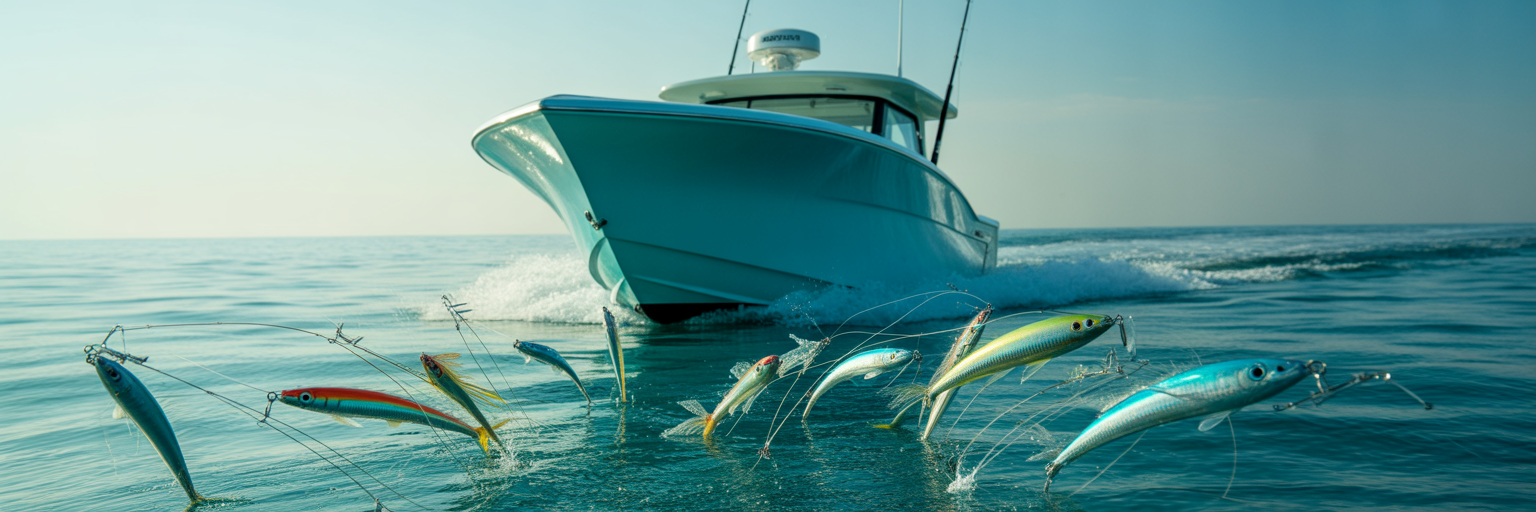
Now we get to the tactical core of how to troll for mahi mahi. Setting up a standard four to six line spread is about precision and purpose. The most important rule is to stagger your lines to prevent a tangled nightmare, especially when you make a turn. Each position in the spread has a role, and placing the right lure in the right spot is what creates a cohesive, productive presentation. A well designed mahi trolling spread setup is your greatest asset offshore.
The Flat Lines: Close and Loud
Your flat lines run directly from the rod tips, positioned right in the prop wash about 30 to 50 feet behind the boat. This is the zone for commotion. The turbulence from the props obscures leaders and makes lures look like they are fleeing in panic. This is the perfect spot for a loud chugger or a durable skirted ballyhoo that can handle the rough water. The goal here is to make noise and draw fish in close.
The Rigger Lines: Wide and Natural
Outriggers are essential for getting your lures into the clean, undisturbed water outside the wake. These lines should be set at staggered distances, typically from 75 to 125 feet back. This is the prime real estate for your most natural presentations. A perfectly rigged skirted ballyhoo or a high quality Ilander style lure running in this clean water presents a clear, tempting target for any mahi patrolling the area.
The Shotgun: Long and Lonely
The shotgun is the secret weapon of the spread. This is a single line run straight down the center, way back behind everything else, often 150 feet or more. This lure often tempts the largest, wariest fish that might be hesitant to approach the boat. A small jet head, a streamlined bullet lure, or the classic cedar plug is the ideal choice for this position. It is the lonely straggler that a big bull mahi cannot resist.
Choosing Colors: Contrast is Key
Mahi are attracted to bright, high contrast colors. You can never go wrong with combinations like pink and white, blue and white, and chartreuse and green. The best strategy is to run a mix of colors across your spread. Pay close attention to which color is getting hit. If the pink and white lure on the long rigger gets eaten twice, it is a good idea to switch another lure to that same color. Let the fish tell you what they want.
As highlighted in guides from experts like The Tackle Room, using a staggered formation with proven distances is key to covering water effectively and preventing tangles.
| Position | Distance from Boat | Recommended Lure Type | Purpose |
|---|---|---|---|
| Short Flat (Port) | 30-40 feet | Chugger / Popper | Loud, splashy attractor in prop wash |
| Long Flat (Starboard) | 50-60 feet | Skirted Ballyhoo | Natural presentation in turbulent water |
| Short Rigger (Port) | 75-90 feet | Medium Skirted Lure (e.g., Ilander) | Runs in clean water with a visible profile |
| Long Rigger (Starboard) | 110-125 feet | Skirted Ballyhoo / Sea Witch | Natural swimming action further from the boat |
| Short Shotgun (Center) | 150-200 feet | Jet Head / Bullet Lure | Straight-running lure with bubble trail |
| Long Shotgun (Center) | 250+ feet | Natural Cedar Plug | Erratic, deep-running lure for wary fish |
Note: These distances are a starting point. Adjust based on sea conditions and boat traffic. The key is to keep lures staggered to cover a wide area and prevent tangles during turns.
Adjusting Your Spread for Water Conditions
The set it and forget it approach does not work offshore. A successful angler is constantly adapting. Your spread must be actively managed based on the sea state, and this is a core component of effective Florida offshore trolling tactics. The ocean is a dynamic environment, and your presentation needs to reflect that. Paying attention to how your lures are running and making small adjustments is what separates a lucky day from a consistently productive one.
Trolling in Calm, Glassy Seas
On those beautiful, calm days, you might need to create your own action. Consider bumping up your trolling speed towards 8 knots. On a flat surface, the extra speed helps your lures work properly and create a more enticing commotion. This is the time to deploy more aggressive chuggers and poppers. Their splashing and gurgling will create a disturbance that can attract fish from a long way off in the quiet conditions.
Tackling Choppy Water
When the seas pick up to two to four feet, your priority changes. The goal is to keep your lures in the water, not have them flying through the air on the back of every wave. Slow your speed down to around 6 knots. This is when heavier, streamlined lures become your best friends. Jet heads, bullet heads, and weighted skirted lures will dig in and run true despite the boat rocking. They stay in the strike zone and present a consistent target, which is critical in rougher water.
The main takeaway is a simple, actionable rule. Constantly watch your lures. If they look dead in the water and are not swimming correctly, speed up or switch to a lure with more built in action. If they are constantly blowing out of the wake, slow down or switch to something heavier that will stay planted.
Weed Line Tactics for Productive Trolling
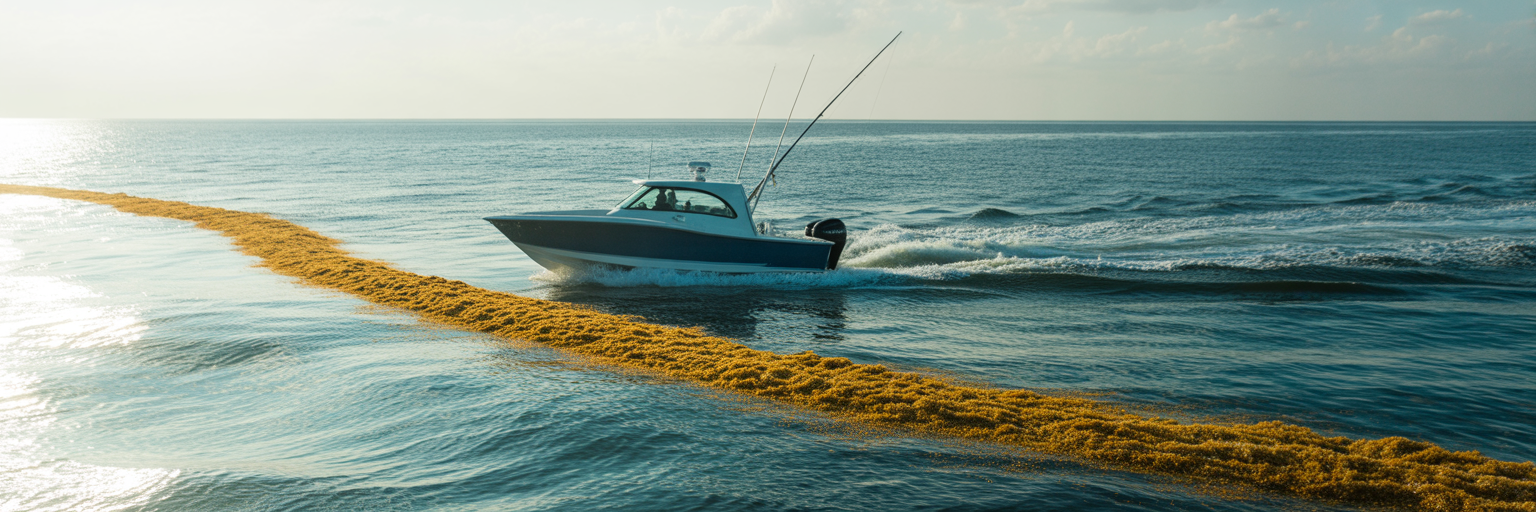
Let us talk about the most classic Florida mahi scenario: the weed line. These floating patches of sargassum are complete ecosystems. They provide shade, structure, and a buffet of baitfish, making them absolute mahi magnets. Your approach to mahi fishing weed lines needs to be methodical. The single most important tactic is to troll parallel to the weed line, not through it. This keeps your lures in the prime strike zone along the edge and saves you the constant headache of clearing grass from your hooks.
When you find a promising line, tighten up your spread. Bring your lures about 25 to 30 percent closer to the boat. This keeps your presentation focused and manageable as you work the productive edge. Do not just make one pass. Work the structure. Make multiple passes on the most promising sections, like a particularly thick patch, a current rip forming along the edge, or an area where you see floating debris mixed in. Troll one direction with your lures on the outside edge of the weeds, then turn around and troll back with them running along the inside edge.
Most importantly, use your eyes. Be constantly scanning for signs of life. Look for birds working the area, baitfish showering out of the water, or distinct color changes that signal where the mahi are likely holding. Active observation turns a random troll into a calculated hunt.
The Art of the Teaser and Pitch Bait
This is where we separate the beginners from the seasoned pros. These are the tactics that turn a decent day into an epic one. It is about creating opportunities and then capitalizing on them with ruthless efficiency. A teaser and a ready pitch bait are the keys to unlocking the full potential of a hot mahi bite.
Drawing Them In with Teasers
A teaser is not meant to catch fish. It is a big, flashy advertisement designed to attract them. Its job is to create the illusion of a large school of bait being chased, drawing curious and competitive mahi into your spread of hooked lures. Common types like squid daisy chains or spreader bars create a massive visual profile. Run one from a stern cleat so it splashes just ahead of your closest flat line lure. It is the billboard that says, “easy meal this way.”
The Pitch Bait: Turning One Fish into Ten
This is the most critical tactic for schooling mahi. You must have a pitch bait rod rigged, ready, and within arm’s reach at all times. A simple spinning rod with a bucktail jig or a rigged ballyhoo is perfect. Here is the single most important rule: when a fish is hooked, leave it in the water next to the boat. This is not just a theory. As guides from the Florida Keys to the Carolinas know, mahi are intensely competitive feeders. The hooked fish acts as a live decoy, keeping its entire school fired up and circling right behind your boat.
This is the moment of truth. With the school lit up, you grab the pitch bait rod and cast to the other fish. This is how you turn a single hookup into five, ten, or even more fish in the box. It is essential for capitalizing on a school of “bailers,” the smaller but plentiful schoolie sized mahi. That first hooked fish is your ticket to loading the boat, but only if you are ready with a pitch bait to make it count.