
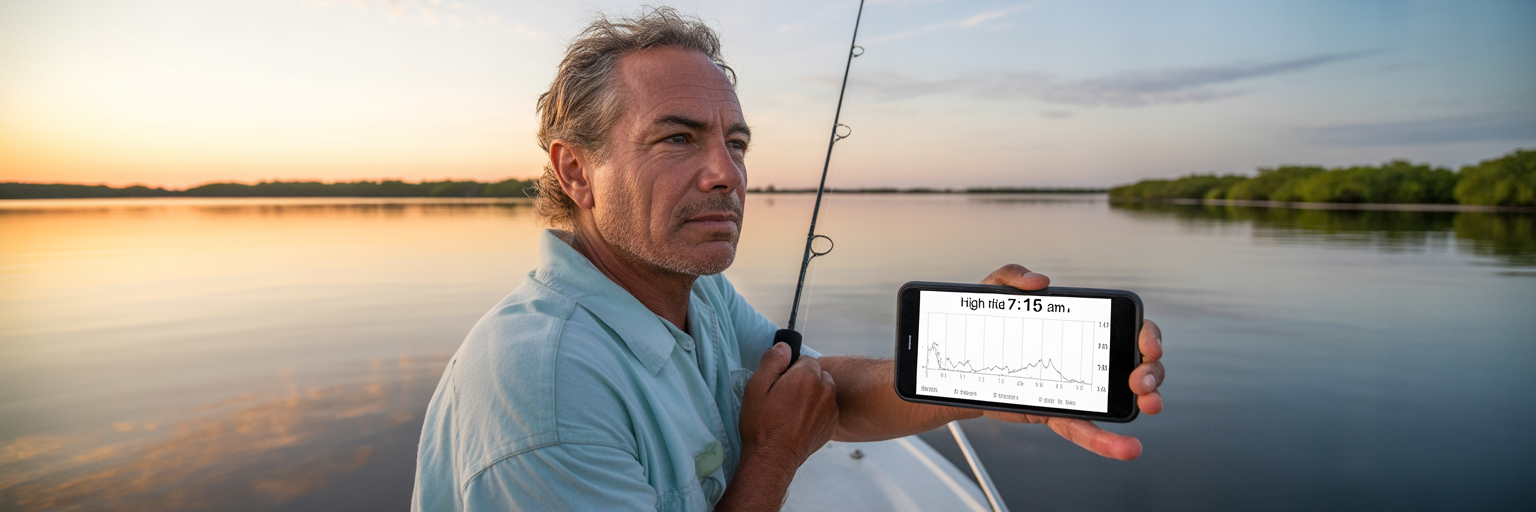
Every Florida angler knows the feeling. You have a free morning, the weather looks decent, but the big question remains: when is the absolute best time to be on the water? We often rely on gut feelings, but to consistently improve your catch rate, you need a better plan. Using Florida fishing tide charts combined with solunar tables moves you from guessing to strategizing. These are two distinct, powerful forces that dictate when fish feed. The most explosive bites often happen when strong tidal movement aligns with a predicted solunar feeding period.
Let’s be clear, this is not a magic bullet. It is a strategic method for stacking the odds in your favor. A sudden squall, muddy water, or a complete lack of bait can override any forecast. Think of this guide as your playbook. We will first break down the power of the tide, then cover solunar theory, and finally show you exactly how to combine them to pinpoint peak feeding windows. Most importantly, we will cover how to adapt your plan based on what you actually see on the water.
Tide Movement: The Primary Feeding Trigger
For inshore and nearshore fishing in Florida, tidal movement is the undisputed king. It is the single most important factor driving fish to feed. Forget everything else for a moment and focus on this one concept. Moving water creates opportunity for predators. It dictates where they position themselves and when they actively hunt.
Why Moving Water is Everything
Think of a strong tide as a conveyor belt for bait. As water flows through passes, around points, and over flats, it carries shrimp, crabs, and baitfish with it. Gamefish are smart. They will not waste energy chasing food all day. Instead, they find ambush points like channel edges, dock pilings, or oyster bars and let the current deliver their meals directly to them. No moving water means no conveyor belt, and the bite often shuts down completely.
The Four Tide Phases: Incoming, Outgoing, and the Unproductive Slack
A full tide cycle has four distinct phases, but only two are prime for fishing. The incoming (or flood) tide brings clean, cool water in from the ocean, pushing bait onto shallow flats and into backwater creeks. This is when redfish and flounder often move into skinny water to forage. The outgoing (or ebb) tide pulls water out of the estuaries, flushing bait from the backcountry toward the inlets. This is the classic setup for snook fishing tide movement, as they stack up in passes and along channel edges to intercept the buffet line flowing out to sea. The other two phases, high slack and low slack, are periods of minimal water movement. These are typically the least productive times to fish and are best used for relocating or re-rigging.
Spring Tides vs. Neap Tides: Planning for Intensity
Not all tides are created equal. The intensity of the current is dictated by the moon phase. Spring tides, which occur during the new and full moons, produce the strongest currents and the biggest tidal swings. This supercharged conveyor belt often triggers the most aggressive feeding activity of the month. In contrast, neap tides, occurring during the quarter moons, have the weakest currents and smallest tidal ranges. While fish still feed, the action is often less intense and concentrated. When reading a tide chart, focus your efforts on the two hours surrounding the high and low points during a strong spring tide. This is when the current is typically running its hardest, whether you are fishing channel edges in Tampa Bay or the mouth of a creek near Jacksonville.
Understanding Solunar Theory for Anglers
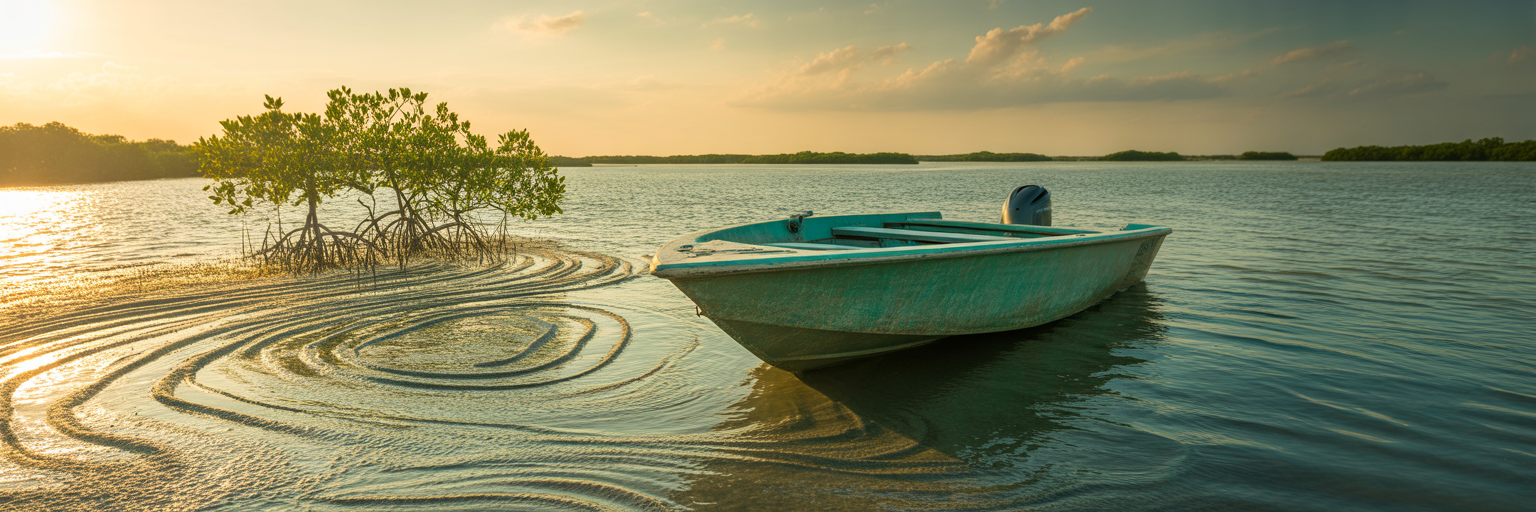
With the tide as your foundation, the next layer to add is solunar theory. The core idea of solunar fishing theory explained is that the moon’s position influences fish and wildlife activity. While the tide is the primary driver, solunar periods can pinpoint smaller windows of heightened feeding activity within a larger tidal phase. It is a tool to refine your timing, not replace your reliance on moving water.
Major vs. Minor Periods: What You Need to Know
Solunar tables identify two types of feeding periods. Major Periods are the most significant. They last for one to two hours and occur when the moon is directly overhead or on the opposite side of the earth (underfoot). This is when the moon’s gravitational pull is strongest. Minor Periods are shorter, often lasting 30 to 90 minutes, and coincide with moonrise and moonset. Think of these as secondary spikes in activity. While a Major Period is the prize, a Minor Period that aligns with a good tide is still a high-potential window that should not be ignored.
The Moon’s Role: Connecting Solunar to Tides
It is no coincidence that solunar theory works. The same lunar gravity that drives the tides is what the theory is based on. This is why the predictions often align with what experienced anglers have observed for generations. The key is to view these periods as a potential activity spike, not a guarantee of a wide-open bite. When you learn how to read solunar tables, either through a dedicated app or a fishing website, look at the predicted times. Then, cross-reference them with your tide chart. A Major Period during a dead slack tide is far less promising than a Minor Period that falls right in the middle of a strong outgoing tide.
Finding the Overlap for Peak Bite Windows
This is where the plan comes together. By cross-referencing your tide chart with a solunar table, you can identify the highest-probability windows for a trip. This is how you find the absolute best time to fish in Florida based on data, not just luck. Your goal is to find the moments when multiple positive factors align.
The ‘Golden Hour’ Formula: Tide + Solunar + Time of Day
The ideal scenario, the true “golden hour” of fishing, is when a Major solunar period overlaps with the strongest part of an incoming or outgoing tide. If this happens during a spring tide, the potential is even greater. Add one more bonus factor: time of day. The low-light conditions of dawn and dusk naturally encourage predators to hunt more actively. When you can stack a strong tide, a Major period, and the first or last hour of daylight, you have created the perfect recipe for an aggressive bite.
A Step-by-Step Planning Example
Let’s make this practical. Imagine you are planning a trip to Destin’s East Pass.
1. You check the tide chart and see a strong outgoing tide scheduled from 4:00 PM to 7:00 PM.
2. You then check the solunar table, which shows a Major period from 5:15 PM to 6:30 PM.
3. That 75-minute window, from 5:15 PM to 6:30 PM, is your prime target. This is when the conveyor belt of bait is running at full speed, and the moon’s position is signaling a peak feeding time.
Of course, to do this effectively, you need to be confident in reading fishing tide charts to identify the strongest current. You can use integrated fishing apps or go straight to the source with resources like the official NOAA’s Tides & Currents website, which provides the raw data for the entire Florida coast.
| Time Slot | Tide & Solunar Event | Angler Action & Expectation |
|---|---|---|
| 3:30 PM – 4:30 PM | Outgoing tide begins, current building. | Position the boat. Start with search baits. Fish are beginning to stage. |
| 4:30 PM – 5:15 PM | Strong outgoing tide. | Bite should be picking up. Focus on ambush points and current seams. |
| 5:15 PM – 6:30 PM | PEAK WINDOW: Strong outgoing tide + Major Solunar Period. | This is the target window. Expect the most aggressive feeding. Use your most productive lures. |
| 6:30 PM – 7:30 PM | Outgoing tide slowing. Sunset approaching. | Bite may continue due to low light but will taper as current dies. |
| 7:30 PM onwards | Slack tide. | Bite will likely shut down. Time to head in. |
When the Forecast and Reality Collide
You have done your homework. The tide and solunar charts align perfectly. You get to the spot, and nothing happens. This is the critical reality check every angler faces. A perfect forecast on paper means nothing if the on-the-water conditions are wrong. Learning to read these conditions and adapt is what separates consistently successful anglers from the rest.
Wind: The Tide Killer
Wind is the most common culprit for ruining a well-laid plan. A strong onshore wind blowing against an outgoing tide can effectively “stand up” the water, slowing or even stopping the current. The conveyor belt shuts down. Conversely, a hard offshore wind during a low tide can blow all the water off a flat, leaving it high and dry hours before the chart says it should be. Always check the wind forecast and be prepared for it to alter the predicted tide times and strength.
Water Conditions: Clarity, Temperature, and Pressure
Beyond wind, other factors can shut down a bite. A heavy rainstorm can turn a clear flat into chocolate milk, making it impossible for sight-feeders like redfish to hunt. A sudden cold front can cause water temperatures to plummet, making fish lethargic even on a perfect tide. Barometric pressure also plays a role. A falling barometer, often ahead of a storm, can trigger aggressive feeding. A high, steady barometer after a front passes can give fish a classic case of lockjaw. Your plan is a starting point, but your eyes are the final judge.
The Ultimate Trump Card: Finding the Bait
This is the most important rule in fishing: predators follow the food. You can have the perfect tide, a Major solunar period, and beautiful water, but if there is no bait, there will be no gamefish. When you arrive at your spot, take a minute to look and listen. Do you see mullet jumping? Are glass minnows showering on the surface? Are birds diving? These are the signs of life you are looking for. If you arrive during your “perfect” window and the area is dead, you must be willing to abandon the plan and go find the bait.
Prioritizing Your Plan: Tide vs. Solunar
With two powerful tools at your disposal, it is easy to get confused. The hierarchy, however, is simple and non-negotiable for most Florida fishing. Your inshore fishing tide strategy must always start with the tide. Moving water is a physical requirement that creates feeding opportunities. A solunar period is a potential enhancer of that opportunity.
Rule #1 is that the tide is king. If you are forced to choose between a strong outgoing tide with no solunar activity, or a Major solunar period during a dead slack tide, you choose the moving water every single time. The tide opens the restaurant; the solunar period might signal the dinner rush.
The main exception to this rule is often found in deep, open water. When offshore fishing for pelagics like mahi, tuna, or sailfish, where tidal current is less of a structural driver, a Major solunar period can be a more significant trigger, especially when it aligns with dawn or dusk. For the vast majority of coastal anglers, however, the tide comes first.
Here is a simple decision-making framework:
1. Find the moving water on your tide chart first.
2. Look for a solunar Major or Minor period that overlaps within that window.
3. Check the real-world conditions: wind, water clarity, and especially signs of bait.
4. Adjust your plan and expectations based on what you see, not just what the charts say.
Putting It All Together: A Florida Angler’s Log
No chart, app, or theory can replace your own direct knowledge of the waters you fish. The ultimate tool for mastering timing is personal observation, and the best way to harness it is by keeping a simple fishing log. Over time, this log will reveal specific patterns for your spots that no general theory can provide.
For every trip, record these key data points:
- Date and Location: Be specific, down to the flat or channel marker.
- Tide Phase: Incoming or outgoing, and note if it was a spring or neap tide.
- Moon Phase: Full, new, or quarter.
- Solunar Period: Did your bite window overlap with a Major or Minor?
- Wind Speed & Direction: How did it affect the tide?
- Water Clarity & Temperature: Note any recent changes.
- Barometric Pressure: Rising, falling, or steady.
- What You Caught: Just as important, note when and where you did not get bites.
After a season of logging this information, you will start to see clear patterns. You might discover that a certain creek mouth only fires on the last hour of the outgoing tide during a new moon, regardless of what the solunar table says. This personal data, built from your own experiences with Florida fishing tide charts and on-the-water observation, becomes your most valuable asset. By combining data with intelligence, you stop being a hopeful angler and become a strategic one.