
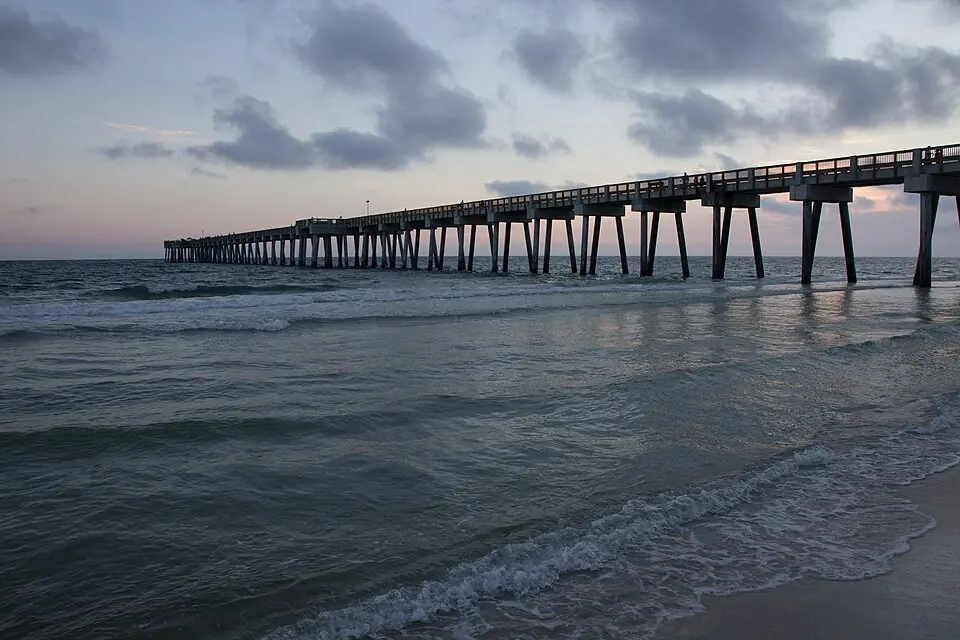
Location photograph: Fishing pier extending into the Gulf at Panama City Beach. Photo: Scott Long. CC BY 3.0. Image source. Resized and converted to WebP.
Panama City Beach fishing gives shore anglers several distinct choices. You can fish a permitted open beach, use a managed fishing pier, or visit St. Andrews State Park. The best choice depends on access, wind, crowds, and the tackle you can use comfortably.
Pick a starting point with real parking
The local tourism authority identifies public parking options at Russell-Fields City Pier, M.B. Miller County Pier, Rick Seltzer Park, and St. Andrews State Park. These are useful planning landmarks, not a claim that fishing is allowed from every part of each beach.
Check the current operator or park rules before travelling. Pier admission and any license coverage are separate from simply parking nearby. State park hours and capacity notices also deserve a look.
Surf fishing rewards a small, well-placed bait
Start with shrimp pieces for whiting in the near trough. Pompano may take sand fleas or shrimp when they are using the beach. A 9- to 10-foot rod and a 4000- to 5000-size reel cover a basic surf approach.
You do not have to cast beyond every wave. Test different distances and keep the bait compact. If the sinker rolls down the beach, retrieve before the hook reaches another person's space.
Fish to recognize before you cast
Two practical sandy-surf targets. Their presence varies with conditions and season.


A pier changes the fishing and the landing
On a fishing pier, ask what has been caught recently and where anglers are working. A smaller rod may be easier to use than a long surf outfit, depending on the presentation. Keep casts inside clear lanes and avoid crossing lines.
Before fishing for anything large, arrange a suitable landing net or operator assistance. A rod is not a crane. Do not plan to lift a heavy fish by a thin leader from the water to the deck.
Use St. Andrews for a more varied park visit
The state park includes Gulf and lagoon settings, fishing facilities, and heavily used swimming areas. Follow the current signs and staff guidance. Rocks and pass water can look productive while also presenting sharp edges, strong current, and conflict with swimmers or divers.
Shell Island requires a separate transport plan. It is not somewhere to add casually after parking at a beach access. Check the return trip, supplies, and permission to carry tackle before leaving the mainland.
Keep the first day realistic
Choose one primary location and a nearby backup with confirmed access. Buy a modest amount of bait. After the first visit, you will know whether you want a longer surf session, a pier outing, or a guided boat trip. That is a better basis for buying equipment than trying to prepare for every fish in the Gulf.
Make the first purchase a small one
Buy enough bait for the chosen session and ask what has been working at that type of water. A beach report, a pier report, and an offshore report can all be accurate while recommending different tackle. Learn the location first, then decide whether another rod or a larger bait supply is worthwhile.
A starting tackle list for Panama City Beach
These are starting ranges, not a shopping requirement. Reel sizes vary by maker. Match the rod, line, and total casting weight, and adjust to the conditions you can safely fish.
| Tackle | Starting choice |
|---|---|
| Surf rod and reel | 9-10 ft spinning rod; 4000-5000 reel |
| Main line | 15-20 lb mono, or 20 lb braid with a suitable leader |
| Leader or bait rig | 20-30 lb mono for small-bait surf fishing |
| Bait and hook | Small shrimp piece or sand flea; roughly size 2 to 1/0 hook, matched to bait |
| Sinker | Only enough to hold; remain within the rod rating including bait weight |
| Pier alternative | 7-8 ft medium-heavy rod; 3000-4000 reel; 15-20 lb line. Ask the operator about the presentation and landing method |

Keep a measuring tool and pliers in the bag. Check current Florida Fish and Wildlife Conservation Commission license, season, size, and bag rules before keeping a catch. Access permission and a fishing license are separate requirements.
Access information checked September 24, 2026. Park notices, construction, weather, and local rules can change. Confirm the chosen entrance before travelling.