

Forget the sunny forecast and the 9 a.m. start time you prefer. The most important factor for your charter’s success was decided by the moon weeks ago. For anglers planning to book one of the many Florida fishing charters available, understanding this simple truth is the first step toward a bent rod. Moving water is the engine that drives the entire coastal ecosystem. It is the single most critical element for a productive day.
Why Moving Water Is Everything in Florida Fishing
For nearly all saltwater species in Florida, current is the dinner bell. It is a conveyor belt for food that triggers predictable feeding patterns. Too many anglers make the mistake of booking a trip based on personal convenience, only to find themselves casting into dead water. The fish are there, but they have no reason to eat. To catch more fish, you must think like a fish, and that means prioritizing the tide chart over your personal schedule.
This period of activity is the feeding window. When the current starts moving, the buffet opens. This flow disorients baitfish like pilchards, mullet, and shrimp, flushing them from the safety of mangroves, oyster bars, and grass flats. This makes them easy targets for predators waiting in ambush. Your guide knows exactly where these ambush points are, but they are only effective when the current is delivering the meal.
Consider two scenarios. On a beautiful, calm, sunny day with a dead slack tide, the water might be crystal clear, but the bite is nonexistent because nothing is moving. Contrast that with an overcast, choppy day with a strong outgoing tide. The conditions are less comfortable for the angler, but the fish are feeding aggressively. This is the core principle of Florida tide fishing: productive conditions always trump pleasant aesthetics.
Game fish like snook, redfish, and tarpon are masters of energy conservation. They use structure as ambush points, waiting for the current to bring them food. A snook will sit behind a dock piling, a redfish will stage on the edge of a channel, and a tarpon will hold in a pass, all facing into the current. They are not actively hunting, they are waiting for the tide to do the work. Understanding this relationship is what separates a successful trip from a long boat ride.
Understanding Tides for Florida Fishing Charters
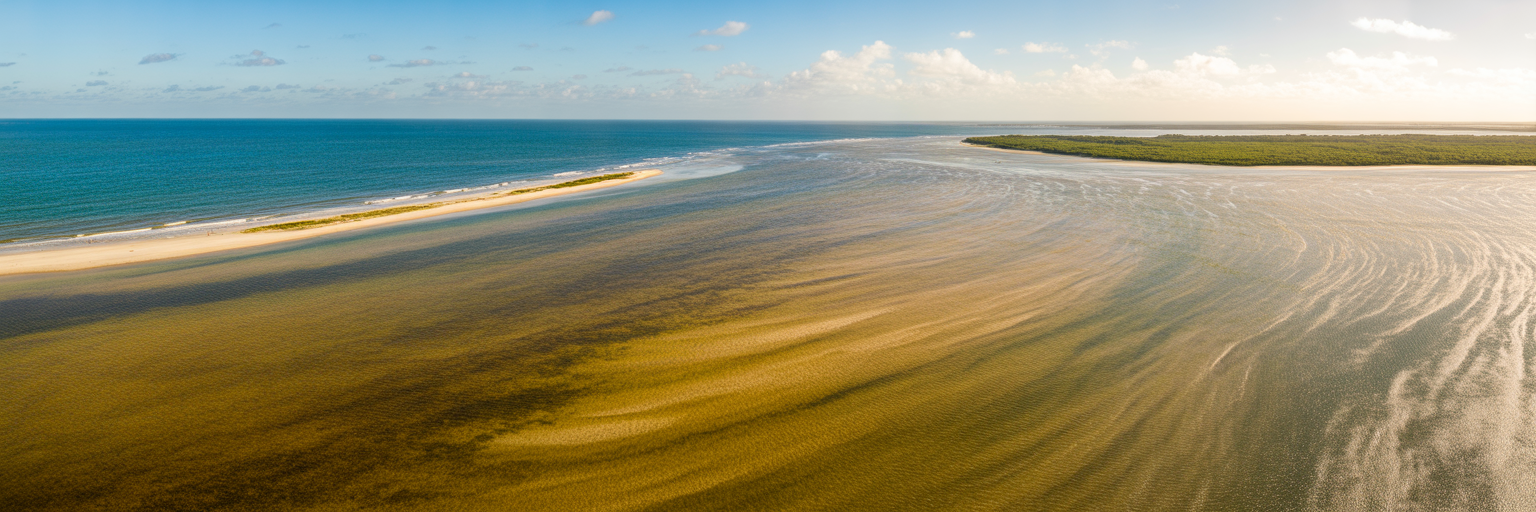
As an angler, you don’t need a degree in oceanography, but you do need to know the basics. The tide cycle has four primary stages, and each one presents a different opportunity or challenge. A good guide builds their entire game plan around these stages.
The four stages are incoming (flood), outgoing (ebb), high slack, and low slack. An incoming tide pushes clean ocean water into the bays and onto the flats. An outgoing tide pulls water, often tannin-stained from backwater creeks, back toward the ocean. High and low slack are the brief periods of inactivity at the peak of each tide when the water stops moving. For most inshore fishing, slack tides are the least productive times. The current has stopped, the bait is not being forced to move, and predators conserve energy.
A rule of thumb used by seasoned guides is the four-hour productive window. The best fishing often occurs from about an hour after a slack tide until an hour before the next one. This period captures the strongest water flow, both incoming and outgoing, and the most aggressive feeding behavior. Here is how different species react:
- Snook and Tarpon: These predators stack up at passes and creek mouths, facing into an outgoing tide to ambush bait being flushed out from the backcountry.
- Redfish: They use a strong incoming tide to push up onto shallow flats and tail for crabs and shrimp in water that was completely dry just hours before.
- Spotted Seatrout: They position themselves in sandy potholes within grass flats to ambush prey carried by the current, whether it is coming in or going out.
- Flounder: These ambush specialists lie camouflaged on the down-current side of oyster bars, waiting for an ebb tide to bring them an easy meal.
The intensity of the tide also matters. Strong spring tides, which occur during new and full moons, are like opening the floodgates. They create powerful currents and can trigger intense feeding periods. Weaker neap tides are like a slow-running faucet, with less water movement. To truly master this, you need to be proficient at reading fishing tide charts and understanding all their nuances.
Inshore vs. Offshore Tide Strategies
It is critical to understand that tides and currents affect inshore and offshore environments differently. Applying inshore logic to an offshore trip is a common mistake that leads to frustration. A guide’s strategy is tailored specifically to the environment they are fishing.
Inshore Fishing: The Tide is Your Map
For inshore fishing Florida, the tide is everything. It dictates physical access to fishing grounds. A few feet of water is the difference between a productive redfish flat and exposed mud. A captain’s boat choice, whether a technical poling skiff or a deeper V bay boat, is directly tied to the tidal plan for the day. You might need a high tide to reach redfish hiding deep in the mangroves, or you might need a low tide to concentrate snook and trout in deeper channels and potholes.
Offshore Fishing: The Current is Your Highway
For offshore fishing Florida, coastal tides play a much smaller role. Here, large-scale ocean currents like the Gulf Stream and its eddies are the primary drivers. These currents are massive highways for migrating pelagic species like mahi, tuna, and sailfish. The focus offshore is not on water depth but on finding where these currents create favorable conditions, such as temperature breaks, color changes, and weed lines that concentrate bait.
The Connection: Where Coastal Tides Meet the Ocean
The two worlds connect at the inlets and passes. A strong outgoing tide from a major pass, like Boca Grande on the Gulf Coast or a Jacksonville inlet on the Atlantic, pushes a plume of nutrient-rich water and baitfish for miles offshore. This creates a visible “rip” or color change that acts as a magnet for predators. Kingfish, cobia, and even sailfish will gather around these tidal plumes nearshore, feeding on the bait being washed out from the bays.
| Factor | Inshore Fishing Strategy | Offshore Fishing Strategy |
|---|---|---|
| Primary Driver | Tidal height and water level | Large-scale ocean currents (e.g., Gulf Stream) |
| Key Focus | Access to flats, creeks, and shorelines | Locating temperature breaks, weed lines, and bait schools |
| Tide’s Role | Dictates where and if you can fish | Influences how bait congregates around structure |
| Impact of Slack Tide | Often unproductive; fish become inactive | Less critical; focus is on larger current features |
| Captain’s Main Concern | Water depth and boat draft | Finding the offshore ‘edge’ or productive zone |
Essential Questions for Your Charter Captain
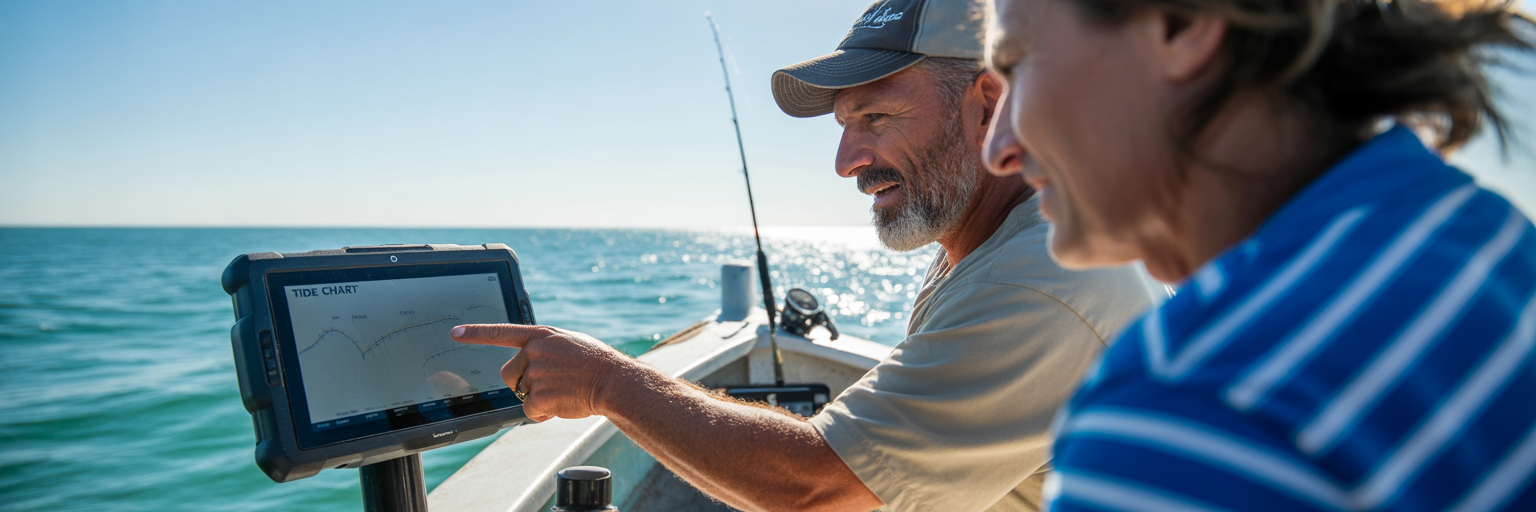
Having a productive conversation with potential Florida fishing guides is about building a partnership before you even book a fishing charter. These questions show you understand what matters and help you find a captain who has a clear, well-reasoned plan.
- ‘Which tide stage will our trip cover?’
This is the master question. It moves the conversation beyond simple logistics and into strategy. It shows you are focused on the most important factor and prompts a discussion about the day’s game plan. - ‘How does that tide affect our primary target species?’
This question pushes for specifics. A good answer sounds like, ‘We’ll be fishing the last two hours of the outgoing tide, which pulls bait out of the creeks. That’s prime time for snook to be waiting at the mouths.’ A vague answer is a red flag. - ‘How do you adjust for wind-driven water changes?’
This is an advanced question that signals you understand Florida’s dynamic weather. A strong onshore wind can trap water in a bay, negating a predicted low tide. A knowledgeable captain will always have a Plan B for these situations. - ‘What is your weather cancellation policy, and can I get it in writing?’
This is crucial for avoiding disputes. A reputable captain makes the final safety call based on conditions, not just a forecast. Your deposit should be rolled over to a new date or refunded if the captain cancels. Get this policy in writing. - ‘Based on the tide and conditions, what’s our best shot for consistent action versus a trophy fish?’
This question helps align expectations. It shows you are flexible and focused on having a great day on the water, not just chasing one specific outcome. It opens the door for the captain to suggest a more productive plan if conditions are not ideal for your primary target.
Beyond the Tide: Wind, Pressure, and Weather
The tide is the foundation of any good fishing plan, but other factors can amplify or diminish its effects. A great guide is constantly processing these variables to stay ahead of the fish.
Wind is the most immediate and powerful factor. A sustained 20-knot onshore wind can create a ‘wind-blown tide,’ stacking up water and creating an artificial high tide that floods areas unexpectedly. On the Gulf Coast, a strong west wind can keep water on the flats. Conversely, a hard offshore wind can ‘blow out’ a flat, leaving it high and dry even during a predicted mid-tide. This is common on the east coast with a strong west wind on places like the Mosquito Lagoon.
Barometric pressure is another key piece of the puzzle. The classic angler’s rule of thumb holds true: a steady or slowly falling barometer, often seen before a front arrives, typically signals active feeding. Fish become more aggressive. After the front passes, a rapidly rising barometer and clear, bluebird skies can lead to a tough bite, often called ‘lockjaw.’ Asking your captain, ‘How does the current pressure trend look for our trip?’ shows you are thinking on a deeper level.
Finally, always consider water temperature and clarity. A summer thunderstorm can dump heavy, cool rain into a backwater system. Even if the tide is perfect, the resulting muddy, fresh water can push fish out of the area entirely. Fishing is a dynamic puzzle. A perfect tide is a great start, but a savvy angler and a great guide are always watching the other pieces to make the right moves.
The Ultimate Florida Charter Booking Checklist
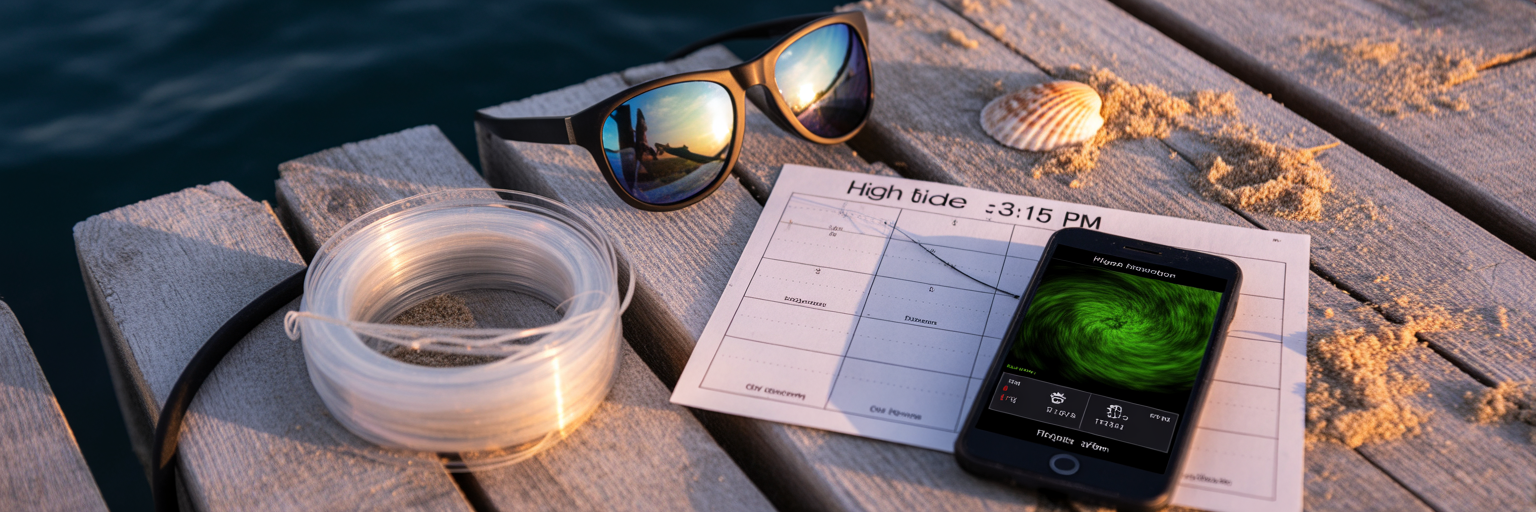
Use this checklist the day before or the morning of your trip to ensure you and your captain are perfectly aligned. This is your final confirmation that the plan is solid and expectations are realistic for your Florida fishing charters experience.
- Confirm the Tide and Time: Call or text the captain to re-confirm the exact tide stage for your launch time and location. Tides can vary by an hour or more just a few miles apart. You can cross-reference this with official data from the NOAA Tides & Currents portal.
- Verify Launch Site Accessibility: This is a pro-level question. Ask, ‘Is the ramp we’re using accessible at this tide?’ Some backcountry ramps become unusable mud flats at dead low tide.
- Match the Boat to the Zone: Verbally confirm the plan. ‘So we’re still planning to pole the flats for redfish in the skiff, right?’ This prevents a last-minute switch to a different boat or area that might not align with your original goal.
- Review the Final Weather Forecast: Discuss the latest wind, rain, and pressure forecast with the captain. Ask if it has changed their initial plan and what adjustments they are considering.
- Discuss the Itinerary and Backup Plan: Ask, ‘Based on the latest conditions, where are we likely to start?’ and ‘If that spot isn’t productive, what’s our Plan B?’ This confirms the captain is thinking strategically and has contingency plans.
- Set Realistic Species Expectations: This is the most important final check. Ask, ‘With today’s conditions, what species offer the best shot at consistent action?’ This aligns your hopes with reality and prevents disappointment if a specific trophy fish is not cooperating.
Setting Expectations for a Great Day on the Water
A successful charter is a partnership. The captain’s job is to navigate the conditions and put you on fish. Your job is to trust their expertise, be ready to cast, and enjoy the experience. It is important to differentiate between a ‘catching’ trip and a ‘fishing’ trip. Even with perfect planning, nature is unpredictable. A great day is about learning, seeing the ecosystem, and enjoying time on the water. Catching fish is the incredible bonus, not the sole measure of success.
View your captain as a teacher. Ask questions throughout the day. ‘Why did you choose this spot?’ ‘What are you looking for in the water?’ ‘Why that lure color?’ This transforms the charter from a simple transaction into a valuable, hands-on seminar that will make you a better angler on your own time.
Be open to your guide’s advice, especially when it comes to the ‘trophy hunting’ versus ‘action’ dilemma. On some days, the conditions might make targeting a single large tarpon a low-percentage gamble. A great guide will be honest about this and suggest a better plan, like targeting jack crevalle or Spanish mackerel for steady action and bent rods. Trusting that advice is the key to a fun, memorable day.
Ultimately, using your knowledge of tides and conditions is not about controlling the uncontrollable. It is about selecting the right guide, asking the right questions, and working together as a team to put the odds squarely in your favor for a productive and unforgettable day on the water.