
HookCurrent Florida fishing
Gag Grouper
Understand gag grouper identification, nursery habitat and spawning, with practical advice on bottom rigs, live bait, structure and responsible release.
Mycteroperca microlepis

A short distance to the rocks
The first moments of a gag grouper fight often decide the outcome. A fish can take a bait beside a ledge and retreat into cover before an angler removes the slack. Good positioning and ready tackle matter as much as bait choice.
Gag are one of Florida's important grouper species, but they should not be treated as interchangeable with red or black grouper. Their markings, habitat use and management rules need their own attention.
Recognize the markings before keeping a fish
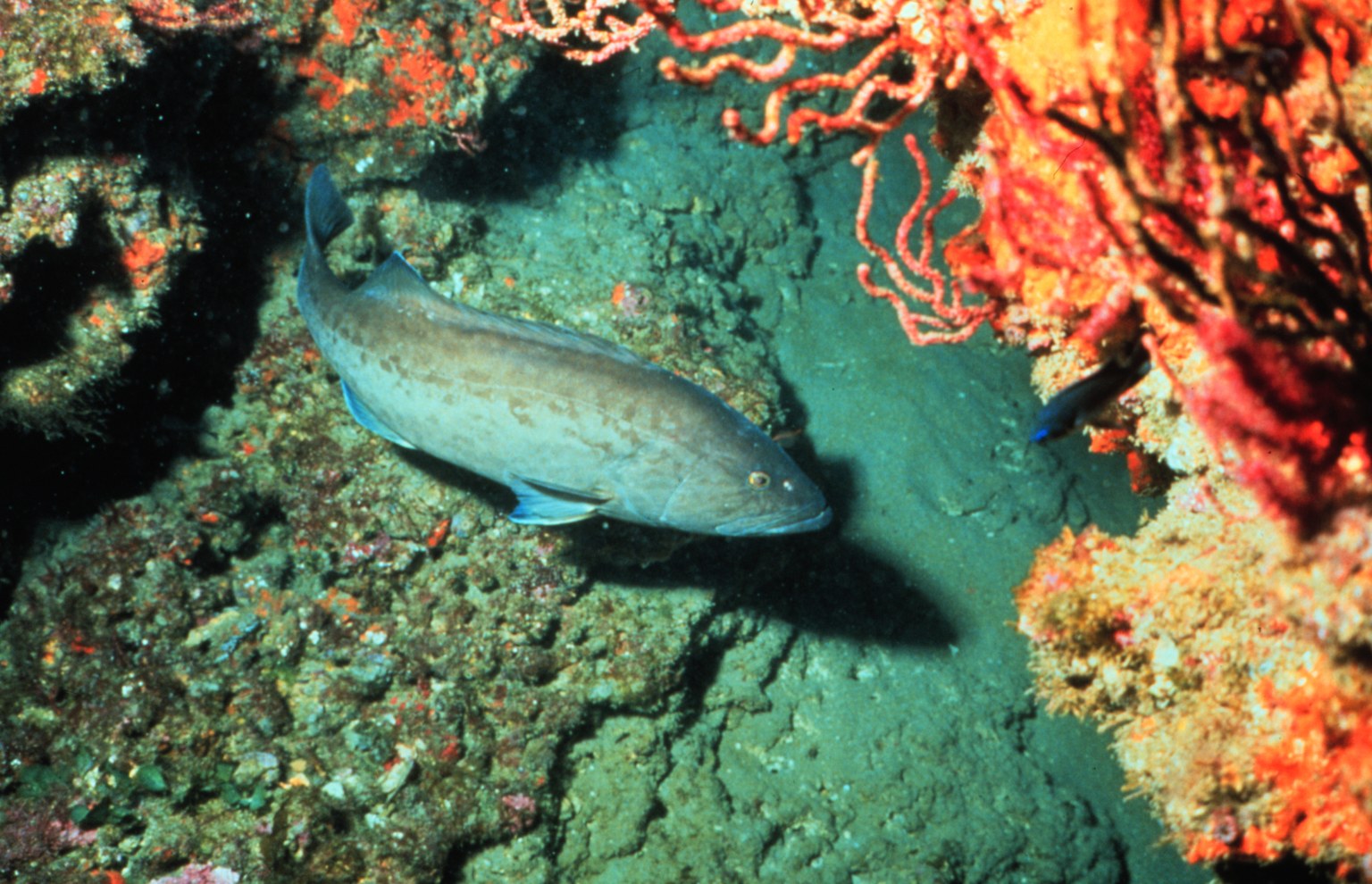
Mycteroperca microlepis usually has a brownish-gray body with irregular darker markings that can look like worms or uneven chains. Dark lines may radiate from the eyes. The fins are dark, sometimes with pale edges.
Black grouper are a frequent source of confusion. Their dark body blotches are generally more rectangular, and brassy spots can be visible. Gag also have a more pronounced serrated projection at the lower cheek edge, but that sharp feature is not something to explore with bare fingers.
Color alone changes with the fish and surroundings. Use several features together and consult a reliable identification guide when in doubt. The correct species name determines which harvest rules apply.
The nursery is different from the adult reef
Juvenile gag use estuaries and seagrass habitat. Larger fish move toward coastal and offshore structure, including rock ledges, reefs and drop-offs. A healthy offshore fishery therefore depends partly on shallow habitat far from the adult fishing grounds.
Adult fish use cover for shelter and feeding. The exact depth can vary by region, season and fish size. A broad claim that all gag live beyond one depth would miss their movement between different habitats.
When planning a trip, look for structure with nearby feeding water. A ledge edge, isolated rock or change in bottom can be productive without being the tallest feature on the chart.
Florida areas worth understanding
Gag fishing is familiar along Florida's Gulf coast, including the Big Bend and west-central region, with offshore opportunities elsewhere too. The distance to useful bottom varies greatly between ports.
Steinhatchee, Crystal River and the Tampa Bay region provide different approaches to Gulf habitat. Some trips focus on relatively shallow seasonal structure, while others require a longer offshore run. Local regulations and weather should shape the plan before selecting a target depth.
An old waypoint can still mark a rock while holding few fish. Observe bait, current and recent habitat conditions instead of assuming that a saved coordinate guarantees a catch.
Reproduction and seasonal travel
Gag begin adult life as females, and some later become males. Spawning occurs in groups offshore, with late winter and spring important in the region. Protecting the spawning population requires more than protecting only small fish.
Seasonal movements can change which depths and structures hold adults. Young fish entering nursery areas and mature fish gathering offshore are different stages of the same life cycle.
Fishing regulations can change in response to stock conditions. A traditional local season remembered from years ago is not a safe guide to current retention. Check the official rules close to departure.
What gag eat
Fish are important prey, with invertebrates also part of the diet. Live pinfish and other suitable local baitfish can be effective. Fresh dead bait and cut fish offer alternatives when live bait is difficult to obtain.
Choose a bait that fits the hook and can survive the presentation. A large bait poorly attached is less useful than a smaller one that reaches the ledge intact. Keep dead bait cold so it remains firm.
The bait needs to be near a feeding fish without becoming trapped deep inside its shelter. That small distinction explains why boat position and controlled line length are so important.
Build a rig around the structure
A conventional bottom outfit with an abrasion-resistant leader and appropriate single hook is a common starting point. Use the hook type required for the region and natural bait. Choose leader strength for rock contact and expected fish size.
Sinker weight should hold the bait where intended without making every drop lodge in the reef. Strong current may require a different drift or anchor position instead of an endless increase in lead.
Check knots, swivels and hook points before each series of drops. A frayed leader from the previous snag may fail at the next bite. Grouper fishing puts the weakest connection under load very quickly.
Anchor or drift with a purpose
Anchoring can keep bait beside a specific ledge when permitted and safe. Position upcurrent so the rig reaches the target. Avoid placing the anchor on living coral or inside protected habitat.
Drifting can search a broader patch of bottom. Monitor speed and retrieve before the rig drags through a dangerous snag. The boat operator and anglers should agree on when to drop and when to reel up.
If all lines angle sharply away, the bait location may be much farther from the boat than the sounder suggests. Resetting the drift can be more effective than assuming the fish stopped biting.
The bite and the first few turns
Stay ready with the rod in a useful position. When a fish takes a circle-hook bait, bring the line tight steadily. Then apply controlled pressure to move it away from the bottom.
Do not create slack while changing grip or reaching for a belt. Arrange the outfit and fighting position in advance. Those first few turns of the reel are often the best chance to gain distance from cover.
If a fish reaches a hole, avoid pulling beyond the safe load of the rod and line. Changes in pressure or boat angle may help, but rough bottom can cut tackle regardless. Never wrap heavy line around a hand while trying to break free.
Lures and trolling options
Deep-running plugs can cover suitable shallow structure where the method is legal and the route is safe. The lure must reach a useful depth without constantly digging into rock. Track the bottom and avoid abrupt shallow hazards.
Jigs and soft plastics can also work around feeding fish. Their value depends on keeping them near cover while still moving naturally. Use hooks and tackle strong enough for the expected strike and first run.
These methods do not remove the need to identify the catch or follow seasonal rules. A closed retention season still matters when a gag takes a lure intended for another species.
Release planning belongs before the drop
Have a measuring tool, dehooker and descending device ready. Deep-caught gag can experience pressure-related injury, and a fish floating at the surface may need help returning to depth.
Keep handling brief and avoid squeezing the body. Support the fish if it must be lifted, and use an appropriate landing method for release. A gaff is not suitable for an unwanted fish.
If sharks repeatedly take hooked grouper, change locations. Continuing the same pattern creates losses even if every angler intended to release fish responsibly.
Current rules and a useful trip record
Gag seasons and limits differ by region and jurisdiction and can be restrictive. Verify Gulf or Atlantic rules, state or federal waters and any special management area that applies to the trip.
Record bottom type, water depth, current and whether fish were on the upcurrent edge or inside the structure. Those details help explain why a location worked and make the next trip more deliberate.
Gag grouper questions
Are gag and black grouper the same fish?
No. They are separate species. Marking shape and cheek features help distinguish them, and their rules must be checked separately.
Why do young gag occur in grass flats?
Shallow estuary habitat serves as nursery ground. Adults use different habitat as they grow and move toward more substantial structure.
Must I use live bait?
No. Fresh dead bait, cut bait and suitable lures can catch gag. Presentation beside productive cover remains important.
Why does the line break immediately after a bite?
The fish may reach rough structure, or a damaged knot or leader may fail. Inspect the rig and improve the fighting angle before the next drop.
Can a familiar season date be trusted every year?
No. Gag management can change. Confirm the current opening, closure and limits from the official source before retaining fish.
What if a released fish cannot swim down?
Use a suitable descending device and the recommended release procedure. Prepare the equipment before fishing rather than searching for it with a fish on deck.
Match your approach to the water
| What you find | An option to try | The detail that matters |
|---|---|---|
| Ledge with fish near its lip | Live local baitfish | Manage slack so pressure begins before the fish retreats. |
| Broader shallow structure | Suitable deep-running plug | Monitor depth and avoid dragging through dangerous rock. |
| A repeated break-off angle | Repositioned boat and fresh leader | Change the route away from cover instead of repeating the same loss. |
Plan a gag grouper trip
Local access guides for gag grouper trip planning: Steinhatchee, Crystal River, Tampa.
Tides and weather · Florida fishing charters
Read the current FWC rules for gag grouper.
Rules review: October 4, 2026.
Research and photograph credits · All fish species · Return to the beginning