
HookCurrent Florida fishing
Tripletail
Spot Florida tripletail around floating cover, understand their feeding and seasonal movements, and learn quiet approaches, bait placement and landing tactics.
Lobotes surinamensis
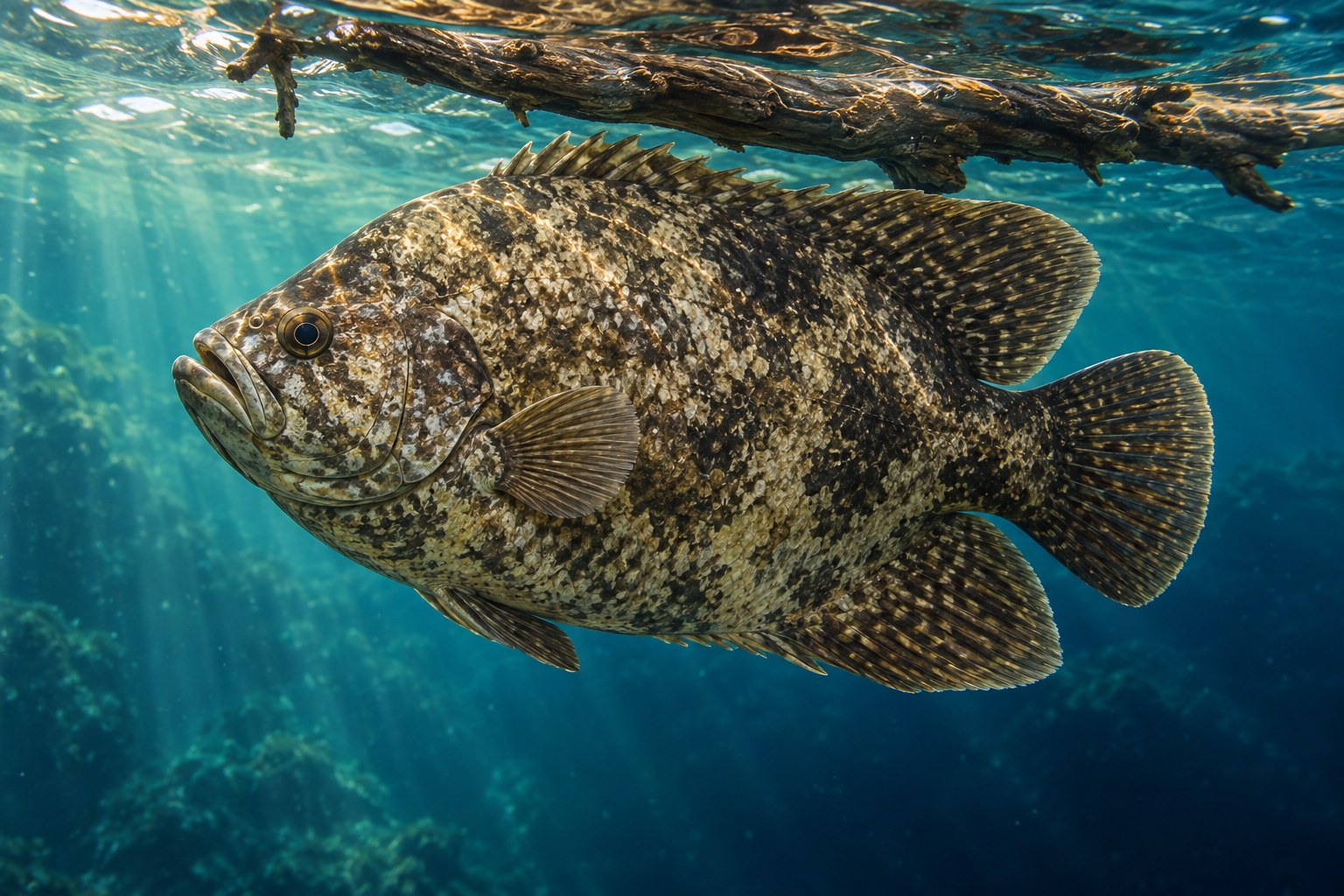
Look twice at the shape beside the buoy
What looks like a brown leaf or a patch of weed can be a tripletail resting near the surface. Its unusual posture is part of what makes this fish so interesting. An angler can pass within casting distance without realizing a fish is there.
Tripletail fishing rewards a careful search and a deliberate first presentation. Once a fish is spotted, the task changes from covering water to placing a bait close enough to be noticed without alarming it.
Why it appears to have three tails
Lobotes surinamensis has a deep, flattened body. The rounded soft dorsal and anal fins extend toward the tail, creating the impression of three separate tail fins. Brown, tan and mottled coloring helps the fish blend with floating material.
The mouth is large, and the cheek edge is sharp. Young fish can lie on their sides near the surface and resemble drifting leaves. This behavior should not be mistaken for proof that a fish is sick or dying.
A fish beside a marker is not automatically a tripletail. Look for the broad body and rounded rear fins. Sheepshead, spadefish and other species also use structure but have different outlines and markings.
Floating cover and fixed structure
Tripletail occur from estuaries and bays to coastal offshore water. Buoys, floating weed, debris, channel markers and other structure can provide a place to shelter and ambush food.
The object itself may be small. What matters is how it offers cover and attracts prey. Fish can sit on the shaded side or slightly below the most visible part, so scan the surrounding water rather than staring only at the buoy.
Never interfere with navigation equipment or another person's fishing gear. Do not tie to a marker, lift a trap or move a buoy to reach a fish. The fishing approach must respect both safety and property.
Where Florida anglers search
Gulf coastal waters around the Nature Coast, Tampa Bay, Charlotte Harbor and southwest Florida provide familiar tripletail settings. Atlantic coastal areas and bays can also hold them. The best search route depends on the objects and conditions present that day.
Choose a route that allows safe observation without weaving through navigation lanes. A passenger can help watch while the operator maintains attention to traffic and depth. Slow early when approaching a likely object.
Floating storm debris is not an invitation to drive carelessly. It can hide submerged hazards or line that fouls a propeller. Maintain enough distance to inspect the area before committing to a cast.
Warm-season movement and spawning
Tripletail are more commonly encountered in much of Florida during spring, summer and fall. Northern areas generally become less favorable as water cools. Southern waters can retain suitable conditions for longer.
Spawning occurs mainly in warm months, with summer important along both the Atlantic and Gulf coasts. Eggs and larvae develop in open water. Small juveniles often associate with floating vegetation before becoming the larger fish sought by anglers.
Warm water alone does not guarantee a fish at every buoy. Food, recent fishing pressure, current and the availability of cover influence which objects hold fish.
Set up the approach before casting
Pass far enough away to avoid running over the fish. Stop or idle down at a sensible distance, then return quietly with wind and current in mind. A controlled drift can be less disruptive than repeated engine corrections beside the buoy.
Keep your shadow and boat noise away from the fish when possible. Stand where you can cast without stepping loudly or swinging tackle across another person.
If a first cast lands poorly, retrieve without dragging the hook through the structure. A patient second attempt is better than snagging the buoy line and turning a visible opportunity into a tangled recovery job.
Shrimp under a float or without one
A small float can hold a shrimp at the fish's level. Set the depth so the bait drifts near the tripletail rather than far above or below it. Use minimal extra hardware where clear water makes the fish cautious.
An unweighted or lightly weighted shrimp is another option when conditions allow an accurate drift. Place it upcurrent and let it approach. The best cast may land beyond the fish so the bait has time to settle naturally.
Choose a strong single hook that fits the shrimp. With a circle hook, let the line tighten smoothly after the fish takes and turns. A sudden hard strike can pull the bait away from the mouth.
Lures and flies
Small shrimp imitations and compact soft plastics can tempt tripletail when live bait is unavailable. Use a weight that reaches the fish without dropping rapidly out of view. A slow, controlled fall is often useful.
Fly anglers need a pattern that sinks to the observed depth and can be placed precisely. Short movements may be enough to suggest a shrimp. Constant aggressive stripping can move the fly away before the fish commits.
If a fish follows without taking, pause and observe. It may need a slower presentation, a smaller offering or a different approach angle. Repeatedly hitting the same fish with a lure rarely improves the situation.
Tackle for the first dash to cover
Tripletail can fight much harder than their resting posture suggests. Medium spinning tackle with line around 15 to 30 pounds is a practical starting range, adjusted for fish size and nearby rope or structure.
Use an abrasion-resistant leader and a properly set drag. The goal is to turn the fish away from cover without breaking the line. A leader that has already rubbed a buoy rope should be replaced before the next cast.
Plan which direction to pull before the bite. Boat positioning can give a clear fighting lane. Hooking a fish with the boat on the wrong side of a marker may leave no useful angle to prevent a wrap.
Landing, measuring and release
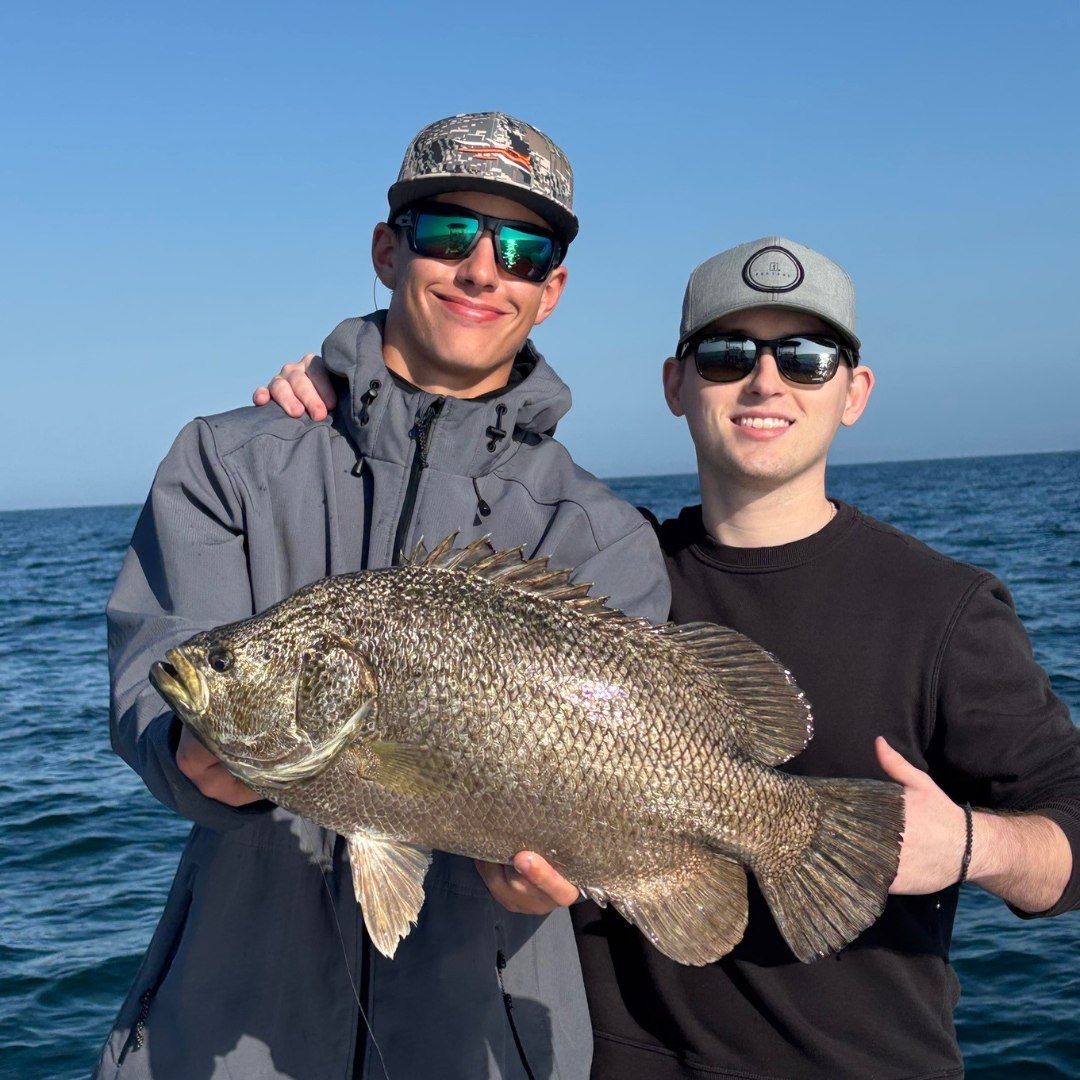
A strong landing net is helpful. Keep fingers away from the gill-cover edges and use suitable tools to remove the hook. Support the body instead of lifting a large fish by a light leader or leaving it suspended for photographs.
Have the measuring device ready before deciding to retain a fish. Review current tripletail size, bag and gear rules for the trip. A fish that looks large beside a small buoy can be difficult to judge accurately.
Release undersized or unwanted fish promptly. If a fish swims strongly back toward cover, allow it to go rather than chasing it for another photograph. Record the sighting and continue searching other suitable water.
Tripletail questions
Is a sideways floating fish unhealthy?
Not necessarily. Tripletail commonly rest or feed in unusual surface positions that help them resemble floating material.
Does every crab-trap buoy hold one?
No. Most objects may be empty. Careful searching is a normal part of the method, and working gear must not be disturbed.
Should the shrimp touch the buoy?
The bait needs to reach the fish, not the rope. Leave room for a natural drift and a clean hook-set without snagging the object.
Can tripletail be caught on artificials?
Yes. Small shrimp patterns, soft plastics and flies can work when presented at the right depth and speed.
Why did the fish wrap the marker immediately?
Tripletail often head for nearby cover after hooking. Better boat position, suitable tackle and prompt controlled pressure can improve the angle.
Is bright sunshine useful?
Good light and polarized glasses can make fish easier to see. Visibility helps the search, but glare, wind and viewing angle still matter.
Match your approach to the water
| What you find | An option to try | The detail that matters |
|---|---|---|
| Fish visible beside a buoy | Shrimp at the observed depth | Drift toward the fish without snagging the rope. |
| Fish sitting slightly below cover | Lightly weighted shrimp imitation | Allow a slow controlled fall within view. |
| Wind carrying the boat too close | Reset the approach | Give yourself a quiet casting position before trying again. |
Plan a tripletail trip
Local access guides for tripletail trip planning: Crystal River, Tampa, Fort Myers.
Tides and weather · Florida fishing charters
Read the current FWC rules for tripletail.
Rules review: October 4, 2026.
Research and photograph credits · All fish species · Return to the beginning