
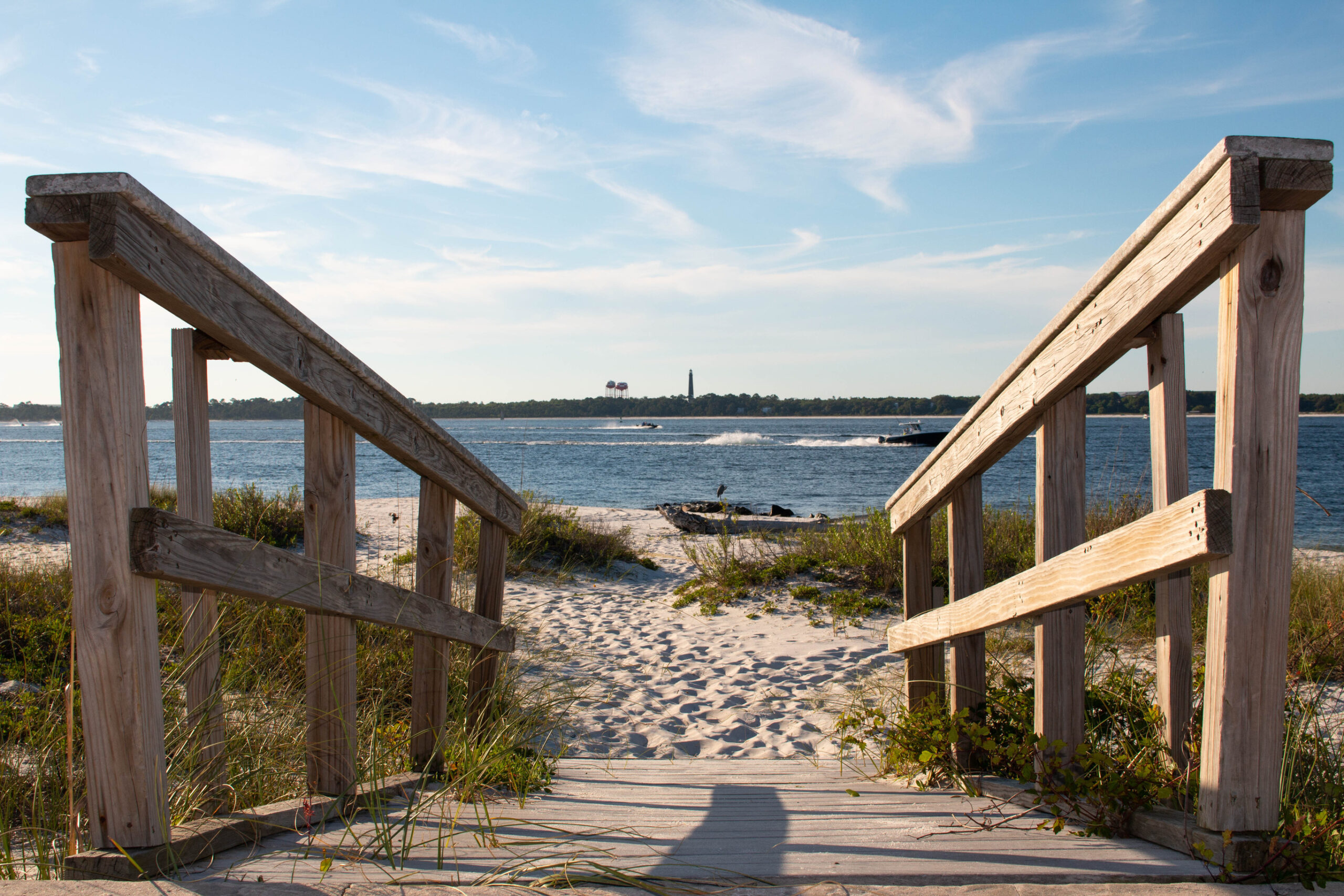
Fort Pickens gives a shore angler a choice that many Pensacola Beach access points do not: fish an open Gulf beach, choose a legal section of bayside shoreline, or use the designated fishing pier. Those are three different trips. Decide which one you want before buying bait or choosing a rod.
For a first visit, use the Gulf shore for a small-bait surf session, or the licensed fishing pier for an easier introduction to fishing over deeper water. The exposed point and jetties are not the beginner shortcut to better fish. Current, slippery rocks, boat traffic, and an awkward landing position can outweigh their attraction.
Check the closure before choosing a beach access
Enter the Fort Pickens Area from Pensacola Beach on Fort Pickens Road. A national seashore entrance fee or accepted pass applies. Check the area’s operating hours and road alerts before departure; weather and sand can interrupt access even when your wider Pensacola Beach plans remain unchanged.
Access update checked September 24, 2026: NPS lists Battery 234 Loop Road and the Battery Cooper area as closed because of the unstable historic tower. The restriction includes affected pedestrian beach access from the Gulf side. Do not use an old map or an apparently empty path to walk into the closed area. Choose a currently open, signed access instead.
Langdon Beach is a swimming destination within the Fort Pickens Area. NPS prohibits fishing in its designated swim beach while lifeguards are on duty. Keep clear of swimmers elsewhere too; arriving before a busy period does not override posted boundaries or an active closure.
The fishing pier and ferry pier are not interchangeable
The Fort Pickens Fishing Pier extends about 200 feet into Pensacola Bay. NPS identifies it as a licensed saltwater fishing pier, so recreational fishing from that pier does not require an individual saltwater license. That coverage does not travel with you onto the beach or around the point.
The separate ferry pier is closed to fishing and netting. Verify the sign before unloading. At the fishing pier, NPS limits each person to two fishing devices, such as two rods or a rod and a cast net. A beginner is usually better served by one rod that can be watched continuously.
If fishing from shore near this part of the park, stay out of the water around the fishing pier, ferry dock, and other restricted dock areas. NPS imposes a 200-foot water exclusion around specified Fort Pickens structures. Do not wade toward a pier to shorten a cast.
Fish to look for
These are some of the targets discussed below. Reference images show the species, not catches from this beach. Availability varies with season and conditions.
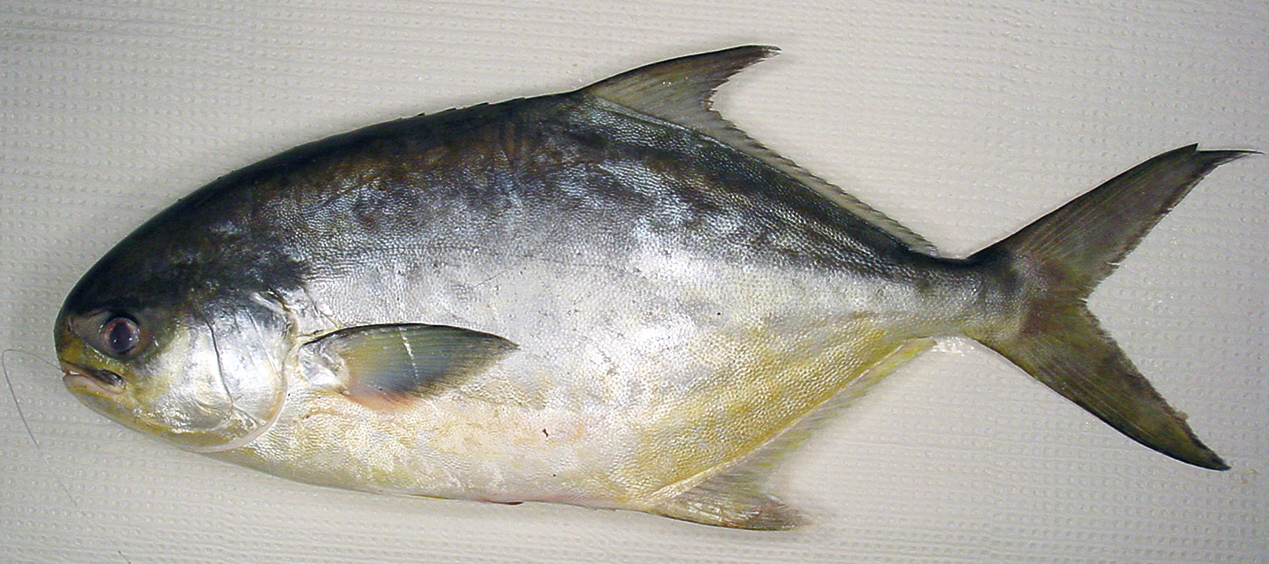
Trachinotus carolinus
U.S. Food and Drug Administration. Public domain (United States).
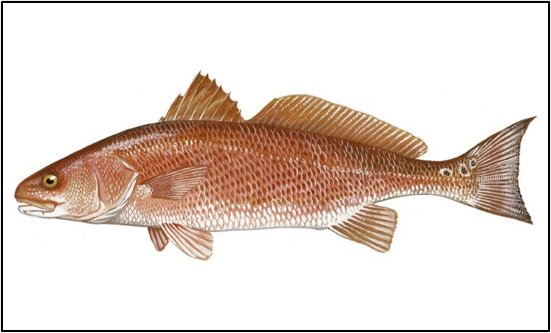
Sciaenops ocellatus
NOAA. Public domain (United States).
Pick a target that matches your side of the island
| Fishing approach | Sensible targets | Bait or lure to start with |
|---|---|---|
| Open Gulf surf, outside swim areas | Pompano and whiting | Small shrimp pieces or purchased sand fleas on a bottom rig |
| Legal bayside shoreline | Redfish and flounder | Shrimp near the bottom or a slowly worked soft plastic |
| Fishing pier near structure | Sheepshead | Small shrimp or fiddler crab, presented close to cover where permitted |
| Pier or open shore with visible bait activity | Spanish mackerel | A compact spoon or metal jig retrieved through the baitfish zone |
These choices reflect the area’s habitats and regional catches, not a same-day fishing report. A beach can be empty of pompano while mackerel feed elsewhere, and a promising piling can produce nothing. Ask what has actually been caught recently before committing to one species.
For sheepshead, small baits and direct contact are more useful than a bulky rig. For Spanish mackerel, retrieve a small lure briskly enough to keep it moving like fleeing bait. Watch for feeding birds, but never cast into a flock or toward a dolphin chasing the same school.
Two outfits cover most first visits
Gulf surf outfit: a 9-10-foot medium-heavy spinning rod, a 4000-5000 saltwater reel, and 15-20 lb mono or 20 lb braid. Pair it with a two-drop surf rig using small single hooks and a sinker within the rod’s casting rating. Two or three ounces is a reasonable calm-to-moderate starting range, not a prescription for every sea state. Sinkers plus bait must stay within the rod’s rating.
Bay and pier outfit: a 7-8-foot medium or medium-heavy spinning rod, a 3000-4000 reel, and 15-20 lb braid. Use a 20-30 lb mono or fluorocarbon leader for shrimp, small baitfish, or soft plastics. Begin with the lightest weight that keeps the bait in the intended zone. Use heavier tackle only when the target, structure, and your landing method justify it.
For metal lures and mackerel, carry a heavier leader option, roughly 30-40 lb mono or fluorocarbon, and check it after every fish. It is abrasion protection, not tooth-proof insurance. A short wire trace may reduce cutoffs, but can also change how the lure moves and how fish respond.
On the pier, bring a suitable landing net or arrange help from someone equipped to land a larger fish. Do not hoist a heavy catch by the rod tip or drag it up a piling. Avoid targeting fish you cannot land and release responsibly with your equipment.
Read the surf before making the longest cast
On an open Gulf section, watch several wave sets. Breaking water often outlines a sandbar, while a darker band between that bar and the beach can be a trough. Start with a short cast into reachable water, then test a second distance. A maximum-distance cast can pass over the fish you came to catch.
Use small baits with an exposed hook point. If the sinker rolls rapidly sideways, retrieve before it crosses another angler’s line. A different sinker shape or a less exposed legal stretch may solve the problem more sensibly than adding weight beyond your rod’s rating.
For heavier surf casting, use an appropriately rated shock leader and a protected casting finger, and learn the rig from a knowledgeable tackle shop before making forceful casts. Never cast over walkers, and check behind you every time. Fish from dry sand instead of wading into a cut through the bar.
Let the conditions choose the backup plan
When the Gulf is rough, the bay side may look calmer, but it is not automatically safe. Watch wakes, current, wind direction, and available standing room before setting up. Strong flow around the point is a reason to choose a different place, not a reason to walk farther out.
Regional FWC guidance highlights spring pompano, late-winter and spring sheepshead, and spring or fall flounder activity. Those are useful starting expectations. They do not override harvest closures, and they do not guarantee the same timing every year.
A practical half-day trip is to inspect an open Gulf access first, then switch to the designated fishing pier if surf conditions or swimming activity make the beach a poor choice. Keep the two setups compact enough that moving is easy. Pack out bait packaging and every piece of discarded line.
Fort Pickens questions worth answering before arrival
Is the whole beach covered by the pier’s fishing license?
No. The licensed-pier exemption applies to recreational fishing from the designated fishing pier. For surf or bank fishing, have appropriate Florida saltwater coverage unless exempt.
Can I fish beside swimmers if I cast past them?
No safe fishing plan depends on casting over people. Respect the designated swim-area rule and choose a clear stretch where your cast, drifting line, and hooked fish will not enter swimming water.
Do I need a giant surf rod for everything here?
No. A long surf rod helps manage a bottom rig in waves. A shorter outfit is easier for shrimp presentations, pier work, and casting lures. Choose for the water you intend to fish rather than buying the largest combination available.
Plan a nearby fishing trip
Access and regulations checked September 24, 2026. Recheck park notices, weather, and FWC rules before your trip. Tackle recommendations are starting setups, not guarantees of catches.
Photo: NPS/Carly Adams. Public domain; National Park Service collection.