

The best place to start fishing on Pensacola Beach depends on the trip you want. A visitor with no tackle may be better served by the Gulf Pier’s rental counter. Someone carrying a surf outfit needs a legal, uncrowded stretch with manageable waves. An angler interested in bayside structure should look at a suitable fishing access rather than treating every swimming beach as a place to cast.
Pensacola Beach is the beach community on Santa Rosa Island, not the same place as downtown Pensacola. It is also a wider destination than Fort Pickens or Opal Beach. Use this guide to choose your kind of fishing day, then check the specific access rules before heading out.
Pick your fishing day before picking your bait
| Your situation | A practical choice | What to check first |
|---|---|---|
| Visiting without rods or reels | Pensacola Beach Gulf Pier | Current opening, fishing admission, rentals, and pier rules |
| Want to fish with feet on dry sand | An open Gulf beach outside swimming exclusions | Beach flags, casting room, surf, and local signs |
| Want a park trip with more than one habitat | Fort Pickens Area | Entrance requirements, closures, and the exact fishing location |
| Staying closer to Navarre Beach | Opal Beach | Complex hours, swim-area boundaries, and coastal road access |
| Fishing with beginners who need an easy exit | A staffed fishing pier or accessible legal shore | Railings or footing, restrooms, shade, and a short return route |
A busy swimming beach is not a bad beach. It is simply the wrong place to spread out rods and baited hooks. Plan swimming and fishing as separate parts of the day if the group wants both.
Fish to look for
These are some of the targets discussed below. Reference images show the species, not catches from this beach. Availability varies with season and conditions.
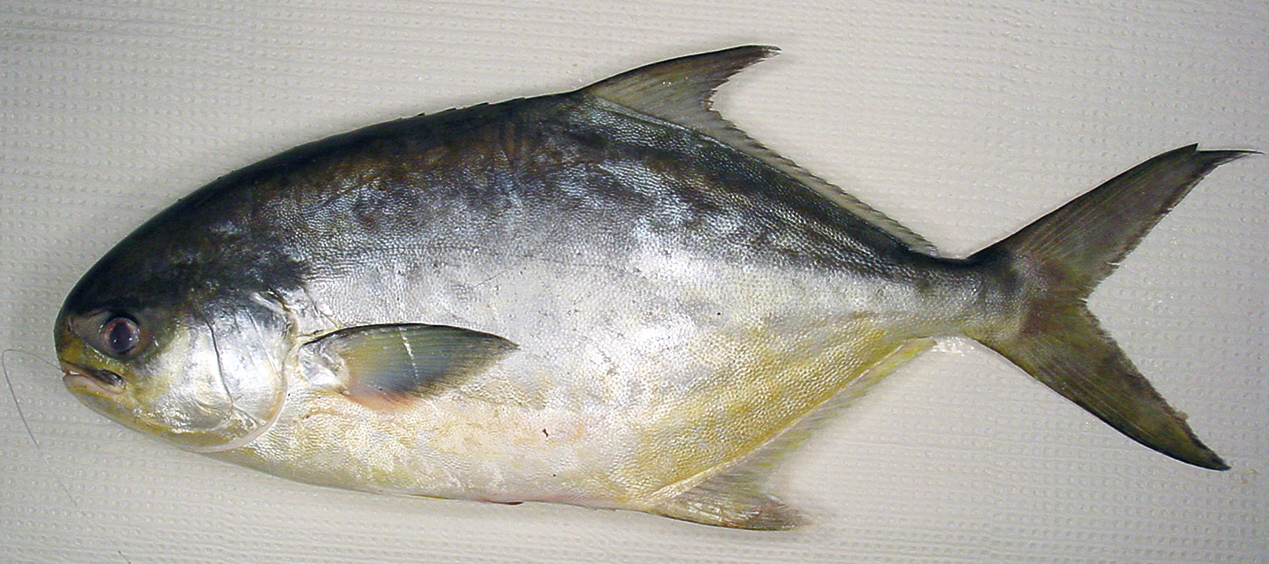
Trachinotus carolinus
U.S. Food and Drug Administration. Public domain (United States).
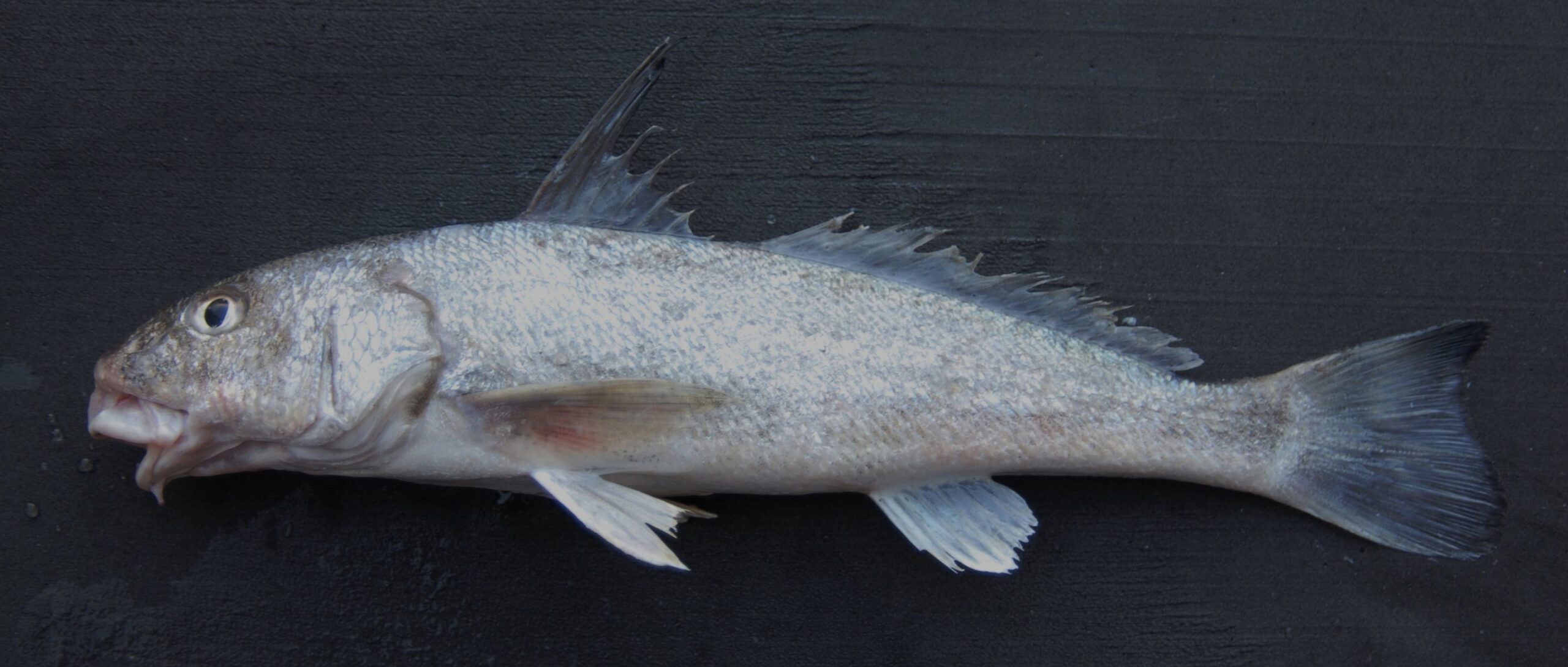
Menticirrhus littoralis
SEFSC Pascagoula Laboratory / Brandi Noble, NOAA. Public domain (United States).
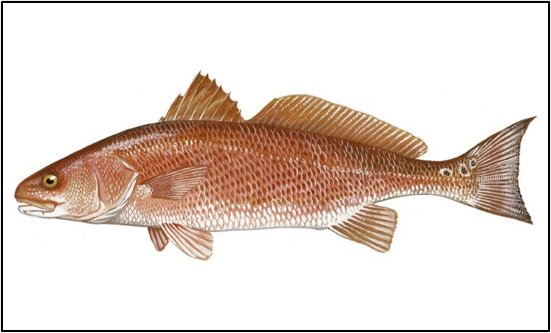
Sciaenops ocellatus
NOAA. Public domain (United States).
Pensacola Beach Gulf Pier: the simplest rental option
The Gulf Pier is at 41 Fort Pickens Road, beside Casino Beach. The official destination listing describes a pier approximately 1,471 feet long. It is a different structure from the much shorter Fort Pickens Fishing Pier inside the national seashore.
The Santa Rosa Island Authority says the Gulf Pier has an on-site bait and tackle shop with rod rentals. Fishing and sightseeing have separate admission charges. Check the operator’s current prices, hours, license coverage, and rental availability before arrival rather than relying on an old visitor-guide price.
At the counter, ask three useful questions: what small-to-medium fish are being caught today, what bait is working for those fish, and where a beginner can fish without crowding another technique. A manageable rental setup matched to recent catches is more useful than buying equipment for an occasional king mackerel sighting.
Fish can use different parts of a pier. Small bottom feeders may be closer to the beach, while passing baitfish schools can attract predators farther out. Do not assume everyone must crowd the end. Follow the posted casting directions and keep bags, coolers, and spare rods out of the walking lane.
Arrange a landing method before targeting a larger fish. A pier net and help from an experienced angler may be needed; the rod is not a crane. Avoid casting where birds are feeding or deliberately presenting bait to dolphins or other wildlife.
Surf fishing starts with space, not distance
For fishing from the sand, select a public access that is open and allows the activity, then inspect the actual shoreline. Keep away from lifeguarded swimming areas and any other signed exclusion. Do not cast across swimmers, surfers, walkers, or the water immediately around a busy pier.
A good beginner stretch has room behind you, a clear casting lane, and waves that allow a light-to-moderate surf rig to stay in place. Look for the trough between shore and the first bar. Try it before attempting a distant cast, especially when using small shrimp baits for whiting.
Start with one rod. You will learn more by checking the bait, changing distance, and watching the line than by leaving three nearly identical rigs unattended. If the current pushes your sinker toward people or another angler, retrieve promptly.
There is no need to wade into the surf to make this plan work. Stay on dry, firm sand. Follow the local flag system and closures; Pensacola Beach’s published beach rules tell visitors not to swim or wade on red or double-red flags.
Which fish should a visiting angler actually plan for?
Pompano and whiting: the most straightforward surf starting point. Use small shrimp pieces, purchased sand fleas, or compact synthetic bait on a small-hook bottom rig. Pompano are seasonal, so ask about recent catches instead of assuming a year-round beach run.
Spanish mackerel: a more active option when baitfish gather within range. A small metal lure and a suitable leader let you cast and retrieve without managing a live-bait bucket. Watch the action without casting at birds. Teeth can cut mono and fluorocarbon even when the leader is fairly heavy.
Sheepshead: a structure-oriented possibility around a suitable fishing pier. Small shrimp or fiddler crab and careful bait placement are more relevant than a long surf cast. Learn the local pier’s rules before dropping beside pilings or fishing under its deck.
Redfish and flounder: better reasons to investigate appropriate bayside habitat or a separate Fort Pickens trip than to promise a catch beside a central swimming area. A shrimp or slowly fished soft plastic can cover them where access and conditions permit.
These are target choices, not a list of everything that might pass through the area. Offshore species advertised on charter pages do not become realistic targets for an ordinary visitor standing on the beach.
Choose a surf outfit or a light pier outfit
| Tackle | Surf bait session | Light pier or inshore session |
|---|---|---|
| Rod | 9-10-foot surf spinning rod | 7-8-foot medium or medium-heavy spinning rod |
| Reel | 4000-5000 saltwater reel | 3000-4000 saltwater reel |
| Main line | 15-20 lb mono or 20 lb braid | 15-20 lb braid, or suitable mono within the outfit’s rating |
| Leader or rig | About 25-30 lb mono surf rig | 20-30 lb mono or fluorocarbon; heavier option for abrasion or mackerel |
| First bait | Small shrimp piece or sand flea | Shrimp matched to a small single hook |
| Backup | Durable synthetic bait strip | Small paddletail or compact metal lure, where appropriate |
These are starting recommendations, not universal requirements. Reel numbering varies by brand. Check the rod’s line and casting ratings, and never throw a sinker plus bait heavier than the rod can handle. A 2-3-ounce surf sinker may work in manageable conditions; unsafe surf is not solved by buying more lead.
A proper shock leader and casting-finger protection matter when heavy casting loads and braid are involved. Ask the tackle shop to demonstrate the complete rig if needed. For a pier rental, use the supplied equipment as instructed and do not improvise a heavy casting rig on a light rod.
Build a useful two-hour visit
For a pier visit, arrive with sun protection, water, and a modest tackle plan. Get local advice, select a clear fishing space, and spend the first session learning bait presentation and landing fish. Short trips are often more enjoyable for new anglers than a full day in the sun.
For a surf visit, check weather and flags, then walk the legal beach before carrying down a large load. Fish a close distance and a middle distance with small baits. If weed, swimmers, or current make the stretch unsuitable, change the location or postpone.
For a park visit, check the specific area’s access rather than applying the central beach’s rules everywhere. Fort Pickens has Gulf and bay choices plus its designated fishing pier. Opal provides a different open-coast setting toward Navarre. Each deserves its own trip plan.
Do not schedule the day entirely around a tide number. A prediction describes water level at a station, while your fishing depends on actual current, wind, bait, and beach shape. Watch what the water is doing when you arrive.
Licenses, keeping fish, and leaving the beach clean
Florida saltwater license rules apply unless you qualify for an exemption or are covered by a properly licensed fishing pier. Confirm the pier’s coverage with the operator. Visitors should not assume Florida’s free resident shoreline license applies to them, and releasing every fish does not automatically remove the license requirement.
Before retaining a fish, identify it, measure it correctly, and check its current FWC size, bag, and seasonal rules. Florida flounder harvest is currently closed October 15-November 30, illustrating why an autumn fishing opportunity is not necessarily an opportunity to keep fish.
Carry pliers and a measuring tool, keep released fish wet and supported, and pack out line and hooks. Stop fishing when lightning threatens and reach an enclosed vehicle or substantial building. A good first Pensacola Beach trip leaves you with a repeatable method and a reason to return, rather than an overloaded tackle bag and a conflict with the swimming crowd.
Plan a nearby fishing trip
- Big Lagoon State Park fishing guide
- Fort Pickens beach fishing guide
- Johnson Beach fishing guide
- Opal Beach fishing guide
Access and regulations checked September 24, 2026. Recheck park notices, weather, and FWC rules before your trip. Tackle recommendations are starting setups, not guarantees of catches.
Photo: Bobbykreiner. Original photograph, CC BY-SA 4.0. Unmodified image.