
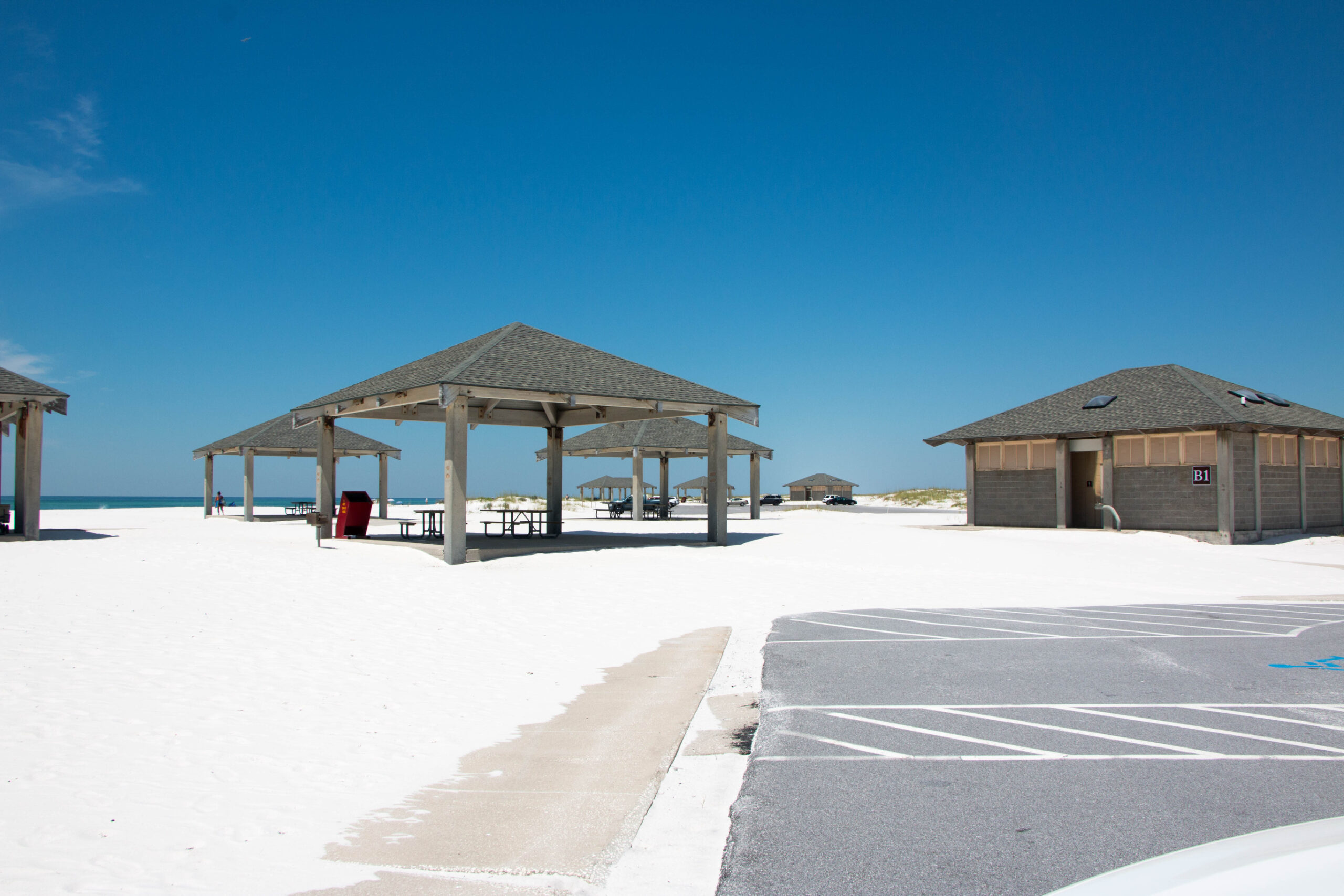
Opal Beach lies along the coastal road between Pensacola Beach and Navarre Beach. For anglers, its appeal is an open-beach fishing session where reading the water matters more than finding a permanent piece of structure. A trough, sandbar opening, or concentration of bait may be productive on one trip and different after the next stretch of rough weather.
Bring a compact surf setup and be ready to adjust. Pompano and whiting suit small bottom baits; Spanish mackerel are a possible alternative when baitfish schools come within casting range. None of those possibilities makes the lifeguarded swimming area a fishing spot.
Plan your arrival around the Opal Beach complex
The Opal Beach Complex is part of the Santa Rosa Area of Gulf Islands National Seashore, reached from Highway 399, also called J. Earle Bowden Way. It sits between two beach communities rather than in a separate incorporated city named Opal Beach. Use the exact beach name when navigating.
NPS lists the Opal Beach Complex as open from 8 a.m. to sunset. The surrounding road’s access hours do not mean the complex’s facilities and parking are open all night. A park entrance fee or accepted pass is required to use the complex.
There are Gulf-side and sound-side facilities, but do not select a place to cast simply because it has a pavilion. Inspect signs, swimmers, and the available shoreline first. This guide’s surf recommendations concern the open Gulf side.
Facility note checked September 24, 2026: NPS lists the Pavilion C restrooms as closed for repairs. Confirm which facilities are available when planning a family visit. Check road and weather alerts before driving the coastal route; an attractive beach forecast does not guarantee every access is operating normally.
Read three pieces of water before setting a sand spike
Begin with the nearshore trough. This is the water between the beach and the first obvious shallow bar. It deserves a trial cast even when anglers nearby are throwing much farther. Small crustaceans and fish can be available close to the wash.
Next look for a change along the bar. Where waves stop breaking uniformly, the bottom may dip or the current may pass through. Treat this as a feature to observe from land, not a place to wade. Rip currents can use these same gaps.
Finally, watch the direction of drift. A modest side current moves food, but a rig sweeping down the beach can soon cross another line or reach swimmers. If your bait will not remain in a clear fishing lane, change the sinker within the rod’s rating, move to another legal spot, or end the session.
These are reading techniques, not fixed fishing coordinates. Storms rearrange sand. Returning to the same place on a map is less useful than checking how the beach is shaped on the day you arrive.
Fish to look for
These are some of the targets discussed below. Reference images show the species, not catches from this beach. Availability varies with season and conditions.
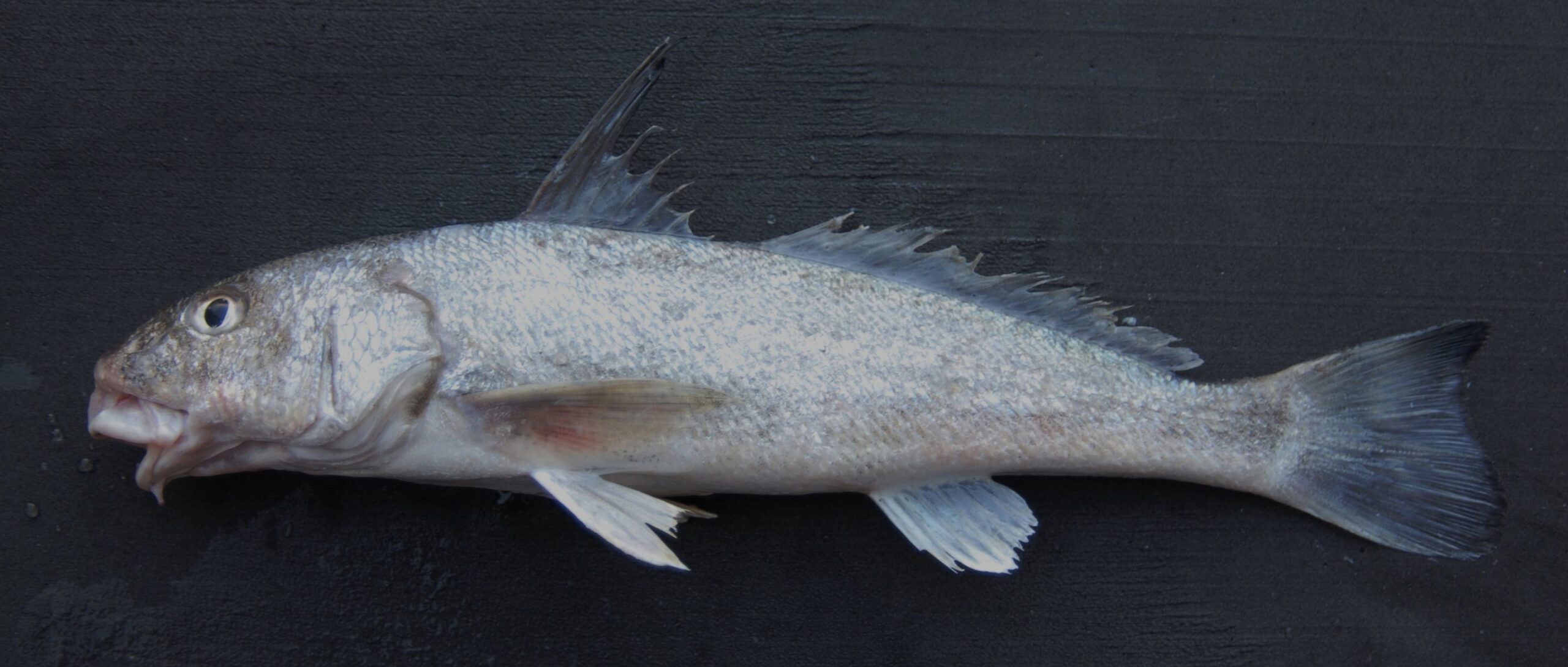
Menticirrhus littoralis
SEFSC Pascagoula Laboratory / Brandi Noble, NOAA. Public domain (United States).
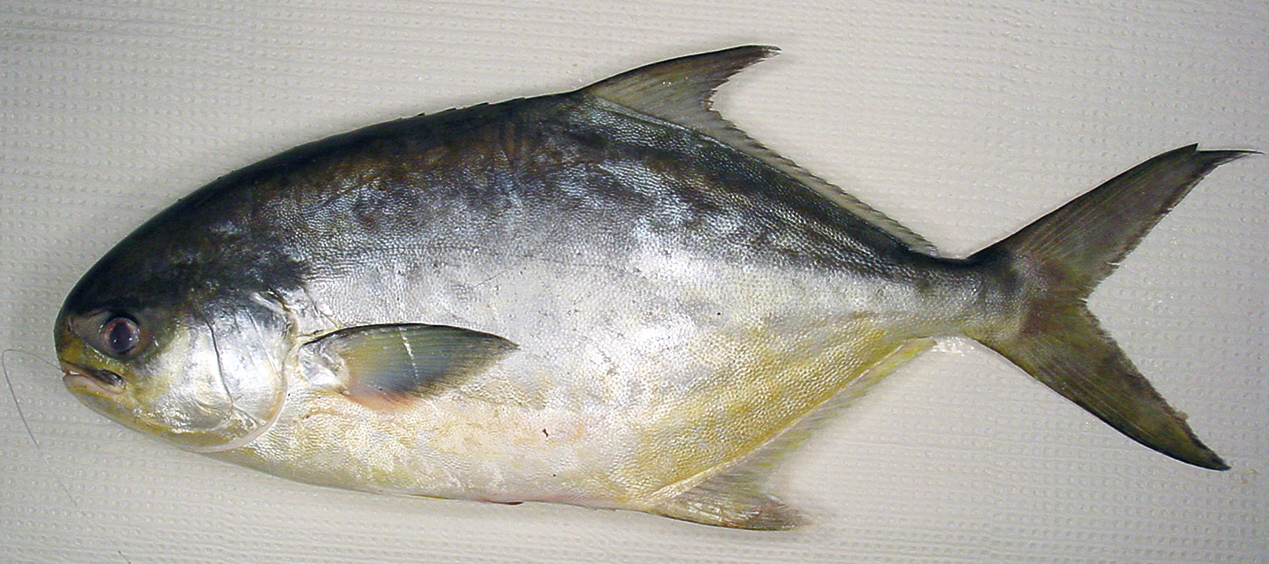
Trachinotus carolinus
U.S. Food and Drug Administration. Public domain (United States).
Build a small bait plan around pompano and whiting
For a stationary surf session, pack small pieces of shrimp and purchased sand fleas, with a compact synthetic bait as a durable backup. Start with a simple two-drop rig and separate small single hooks. Keep the hook gap open. A fist-sized bait does not improve a pompano presentation.
Try the two hook positions with different baits and note which gets attention. If every bait disappears without a sustained pull, make the pieces smaller and check the rig more often. If the hooks return covered in weed, move rather than spending the whole morning fishing a rig that cannot present bait.
Pompano are a seasonal prospect along this part of the Panhandle, with spring a reasonable first window to investigate. Whiting are another sandy-beach target. Regional habitat and season guidance can help plan a trip, but it does not confirm that a school is presently at Opal Beach.
Match line strength to the job, not the biggest fish imaginable
| Job | Rod and reel | Line and terminal setup |
|---|---|---|
| Small-bait surf fishing | 9-10-foot surf rod; 4000-5000 spinning reel | 15-20 lb mono or 20 lb braid; about 25-30 lb mono rig body; small circle hooks |
| Casting to visible bait activity | 7-8-foot medium or medium-heavy rod; 3000-4000 reel | 15-20 lb braid; 30-40 lb leader for small metal lures and possible mackerel |
| Very calm, close-range fishing | A suitable 7-foot medium spinning rod | Light rig within its casting rating; no attempt to throw heavy surf sinkers |
For the surf outfit, a 2-3-ounce sinker is a starting option only when conditions allow it to hold. Check the rod’s printed casting range and include the bait’s weight. A grip-style sinker can resist sideways movement, but needs a clear landing area and careful handling.
Use a proper casting shock leader and finger protection where the casting load calls for them, especially with braid. Do not confuse a short hook leader with a shock leader. Learn the knots and test them before the trip, and never use an overhead power cast with people behind you.
The lure outfit is for small Spanish mackerel-type opportunities, not for deliberately targeting large sharks or oversized fish with inadequate gear. Mono or fluorocarbon leaders can still be cut by teeth. If cutoffs persist, change the bite protection or choose a different target.
Wind can change the entire session
A wind direction label alone does not tell you whether Opal Beach will fish well. Observe wave size, clarity, weed, and whether you can control the line. An onshore breeze may stir food, but increasing surf can quickly make the same stretch difficult or unsafe.
If a crosswind bows the line, cast a shorter distance you can manage and keep unnecessary slack out. Do not compensate for every problem with a heavier sinker. Sometimes the right decision is to return on a calmer day.
The sound side is not an automatic fallback. It is a different habitat with its own swimmers, vegetation, wind exposure, and access restrictions. Scout it separately and use lighter inshore methods only where fishing is allowed. Stay out of seagrass instead of walking through it to reach deeper water.
Give swimmers the central beach; find a clear fishing lane
NPS prohibits fishing within the designated Opal swim beach when lifeguards are on duty. Check the actual boundary on arrival. A quiet-looking patch inside the boundary does not become available just because no one is swimming at that moment.
Outside it, choose enough room that a cast, drifting line, or fish will not move into other visitors. Use the established crossovers, protect dunes and nesting areas, and retrieve lines before walking away from the rods. Empty bait packets and loops of monofilament should leave with you.
For a mixed family visit, separate swimming and fishing into different supervised activities. Do not plant baited hooks among the towels and ask everyone to step around them. Keep spare hooks in a closed box and wash hands before handling food.
An Opal Beach trip that can adapt
Arrive after the complex opens, confirm the usable access and facilities, and spend a few minutes watching the Gulf before unloading everything. Choose one clear lane, test a close and middle distance, then make a deliberate change if the first approach fails. A light load makes moving possible.
Check Florida saltwater license coverage and current harvest rules before fishing. Keep a measuring device, pliers, water, sun protection, and a weather forecast handy. Retreat to an enclosed vehicle or substantial building if thunder develops; an open pavilion does not provide adequate lightning shelter.
The useful skill at Opal is recognizing when to stay, when to move, and when the beach is better saved for another day. A manageable rig in fishable water gives you a better starting point than an elaborate setup you cannot safely control.
Plan a nearby fishing trip
Access and regulations checked September 24, 2026. Recheck park notices, weather, and FWC rules before your trip. Tackle recommendations are starting setups, not guarantees of catches.
Photo: National Park Service. Public domain; National Park Service collection.