
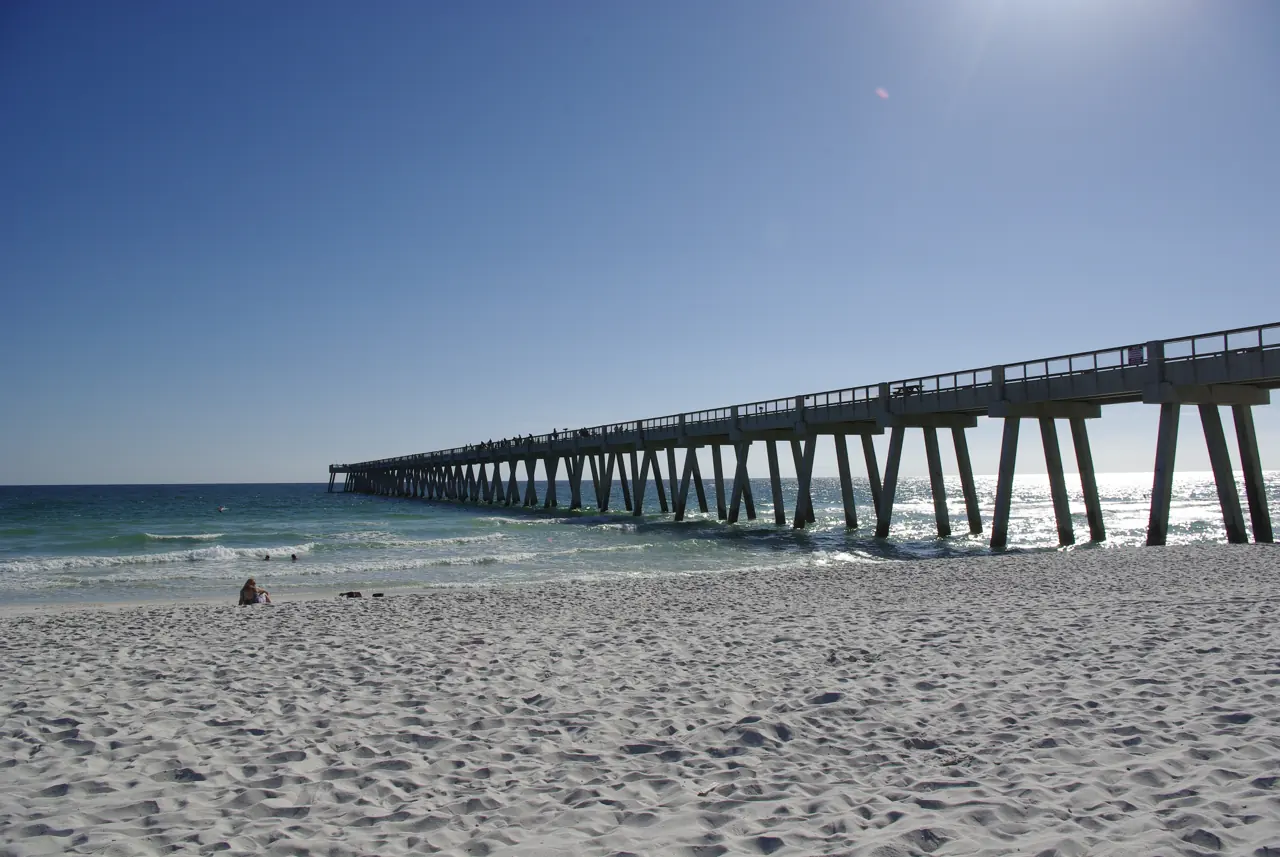
Location photograph: Navarre Beach fishing pier extending from the sand into the Gulf. Photo: Taminar. CC BY-SA 4.0. Image source. Resized and converted to WebP.
Navarre Beach fishing starts with a useful question: do you want to carry your own surf gear, or rent a rod and fish from the pier? Both can make a good morning. They are not the same trip, and the pier's fishing admission does not cover you when you leave to fish the sand.
The pier operator lists rod rentals and says a fishing license is included in fishing admission. Confirm the current fee and hours before going. This is a practical option for a visitor who has brought beach towels but no tackle.
Start at the pier if you need help
Ask the tackle shop what is being caught and which part of the pier suits your outfit. A small bait near the structure needs a different approach from a lure worked toward visible baitfish. Leave space for other anglers and ask about landing a larger fish before one is on your line.
The pier stands high above the water. Do not plan to lift a good fish by the line or lean over the rail to reach it. Use the operator's recommended landing method. Keep hooks secure while walking past families and sightseers.
Take the surf route when you have room
For beach fishing, choose a legal stretch away from swimmers, reef users, and the pier. Navarre Beach Marine Park includes swimming and snorkeling use, so a convenient parking space is not proof that the nearest water is a casting lane.
Small pieces of shrimp or purchased sand fleas are a sensible start for whiting and pompano. A clean stretch of nearshore trough often matters more than casting far. Watch where the waves break, then try more than one distance before changing baits.
Fish to recognize before you cast
Two practical sandy-surf targets. Their presence varies with conditions and season.


Match the trip to the wind
A calm beach may suit a light bottom rig. A strong sideways wind can make the same outfit difficult to control. Watch the flags, the surf, and the path your line takes. If the conditions push hooks toward people, change location or stop fishing.
Bring only what you can manage. One attended rod is a better family plan than several unattended lines. If you want another beach option for a later day, compare the access at Opal Beach rather than assuming the whole island has the same hours and rules.
Do not buy tackle before choosing the venue
A long surf rod can be awkward on a busy pier. A short light rod may struggle with a beach sinker. If this is your first saltwater trip, ask the pier operator about a rental and current catches before buying a setup. For the surf, start with a manageable rod that you can cast smoothly rather than one selected only for maximum length.
A starting tackle list for Navarre Beach
These are starting ranges, not a shopping requirement. Reel sizes vary by maker. Match the rod, line, and total casting weight, and adjust to the conditions you can safely fish.
| Tackle | Starting choice |
|---|---|
| Surf rod and reel | 9-10 ft spinning rod; 4000-5000 reel |
| Main line | 15-20 lb mono, or 20 lb braid with a suitable leader |
| Leader or bait rig | 20-30 lb mono for small-bait surf fishing |
| Bait and hook | Small shrimp piece or sand flea; roughly size 2 to 1/0 hook, matched to bait |
| Sinker | Only enough to hold; remain within the rod rating including bait weight |
| Pier alternative | 7-8 ft medium-heavy rod; 3000-4000 reel; 15-20 lb line. Ask the operator about the presentation and landing method |

Keep a measuring tool and pliers in the bag. Check current Florida Fish and Wildlife Conservation Commission license, season, size, and bag rules before keeping a catch. Access permission and a fishing license are separate requirements.
Access information checked September 24, 2026. Park notices, construction, weather, and local rules can change. Confirm the chosen entrance before travelling.