
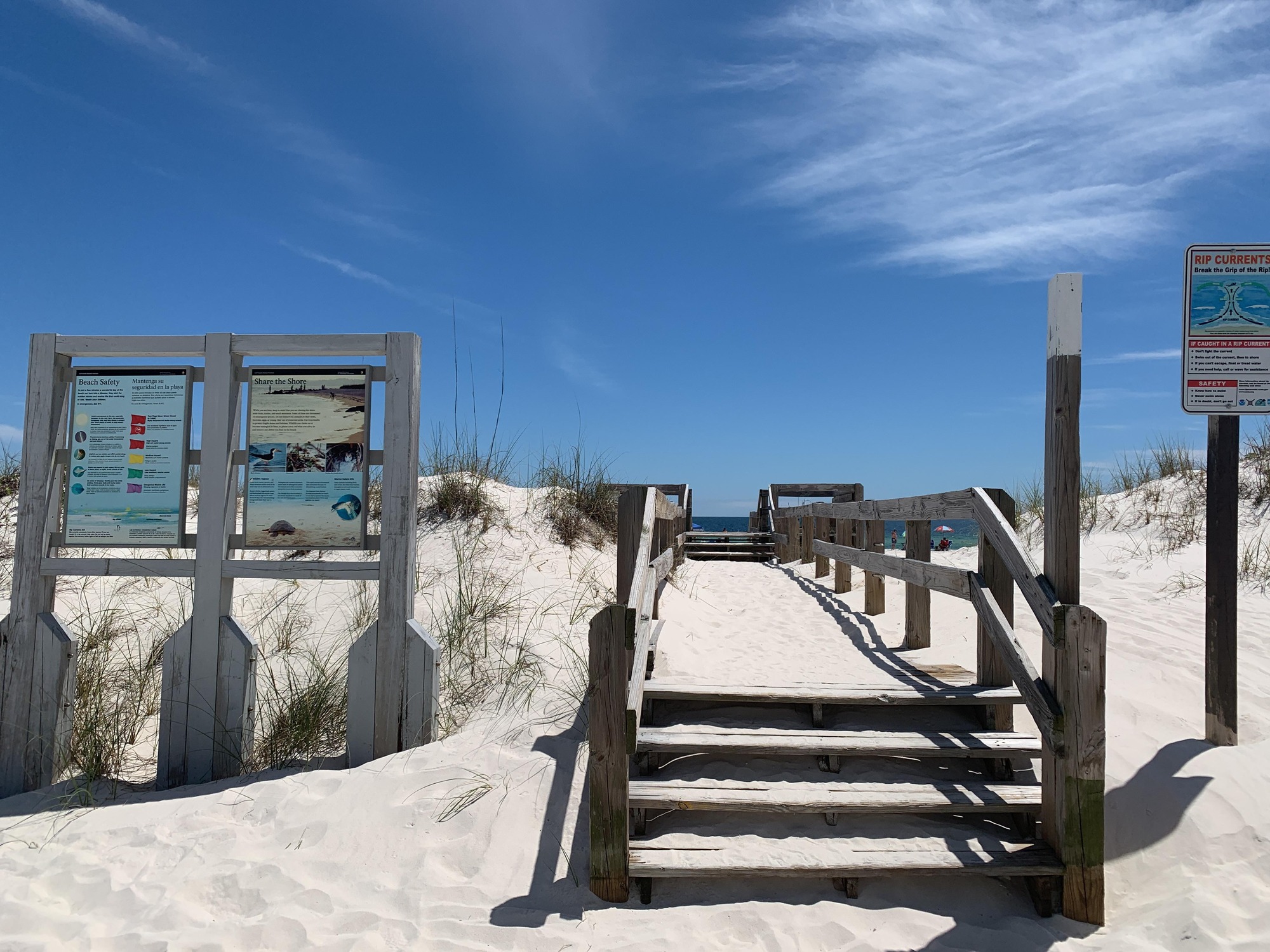
Johnson Beach in Perdido Key is a place to simplify your surf fishing. Start with small bait, one manageable rod, and a clear stretch outside swimming areas. Pompano are an appealing seasonal target, but whiting deserve equal attention: a shorter cast with a small shrimp bait can be more useful than repeatedly throwing a heavy rig as far as possible.
This is Rosamond Johnson Beach in the Perdido Key Area of Gulf Islands National Seashore. It is not a Pensacola Beach access point across the pass, and it is not the lagoon shoreline at Big Lagoon State Park. Plan for an open Gulf beach, shifting sandbars, and park access rules.
Find fishing room beyond the swimming setup
Follow Johnson Beach Road to the national seashore entrance and use an open, signed parking area and beach crossover. An entrance fee or accepted park pass is required. Check the current Perdido Key Area hours before planning an early start; the access schedule changes seasonally.
The main Johnson Beach recreation area has parking, restrooms, showers, and picnic facilities. It is also a popular swimming beach. NPS says fishing is not permitted within the flagged swim beach during its lifeguarded summer operation. Its wider Florida fishing guidance prohibits fishing in designated swim beaches when lifeguards are on duty.
Ask staff where the fishing boundary lies, then choose an open stretch with enough room for your cast and the drift of your line. There is no universal safe distance from a swimmer that overrides a marked exclusion. If people move into your casting water, reel in and relocate.
Stay on established crossovers, out of dunes and shorebird enclosures. Do not assume an old access photograph proves that a particular walkover is open today. For a first trip, remain close enough to your vehicle that changing weather, heat, or a tired child will not create a long return walk. The distant tip toward Pensacola Pass is a different, more demanding outing.
Fish to look for
These are some of the targets discussed below. Reference images show the species, not catches from this beach. Availability varies with season and conditions.
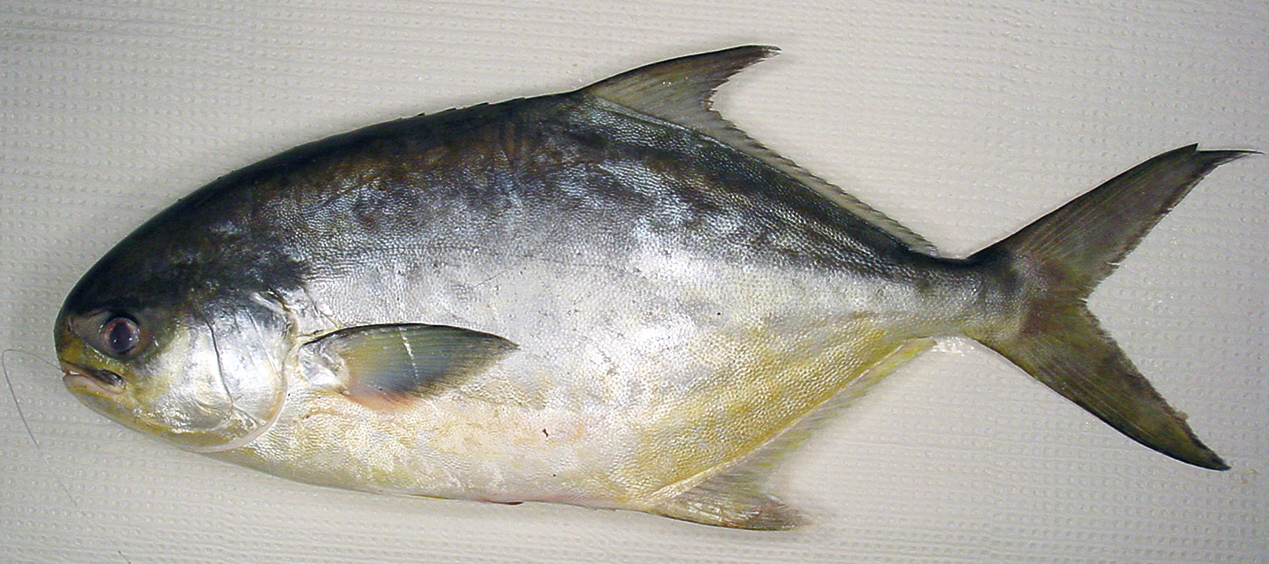
Trachinotus carolinus
U.S. Food and Drug Administration. Public domain (United States).
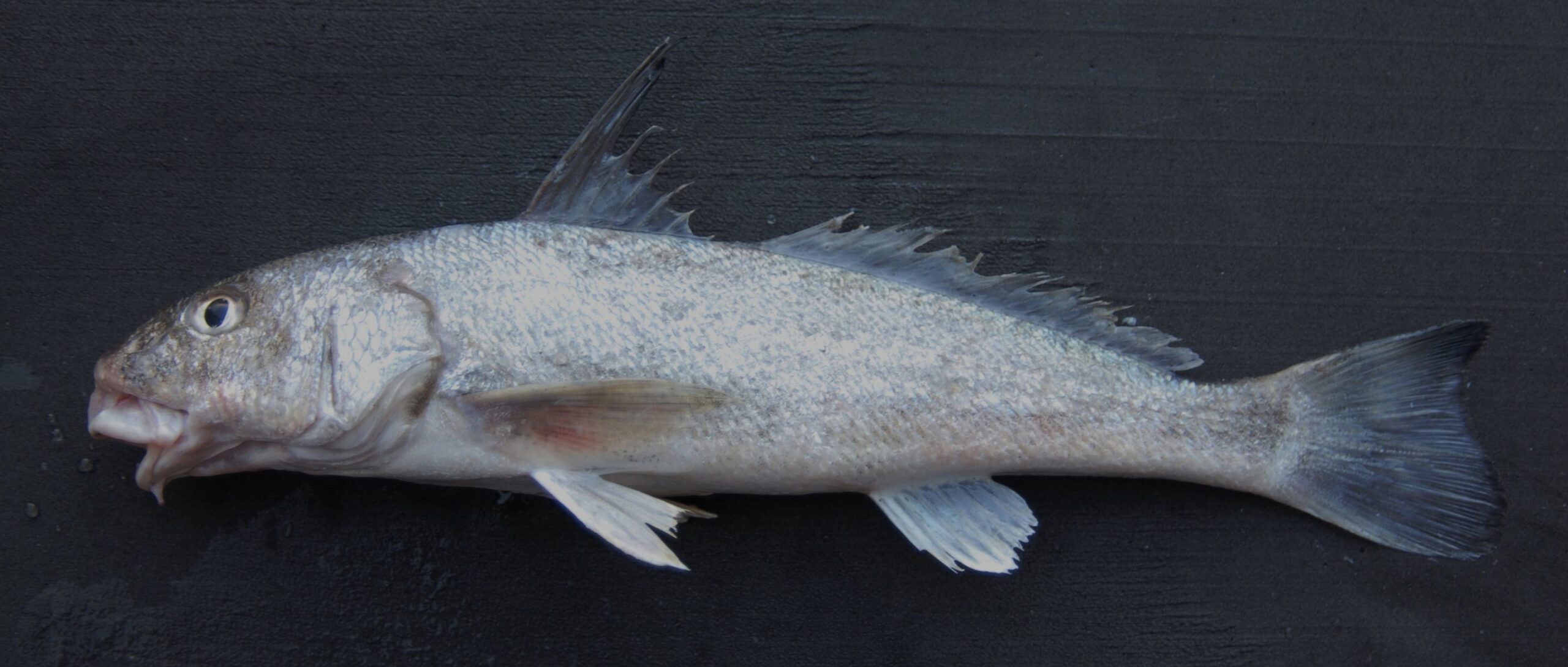
Menticirrhus littoralis
SEFSC Pascagoula Laboratory / Brandi Noble, NOAA. Public domain (United States).
Pompano and whiting call for small, clean baits
Florida pompano feed on small bottom-dwelling prey, including sand fleas. A purchased sand flea, a small piece of fresh shrimp, or a compact synthetic sand-flea or shrimp bait is a sensible starting presentation. Oversized bait can mask a small hook and invite repeated nibbles without a solid hookup.
Whiting, including Gulf kingfish, fit the same basic surf approach. Try a piece of peeled shrimp in the nearshore trough before assuming all the fish are beyond the outer sandbar. Keep the hook point clear and replace bait that has washed out or been stripped.
Fish a purchased two-drop pompano rig with two separate single hooks, not treble hooks dressed with natural bait. Small circle hooks around size 1 or 1/0 are a starting point; actual hook dimensions differ between brands. Use the smallest bait that sits securely without filling the hook gap.
A small float on the rig can lift bait slightly off the bottom, but it is not mandatory. If floating weed keeps catching on extra hardware, a simpler rig can stay fishable longer. Keep one change at a time so you can tell whether distance, bait, or the rig made the difference.
A surf outfit you can cast comfortably
| Component | Starting recommendation | Adjustment to consider |
|---|---|---|
| Rod | 9-10-foot medium-heavy surf spinning rod | Choose one with a casting range that covers your sinker plus bait |
| Reel | 4000-5000 saltwater spinning reel | Check actual capacity; size numbers are not standardized |
| Main line | 15-20 lb mono, or 20 lb braid | Mono is a straightforward option for occasional anglers |
| Rig body | About 25-30 lb mono with two short hook branches | Replace damaged knots and abraded sections immediately |
| Hooks | Small single circle hooks, approximately size 1-1/0 | Fit the bait rather than choosing by target fish size alone |
| Sinker | Begin around 2-3 ounces if conditions permit | Use a holding shape, or relocate, before exceeding the rod rating |
With braid or forceful casts using heavier sinkers, add an appropriately rated shock leader long enough to take the casting load, and use finger protection. The short leader supplied on a surf rig is not the same thing as a casting shock leader. Have a tackle shop check the complete setup if this is new to you.
A 7-foot inshore rod can work on a calm day with a light rig and fish close to shore. It does not become a surf rod simply because a bigger sinker is tied on. If the water requires weight your rod cannot safely cast, change the trip rather than overpower the equipment.
Search the trough before searching the horizon
Watch the waves for several minutes from dry sand. A line of breaking waves can reveal a shallow bar. The water between that line and the beach may provide a feeding lane. A gap in the breakers can indicate deeper water, but can also be a rip-current channel: fish toward it only from a safe, legal position on land, and do not wade into it.
Make the first cast short enough that you know where the bait landed. On the next few casts, test a middle distance and then a longer one. Let the results guide you. Two rods at identical distances do not tell you much more than one, while extra lines make it harder to avoid walkers and swimmers.
When a circle-hook rig gets a sustained pull, take up slack smoothly and reel into the fish. A dramatic hook-set can pull the small bait out of its mouth. Keep steady pressure as the fish reaches the wash and avoid sliding it up dry sand, especially if it will be released.
What changes when the surf carries weed or mud?
Loose weed can make an otherwise promising stretch unfishable. If every retrieve brings back a heavy clump, first remove unnecessary floats or bulky hardware. Then inspect another open section. Adding weight may hold the sinker while leaving the hooks smothered.
After rough weather, compare water color along the beach without entering closed areas. A slightly stirred surf can still be worth fishing; heavy debris, strong lateral current, or unsafe conditions are reasons to stop. Green-looking water is not a safety assessment, and a calm patch can hide a rip current.
If you see baitfish being chased within range, a second, lighter outfit with a compact metal lure can cover Spanish mackerel or bluefish opportunities. This is a different presentation from soaking pompano bait. Use a leader appropriate for toothy fish and stop casting if birds or swimmers occupy the same water.
A realistic first morning on Johnson Beach
Pack one surf outfit, two spare rigs, small bait portions, a sand spike, pliers, a measuring board, drinking water, and a bag for rubbish. Keep the reel out of the sand, and carry bait in a separate chilled container rather than warming the entire supply on the beach.
On arrival, check flags and fishing boundaries before rigging. Spend the first part of the session comparing casting distances. If small fish keep stealing bait, reduce its size or add a small synthetic bait strip. If nothing is happening, change the fishing lane before buying a larger rod or heavier line.
Spring is a sensible regional starting window for pompano, but water temperature, storms, bait movement, and recent catches are more useful than a guaranteed calendar date. Leave when thunder approaches or conditions deteriorate. Double-red flags close the water; this guide does not require wading to fish.
Keep the legal checks separate from the tackle advice
Have Florida saltwater fishing coverage unless exempt. The free resident shoreline license is not a visitor license; nonresident anglers generally need an appropriate paid license unless covered by a specific exemption. Check FWC’s current pompano size and bag limits before keeping fish.
Learn to distinguish pompano from permit and other similar fish before putting a catch in the cooler. Use a proper measuring tool, follow current park notices, and treat every beach closure as a boundary even when a promising trough lies just beyond it.
Plan a nearby fishing trip
Access and regulations checked September 24, 2026. Recheck park notices, weather, and FWC rules before your trip. Tackle recommendations are starting setups, not guarantees of catches.
Photo: NPS/Breault. Public domain; National Park Service collection.