
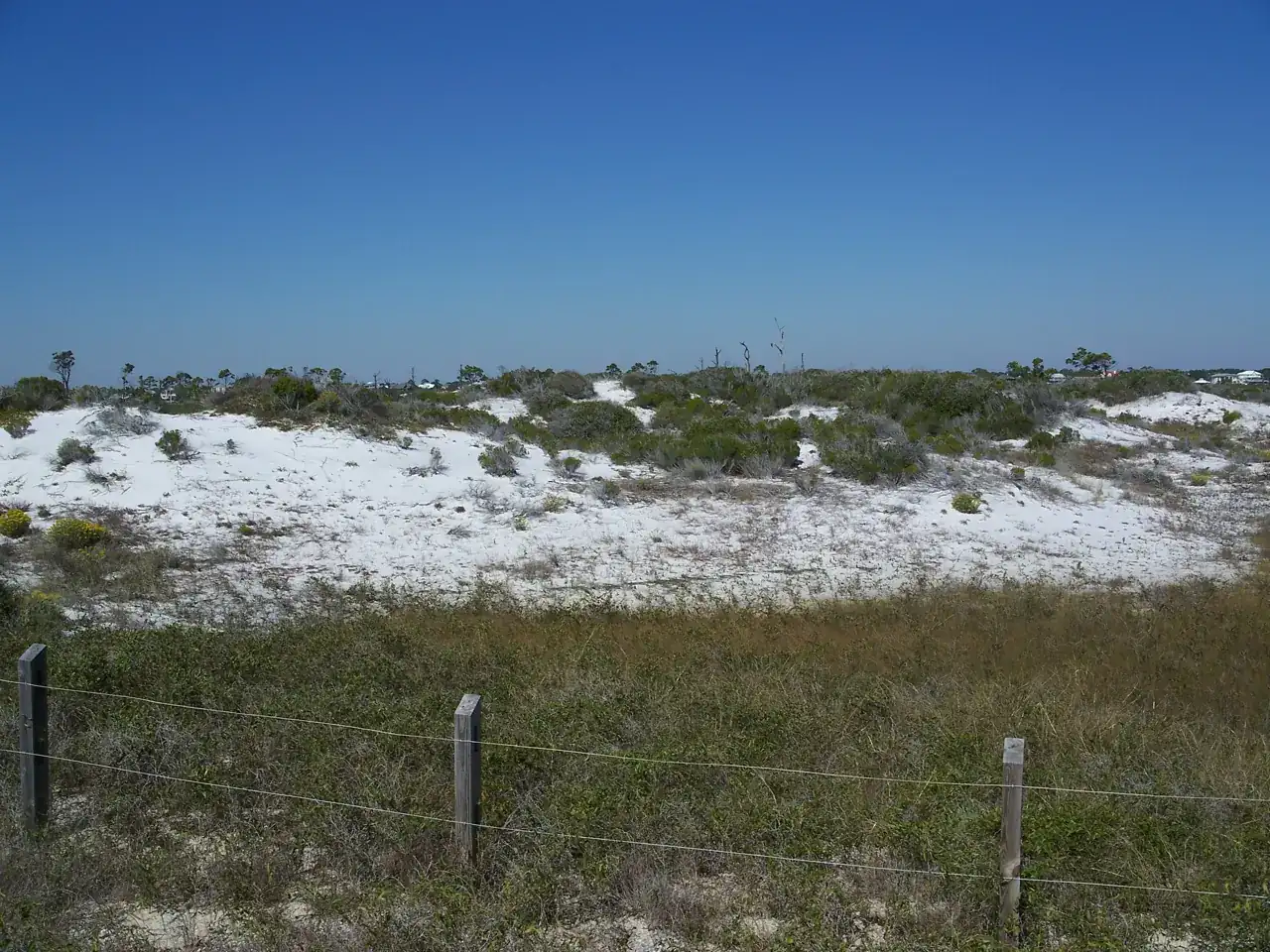
Location photograph: White sand dunes and low vegetation at Perdido Key State Park. Photo: Ebyabe. CC BY-SA 3.0. Image source. Resized and converted to WebP.
Perdido Key State Park suits an angler who wants a Gulf beach session without turning the trip into a boat outing. The useful starting point is a modest surf rod, a small cooler of bait, and enough patience to read the water before casting.
Florida State Parks lists surf fishing here. That does not mean every stretch beside a swimming group is a good place to set up. Walk the signed access first and choose room for your line, your landing area, and the people behind you.
Plan around the 8 a.m. opening
The park lists day-use hours of 8 a.m. to sunset. A sunrise tide may look appealing on an app, but it does not open the gate. Plan your arrival around legal access, with time to unload and check the beach.
Use the boardwalks through the dunes. They protect habitat for the Perdido Key beach mouse as well as the plants that hold the sand. Do not take a shortcut just because a rod cart is awkward on a turn. One rod and a small bag can make this an easier trip than a full cart.
Fish the first useful trough
Start with shrimp on a small bottom rig and place the first cast in the near trough. The goal is to hold a bait where a fish can find it, not win a casting contest. Pompano are worth targeting when conditions suit them, while whiting can make a short session worthwhile.
Keep the line just tight enough to show a bite. Too much tension can drag the sinker out of place. When a circle hook loads up, reel into the fish rather than making a hard strike. Recheck the bait after a missed bite or a long quiet spell.
Fish to recognize before you cast
Two practical sandy-surf targets. Their presence varies with conditions and season.


Know when to pack lighter or leave
If a heavy crosswind bows the line down the beach, shorten the cast and see whether you can hold safely. If the sinker still sweeps through other visitors' water, stop. A larger sinker must stay within the rod's casting rating, including the weight of the bait.
Bring pliers and a measuring tool, even if you intend to release everything. Keep fish wet during handling. Finish early enough to leave before sunset, and take home every loose piece of line. For a different shoreline setting, plan a separate visit to Big Lagoon rather than forcing surf tackle into lagoon water.
What to do with a missed bite
Bring the rig in and look at the hook before casting again. A bare hook suggests bait theft; a loose ball of bait may be hiding the point. With a circle hook, let a steady pull load the rod and reel into the fish. Repeated hard strikes can pull a small bait away before the hook turns.
A starting tackle list for Perdido Key State Park
These are starting ranges, not a shopping requirement. Reel sizes vary by maker. Match the rod, line, and total casting weight, and adjust to the conditions you can safely fish.
| Tackle | Starting choice |
|---|---|
| Surf rod and reel | 9-10 ft spinning rod; 4000-5000 reel |
| Main line | 15-20 lb mono, or 20 lb braid with a suitable leader |
| Leader or bait rig | 20-30 lb mono for small-bait surf fishing |
| Bait and hook | Small shrimp piece or sand flea; roughly size 2 to 1/0 hook, matched to bait |
| Sinker | Only enough to hold; remain within the rod rating including bait weight |

Keep a measuring tool and pliers in the bag. Check current Florida Fish and Wildlife Conservation Commission license, season, size, and bag rules before keeping a catch. Access permission and a fishing license are separate requirements.
Access information checked September 24, 2026. Park notices, construction, weather, and local rules can change. Confirm the chosen entrance before travelling.