
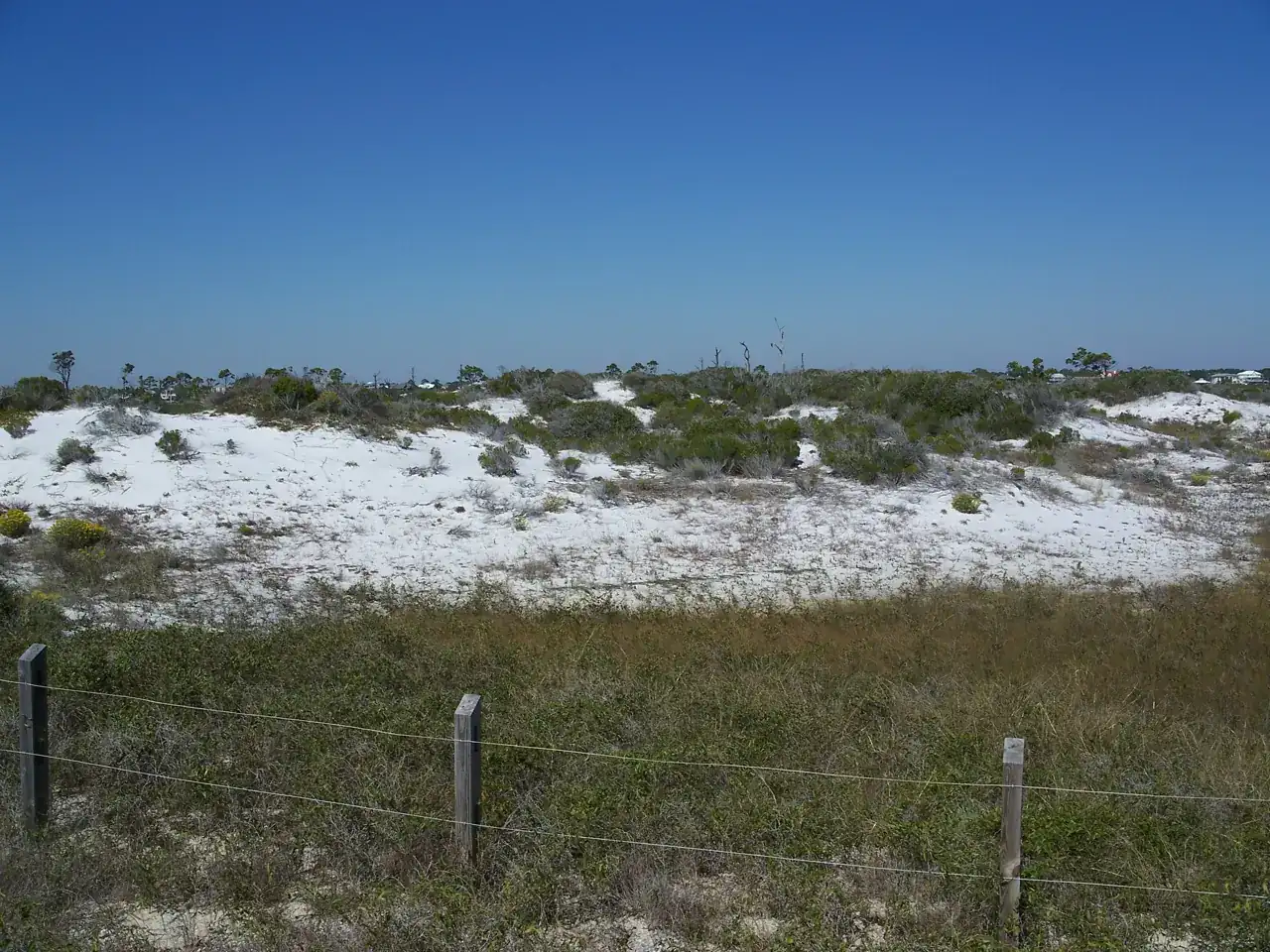
Location photograph: White sand dunes and low vegetation at Perdido Key State Park. Photo: Ebyabe. CC BY-SA 3.0. Image source. Resized and converted to WebP.
Perdido Key gives you a real choice before you ever tie on a hook. You can fish the open Gulf, look for a sheltered bank around Big Lagoon, or plan a trip around a park entrance. Those choices need different tackle. Pick your water first, then buy bait.
For a first surf trip, keep the target list short: pompano and whiting on small baits. If wind makes the beach hard to fish, a legal lagoon shoreline may suit a light spinning outfit. It is a different fishery, not a promise that the same rig will work everywhere.
Choose the park that fits your morning
Perdido Key State Park and Johnson Beach are separate places with separate management. The state park gives you Gulf beach access. Johnson Beach belongs to Gulf Islands National Seashore. Big Lagoon State Park sits on the mainland and offers lagoon water rather than Gulf surf.
That distinction saves wasted driving. Check the chosen park's current hours, entrance requirements, and fishing boundaries before you load up. A public beach entrance does not make nearby condo paths public. Carry your gear through a marked access, and leave the dune plants alone.
Let the beach tell you where to cast
Watch several sets of waves before planting a sand spike. A darker strip between shore and a breaking bar may be a trough. Try that close water before casting beyond everything you can see. Small fish often feed well inside the distance reached by a heavy surf outfit.
Use a small piece of fresh shrimp or a purchased sand flea. Leave the hook point clear. If your bait comes back wrapped in weed, move to cleaner water instead of adding ever more lead. If people enter your casting area, reel in and move.
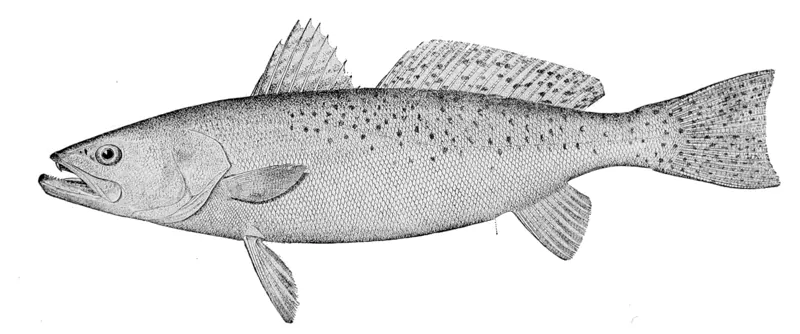
Fish to recognize before you cast
Possible fish in suitable inshore habitat, not a catch forecast.

A separate plan for lagoon water
For redfish or spotted seatrout, a 7-foot medium spinning rod with 10-15 lb braid is easier to work than a long surf rod. Start with a 20 lb leader and a small paddletail. Cast along an accessible shoreline edge, not across a boat lane. A light jig lets you search without dragging a heavy sinker through shallow cover.
Perdido Key is close to Alabama, but this guide covers Florida locations. Check the license and rules for the water where you actually fish. Do not assume a license or park pass covers both states.
Make the first stop a learning session
At a beach entrance, spend ten minutes watching sets of waves before buying into a long-cast plan. At a lagoon edge, watch bait movement and where shallow water drops away. These observations answer different questions. Keep separate notes for the two settings so a successful lagoon lure does not become an unexplained recommendation for rough surf.
A starting tackle list for Perdido Key
These are starting ranges, not a shopping requirement. Reel sizes vary by maker. Match the rod, line, and total casting weight, and adjust to the conditions you can safely fish.
| Tackle | Starting choice |
|---|---|
| Surf rod and reel | 9-10 ft spinning rod; 4000-5000 reel |
| Main line | 15-20 lb mono, or 20 lb braid with a suitable leader |
| Leader or bait rig | 20-30 lb mono for small-bait surf fishing |
| Bait and hook | Small shrimp piece or sand flea; roughly size 2 to 1/0 hook, matched to bait |
| Sinker | Only enough to hold; remain within the rod rating including bait weight |
| Separate inshore outfit | 7 ft medium rod; 2500-3000 reel; 10-15 lb braid and 20 lb leader |

Keep a measuring tool and pliers in the bag. Check current Florida Fish and Wildlife Conservation Commission license, season, size, and bag rules before keeping a catch. Access permission and a fishing license are separate requirements.
Access information checked September 24, 2026. Park notices, construction, weather, and local rules can change. Confirm the chosen entrance before travelling.